

From passion to profession: A day in the life of a zookeeper in Australia
Meet Dan Rumsey: a passionate zookeeper with years of experience working across Australia’s top zoos and reptile parks, including renowned places like Australia Zoo. Dan has always had a deep love for reptiles and through his dedication and positive attitude, he’s built a rewarding and sustainable career in the industry.
Dan has an in-depth understanding of the zoo industry and his career has given him immense fulfilment. In this article, he not only shares what a typical day as a zookeeper entails, but also offers invaluable advice for pursuing a job in this industry based on his personal journey, aiming to inspire and guide the next generation of passionate wildlife caretakers.
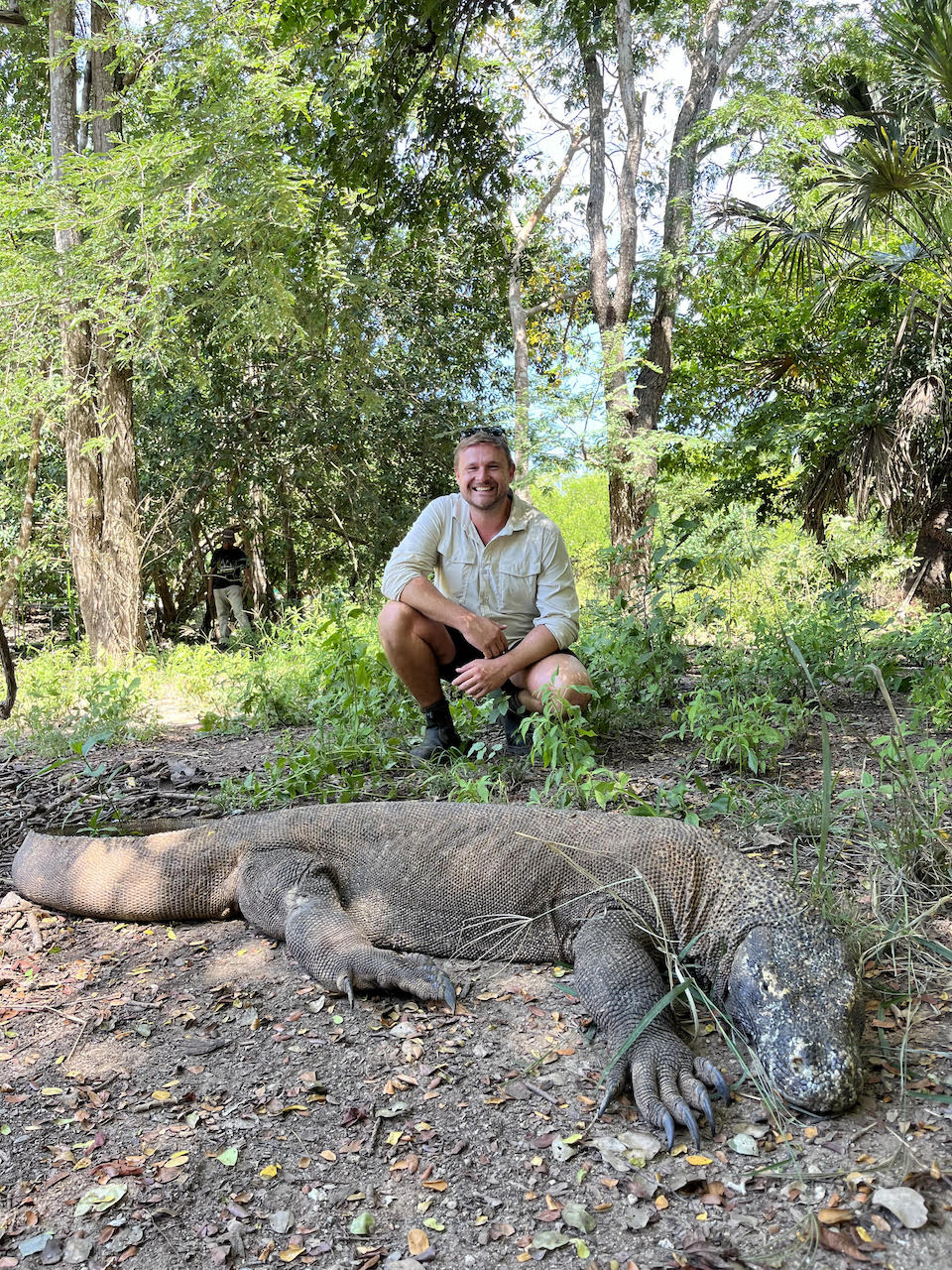
Dan with a Komodo Dragon, during his career as a zookeeper.
Dan’s journey: A passion for reptiles
From an early age, Dan had always been fascinated by reptiles, keeping them as pets and immersing himself in their world. He shares: “I remember when I was young, I got my first pet Blue Tongue Lizard. I still remember getting my first pet snake when I was about 10 or something – so it was really reptiles that caught my interest from a young age, and I guess I’ve followed that through my career as well.”
Dan’s love for reptiles hasn’t faded over the years; in fact, he still keeps them today, chuckling, “Nothing’s changed!”
After finishing school, Dan travelled around until he realised that he wanted to pursue a career in something he felt passionately about – and for Dan that was reptiles. He shares:
“When I left school, I did a bit of travel and fluffed around for a few years to be fair, much to my parents’ dismay. And then I still remember I was actually traveling through Europe when I thought to myself, I’ve always loved reptiles, why don’t I try and do that as a career?”
Dan wondered how he could make that possible. The idea of becoming a zookeeper began to take shape. With this newfound focus, Dan packed up his life in Queensland and moved south to start volunteering as a reptile keeper at Taronga Zoo in Sydney, Australia.
“And it just went from there.”
Dan’s career took off and he worked at several well-known zoos across Australia as a reptile keeper – Symbio Wildlife Park in Ellensburg, Taronga Zoo in Sydney, the Australian Reptile Park and Australia Zoo in Brisbane, gaining invaluable experience as a reptile keeper along the way.
“My career just kind of spiralled from there,” he reflects. “I started with my own love for keeping reptiles, and over time, I realised there was a huge need for education around them- especially given the negative perceptions many people have about reptiles. That educational aspect has become a huge part of what I do now.”
Breaking the stereotypes: Changing perceptions of reptiles
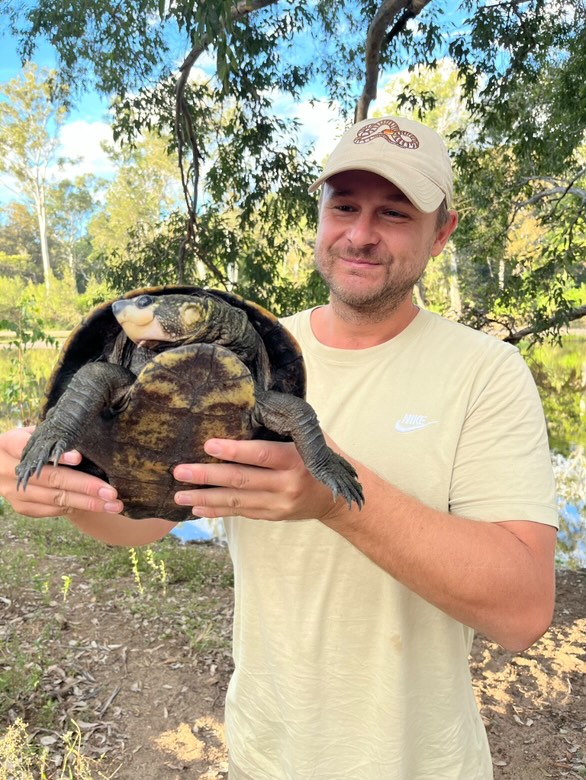
Although Dan always had a passion for all reptiles – snakes, lizards, turtles, crocodiles – he grew up in an era when negative attitudes towards reptiles were widespread. Dan and many other reptile enthusiasts have been working extremely hard over the years to change this perception through science communication and Dan happily reflects that he has seen this change a fair bit, especially over the past decade.
He recalls, “When I was young with pet snakes, every second person would say, the only good snakes are dead snakes. I heard that my whole life growing up, but I don’t hear it as much now.”
“And I genuinely think that people these days are more open to understanding and appreciating snakes, particularly in Australia, possibly because with modern medicine here in Australia, your chance of being killed by a snake is incredibly small. We’ve got great education around snake bite and first aid treatment – and wonderful anti-venoms.”
Social media has played a pivotal role in reshaping the image of reptiles, particularly species like snakes and crocodiles that once had a reputation for being dangerous.
“On social media now, people upload incredible photos and videos of snakes and snake behaviour in a non-confrontational way – and I think snakes have almost become a little bit cool!” Through these online platforms, reptile enthusiasts like Dan are able to educate the public and present reptiles in a more approachable light, dismantling misconceptions and fostering a greater appreciation for these misunderstood creatures.
A day in the life of a zookeeper in Australia
The role of a zookeeper can vary wildly from day to day, with each new shift bringing unique challenges and rewards. Dan explains:
“Today is a very good example. Lots of animal stuff – cleaning, feeding and customer interaction. And I guess now, a lot of my role particularly is behind the scenes in the office – managing the collection, motivating staff and teaching the next generation.”
As Dan puts it, the nuts and bolts of zookeeping is cleaning and looking after the animals, making sure they’re provided the best possible care that they can have. Visitor engagement is also really important – guiding their experiences and inspiring them to make small changes in their lifestyles to benefit wildlife and nature.
Dan explains, “Just from messaging, you can actually make a huge impact with small changes, whether it’s reducing plastic usage or making sure waste is disposed of properly – this has huge flow on effects for animals like turtles.”
The zoo is an incredibly important space in connecting people with nature. Dan explains, “Most people don’t want to walk around the bush for 10 hours and maybe see a Koala. Instead, zoos provide that opportunity for people to see and interact with Koalas so they can appreciate how important they are, not just to Australia, but around the world!”
In this way, zoos have a huge role to play in bridging the gap between nature and the community in a comfortable way – and inspiring the next generation. Dan reflects on the impact that zoos have had on his own journey: “I remember as a kid we used to go to Symbio Wildlife Park on Sundays – and then I ended up working there all those years later. It blows my mind.”
Dan has pictures of himself as a kid at Australia Zoo, at the Australian Reptile Park and at Taronga Zoo as well – and he’s been a part of all these institutions since.
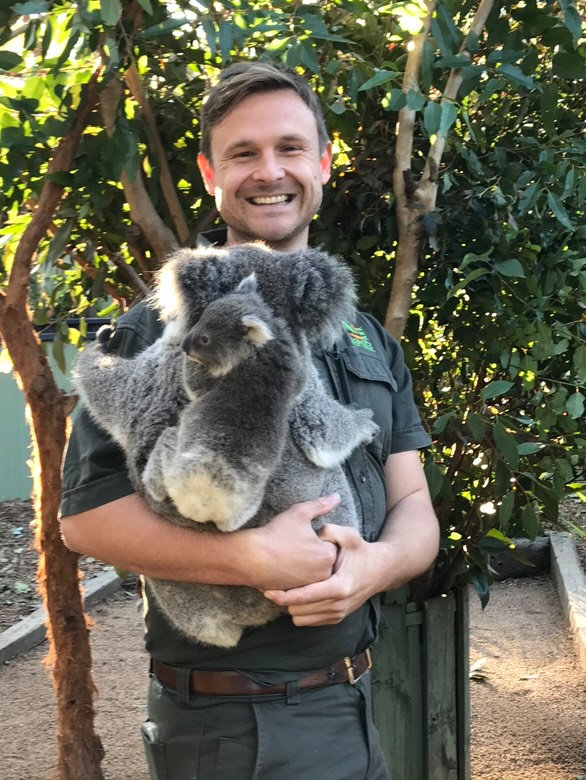
Dan with a mother and baby Koala, during his work as a zookeeper.
Career advice for aspiring zookeepers
If you’re looking to break into the zoo-keeping world, Dan sees a few different avenues you can take to get there – but above all it’s about your why and your motivation and attitude.
He says, “A lot of people ask me about zookeeping and I think a lot of it does come back to having a positive attitude, a willingness to learn and surrounding yourself with really good mentors, networking, and I guess just being passionate.”
Dan emphasises that achieving great things in the wildlife industry requires a lot more than just the standard 40-hour workweek: “I feel like it’s that above and beyond attitude that gets people places. And I remember when I first started volunteering at Taronga Zoo and I was working two other part-time jobs, but I was so passionate and dedicated, I thought this is my dream, I’m going to do it until it happens – and I was very lucky that it did.”
As someone who now feels fortunate to be in a position where he can provide people with opportunities to grow and develop in their zookeeping career, Dan maintains that it’s all about attitude, “I want to see that same dedication that my mentors saw in me.”

Showing up with a positive high vibe attitude, and putting your best foot forward in everything you do is a really attractive quality in an industry that is fuelled by energy and passion.
Despite this, Dan says that the wildlife industry as a whole could look at providing better pay, career growth and more contract stability to sustain people in the industry:
“It really is a cool job but I have a lot of friends who are keepers above 30 leave the industry or take other opportunities, basically for financial reasons.”
“And that’s scary for the industry as a whole, because it’s 10-, 20-years of knowledge and experience that is lost instead of being passed on to guide the next generation of junior keepers.”
Dan stresses that the industry needs to build clear career pathways and reward its workers better so they don’t have to choose between contributing to conservation and managing basic life needs like buying a house or starting a family.
He also emphasises the importance of self-care and preventing burnout, something that is all too common in high-energy fields like conservation:
“Passion fatigue is a term you hear a lot in wildlife fields, and I’m not an expert on it or anything like that, but it’s important to start talking about these things because we do get passionate, dedicated people that burn out, …They just leave the industry and it’s really sad because if they’d been nurtured and looked after better, they would likely still be doing it.”
Luckily, these issues are being discussed more and more in learning institutions and there are more and more resources and coping strategies being taught to increase awareness of challenges like passion fatigue and burnout – and hopefully, help the next generation of wildlife enthusiasts to avoid falling victim to them.
For Dan, staying positive and showing gratitude is important to weather the storms and stick out the tough times. Having a positive attitude has been key to his success,
“Definitely attitude’s the key word to take from this chat – having the right attitude, positive attitude, willing to learn, willing to absorb information… Not everything will go your way, but at the end of the day, life’s good, especially if you’re working with animals – sometimes we forget that.”
For Dan, self-reflection is important to remind him of this, “whether you are in the field or working at a zoo or as a vet – working with animals is the best, and for me, there’s nothing better than spending your days working with critters.”
Dan shares that his deep passion for animals keeps him motivated, even when the work gets challenging.
“Although I wish I knew the absolute secret, for me it’s travel with mates seeing critters that brings it all back. Those moments keep me going and to be honest, it’s probably what inspires me now.”
“And that’s not to say that I don’t still love going to zoos, but it’s getting out in the bush and disappearing in nature for a few days looking for reptiles that keeps me going.”
Dan’s top tips for starting and sustaining your zookeeping career:
- Nurture your passion: let your love for animals drive you through the tough times.
- Show your dedication by taking opportunities to expand your experience: seek out every opportunity to gain experience and expand your skills.
- Find strong mentors: surround yourself with people who inspire and motivate you to do your best.
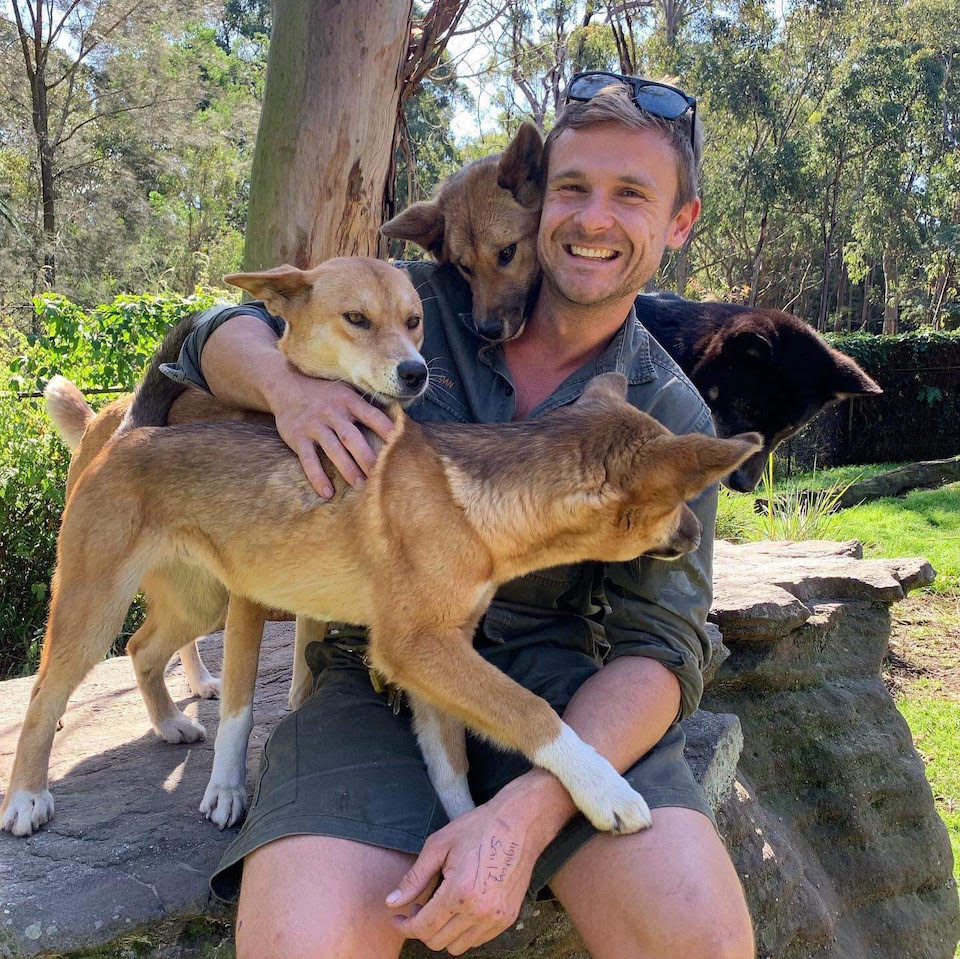
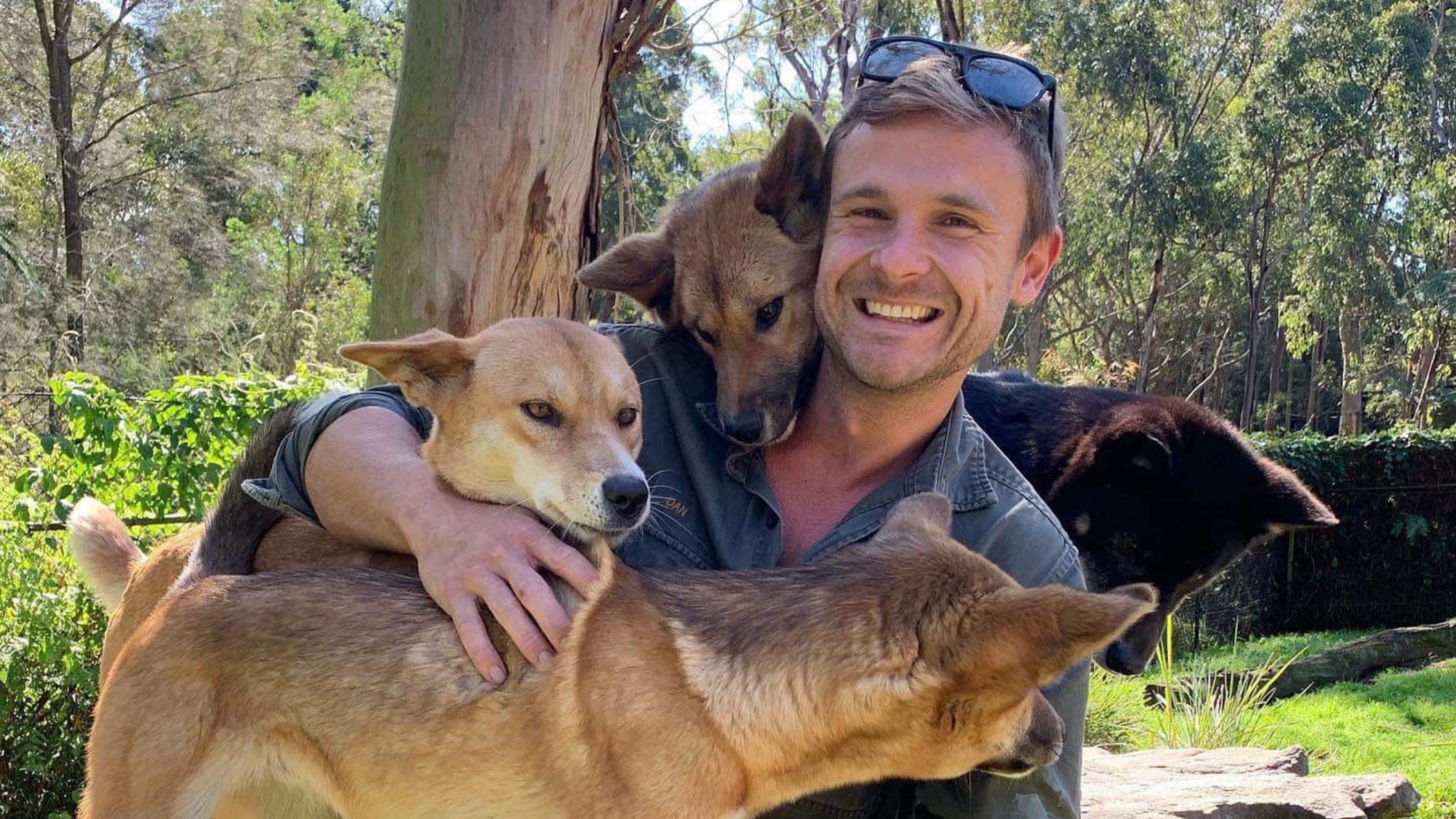
Dan with Dingos, Australia’s wild dogs, during his work as a zookeeper.
Stay connected and inspired
Want to hear more from Dan and follow his journey in wildlife conservation? Connect with him on Instagram and keep up with his latest adventures:
Instagram: @zookeeper_dan
But that’s not all! For more inspiration and resources on becoming a zookeeper and working in conservation, check out these great resources:
Wildlife Carer: Caring for wildlife: Explore various wildlife care roles, from zookeepers to wildlife rehabilitators, with helpful resources and job listings to kickstart your career in animal conservation.
11 Key Conservation Roles: A comprehensive guide to all the key conservations roles, with insights on education, skills and job opportunities.
Reptile Conservation Resources: Explore key resources, articles, and initiatives focused on the conservation of reptiles and their habitats around the world.
Stay inspired and keep pushing forward in your conservation career!
Author Profile | Susie Stockwell

Susie with a Purple-crowned Lorikeet, during work as a bird bander.
Susie Stockwell (she/her) is a field ecologist, science communicator and creator of the blog and podcast, #itsawildlife, a platform to support people on their journey to work their dream job in wildlife science or conservation. Based on beautiful Menang country on the south coast of Western Australia, Susie is passionate about finding novel solutions for wildlife conservation and opening up the space to promote engagement and involvement for everyone interested in pursuing this career.