
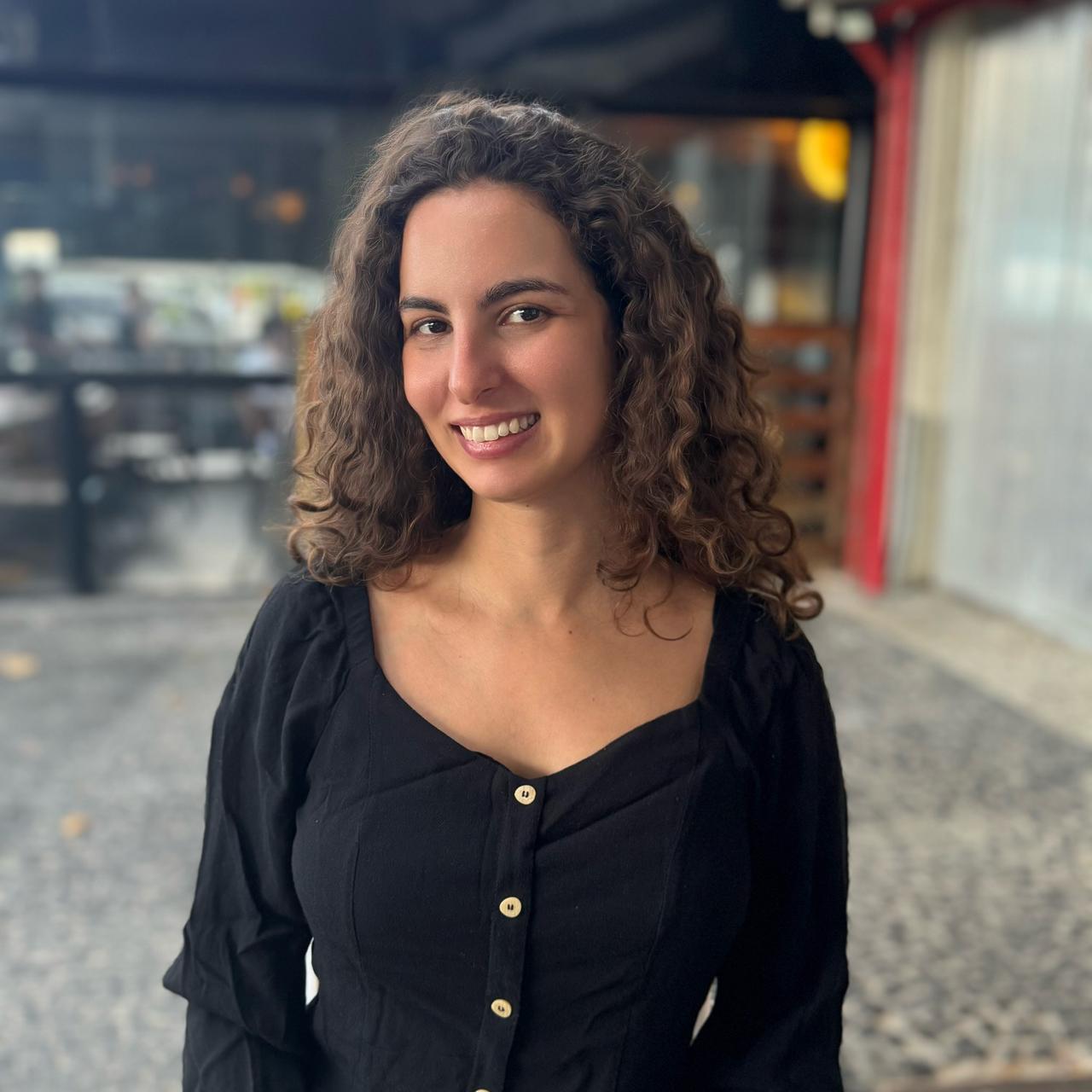
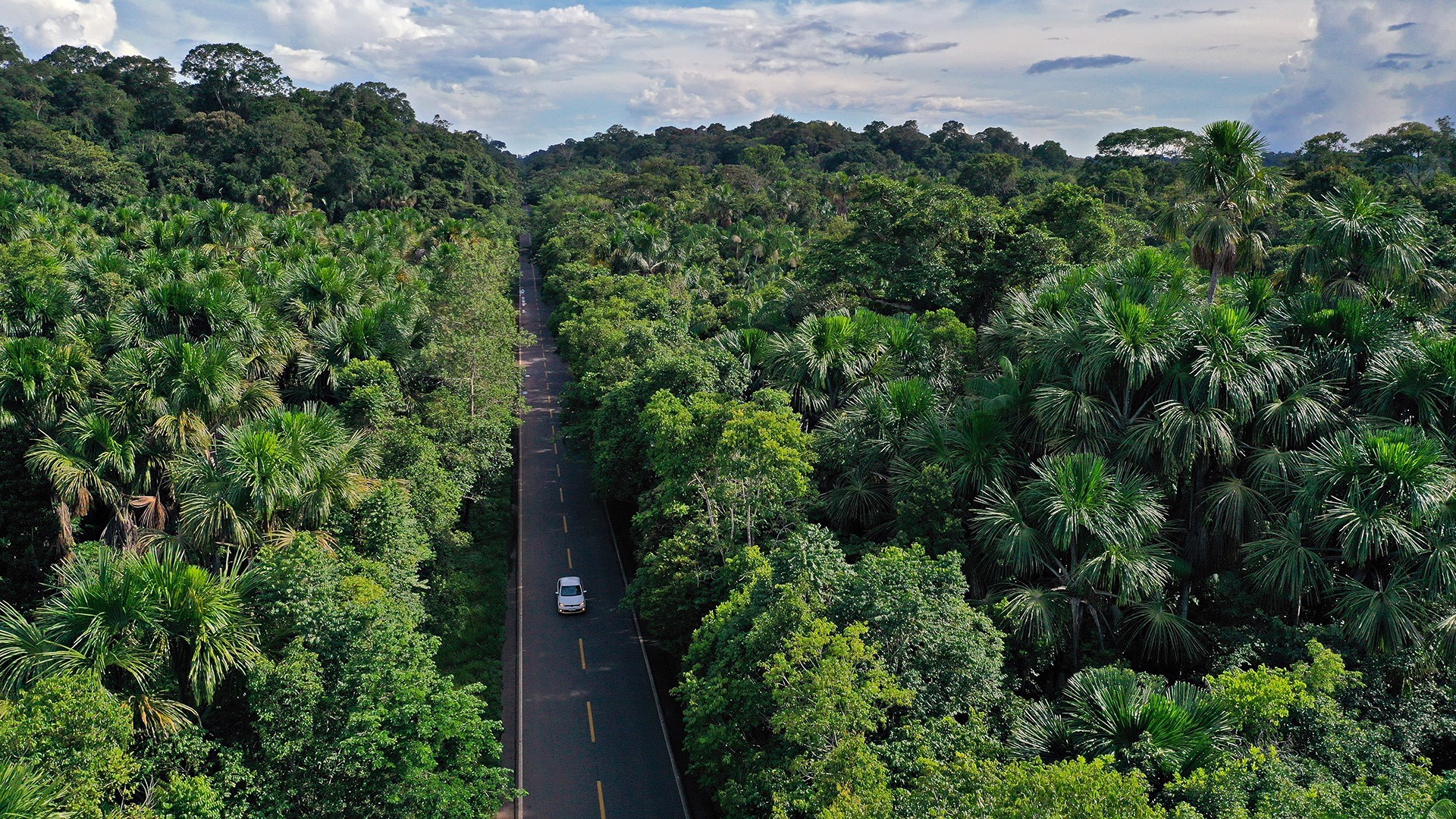
Saving wildlife on the road – Where science and entrepreneurism meet
Have you ever passed by an animal that was run over on a highway? Have you ever wondered what impact those kills have on the conservation of biodiversity? Or better yet, whether anything can be done to prevent it?
Fernanda Abra has… And today, she runs a successful consulting company that actively works to mitigate the impact of roadkill on Brazilian biodiversity.
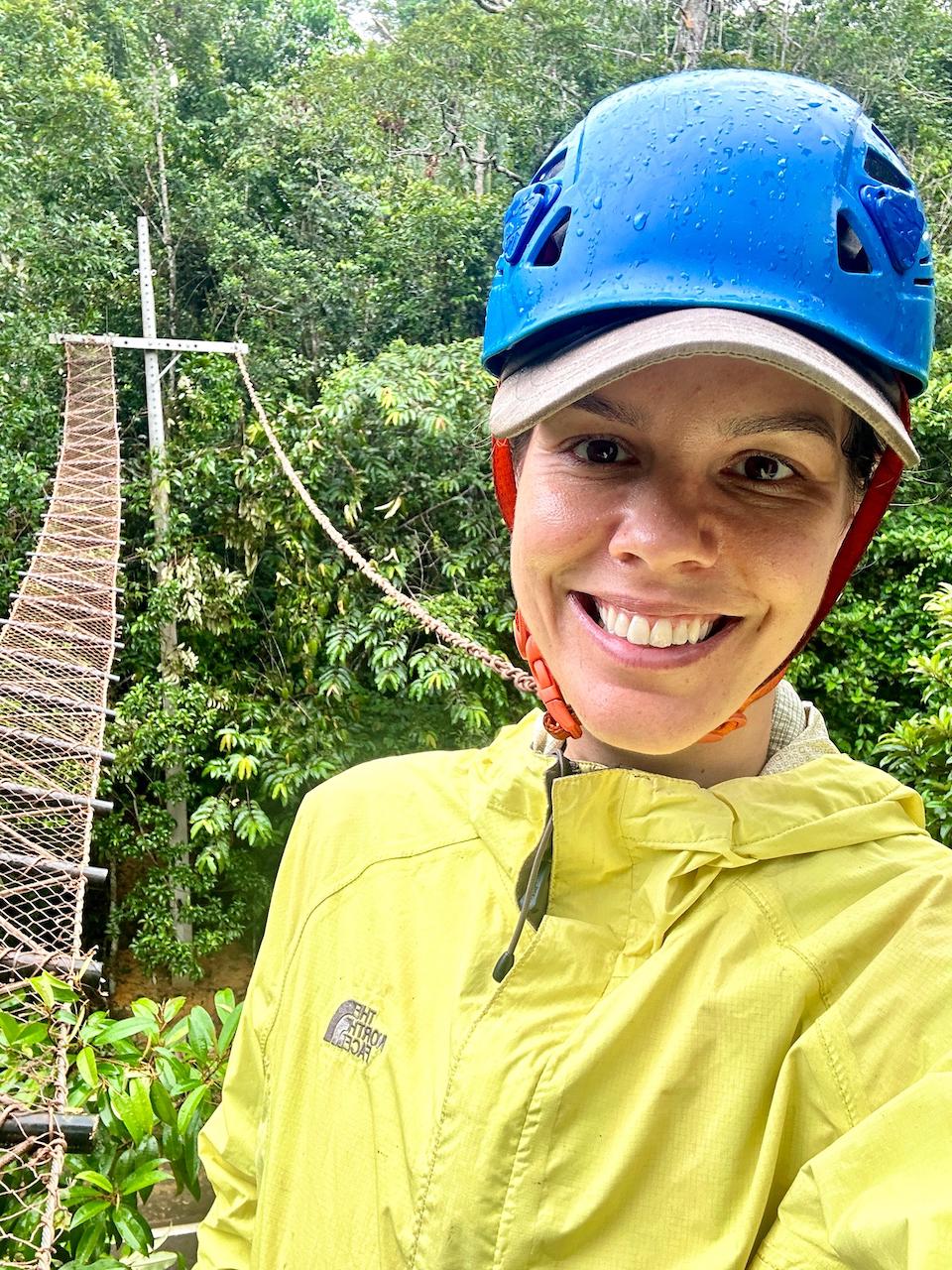
Fernanda Abra in the field assessing roadkill mitigation sites.
The company is an environmental consulting group specialised in wildlife management for transportation infrastructure projects (mainly highways, railways and airports). It emerged in the scenario of a very large country that depends heavily on highways and is currently undergoing road expansion.
Fernanda’s journey began during her undergraduate studies, while interning at a regional office of IBAMA (Brazilian Institute of Environment and Renewable Natural Resources). Her task: to analyse roadkill data from a highway under environmental review.
“What I found shocked me,” she recalls. “An alarming number of dead animals in a short span of time.”
This pivotal moment sparked a lifelong mission. Fernanda began researching international roadkill mitigation strategies and shared ideas with her supervisor. As a result, one of São Paulo’s highways became one of the first in Brazil to implement wildlife crossings and fencing.
That experience led her to pursue a master’s degree focused on evaluating the effectiveness of these measures.
“I fell in love with the solution much more than the problem”, she says.
She later joined a large consulting firm, where she gained hands-on experience leading fauna programs and implementing mitigation in real-world projects. In 2014, Fernanda and her female business partner launched ViaFauna, an enterprise grounded on the pillars:
- Understanding the operations of mitigation procedures.
- Developing mitigation plans to reduce wildlife roadkill.
- Proposing increased connectivity for projects that cut through natural environments.
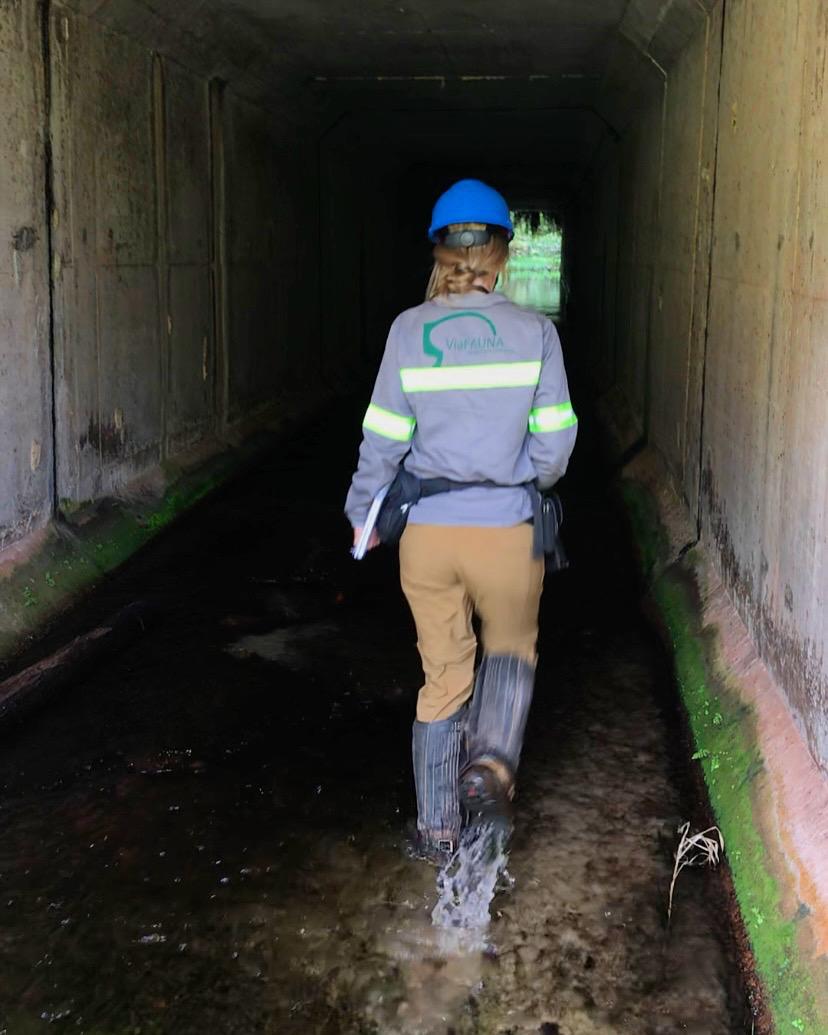
A ViaFauna professional in a wildlife crossing structure installed along a Brazilian highway.
This company, founded exclusively by women, is extremely technical, and already operated in 12 states in Brazil. Its clients include the largest private and public road managers and railway companies.
Remarkably, the company grew entirely through word-of-mouth – no website, no advertising. It started with a client in a countryside city and now boasts a team of 70 people working on 23 active projects.
“Our passion influences the customer.”
The advantages of the consultancy are attractive:
- Biodiversity conservation.
- Promoting people’s safety by avoiding accidents.
- Economic advantage – in Brazil, every accident involving wildlife is eligible for compensation from the road operator.
Often (and not surprisingly), what sells the consultancy to the client is the financial benefit. But, still, conservation wins as well!
In this scenario, using abundant species frequently involved in accidents (like capybaras) as flags for the issue, often justifies building wildlife crossings – structures that also help rarer, endangered species.
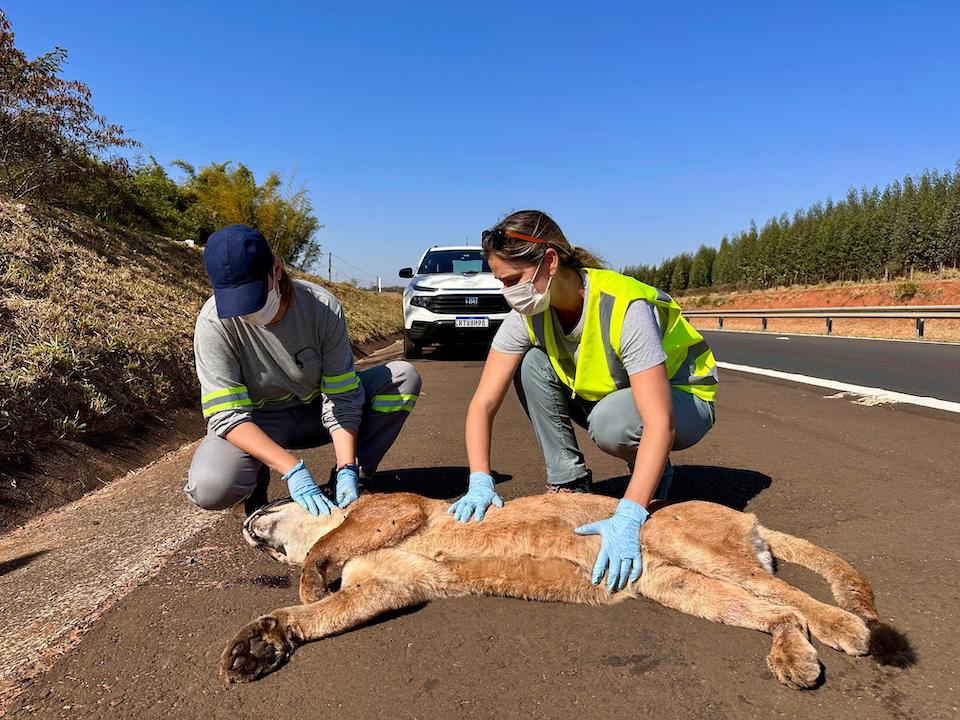
Fernanda Abra and the veterinarian Camylla Silva aiding a Puma concolor.
ViaFauna’s influence goes beyond projects. Fernanda’s team was hired by DNIT (the Federal Transport Agency) to write the official wildlife mitigation manual for all federal highways. Their mitigation plan for BR-262 – which crosses the Pantanal and had one of Brazil’s highest roadkill rates – was fully approved by IBAMA and DNIT, a rare feat.
But changing Brazil’s infrastructure mindset remains one of the biggest challenges.
:I think that when engineers understand that this is essential for projects, Brazil will certainly lead this sustainable infrastructure.”
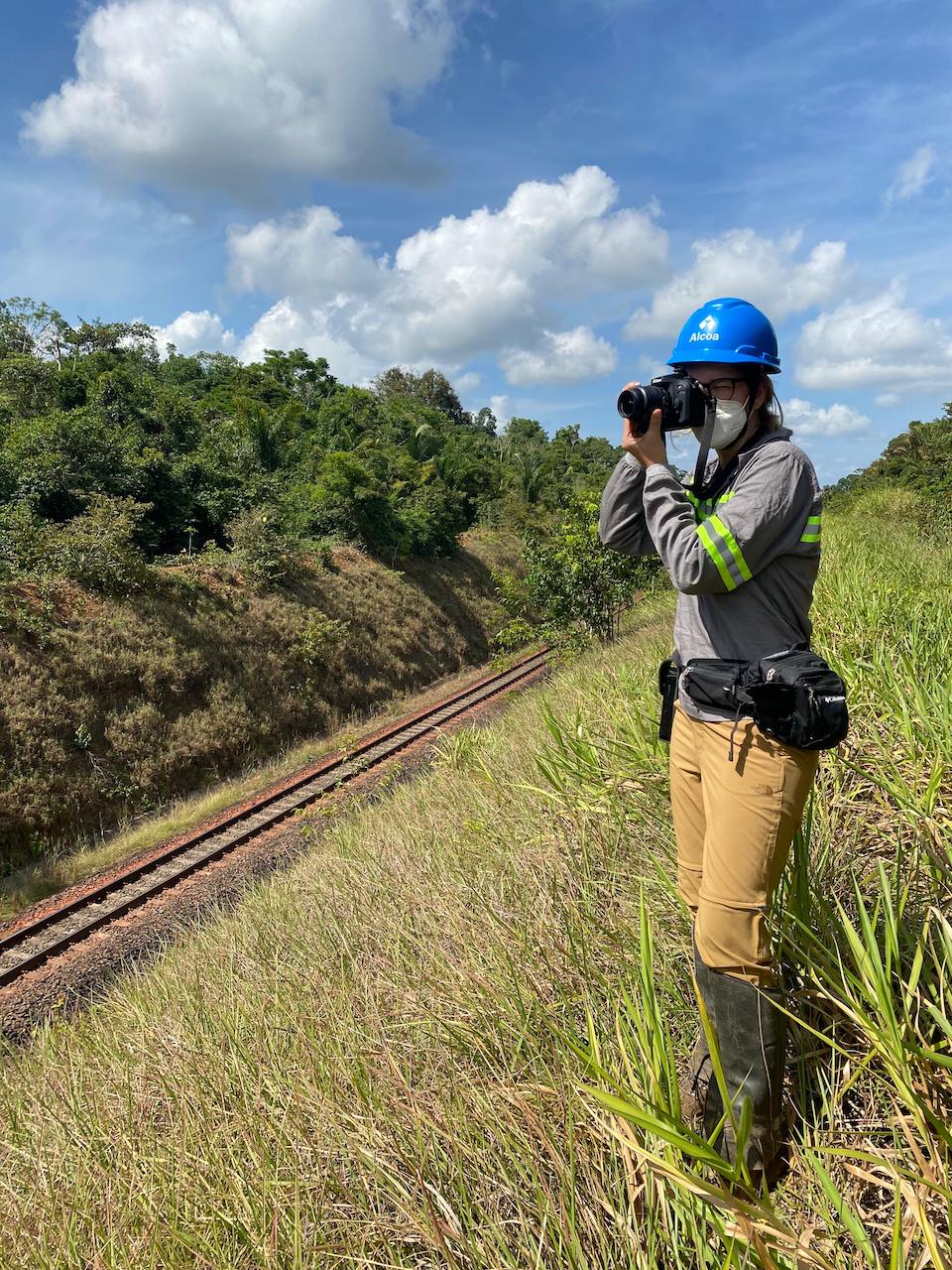
A ViaFauna professional conducting monitoring of a railway.
When looking for candidates, the ViaFauna team looks for a solid resume and proactivity.
“Consulting is different from academia; it requires fine-tuned communication, flexibility and the power of persuasion.”
Fernanda’s trajectory is marked by the marriage of academic and business work. She continued with her doctorate, and won the prestigious Future for Nature Award.
With that funding, she launched the Reconecta Project, now part of her postgraduate research at the Smithsonian’s National Zoo and Conservation Biology Institute in Washington, D.C., USA. The project is developing and testing artificial canopy bridge models to help arboreal animals cross roads safely in the Amazon.
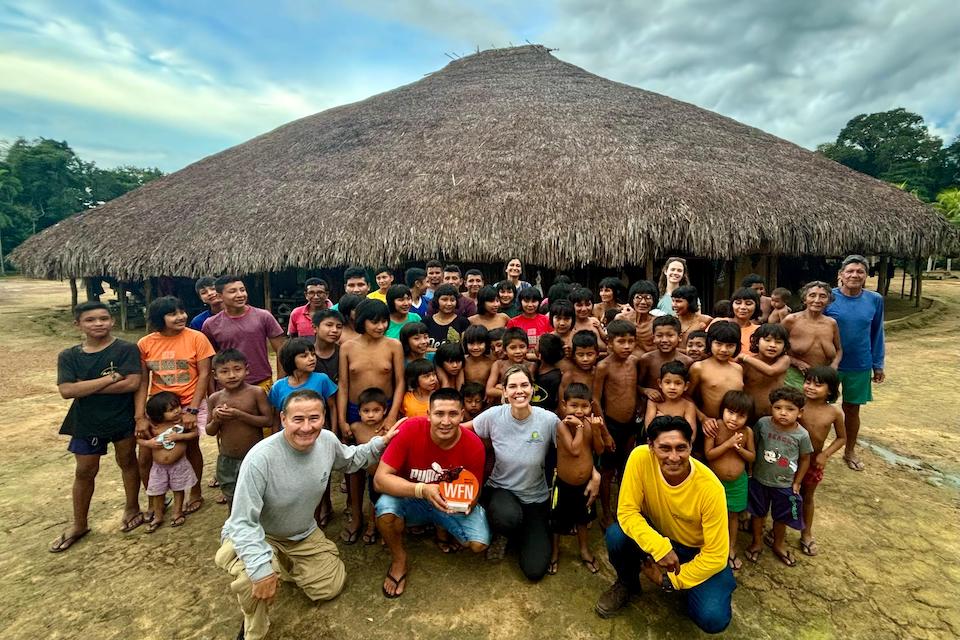
The Reconecta team and an Indigenous community in the Amazon celebrating a Whitley Award in recognition of the Reconecta Project.
“In academia we develop new thoughts and ideas and in consulting we apply them. And it is in consulting where I see the bottlenecks that science has to resolve.”
Her advice for aspiring environmental entrepreneurs is to obtain entrepreneurship training and develop a good network.
“Don’t give up, because it’s not easy. What we need most are solutions, products, methods and processes to conserve wildlife. The challenge is to take the idea and transform it into a sellable product. In Via Fauna, for example, the product is a method for solving the wildlife problem on the highway.”
Further reading
Are you interested in becoming a conservation scientist, ecologist or economist, or running your own conservation organisation? Explore the following resources to learn more:
- Organisational Manager | Running organisations that conserve nature
- Conservation Scientist | Answering key questions to tackle biodiversity loss
- Ecologist | Ensuring ecologically-sensitive development
- How to become an ecologist
- Conservation Economist | Putting a value on nature
- Saving pastures by selling cheese: A case study of an economist’s vital role
Author Profile | Mayan Press Goldfreind
Mayan Press Goldfreind is a veterinarian, with a focus on wildlife conservation and One Health. She is specialised in Health Surveillance by the Oswaldo Cruz Foundation, where she carried out environmental surveillance projects for emerging pathogens. Currently, she is a PhD student at the University of São Paulo, Brazil, studying the impacts of climate change on biodiversity.