

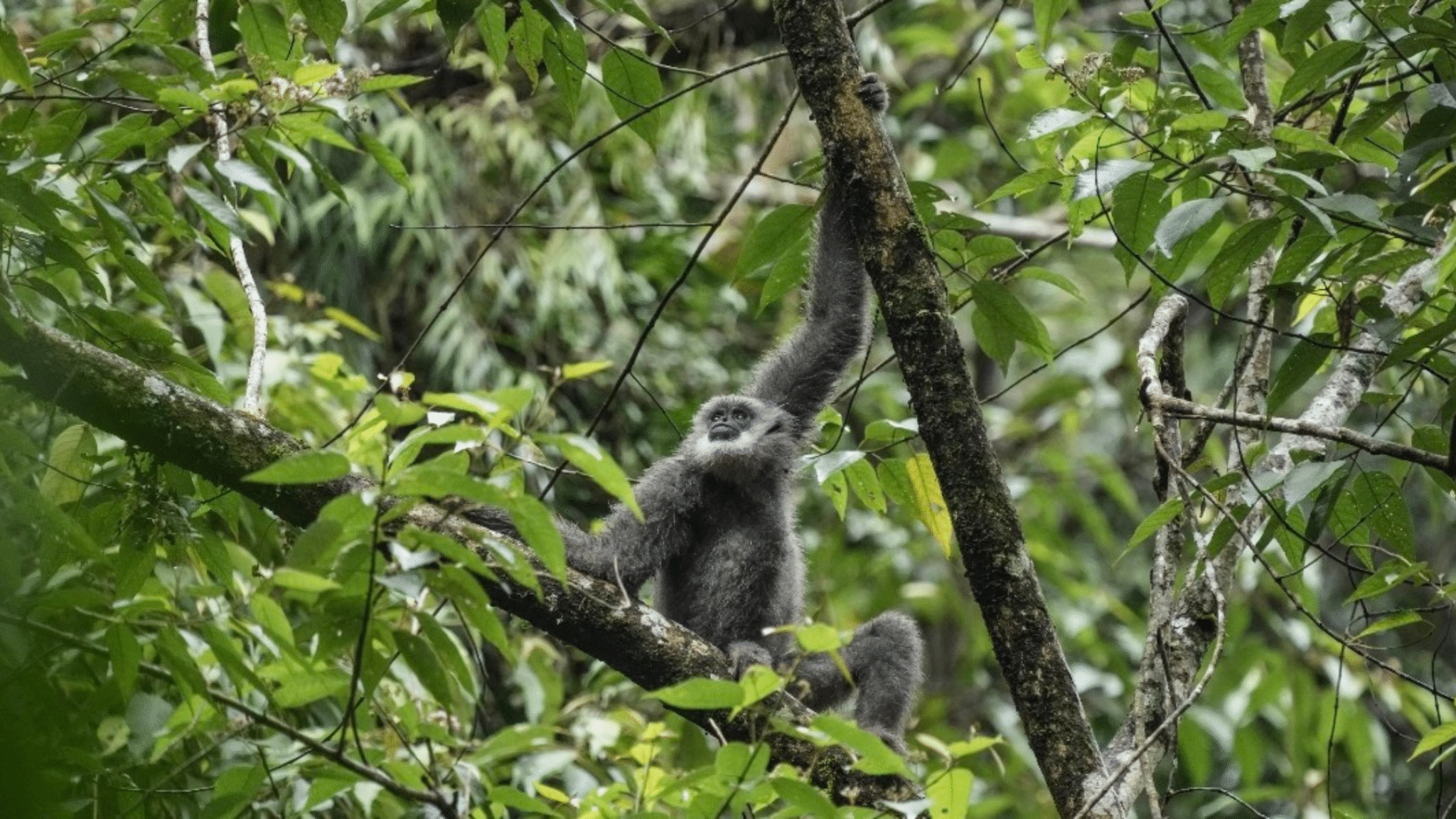
Guardians of the Javan gibbon: The team protecting an Endangered primate
Rahayu Oktaviani, an Indonesian primate conservationist, has dedicated her career to protecting the Javan gibbon, an elusive primate found in Java, Indonesia. Seeking adventure, she studied Forest Resource Conservation and Ecotourism at university and worked part time with NGOs (non-governmental organisations).
Today, Rahayu runs KIARA (Yayasan Konservasi Ekosistem Alam Nusantara), which she created to ensure the long-term survival of Javan gibbons. KIARA combines research with education and community engagement.
Winner of the 2025 Whitley Award, Rahayu’s mission is to raise awareness of this lesser-known primate, encourage more people to study gibbons, and ensure they continue to swing among the trees of Java forever. At the heart of this mission: teamwork.
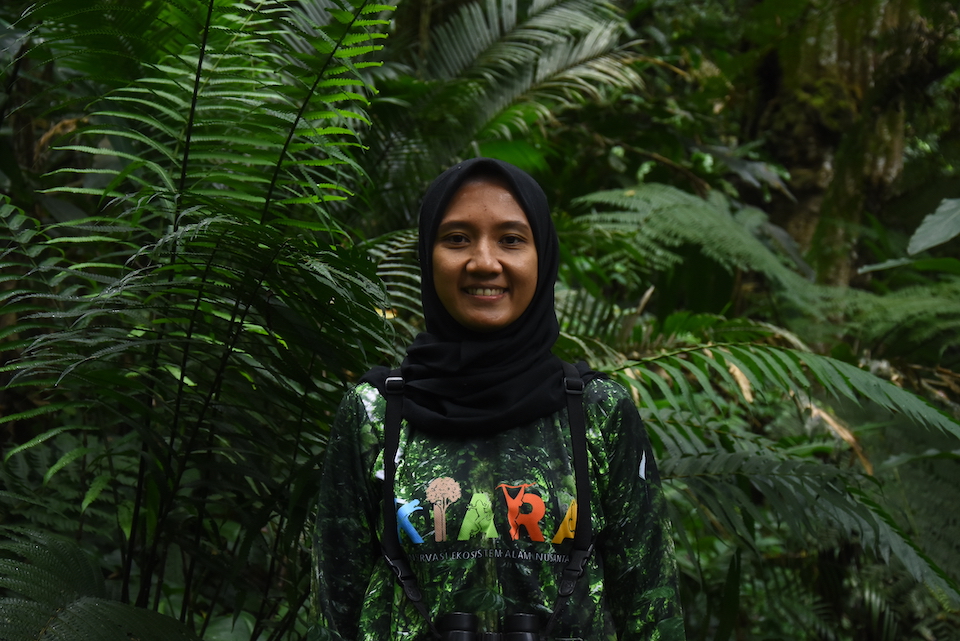
Rahayu Oktaviani.
Discovering the Javan Gibbon
Despite her passion for Javan Gibbons today, it wasn’t always the animal Rahayu had her heart set on. She remembers a university lecture where she became captivated with another primate.
“I didn’t aim for Javan gibbons in the beginning because my first love was orangutans.”
Her university, in Bogor, Java, lacked resources, so students often watched films in class. One BBC documentary, narrated by Sir David Attenborough, “totally opened my eyes to wildlife biodiversity in the world, especially Indonesia,” she says. Seeing the orangutans and learning about them captivated Rahayu, and her fascination grew when Dr Sri Suci Utami Atmoko, an Indonesia orangutan expert, was a guest professor.
Unable to secure funding to study orangutans for her research, a professor suggested she focus closer to the university. The nearby Taman Nasional Gunung Halimun Salak, is the only home to the Javan gibbon. Rahayu was hesitant, “in my younger mind there’s nothing sexy about the Javan gibbon,” she says.
With a deadline approaching, she chose the gibbons and set out to collect data on their vocalisation behaviour. After two weeks, she had no recordings, as they vocalise sparingly to conserve energy. One day, her luck changed, as did her feelings toward the gibbons. She finally heard it, the song of the Javan gibbon.
“Can you imagine you are standing in the forest and suddenly everything goes silent, and you can hear the song of the Javan Gibbon in the wild.”
Enchanted, Rahayu wanted to know more and wondered why they weren’t as famous as orangutans. “This species should be the one in the spotlight.”
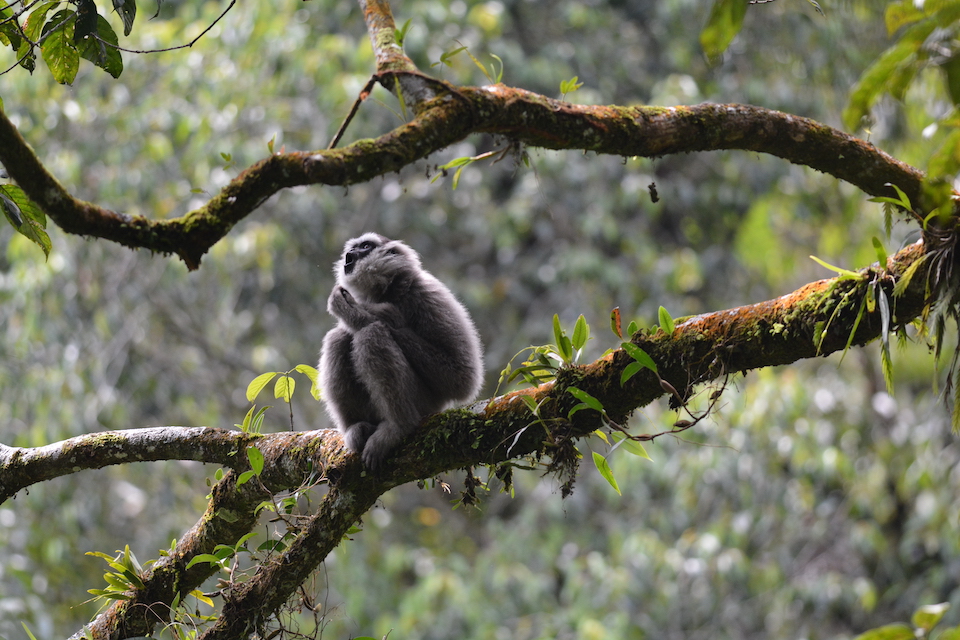
A Javan gibbon.
A day in the life
Rahayu describes her workday as “very dynamic”, blending fieldwork, office management and community. She heads into the forest around 5.30am to check on her team monitoring the gibbons. Some days she spends entirely in the forest following the gibbons, other days she’s in the office attending meetings and supporting her non-field team members.
“It’s not only about the forest, but also about building the connection with all the team members.”
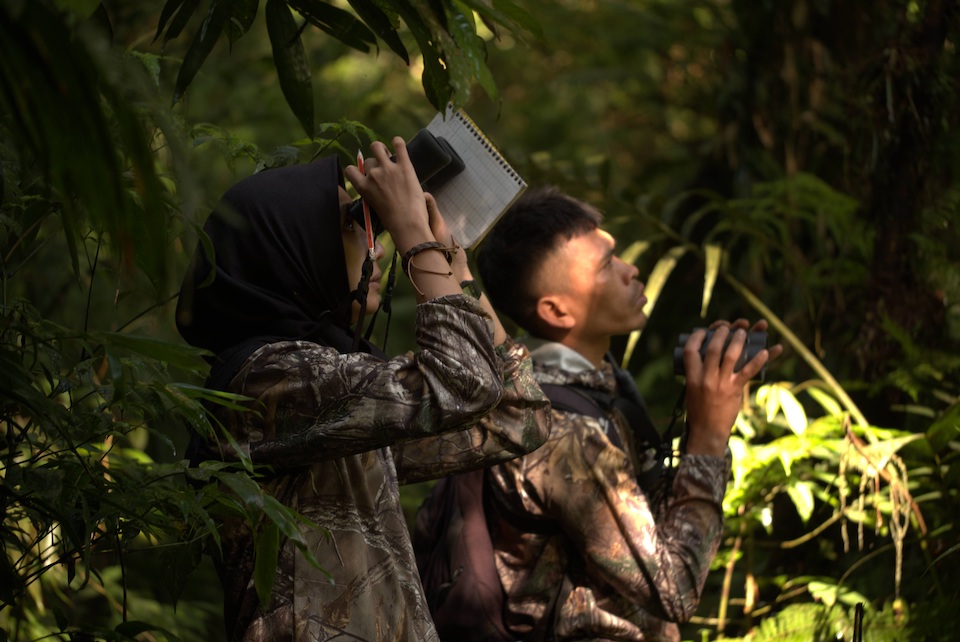
Members of KIARA monitoring Javan gibbons.
The team works around the gibbons schedule, waiting under their sleeping tree, “just like the paparazzi.” If it’s raining, they return to camp, an opportunity for coffee and conversation. “It can be just like a holiday,” Rahayu jokes.
KIARA follows three gibbon groups, known as group A, B, and S. “We know their whole range,” she explains, allowing them to track the gibbons even when silent, searching in 32 hectares which can take half a day.
Rahayu explains that female Javan gibbons are the main vocalists, marking territories and leading the family when foraging. “I like the fact that the female is the leader of the family,” she laughs.
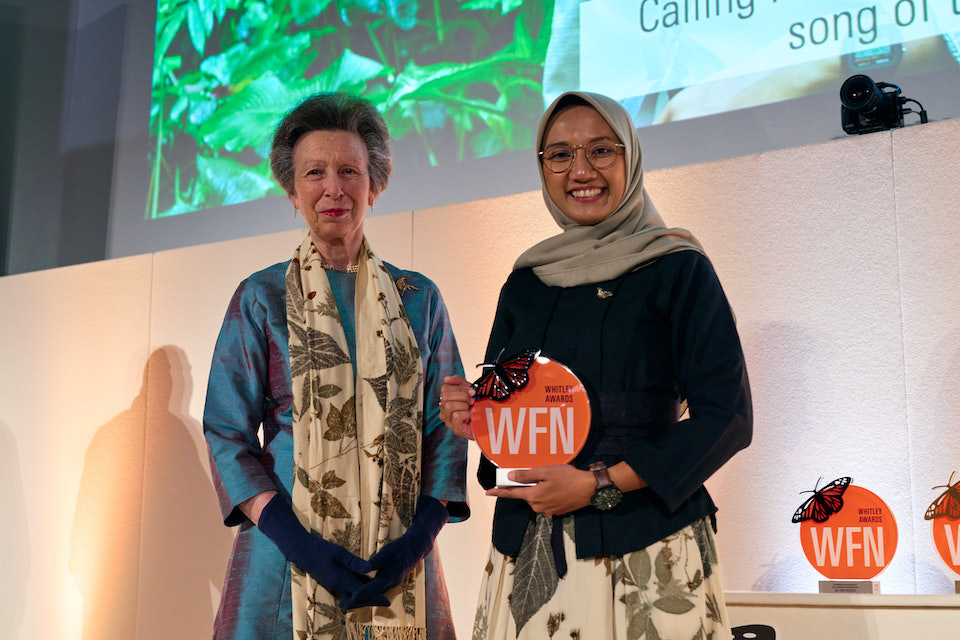
Princess Anne and Rahayu at the Whitley Awards.
Winning the Whitley Award
In recognition of her work, Rahayu received the 2025 Whitley Award, a British charity whose Patron is HRH The Princess Royal. “It feels unreal,” she says. Back home in Indonesia, “the news was everywhere, people were talking about the gibbons.”
Many people are unfamiliar with the Javan gibbon, which rarely captures public imagination “because they’re not charismatic,” explains Rahayu, making them overlooked. The award gave her a chance to put gibbons in the spotlight.
Rahayu also met with Indonesia’s Minister of Forestry, agreeing to continue national efforts to protect Javan Gibbons. Her dream for people to know about the Javan gibbon and “their beautiful song,” was coming true. The award enables KIARA to expand its conservation reach, and involve more local people in protection efforts.
“It’s always about the gibbon.”
A highlight of the London ceremony came when Rahayu gifted Princess Anne a scarf made by Ambu Halimun, a women’s group in Java that creates eco-print clothes, while promoting Javan gibbon conservation. To her delight, the princess wore it for the whole ceremony.
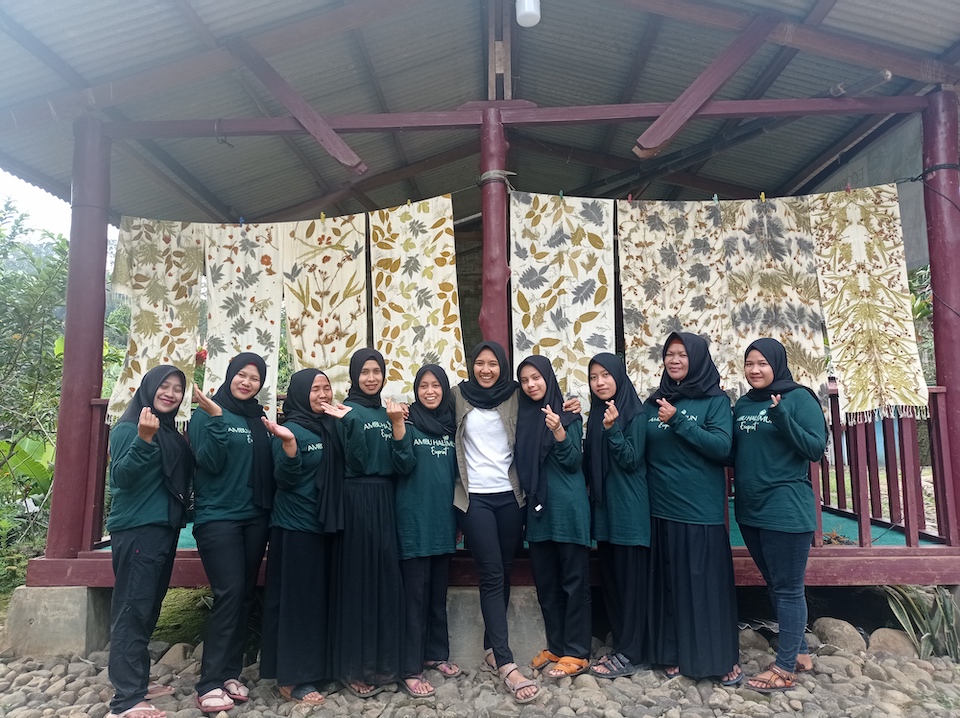
Ambu Halimun.
Local voices with a lasting impact
At the beginning of her career, Rahayu focused only on researching Javan gibbons, until a villager asked why she never spent time in the community. Realising locals were important for conservation, she founded KIARA with community involvement at its core.
“I realised that the local community is an integral part of conservation work.”
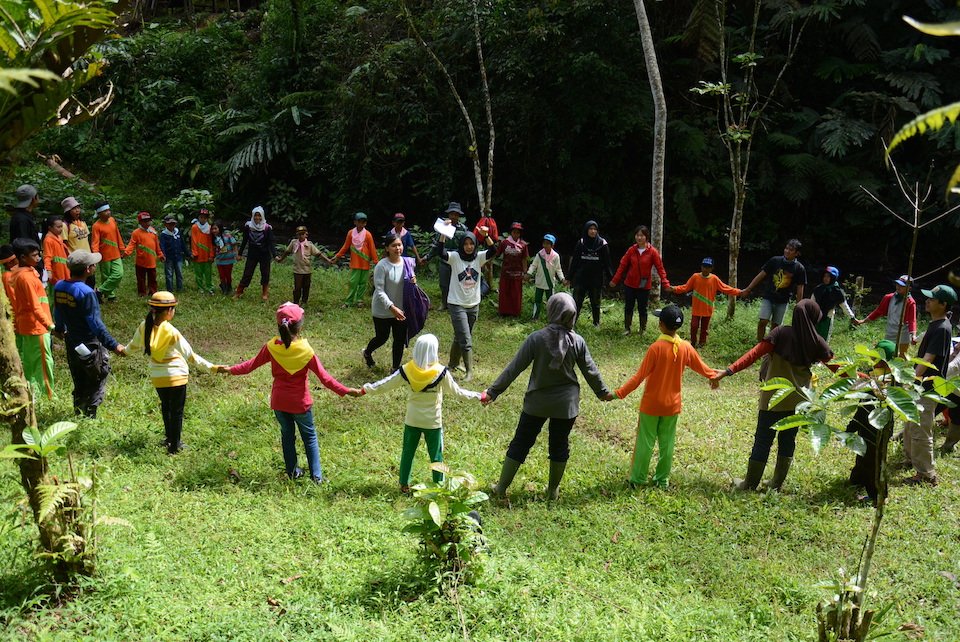
Rahayu with the local community.
Today, the local community works alongside KIARA in the forest and communicates with park rangers, for example, reporting animal traps. “They are the frontline of the conservation effort,” Rahayu says, “without them there is no protection of the forest.”

Through this collaboration, Rahayu learned folklore tales about Javan gibbons, passed down through generations. These are now shared through KIARA’s conservation education programme to raise awareness of the gibbons and teach local children about their history. “They can know about their heritage and feel proud,” she says.
According to folklore, when the Javan gibbons sing, it’s going to rain. This comes from the fact they can be afraid to leave the trees for fear of predators, so they sing to the sky to ask for water to drink. Touched by their song, the sky cries, making it rain.
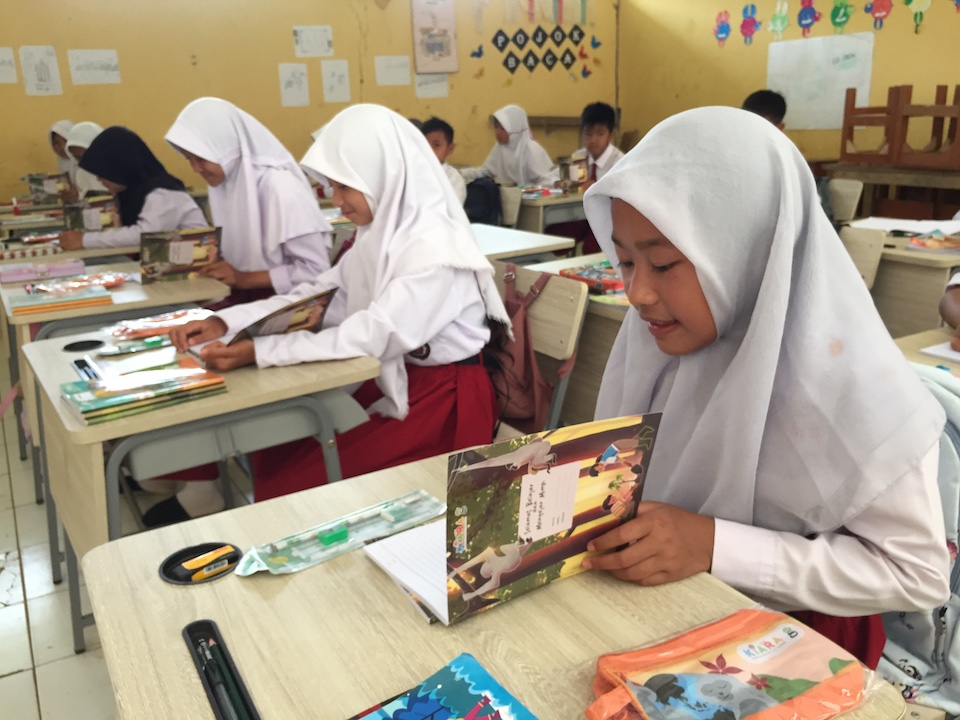
Local school children reading KIARA’s storybook on Javan gibbons.
From devastation to determination
Rahayu describes the lows of her work, realising that despite effort, destruction keeps happening. “The bad news is really happening every day,” she says, leaving her “devastated” and questioning her impact.
The Javan gibbon faces many threats, including habitat loss from deforestation and hunting for the pet trade. With her team at KIARA, Rahayu works with organisations to tackle these threats.
“Cooperation is key for conservation.”
The challenge, Rahayu says, is rebuilding motivation. She draws strength from seeing other conservationists working hard. “It makes me realise that we are not alone in this fight,” she says.
Rewarding moments remind Rahayu why her work matters. KIARA launched a storybook about the Javan gibbon and performed a reading and puppet show of the book in a Bogor cafe, which was recorded for national TV. Afterwards, Rahayu noticed a little girl reading the book, declaring she wanted to study gibbons when she grew up. Proof of the impact she is making, Rahayu calls this moment “super rewarding.”
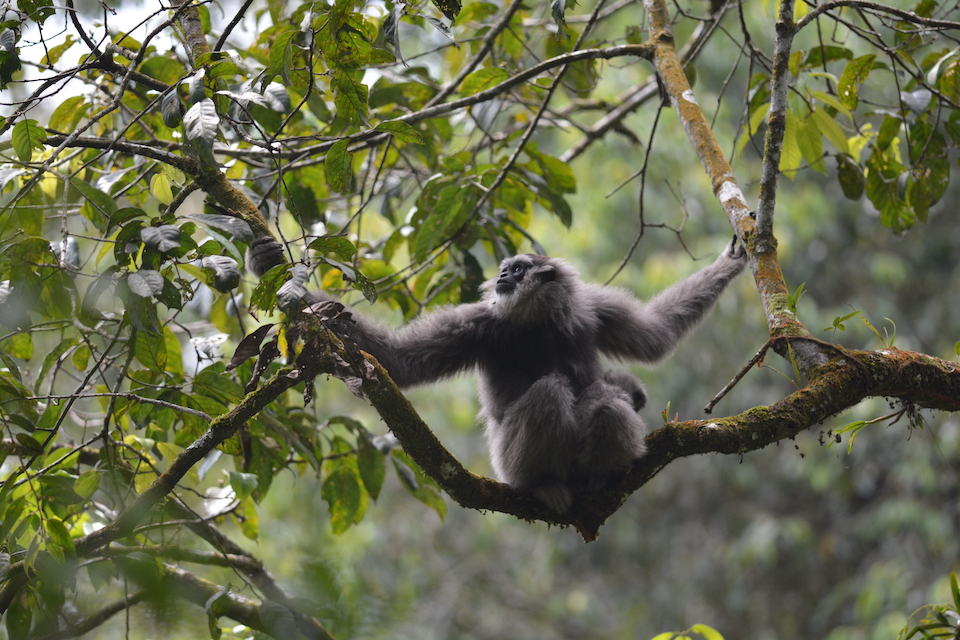
A Javan gibbon.
Rahayu’s advice for aspiring conservationists
Conservation isn’t just data collection or forest work, says Rahayu. It also means office time and building relationships with stakeholders. It’s always about networking,” she explains.
Key skills are communication and adaptability. Different approaches are required for policymakers, communities, and private partners.“It’s about how you can wear different hats.”
Persistence is vital. The work is often underpaid with no quick rewards, but impact “can be seen by future generations,” she says.
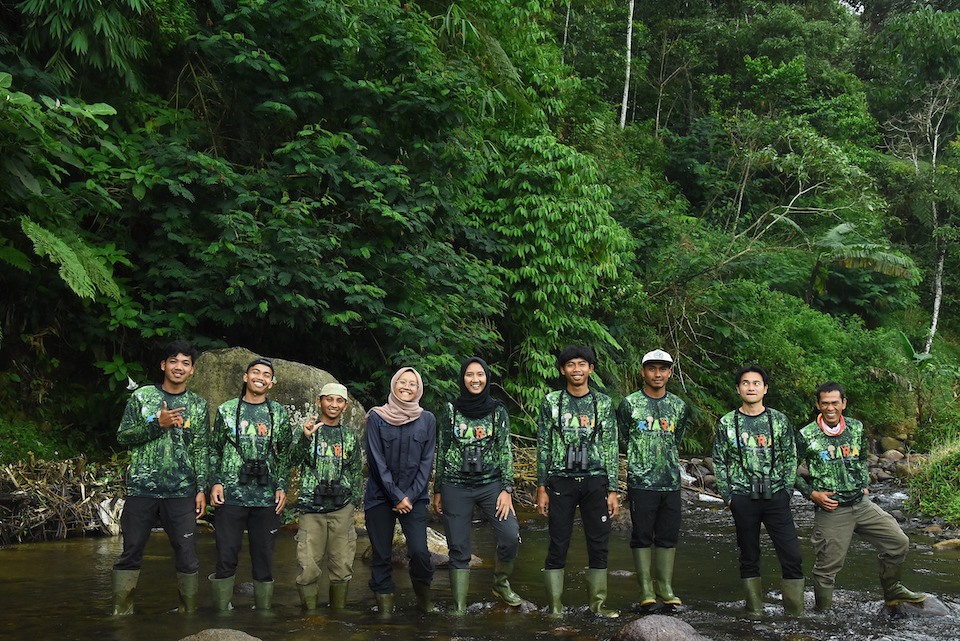
Rahayu and her team at KIARA.
Voices of the forest
When discussing her proudest moments, Rahayu highlights the achievements of her team at KIARA, rather than her own. “They will be the ones becoming agents of change,” she says, “I’m really proud of them.”
That pride shines bright when she talks about Muhammad Nur, a field coordinator and education facilitator at KIARA, whom she describes as “the perfect role model.” He recently won the Education Conservation Commitment Award from the International Primatological Society.
Rahayu is clear that her work would not be possible without the people working alongside her. Just as the Javan gibbons rely on the strength of their group, conservation depends on collaboration. Only then can the captivating song of the Javan gibbon continue to echo through the forest.
“I cannot do it alone,” she says, “the support of my team is everything.”
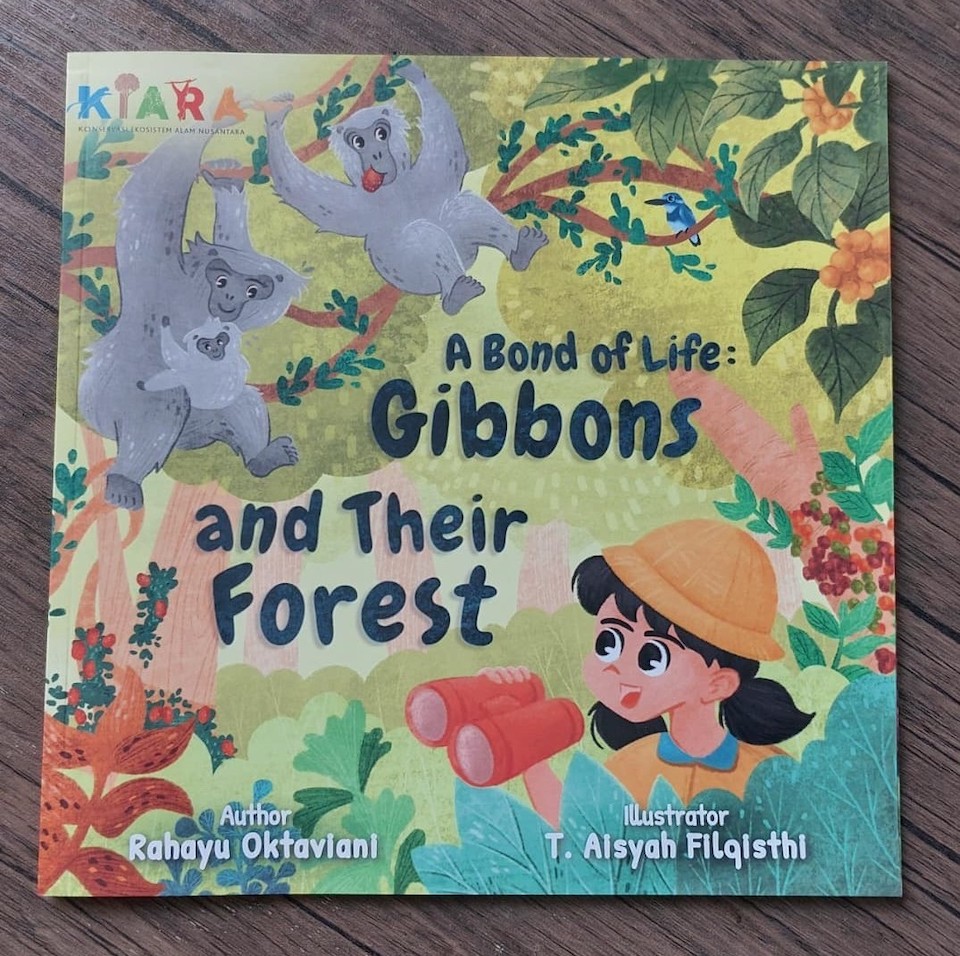
KIARA’s storybook on Javan gibbons.
Explore your path:
Discover more about KIARA and the vital work Rahayu and her team do to protect Javan gibbons by visiting their website, where you can also check out their merchandise.
Learn more about Ambu Halimun, the women’s group creating eco-print clothing in Java, on their Instagram.
Check out the story behind KIARA’s Javan gibbon book launch.
Interested in a career in conservation? Conservation Careers have a range of exciting opportunities and resources to support you. Start with these Ultimate Guides, to get expert Conservation Careers guidance at your fingertips.
Are you interested in running your own conservation organisation, like Rahayu? Check out this Organisational Manager role profile, or explore all the Key Conservation Roles.
Author profile | Emily Pickett
 Emily is a marketing graduate and a conservation volunteer with a lifelong passion for wildlife and the natural world. After working on a nature reserve and in environmental education, she now combines her love of conservation and writing to inspire others to connect with nature and take action to protect it.