
Breaking into Marine Conservation: Career Advice From a Marine Biologist (With or Without a Degree)
The world of marine conservation often looks glamorous on screen, but the reality is very different. “In documentaries, they show Earth as a pristine Eden” explains marine biologist Jeethvendra Kirishnamoorthie. “But in reality, when you visit these areas, you see a lot of trash.”
“What we see on TV is just the 1%, the cool stuff.”
Having worked for years as a marine biologist in Malaysia and Singapore, including seven years studying sea turtles on Pom Pom Island, Jeethvendra understands how easy it is for graduates and career switchers to feel stuck. Drawing on his experience, he shares guidance on navigating a career in marine conservation, degree or not.
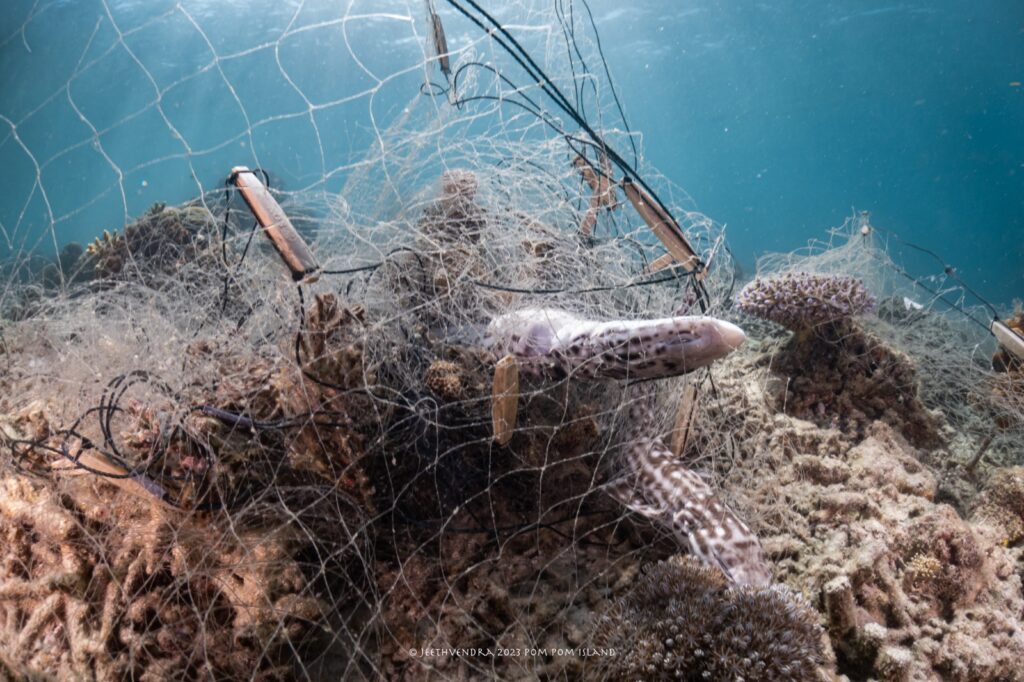
Several coral catsharks lie trapped and dead in a fishing net stretched across a reef crest in Semporna, Sabah.
Navigating Early-Career Challenges
Universities produce marine scientists every year, but marine conservation is a small, saturated field with limited roles and low turnover. Graduates may struggle to find work, while those without degrees often feel unsure of the best route. Volunteering can provide experience and “many conservation projects rely heavily on volunteers,” explains Jeethvendra, but most programmes are pay-to-volunteer which not everyone can afford.
With limited options available, some graduates remain in academia or accept low-paid roles, which can be discouraging. “You feel like your work is not being taken seriously,” Jeethvendra shares, “and if it’s not being taken seriously then you won’t be producing serious outcomes.”
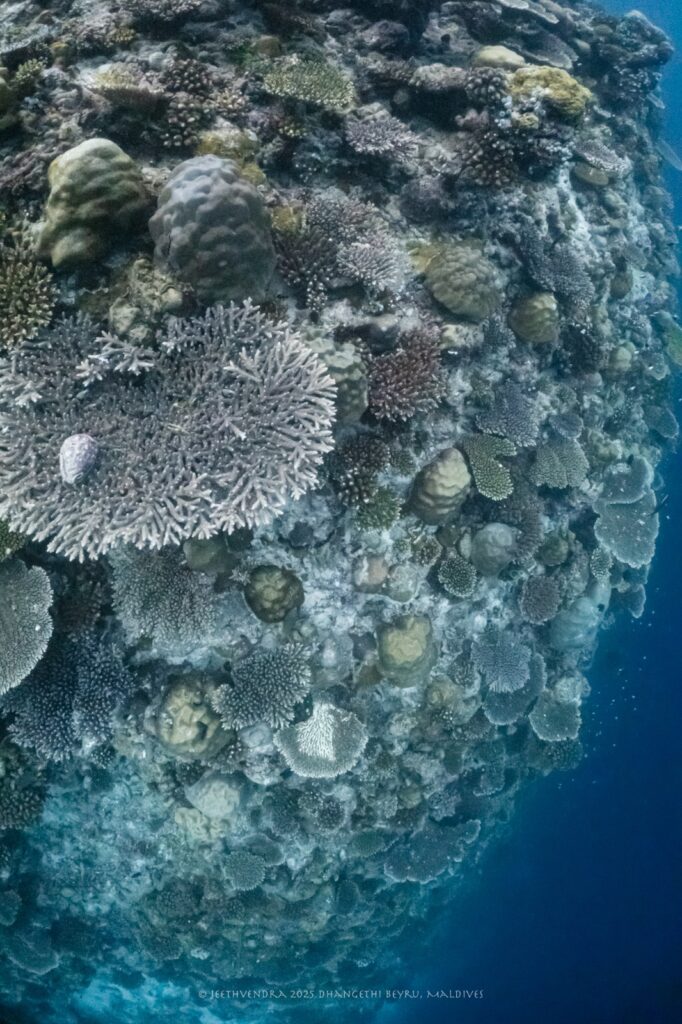
A reef drop-off teeming with coral life and reef-associated fishes, a quiet promise that pristine worlds still exist.
To succeed, degree or not, Jeethvendra suggests building skills and creating opportunities where none exist. “If there’s a point where there’s no opportunities out there for me then it’s an opportunity for me to create opportunities,” he says. Starting a project often requires business knowledge, but taking initiative can open doors. “Nothing’s ever easy,” he adds.
Rather than launching a full conversation-focused dive centre, Jeethvendra advises starting small, such as organising a beach clean and sharing it on social media. “Once things gain traction, you can organise group events or invite like-minded people to join you,” he says, adding that it’s also a great way to build community.
Those with the resources could expand their efforts into a small conservation project or registered charity. For anyone feeling overwhelmed, Jeethvendra stresses that starting somewhere is what matters.
“Whatever path you choose, you’ll need to put in the effort, but the outcome is always rewarding.”
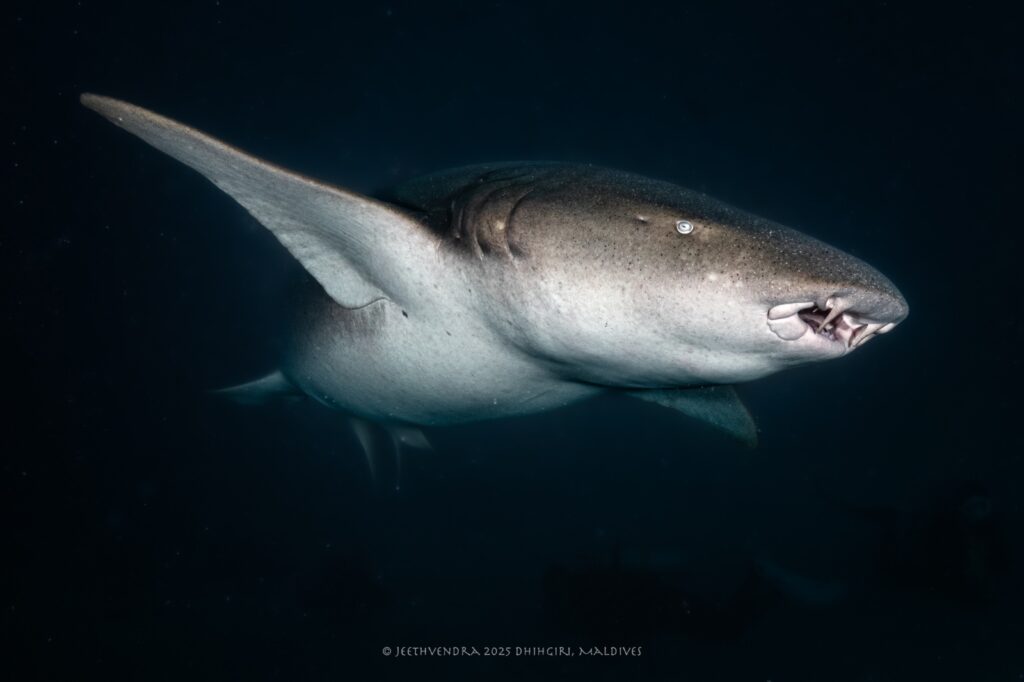
A nurse shark isolated from its surroundings using a high shutter speed, turning the scene into a blackwater-style portrait where nothing exists but the subject.
Gaining Skills and Standing Out
To secure work, some graduates may need to accept roles outside of science, such as a diving instructor. A role that keeps you close to the ocean but can make you drift away from a science career. Others take low-paying roles or pay to volunteer, hoping these experiences lead to better opportunities. Jeethvendra sees these paths as necessary sacrifices to build skills and when looking at options, he suggests weighing up the costs and benefits:
Monetary benefits – the role may not be ideal, but the pay covers basic needs.
Skills and experience benefits – the pay may be low, but the skills gained are invaluable.
Lifestyle benefits – it’s a good location and the work is enjoyable, which is important.
Progress benefits – the role isn’t ideal / the pay is bad but it is clearly leading toward better opportunities.
University learning is often “very surface level,” Jeethvendra says, and mainly teaches people how to seek information. True learning comes from experience and self-learning. Online courses can help you stand out, with skills like statistics being particularly valuable across scientific fields.
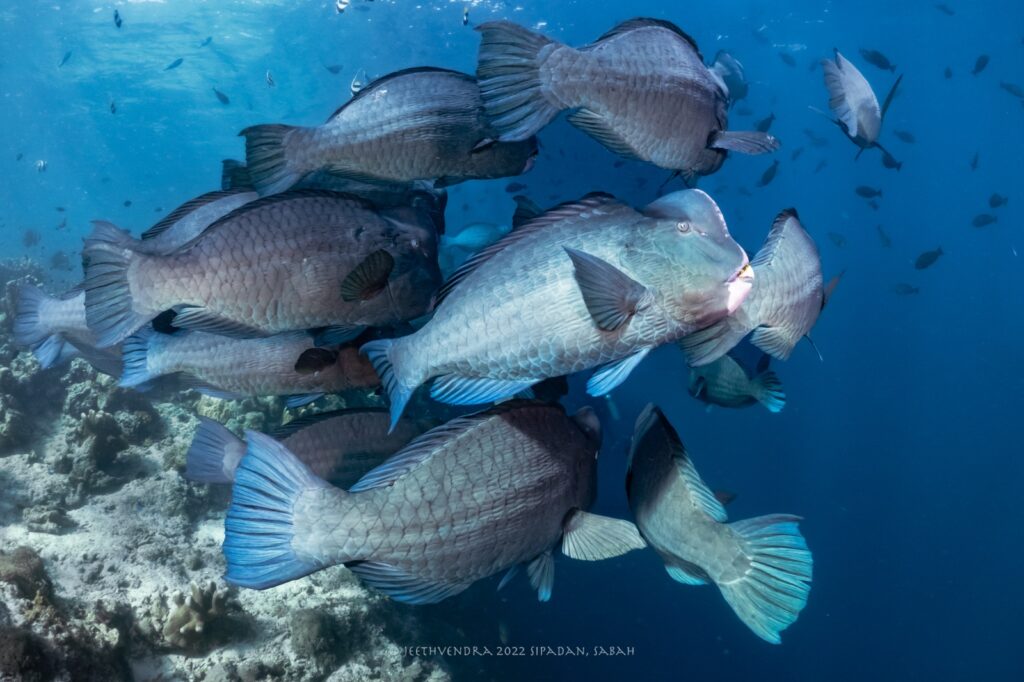
A group of bumphead parrotfish cruising over the reef’s edge at one of the world’s most renowned dive sites, Sipadan Island.
Networking and Experience
Alongside skill-building, networking and experience are essential in marine conservation. Jeethvendra recommends attending scientific conferences, such as the International Sea Turtle Symposium, the International Conference for Conservation Biology, and the International Marine Conservation Congress. Conferences deepen knowledge, connect you with like-minded people, and help clarify career direction by exposing you to new ideas and pathways.
Internships also provide valuable experience, though many favour candidates with marine science degrees. However, Jeethvendra believes opportunities still exist without a degree if you show genuine effort. “Sending a heartfelt message explaining why you believe you would be a great fit can go a long way,” he says, particularly when supported by relevant volunteering experience.
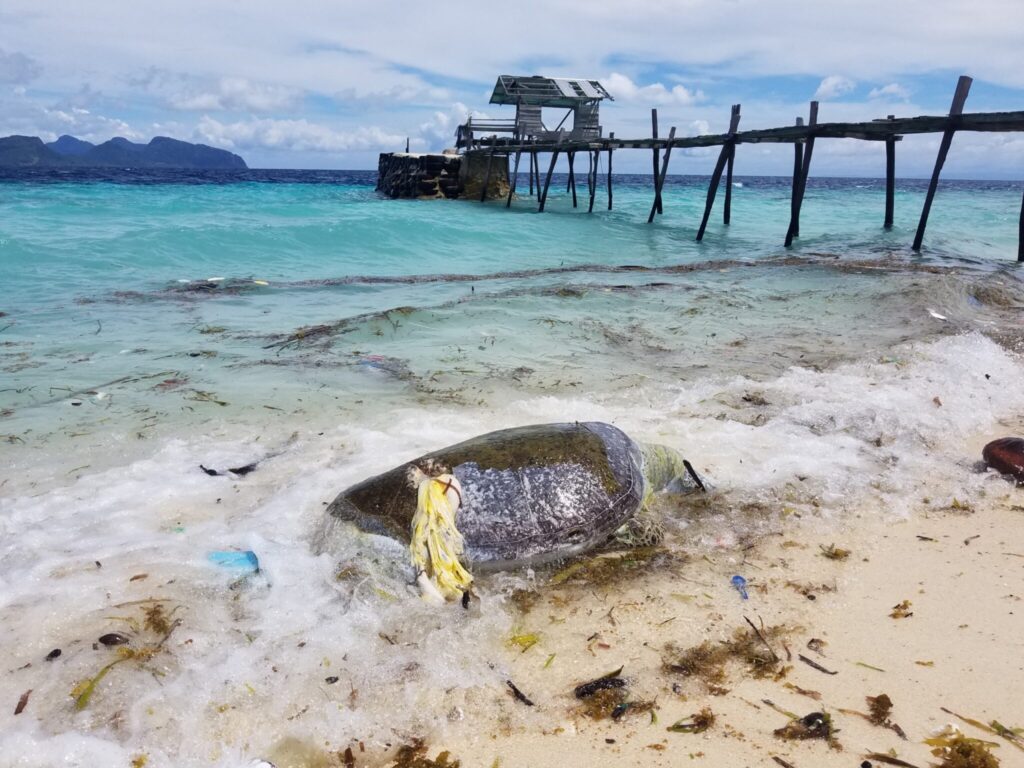
A sad encounter with a dead green sea turtle washed ashore on Pom Pom Island, Semporna, Sabah. The cause of death was most likely illegal dynamite fishing, which remains rampant in the region.
Beyond Biology: Diverse Paths in Conservation
Marine conservation extends far beyond biology. Jeethvendra highlights the growing need for professionals in engineering, finance, marketing, and software development, as organisations increasingly rely on technical and operational experience.
Transferable skills create opportunities, and career switchers bring fresh perspectives, for example, one of Jeethvendra’s colleagues, originally an engineer, is now transitioning into ecology. Despite common perceptions, “diving is a really small part of marine biology,” explains Jeethvendra.
For those with non-traditional degrees, Jeethvendra’s message is clear: conservation needs diverse skills, and different perspectives are often exactly what’s missing.
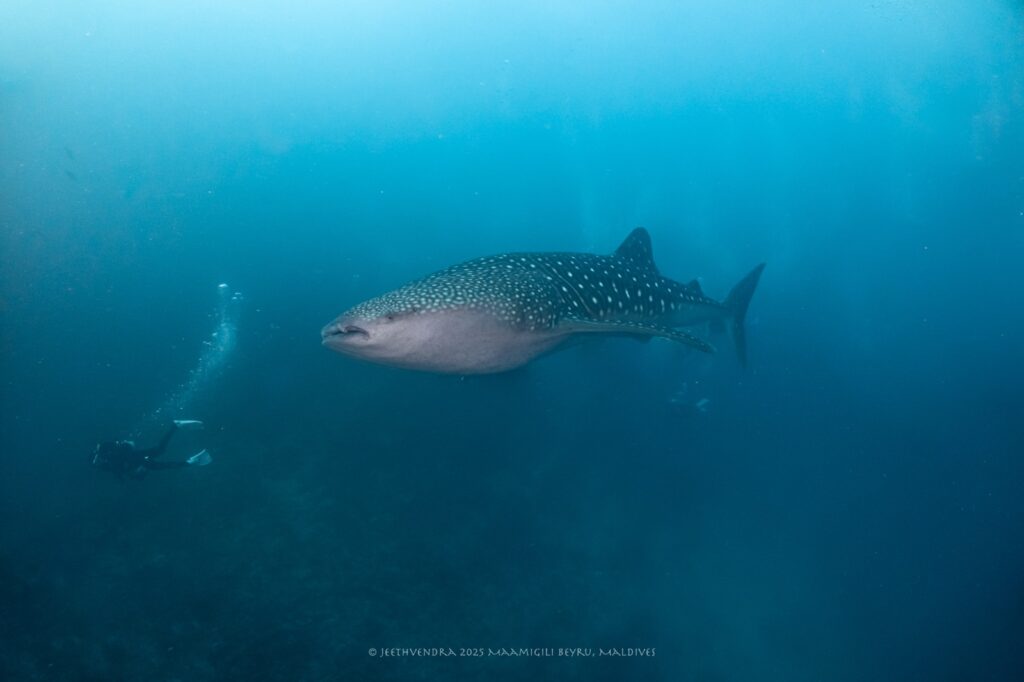
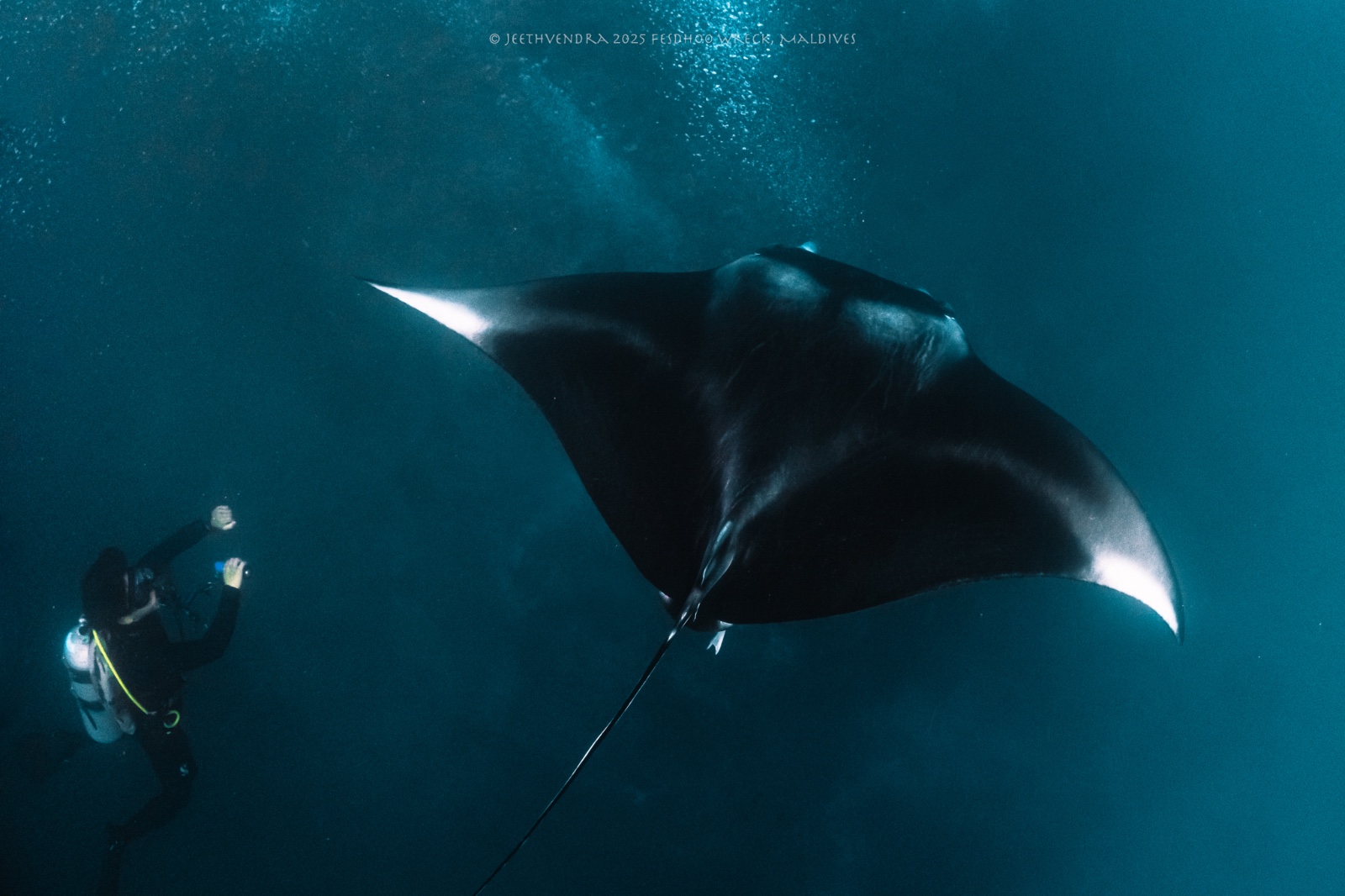
The world’s largest fish, an approximately 8-metre-long whale shark with a visible feeding bulge, swims gently alongside a diver before disappearing into the depths.
Beyond a Degree: Practical Contributions in Conservation
Jeethvendra believes conservation is for everyone.“It doesn’t matter whether you’re doing small things at home like switching off lights to save electricity or reusing water,” he says, “Small things can go a long way in spreading awareness.” Experience in field-based marine conservation is possible without committing to a four-year degree.
In his own career, an underwater photography hobby shared online led Jeethvendra to work opportunities on remote islands in Malaysia and the Maldives. Photography requires no formal qualifications, and strong portfolios can be built through volunteering, diving, or collaborating with local projects. “If you can create engaging content, work with current trends, and introduce fresh ideas, you will be in demand,” Jeethvendra says, noting that compelling visuals help draw attention to conservation issues and “win people’s hearts.”
“If you are like me and you just cannot keep your hair dry, diving roles might suit you well,” says Jeethvendra. Certifications such as Divemaster or Instructor require investment, but some projects offer training in exchange for support. Certified divers are a valuable asset who are often needed to coordinate volunteers. There are always opportunities as the diving industry has a high turnover.
“Most importantly show dedication, stay eager to learn, and smile. Sometimes these small things set you apart more than you realise.”
Jeethvendra also highlights overlooked skills, such as cooking. “Many conservation projects operate in remote locations where teams stay together for weeks or months, and having someone who can cook well, especially with vegetarian or vegan options, can be surprisingly valuable,” he explains, jokingly advising to “make sure your cooking skills do not burn the whole place down.”
“Just remember that the reward is rarely monetary, rather it’s the impact you create and the experience you gain.”
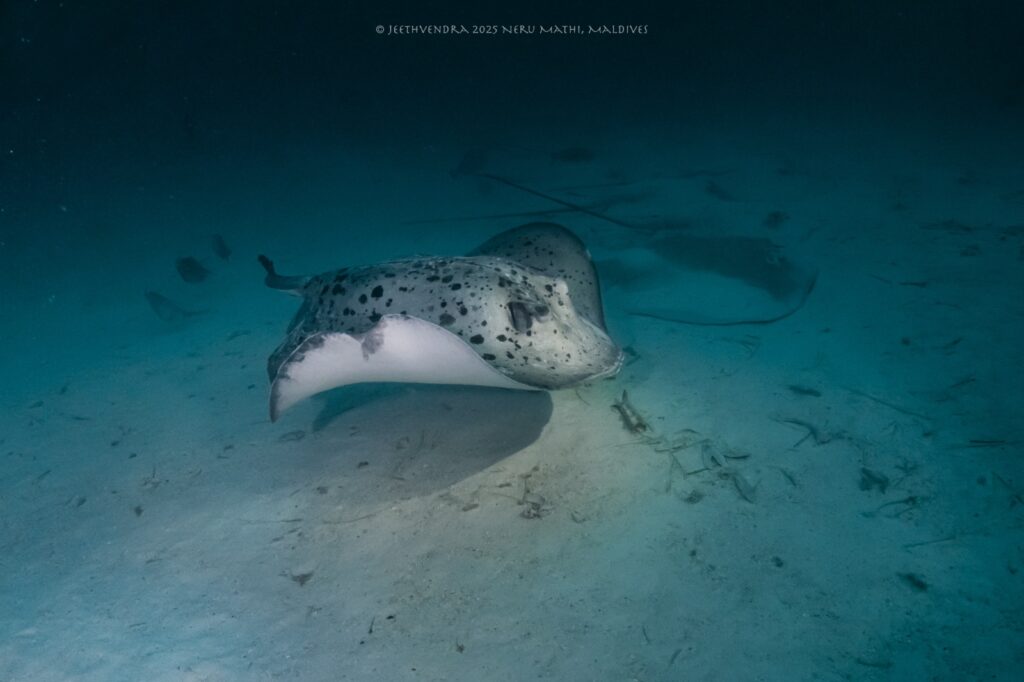
The blotched fantail ray’s unique mottled patterns help it blend into the irregular seabed, lying in wait for unsuspecting prey.
Perspective and Guidance
Breaking into marine conservation is rarely straightforward, and setbacks are inevitable. It’s easy to find yourself disheartened or demotivated but Jeethvendra emphasises the importance of maintaining self-worth and resisting comparisons with others.
“It’s very easy to feel like you’re not worthy, but you’ve got to believe that you are.”
Rather than being discouraged or envious, he encourages gaining perspective by recognising that others face greater challenges. “When we look at others who are not as lucky as we are, we get humbled very quickly.”
In the grand scheme of things, it can feel like you’re not making a difference but Jeethvendra highlights the value of focusing on small, positive changes within your own world. “If you can imagine your world was just a small space,” he says “and you’re trying to make that small space better”. A reminder to focus on what we can control and build up from there.
“If everybody had that mindset, then the world would be a better place. But you’ve just got to do your part.”
Explore Your Path:
If you’d like to see more of Jeethvendra’s work, including his breathtaking underwater photography, you can follow him on Instagram here.
Interested in becoming a marine biologist? Explore this detailed guide to learn more about the path, from degree to fieldwork.
Prefer to focus more on diving and hands-on marine conservation work? Check out this amazing Divemaster and Marine Conservation Apprenticeship in Seychelles, along with other unique opportunities we regularly share on our jobs page.
Author profile | Emily Pickett
 Emily is a marketing graduate and a conservation volunteer with a lifelong passion for wildlife and the natural world. After working on a nature reserve and in environmental education, she now combines her love of conservation and writing to inspire others to connect with nature and take action to protect it.