

Hills Wildlife Sanctuary | Saving Australia’s Wildlife Together
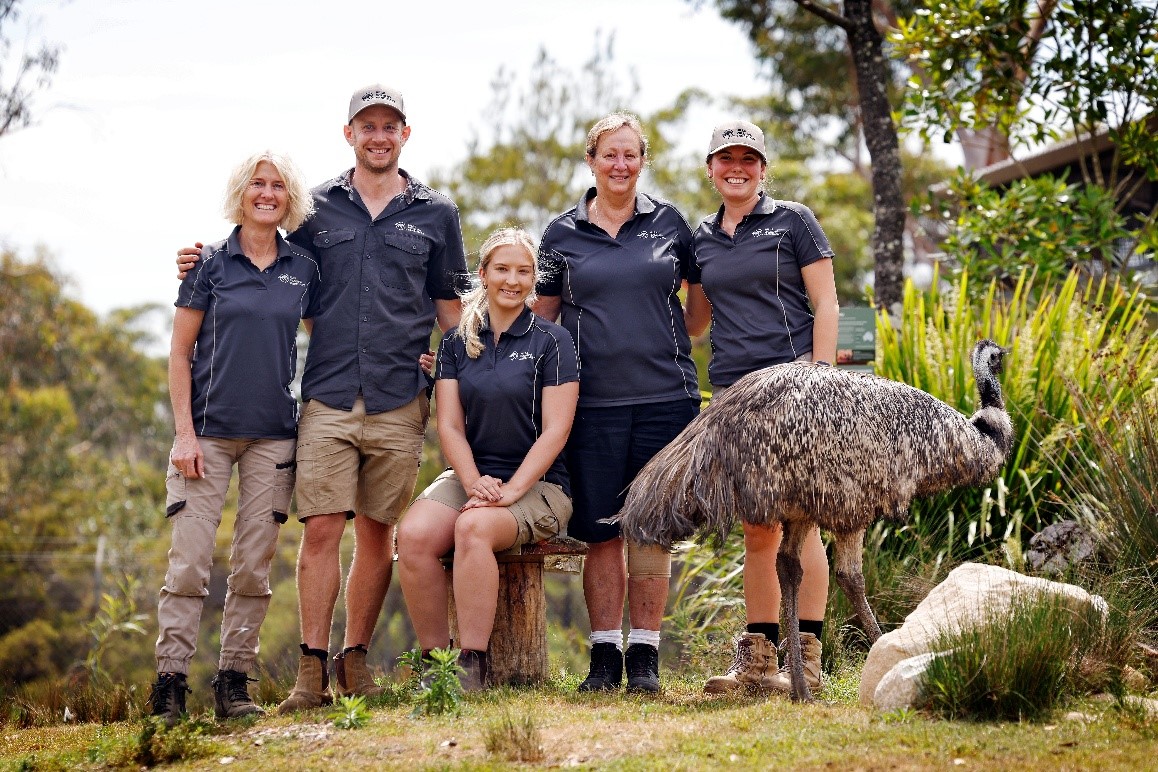
Hills Wildlife Sanctuary is led by Sanctuary Manager and Director Ben Dessen, who is a passionate conservationist, wildlife advocate, author and educator. In this interview, Ben shares insights into his conservation journey and what it’s really like to run a wildlife sanctuary dedicated to rescuing and rehabilitating native Australian animals.
The sanctuary sits on 35 acres of Australian bushland next to the Berowra Valley National Park in New South Wales, Australia. Hills Wildlife Sanctuary is dedicated to the rescue, rehabilitation and care of native Australian wildlife.
Through this interview you can tell Ben and the team are very passionate and driven in what they do, and it was such a pleasure to chat together.
Could you tell me a little bit about Hills Wildlife Sanctuary and why you chose to work in conservation?
The sanctuary was founded in 1977 and had been operating for nearly 50 years. I became involved about 12 years ago. The previous directors had run out of funding and were sadly facing the possibility of closing the sanctuary. The opportunity for me to get involved and try to revive the sanctuary came up and I jumped at it! It was an amazing opportunity to be involved with something that has a long history of incredible work. My brother and I lived in the caretakers cottage as wildlife carers, where I stayed on site for 9 years.
One of the ways we generate funds for the sanctuary is to invite corporate teams from the city to take part in team-building or wellness days. On this day, they can use our education centre for a meeting or training day and then we will take them out on a tour.
One of the sponsors of Hills Wildlife Sanctuary is IFAW (International Fund for Animal Welfare), who have come out to help volunteer and have been a supporter for many years. Other sponsors include Servcorp and AtGO (Allowed To Grow Old Foundation).
Why did I choose conservation?
Growing up I’ve always been incredibly passionate about animals. I was that kid that was bringing Huntsman spiders home from school in my lunch box. As I got older, I started to really appreciate animals and how amazing they are. I also realised the serious issues that they face and that our wildlife needs our help now, more than ever before. I have dedicated my life to conservation and running the sanctuary is a dream come true.
Whether it’s large spiders in Australia to hedgehogs and foxes in the UK, a passion for wildlife and conservation can start at any age!
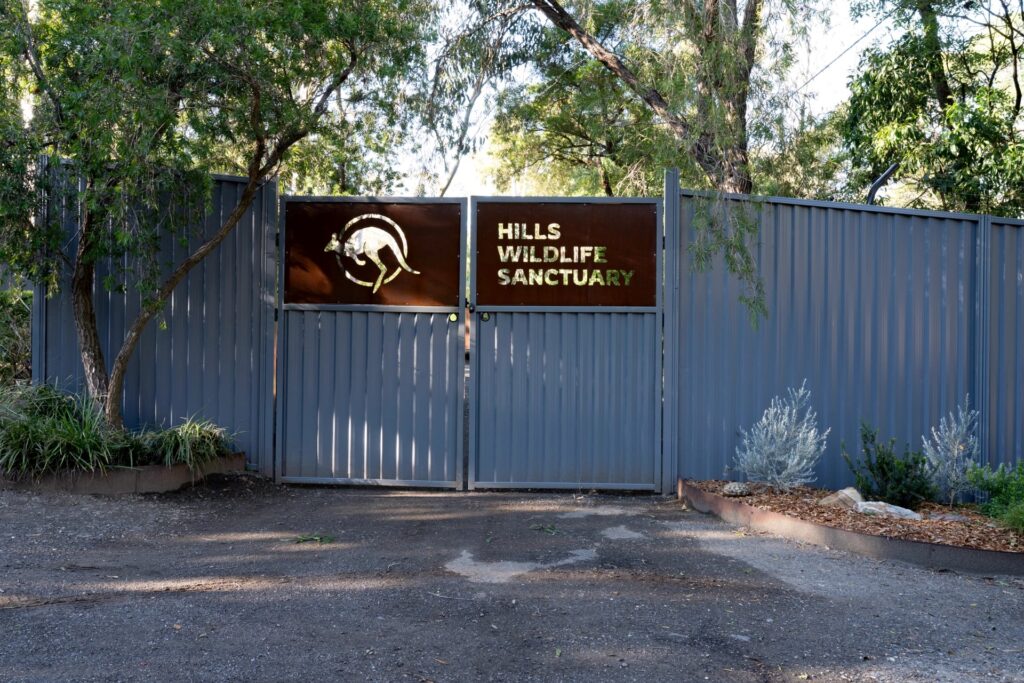
Hills Wildlife Sanctuary Front Gates. Photo by Ben Dessen.
What do you do day to day as CEO and Director?
As we are a small non-profit organisation, I’m involved in almost every aspect of the organisation. I’ll be on the ground physically working with the animals, helping to triage injured patients that come in, and training and coaching our amazing team of volunteers and staff. I also work on administration and compliance, and most importantly in raising funds and bringing in new sponsors. This helps to keep everything running at the sanctuary and moving forward.
We have such limited resources at this stage as we’re still trying to build something from the ground up. It’s a lot of hard work, long hours, and blood, sweat and tears.
Ben helps with other aspects of the sanctuary, including:
- Digging trenches
- Designing and building enclosures
- Pitches to potential sponsors
- Grant Applications
- Fundraising
- Social Media
There’s a huge amount of work to do at this early stage, but hopefully, soon I can bring in some support to employ staff who can help out with these tasks as well.
Typically, the CEO role is the bigger picture tasks, focusing on strategy and executing the long term vision. We’re also in the startup stage, so I must wear many hats to build the sanctuary up.
During the 2020 Black Summer bushfires, we realised we had to move fast, so that we could help many more animals in need during future natural disasters. We realised we had such an amazing opportunity with this 35-acre sanctuary to turn it into something special. I volunteered on my days off and weekends at the sanctuary, but I wanted to commit more to my passion, so I quit my full-time day job as a retail manager in pet care.
Leaving felt risky and daunting. From a secure income to the complete unknown, with no income. In the last year and a half, we’ve had huge amounts of support from the businesses, corporations, sponsorships, the community and many private donors and philanthropists who have believed in us and invested in our vision. We will be forever grateful for the many people who have believed in us.
We are working closely with the government and hoping that there will be some significant support for the wildlife rescue and rehabilitation sector soon. A lot of the skills I use today I learnt from my previous employment, university degree and decades of volunteering. I’m applying this life learnt knowledge to conservation and running a charity now.
What types of roles and skills do people have on your team?
We have a team of 40+ amazing volunteers and staff that have a diverse range of skills. The knowledge is predominantly animal husbandry, animal welfare related expertise. Our team must have a minimum of Certificate II in Animal Care to get involved and hands on at the sanctuary. Other team members are studying a Certificate III in Wildlife and Exhibited Animal Care, and many have university degrees in conservation, ecology, and veterinary medicine and nursing.
Our entire team are very passionate about animals and want to make a difference. Other roles at the sanctuary include: zookeeping, vet nurses, vets, rescue and rehabilitation, photography, social media, graphic designers, bookkeepers and trades people like plumbers, electricians, landscaping and horticulture.
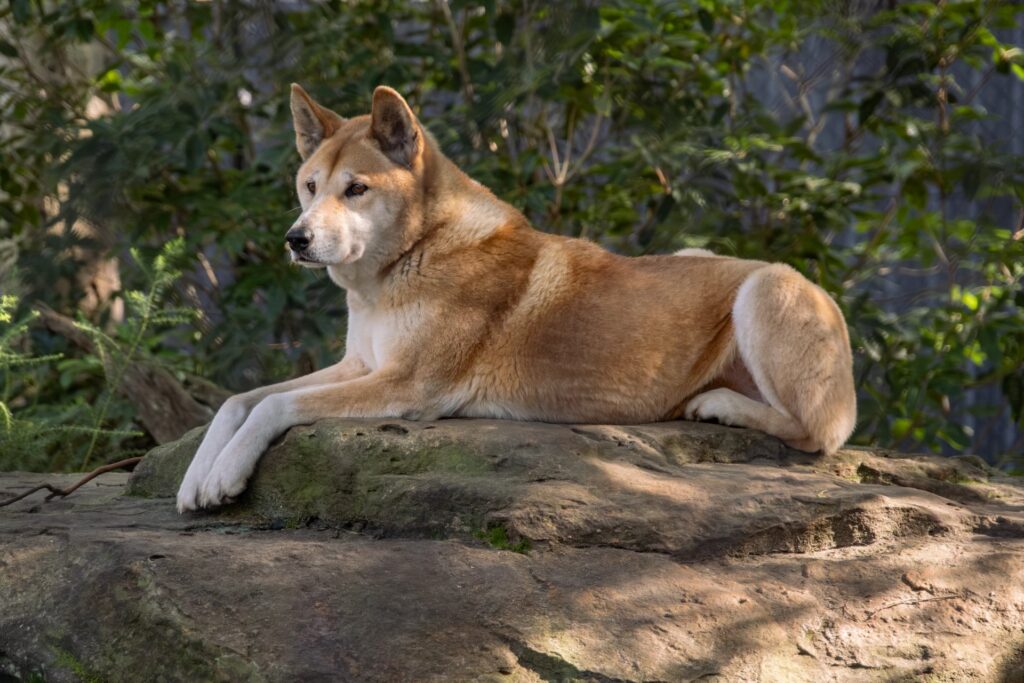
Male Dingo Nioka in the Sanctuary’s care. Photo by Jess Callaghan.
As a wildlife sanctuary that is mainly volunteer based, what is your recruitment process like and who are you looking for?
Whether it’s a volunteer position or a paid position, we treat all roles the same. Many people want to work with wildlife and volunteer, and paid positions can be very competitive. If you’re able to, volunteering helps you gain the skills and experience to lead into paid jobs. Most staff working with wildlife and in conservation facilities started as volunteers, including myself.
Writing a heartfelt email, resume and cover letter that clearly demonstrate your passion and career goals can help you stand out. These are the kinds of people we like to give opportunities to.
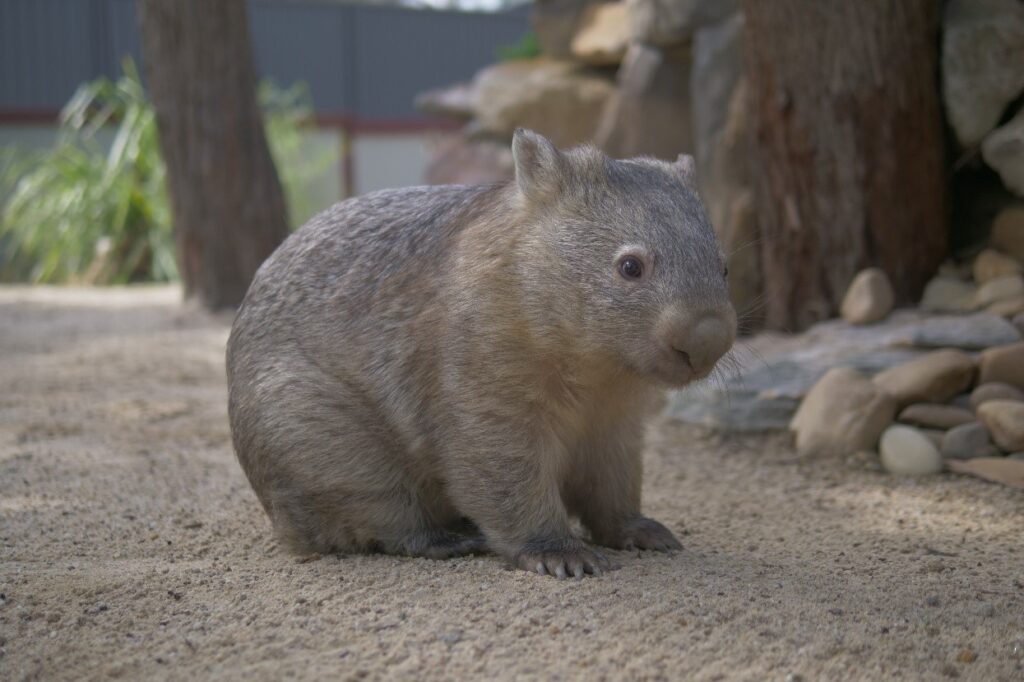
Wendy the Bare-nosed Wombat. Photo by Sam Dessen.
So what’s the best part of your job?
One of the best parts of my job is seeing animals thrive and having a second chance at life. Some of our animals come from the illegal wildlife trade, confiscations through the RSPCA and National Parks and Wildlife Services.
Additionally, what also makes this job worthwhile is working with such compassionate and dedicated people. It takes a special sort of person to dedicate your life to helping animals. Places like our sanctuary attract the most amazing, inspiring people from all walks of life. From volunteering on the ground to people who donate, you see such selfless acts of kindness, and it gives me hope for the future of wildlife and humanity.
What is the most challenging part of your role?
The biggest challenge is ensuring that funding continues to come in so the sanctuary can keep operating. The wildlife rescue and rehabilitation sector currently receives very little government funding or support. In NSW most wildlife rescue groups are charities run entirely by volunteers, and funds solely through donations and fundraising.
Every dollar we raise goes towards our rapidly increasing operational costs including animal food, veterinary costs, electricity, water, and insurance. We must raise that money, so we’re always thinking of the next fundraiser or potential sponsor to approach. All our work starts or stops with the funding we get.
I’ve been involved in a statewide review of the wildlife sector talking working closely with the government, to try and bring about some widespread support and funding that this sector desperately needs. It has been such a rewarding process, and the NSW Government is already making changes.
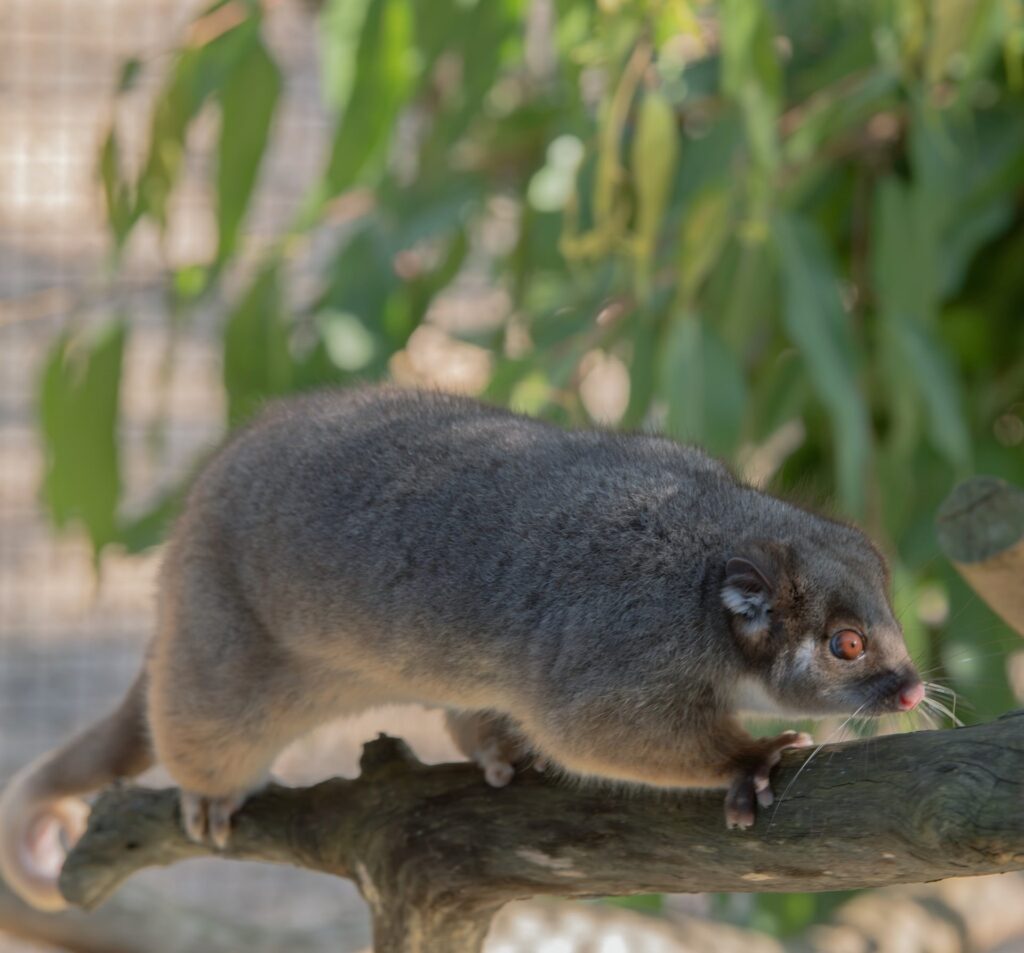
Juniper the male ring-tailed possum. Photo by Macintosh Meagan.
What are your career highlights and what are you most proud of so far?
Some of my greatest career highlights in my life would be the work we’ve done at the sanctuary in the last five years. We have really transformed the sanctuary and facilities into something world class. This has only been possible through backbreaking hard work through the incredible support from the community, and of course our dedicated volunteer team.
Sometimes we have to remind ourselves to stop and look around at all the amazing work we have done, even though there’s always more to do, we need to celebrate the small wins.
My whole job is fixing problems and issues as they arise, so you have to be resilient as working in conservation is hard work. We’re always up against large challenges, but we just keep being patient and moving forward.
If you want to work in conservation, it’s important to have a similar mindset. Just take one step at a time, start volunteering to gain some relevant experience, enrol in a course, start researching and learning about the species and issues you are passionate about.
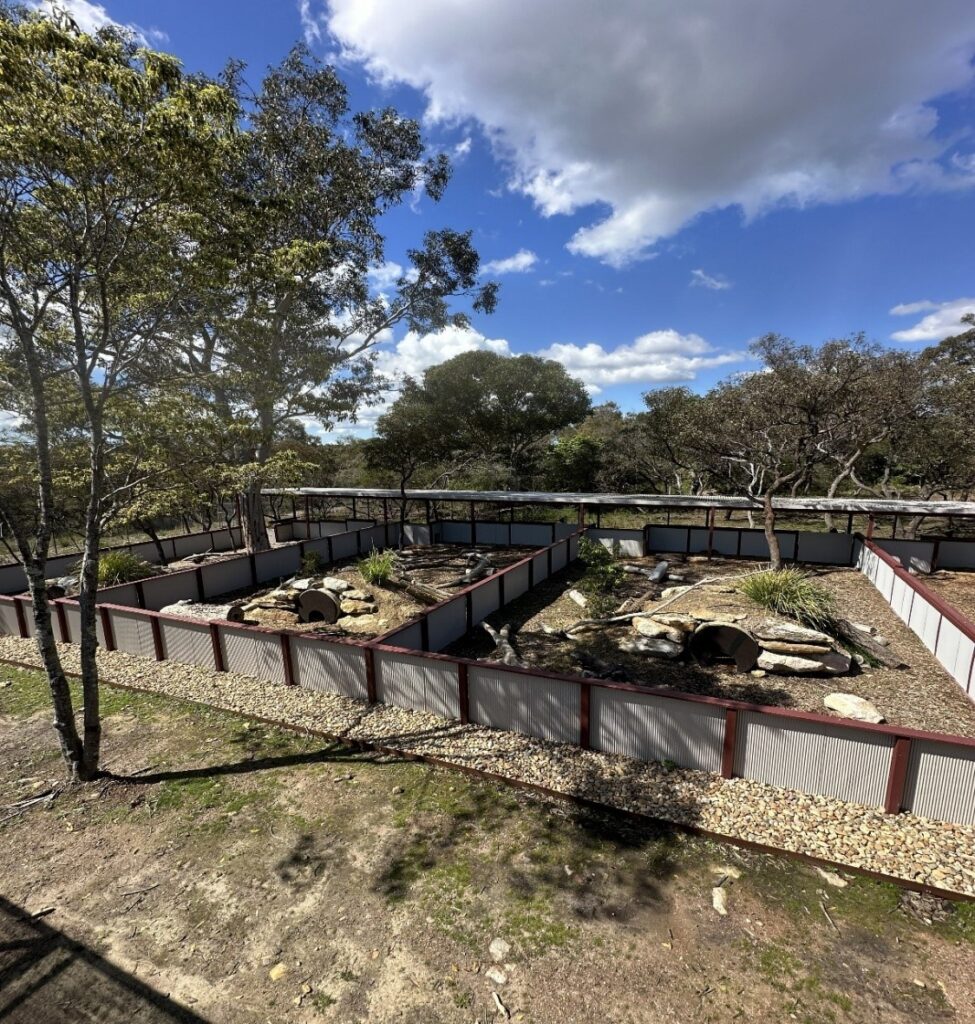
Wombat Rehabilitation Facility at the Hills Wildlife Sanctuary. Photo by Ben Dessen.
What key steps in your conservation career have you taken?
- Studied Biology and Agriculture at school
- Completed a Bachelor of Natural Science, majoring in Animal Science, sub major in Conservation Biology at Western Sydney University
- Volunteer wildlife rescuer and carer with Sydney Wildlife Rescue
- Volunteer at Hills Wildlife Sanctuary as a wildlife carer
- Volunteer at the Australian Reptile Park as a keeper which led to a paid position
- Work Experience at Taronga Zoo working in the Reptile Department
- Casual and full-time work in the animal care industry: Golden Ridge Animal Farm and Kellyville Pets (from a casual working up to general manager position)
Throughout my career I’ve met so many inspiring people, some taking me on as mentors. Every volunteer role I’ve had has given me connections and lead me somewhere new.
If you want to become a wildlife carer like me in NSW, you need to do training and receive your licence at WIRES or Sydney Wildlife Rescue. Theres’s opportunities later to specialise in areas like raising wombat or kangaroo joys, rescuing birds, bats or reptiles. It’s rewarding, and you can adjust the volunteer work around your lifestyle. There are few paid positions as a wildlife carer, but it is great and meaningful work.
What advice would you give wish for someone wishing to follow in your footsteps or work in a similar field?
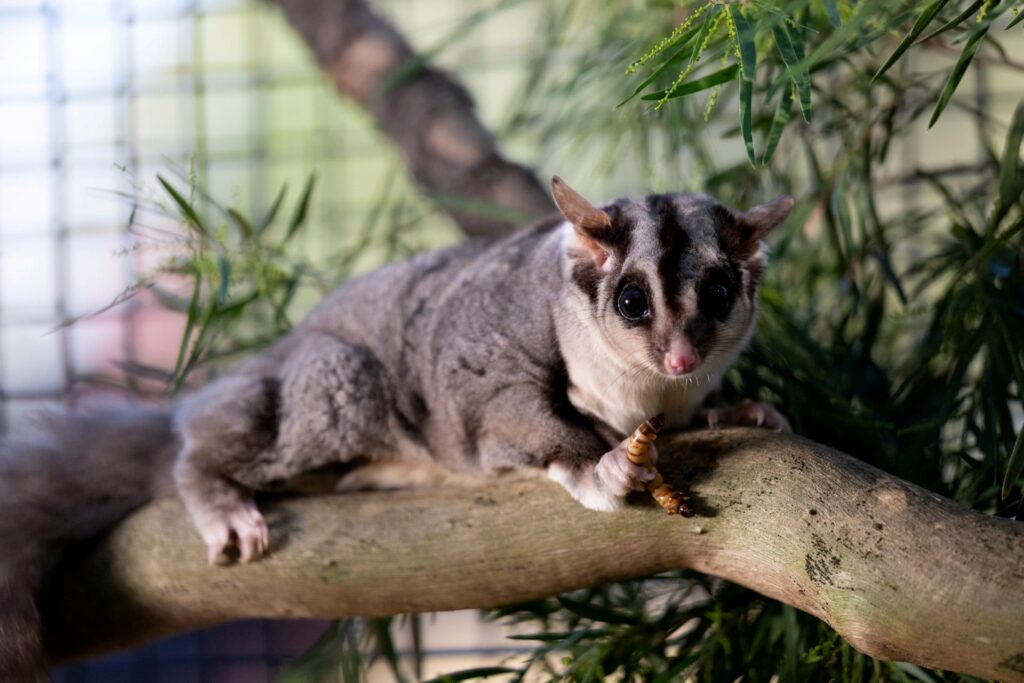
Acacia the Squirrel Glider. Photo by Scott Lawler.
It’s important to have unwavering passion and determination to work in this industry and it can take some time to get to where you want to be. You may not land your dream job straight away, but with persistence and hard work, you can achieve your wildest dreams. So, start now. Start volunteering, enrol in that course and work as hard as you can and you will get there in the end.
It was a pleasure speaking with Ben and learning about the incredible dedication behind Hills Wildlife Sanctuary. An unwavering passion for conservation really creates a lovely community of people!
If you would like to support Ben and the team at Hills Wildlife Sanctuary, you can follow them on their socials:
- Hills Wildlife Sanctuary Website to donate.
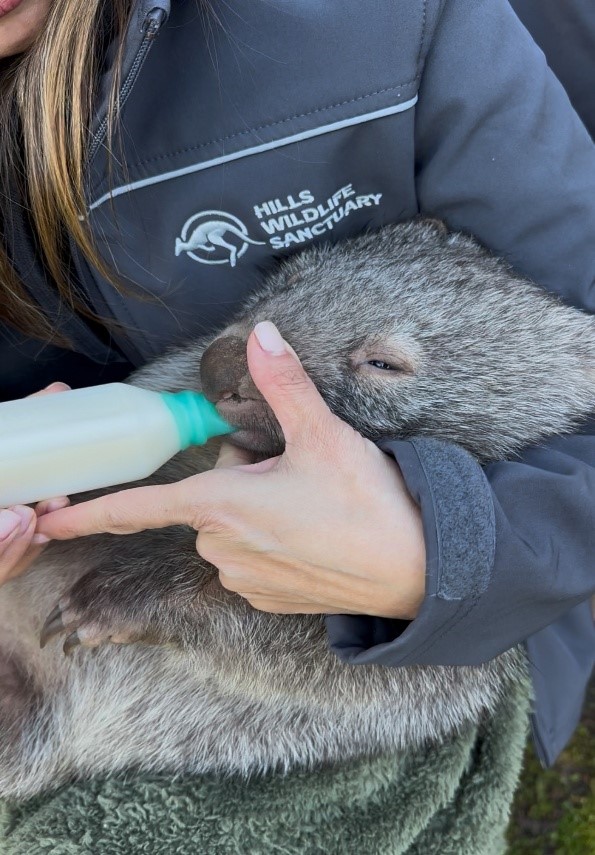
Wombat joey undergoing rehabilitation being fed with a bottle. Photo by Ben Dessen.
Keen to read more about conservation work in Australia? Read our interview with Maggie Muurmans, a lecturer at the University of Queensland and co-founder of the NGO Ocean Connect, or search our Careers Advice Blog for more interviews of conservationists working in Australia.
Want to learn more about a career in conservation? Check out our guide: Key Conservation Roles. or explore other useful Ultimate Guides to working in conservation.
Author Profile | Rosie Dowsett
 Rosie absolutely adores wildlife and is very passionate about conservation and companion animals. She has a Bachelors in Biodiversity and Conservation, with certificates and extensive experience in the Animal Care industry. She loves tea and spending time with her dog and two cats.
Interviews, Animal Welfare, Senior Level, Job Cause, Organisational Manager