How to save the 10,000 animals and plants hurtling fastest towards extinction

World-first assessment of Critically Endangered species maps path to save more than 10,000 animals and plants from extinction
Scientists have outlined the steps world leaders must take to save the world’s most threatened animals and plants from extinction.
In the first ever assessment of its kind for all 10,443 species categorised as Critically Endangered by the International Union for Conservation of Nature (IUCN), the study compiles all conservation knowledge for this fragile group, outlining the regions where species are most likely to be at imminent risk of extinction, what the leading drivers for their declines are, and what actions are needed to restore their numbers, while also highlighting conservation successes.
In the face of the intertwined crises of biodiversity loss and climate change, ‘The status, threats and conservation of Critically Endangered species’, – published today (25 June 2025) in Nature Reviews Biodiversity – highlights how strengthened collaborations and integrating the expertise of local communities into conservation planning, could save more than 10,000 Critically Endangered plant, fungi and animal species from unsustainable human activities which puts them at risk of disappearing forever.
The UN’s Global Biodiversity Framework commits countries to halt and reverse biodiversity loss by 2030. Protecting Critically Endangered species represents a key action to achieve this mission. The roadmap provides vital guidance for decision-makers working towards these global biodiversity goals, in turn helping address the climate crisis by restoring the functioning ecosystems underpinning a healthy planet.
The paper highlights the urgent actions world leaders must take – including safeguarding key habitats for Critically Endangered species, empowering local communities to co-create conservation action that works for both people and nature, and strengthening support for global partnerships working on the ground to deliver conservation action. This includes creating national-level networks to support meeting the goals of the Global Biodiversity Framework, ensuring that community leaders and Indigenous Peoples are involved in conservation planning, and investing in training to increase capacity to protect the irreplaceable habitats that provide a home to the last remaining populations of one or more Critically Endangered species.
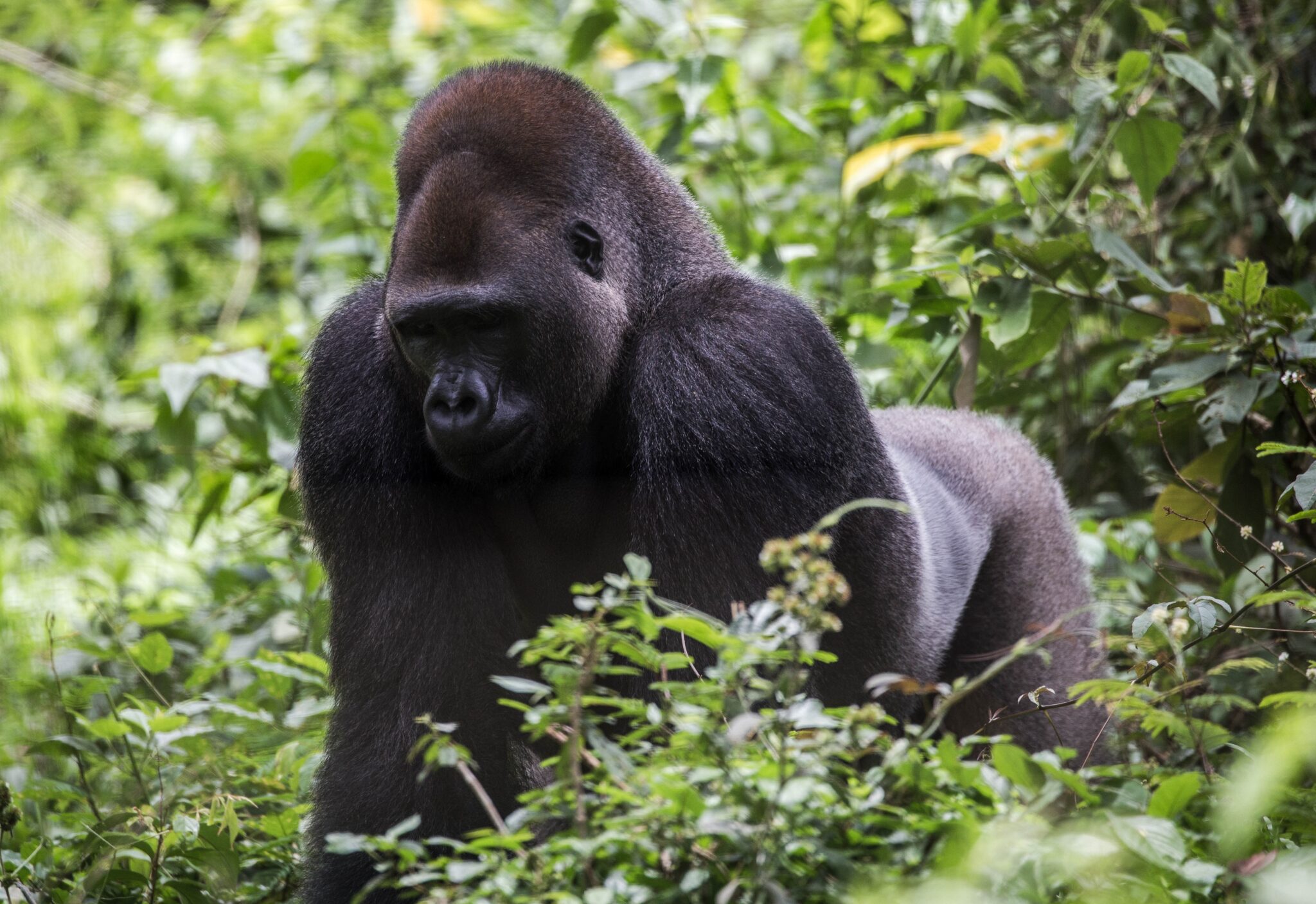
Dr Rikki Gumbs, Research Fellow at ZSL’s Institute of Zoology and co-author of the study said: “From gorillas in the rainforests of West Africa, to two-centimetre-long snails on volcanic islands, over 10,000 of the animals and plants that also call this planet home could be gone forever if world leaders don’t urgently scale up the response to the biodiversity and climate crises.
“These are the species most at risk of disappearing in the blink of the eye, with 15% of them estimated to have fewer than 50 mature individuals left in the wild – so targeted action to save them would make a huge impact in addressing human-caused extinctions and restoring ecosystems.
“The good news is that it’s within our power as humans to do so. It’s our unsustainable behaviour driving these devastating declines – whether through deforestation or the introduction of invasive species and diseases – so we can turn things around and bring these species back from the brink.”
The IUCN Red List of Threatened Species™ assesses the extinction risk of species across the globe, and is a powerful tool for those working to safeguard nature and prevent the collapse of the ecosystems that humans rely on. Of the 47,187 species that have been globally assessed as threatened with extinction so far, the 10,443 which are classified as Critically Endangered are the species most at risk of being lost from the wild forever.
The review found that almost 80% of these species are threatened primarily by habitat loss, but other threats such as illegal wildlife trade, climate change and the introduction of invasive species and diseases such as the chytrid fungus – which is decimating amphibian populations world-wide – also drive the finding that at least 56% of all Critically Endangered species are declining in numbers.
This finding comes less than a year after ZSL’s Living Planet Index – the world’s most comprehensive measure of vertebrate population trends across the globe – identified that monitored wildlife populations of mammals, birds, amphibians, reptiles and fish have decreased on average by 73% between 1970 and 2020, highlighting the devastating scale of the biodiversity crisis across all life on Earth.
Dr Thomas Lacher, lead author of the paper and researcher at Texas A&M University said “The planet faces multiple threats to biodiversity and the loss of ecosystem function. In this current crisis, the Critically Endangered species of the World are those at greatest risk. These 10,000 plus species, distributed across all major taxa, are in urgent need of conservation action to prevent their extinction. Their loss will bring us closer to the tipping points that will endanger critical ecosystem processes. We need to increase our investment in their conservation and use all available tools, actions, and strategies to ensure their survival.”
The estimated cost for downlisting all 10,443 Critically Endangered species to Endangered would be $1-2 billion a year – an investment which requires global mobilisation and collaboration to achieve. The protection of just one Critically Endangered species, the African forest elephant, is predicted to be worth $20.8 billion in the next 10 years alone through increasing the carbon-capturing capacity of their rainforest homes. By trampling smaller trees and dispersing seeds, elephants promote an increased density of larger trees, which are able to remove more climate-change causing carbon dioxide from the atmosphere than their smaller counterparts.
Conservation action is already taking place to protect many of these species, and the team behind the paper hope this roadmap will help further efforts.
Rikki added: “We know nature is in crisis, and with it, life on Earth as we know it. We also know conservation works. From rebounding tiger populations in India and Nepal, to returning Extinct in the Wild antelope to the grasslands in Chad, ZSL has continually shown that with the right support we can completely redirect the path these species are on. We can turn potential tragedies into inspirational success stories, and that’s exactly why we’ve mapped out where we need to see urgent global investment of time and resources in order to solve this crisis and build a brighter future for all life on Earth.”
The paper was written by researchers from ZSL, Texas A&M University, Birdlife International, University of Cambridge, Re:Wild, Universidad de Antioquia, Biodiversity Assessment and Monitoring Directorate of the South African National Biodiversity Institute and IUCN.
ZSL believes nature can recover, and that conservation is most effective when driven by science. We call for science to guide all global decisions on environment and biodiversity and build a healthier future for wildlife, people and the planet. Find out more and support ZSL’s world-leading, collaborative science and conservation work at www.zsl.org