Podcast | Is Coaching Right for You? With Kristi Foster of Conservation Careers

Have you ever felt stuck, burnt out, or unsure of your next move in your career?
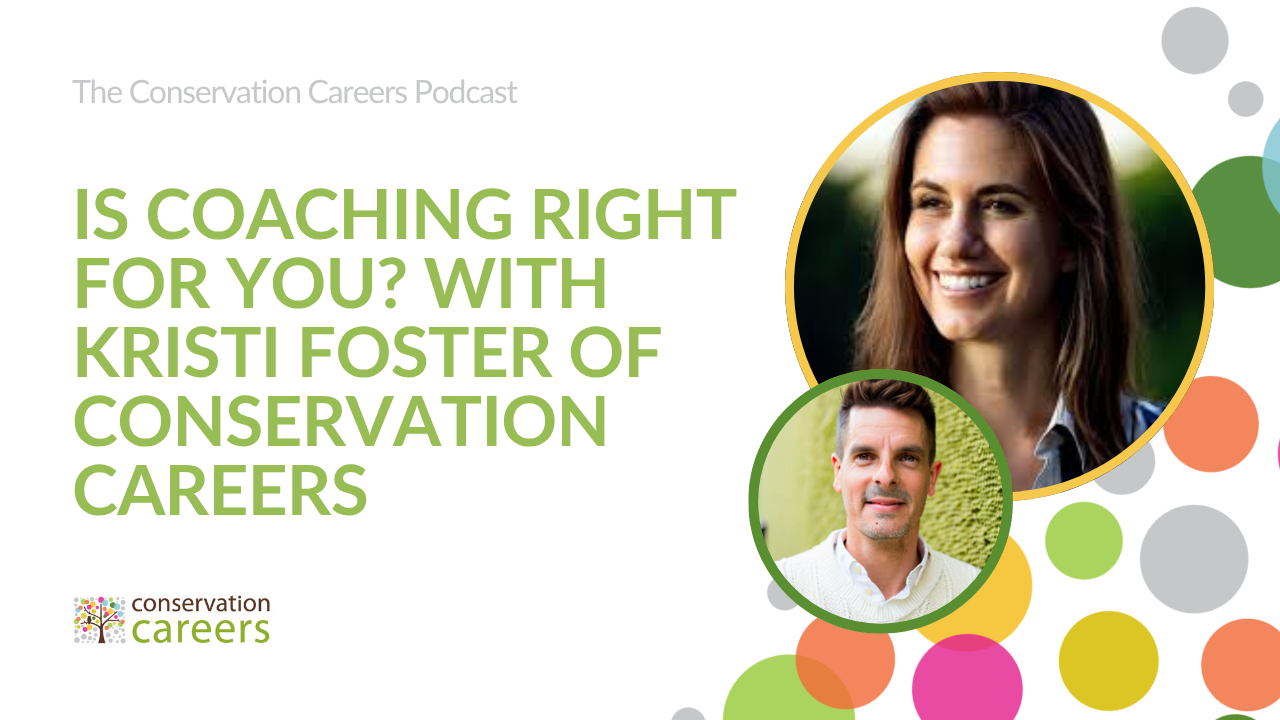
In this episode we’re joined by Kristi Foster, Head of Programmes at Conservation Careers and an experienced careers coach. Kristi has been a guiding force for hundreds of conservationists — helping them overcome internal barriers like imposter syndrome, burnout, and decision paralysis.
Together, we explore what coaching actually is — and what it isn’t — clarifying how it differs from mentoring, consulting or therapy, and what makes it such a powerful tool for growth.
We discuss the unique challenges conservationists face today, from burnout to imposter syndrome to uncertainty, and how coaching can bring you clarity, confidence and direction.
Kristi also walks us through what happens in a typical coaching session, including some of the tools and exercises she uses to help people unlock breakthroughs.
And finally, we explore how to know if coaching is right for you — and what it takes to get the most from the process.
Whether you’re a student, switcher, seasoned professional or someone in-between, this conversation will help you understand the power of coaching to support your growth and success in the sector.
It’s an open, honest, and practical conversation — and if you’d like to explore whether coaching could be right for you, there’s a link in the description to find out more.
Enjoy
Want to learn more or book a coaching session? Click here.
Listen
Watch
Subscribe
You can listen and subscribe to the Conservation Careers Podcast on iTunes, Spotify or Stitcher using the following links, or search for ‘conservation careers’ and you’ll find us!
Resources
Want to learn more or book a coaching session? Click here.
Join our live podcast audience!
All our podcasts are now recorded in front of a live audience who sit in and listen to the chat, and then after the mics are turned off get a chance to talk to the guest, share their thoughts and ask questions.
If you’d like to be in the audience all you need to do is join our CC Academy.
In the CC Academy you’ll get access to the world’s biggest conservation job board – listing over 80,000 jobs, volunteer and internships across the globe each year.
You’ll also enjoy access to our amazing CC Pro private members community with regular events, networking and support.
Plus you’ll get full access to our growing library of career-boosting resources, guides and templates.
And best of all it only costs a few dollars, pounds or euros per month to join the Academy.
To find out more please visit the CC Academy, or simply click the join button at the top of our website.
See you on the inside!
Transcript
Is Coaching Right for You? With Kristi Foster of Conservation Careers
[00:00:00]
[00:00:07] Hi everyone. Nick here from Conservation Careers and welcome to the podcast. Now, have you ever felt stuck, burnt out, or unsure of your next career move? In this episode, we’re joined by Kristi Foster, who’s head of programs at Conservation Careers, and an experienced careers coach.
[00:00:23] Kristi has been a guiding force for hundreds of conservationists helping them to overcome internal barriers like imposter syndrome, burnout, and decision at paralysis. Together we explore what coaching actually is and what it isn’t, and clarify how it differs from mentoring, consulting, and therapy.
[00:00:39] And what makes it such a powerful tool for growth? We discussed the unique challenges Conservation is faced today from burnout to imposter syndrome to uncertainty, and how coaching can bring you clarity and confidence and direction. Kristi also walks us through what happens in a typical coaching session, including some of the tools and exercises she used to help unlock breakthroughs.
[00:01:02] And finally, we explore how to know if coaching’s right for you and what it takes to get the most outta the process. So whether you’re a student, a switcher, or a seasoned professional, or someone in between, this conversation will help you to understand the power of coaching to support your growth and success within the sector.
[00:01:20] It’s an open, honest, and practical conversation, and if you’d like to explore whether coaching could be right for you, there’s also a link in the description to find out more. Enjoy.
[00:01:30]
[00:01:37] Kristi Foster: my name is Kristi Foster. I work as head of programs at Conservation Careers, and I’m a conservation career coach.
[00:01:44] Dr Nick Askew: Hey, Chris is on the podcast. Woohoo. Again.
[00:01:49] Kristi Foster: I know it feels so strange to be here on this side of the podcast rather than listening to it.
[00:01:54] Dr Nick Askew: Yeah. It’s great to have you on. Obviously, we, we work together so closely and it’s, it’s good to have a conversation like this publicly about something we care so much about, actually, which is coaching. That’s what we’re here to talk about today. But for people who don’t know you, perhaps as well as I do, let’s just paint a slightly.
[00:02:12] Dr Nick Askew: Deeper pictures to who you are and what you do at Conservation Careers beyond being Sure. Our in-house coach. Yeah. Tell us what, tell us a little bit about Yeah. What you do at CC Krista. Yeah.
[00:02:21] Kristi Foster: Sure. Um, so I guess I, I’m a coach who works obviously with conservationists and, and also sustainability professionals.
[00:02:31] Kristi Foster: So sustainability, conservation, people doing good in the world for people on the planet. Yeah. And a lot of my work is really about helping people. Helping people find their own answers, their own wisdom, their own solutions. You know, we, we are trained from a very young age to look to other people for the right answer for things.
[00:02:57] Kristi Foster: And so a lot of my work is about empowering people to find their own answers and kind of expand what’s possible for them. Expand their potential in the conservation sector and the work that they do. It was kinda a long answer to your question ’cause I, I, I’m very passionate about this topic, but yeah, so I, I work both one-on-one with.
[00:03:23] Kristi Foster: People who are either looking to get into conservation or they’re switching into the sector, or they’re in a career transition of some sort. Or maybe they’ve trained in conservation and they’ve been out for some number of years and they’re coming back in. But usually there’s some kind of a transition happening.
[00:03:40] Speaker 4: Yeah. Um,
[00:03:41] Kristi Foster: and I work with people one-on-one and I work with, with conservationists sometimes in, in group coaching as well to kind of support them to navigate whatever it is they’re looking to do in their career.
[00:03:54] Dr Nick Askew: Yeah, in
[00:03:55] Kristi Foster: their life.
[00:03:56] Dr Nick Askew: Perfect. Yeah. And, and beyond all that as well, beyond the coach, I mean, you’ve been with CC sort of since the beginning as well.
[00:04:03] Dr Nick Askew: Like we’re sort of 12, 13 years old this year, and you started with us as a volunteer back in the day. Must be best part of 10 years ago now.
[00:04:12] Kristi Foster: Maybe even more than that. I think it was 2014.
[00:04:16] Dr Nick Askew: Right? And this is 11 years. 11 years. So really right at the beginning, you know, you started as a volunteer blogger for us, interviewing people, writing really great interviews and talking to conservationists about their work and sharing their wisdom through your writing.
[00:04:30] Dr Nick Askew: And I remember back 11 years ago, like, you know, when you were writing for us and we, we connected, I thought, oh, if conservation cruise ever gets big enough, I really want to hire Kristi. ’cause she’s so good. You know, and what, 11 years on, you’re managing our content. So all the content that kind of flows through our website yeah, comes through you at one, one way shape, off form.
[00:04:50] Dr Nick Askew: Also, our community as well. You’re really active in our community in helping to manage our programs as our program manager. So beyond coaching, you do so much for us. And you’ve worked for us for now six years, seven years. I mean, I’m terrible at dates and timelines as you’re hearing, so it’s something like that, isn’t it?
[00:05:04] Dr Nick Askew: Yeah.
[00:05:05] Kristi Foster: Yeah. Six years and I kind of came to. To cc, I guess, in an inflection point in my own career. ‘Cause I, I think those are interesting to look at, you know, when we have those inflection points in life and career where we, we get to shift direction and sometimes that feels a bit scary when you make a, a career shift or transition.
[00:05:26] Kristi Foster: But yeah, that I was kind of at a junction in my own career and the opportunity, we created an opportunity for this. Yeah. I think was Virginia.
[00:05:35] Dr Nick Askew: The streams came together. Brilliant streams
[00:05:38] Kristi Foster: came together.
[00:05:39] Dr Nick Askew: Yeah. So let’s, let’s, so we’re here to talk about coaching. It’s such a valuable process for anyone really who wants to kind of make a change in themselves.
[00:05:49] Dr Nick Askew: Whether it’s working towards a goal or, or tackling a challenge or whatever it might be, and it’s something that we’ve been doing. More and more of in conservation careers in recent years. And that reflects actually sort of formalized training that both you and I have done over recent years as well.
[00:06:03] Dr Nick Askew: So you, you head our coaching program. I’ve trained as a coach a couple years ago and I’ve, I’ve sort of put my toe in the water to do it formally, but I’m still kind of, still learning as I go. But you’ve been coaching now hundreds of conservationists over recent years. Um, and we’re here to talk about that process.
[00:06:20] Dr Nick Askew: Like what is coaching, what does it look like, who benefits from coaching? Yeah. What does a, a typical session look like? And really can get, get into the details as to, you know, how it works for people and how people could benefit from it as well. So where to start? The obvious place to start, I think, really is like, the obvious question is like, you know, what is coaching?
[00:06:38] Dr Nick Askew: Because I think people use it in lots of different ways, and it can mean different things to different people as well. So just give us a little bit of a, kind of one-on-one picture as to, you know, how you would describe coaching to someone, Kristi.
[00:06:49] Kristi Foster: Okay. Yeah. I love this question. ’cause I think, like you said it’s a term that gets used in a lot of ways from like basketball through to Yeah.
[00:06:57] Kristi Foster: Um, technical advice. So I guess the, the definition of coaching that’s relevant here, the kind of coaching we’re talking about, the definition from the International Coaching Federation is partnering with clients in a thought provoking and creative process that inspires them to maximize their personal and professional potential.
[00:07:18] Kristi Foster: So that’s kind of the, the global standard definition for coaching. I like to think of it as a space for, for people to. Discover their own ideas, wisdom, solutions and a place for them to realize their own potential. Mm-hmm. I think, I think most people can do can be a lot more than they think they can, and coaching is a, is a space to explore that.
[00:07:48] Dr Nick Askew: I love that. And a few things came out from that. So one is like partnering. Partnering with someone, working together with someone is really important in coaching. Maximizing finding potential. Yeah. Yeah, feels really important too. Someone I’ve, I’ve heard a couple of other definitions also, or way of thinking about coaching that’s helped me as well.
[00:08:06] Dr Nick Askew: Like one. Creating space for someone to have an aha moment. And it’s not necessarily a big aha moment like penny drops, world changes, but just suddenly, whether it is clarity or we often feel like our minds can be spaghetti. It’s about sort of straightening things out and just getting a little bit clearer.
[00:08:23] Dr Nick Askew: I think that can be really, really helpful.
[00:08:25] Kristi Foster: Yeah, I love that.
[00:08:25] Dr Nick Askew: A useful metaphor I heard too is it’s a bit like being on like a tandem bicycle with someone. Yeah. So you as the coach are sat at the back and helping sort of drive and give a bit of momentum and help, but the person being coached at the front and they’re in control about where they go and how they go there.
[00:08:41] Dr Nick Askew: And they have full choice. Yeah. And you are in support. Therefore, them, you’re in service of them on that bike and it’s, it’s this sort of partnership idea, but the control is very much with the other person. Yeah,
[00:08:52] Kristi Foster: absolutely. Yeah, it’s, it’s kind of a cool partnership and relationship because it’s co-created, like every moment of it is co-created.
[00:09:01] Kristi Foster: And like you said, the coach, as a coach, you’re there in service and this other person, um, what they’re trying to achieve, who they want to be, how they want things to go in their career and, and their life. But you kind of get to, to navigate that together. And obviously we use, we can use some. Fancy tools and exercises and coaching, but a lot of that is also just like hearts and and minds that find the answers or find solutions along the way.
[00:09:30] Speaker 4: Yeah. It’s
[00:09:31] Dr Nick Askew: funny, it makes me reflect, I’ve, I’ve received coaching a number of times over the years and always find it valuable and there are points when I felt really stuck and I just need to like externalize this stuff and talk it through, sort of process it and get clarity. And I know that I’ve got the answer, but it’s like I need sort to help me find that answer.
[00:09:50] Dr Nick Askew: A good example of that would be when I was deciding whether I wanted to leave my previous employment and go full time in conservation careers. I was working with a coach at that point and I had sort of four or five lunchtime sessions with them, like an hour each, and slowly but surely kind of worked through, well, what do I need to have in place and.
[00:10:08] Dr Nick Askew: What are the steps I need to take, you know, and how am I gonna make this move and all that sort of stuff. And I think without that coaching, it would’ve gone a lot slower and I’d have a lot less confidence through the process. Yeah. What came out for me was, these are really important to me as my values, and I still have, they’re written in front of me right now today, and they knew what that was and it acted like a compass for me, making this decision and with much more confidence than previously.
[00:10:31] Dr Nick Askew: So, yeah, I think anyone who’s received coaching when they’ve been sort of struggling or wrestling with something. Can find it really beneficial just to kind of, yeah. To get a bit clearer and to kind of move forward with that confidence that, that I felt I had and I’ve had more recently as well with other coaching experiences.
[00:10:47] Dr Nick Askew: Yeah.
[00:10:47] Kristi Foster: Yeah. It’s amazing. It’s so hard. I think it’s so hard to describe coaching just in words because it’s experiential. You know, you, it’s something you experienced in the moment, but I, when you said feeling, stuck and like, there’s just so much going on in your head. I, I’ve certainly experienced that and I’ve had.
[00:11:06] Kristi Foster: People describe it in all sorts of ways, like the mind cloud or the, the fog or the, you know, like we, we all know what that is when it’s just all up in here and we can’t break through it. And just being with another, another person who has, you know, tools and, and a process to kind of break through that or, or help you find how to break through that is super powerful.
[00:11:30] Dr Nick Askew: Yeah. Yeah. Or did we go onto like. Thinking about challenges and how coaching can help specifically in conservation, although it can help many people in different contexts. Like what is coaching not, or what are some of the things that sometimes coaching is confused with as well? I’m thinking things like consulting or mentoring or, yeah, because they’re, they’re all sort of often muddled together.
[00:11:52] Dr Nick Askew: Like how would you differentiate the barriers? Even therapy, I think probably in counseling kinda sits within this kind of bigger context of ways in which people can seek support.
[00:12:01] Kristi Foster: Yeah. I love that. And we, whenever I work with someone, we always sort of go through those distinctions too. Yeah. So I guess coaching, maybe first and foremost, it’s, it’s a partnership.
[00:12:14] Kristi Foster: And it’s a. A space where the coach does not have the answers. Consulting or advising. I think most of us get what that is. You know, you’ve got a, a problem something that you need to fix or solve. And you, you’re seeking out expert advice from someone else who’s got the solution.
[00:12:34] Kristi Foster: Mm-hmm. So it’s, it’s kind of like. The consultant and the client in that case on different levels. Like someone’s the expert.
[00:12:40] Dr Nick Askew: Yeah. Interesting. Yeah. And help
[00:12:42] Kristi Foster: you fix the problem that you’ve got. Yeah. Whereas in coaching it’s quite flat, you know, these are, these are two people who are coming at whatever.
[00:12:50] Kristi Foster: It is a challenge and opportunity, um, with tools and a process but no one’s sort of an expert Yeah. In
[00:12:58] Dr Nick Askew: coaching.
[00:12:59] Kristi Foster: Yeah. If that makes sense.
[00:12:59] Dr Nick Askew: It does. Yeah. I think of also like coaching is often about asking insightful questions as the coach, whereas mentoring or consulting is more about answering questions, like being on the Yeah.
[00:13:12] Dr Nick Askew: Yeah. That’s another way of thinking it through for me. Yeah.
[00:13:15] Kristi Foster: Yeah, and I think in mentoring is almost a bit of a gray area because depending who the mentor is, who’s doing the mentoring, they might have skills in coaching. Yeah. So you could easily get a mix there. Mm-hmm. But I think it really depends on the person involved.
[00:13:31] Kristi Foster: Um, and you asked about like counseling and therapy too, which, it’s interesting because I think most people come in into coaching, especially career coaching, are like, this has nothing to do with therapy or counseling. And actually, I mean. The way our lives run, the way we make decisions the kind of patterns that, that we all have the default ways we do things.
[00:13:56] Kristi Foster: Mm-hmm. All of those things we formed when we’re young. And so there’s a history to them and there’s usually an emotional charge to them. So it’s actually, it’s not that far away from things like. Therapy and counseling. It’s just that coaching as a tool is more designed to look at where we are now, where you are now.
[00:14:23] Kristi Foster: Where you wanna go. Mm-hmm.
[00:14:25] Kristi Foster: And so how do we make a shift now that’s gonna get you to where you wanna be? Yeah. Rather than necessarily going back, you know, into the past and trying to, to heal something or solve something or understand something, we’re really looking at okay, given all this, this stuff, um, that’s making you who you are.
[00:14:45] Kristi Foster: Yeah. What do we wanna do with it? Yeah. So that it can go differently in the future for you.
[00:14:51] Dr Nick Askew: Yeah. I love that. It feels exciting to think like, what do you wanna do with it? Yeah. Just the idea of that. Yeah.
[00:14:58] Kristi Foster: Oh my goodness. I remember that some of the first moments, like I got, we both have experienced coaching, I got coached a lot in the process of training to become a coach.
[00:15:07] Kristi Foster: Yeah. And I remember the first time I kind of sat back and looked at my like default patterns and saw them clearly in front of me and I just went, oh my gosh, this thing is running my life. And I had no idea.
[00:15:21] Dr Nick Askew: God, it’s
[00:15:21] Kristi Foster: wild.
[00:15:23] Dr Nick Askew: Can we dig a little bit more into that? What did you, what was this thing? Sure.
[00:15:27] Dr Nick Askew: What did you learn or how would you characterize what you learned? Yeah.
[00:15:30] Kristi Foster: Oh, there’s been so many. Let me, I’m, I’m gonna try and find an example that’s maybe gonna be easier to describe in words. Let’s go with this. Ooh, I’m torn between two. I’ll go with this one. ’cause it’s probably gonna be very relatable for a lot of people, I suspect. Mm-hmm. Um, so I, I, we gave like, playful names to, to these things when I trained as a coach and the name that, that this. Default pattern of mine has is selfish martyr, right?
[00:16:04] Kristi Foster: Yeah. So this is just, this is just one example. What selfish martyr means is that although I am very passionate about the work that I do in the world, and I’m largely driven by purpose, which is an amazing thing, I think a lot of us share that in conservation. Yeah. At the same time sometimes I’m driven to do work.
[00:16:28] Kristi Foster: Just because I have something to prove. There’s like a bit of a, you know, I’m doing, I’m almost doing it for other people. Yeah. Uh, you know, look, look at me. I should be doing this thing. This gives me more value as a person. Yeah. Um, so when that shows up, I call it selfish mortar. So I, over time.
[00:16:49] Kristi Foster: I’ve worked to, to understand, you know, when I’m genuinely doing something because I, I’m choosing to, and when, when I’ve gone in that other direction of, it’s a bit of. Almost a bit of like people pleasing or perfectionism or, you know, it like it’s an ego thing. Yeah. Yeah. If that makes sense.
[00:17:08] Dr Nick Askew: Yeah. Yeah. And
[00:17:08] Kristi Foster: hopefully that, that example was, was kind of relatable.
[00:17:12] Dr Nick Askew: Yeah. And once you’ve identified that and characterized it and clarified it, then you can use it, you can avoid it. You can shape it. You can shape
[00:17:20] Kristi Foster: it. Yeah. Yeah. Sometimes like it’s, it’s never going away. It’s not gonna, like, I can’t snap my fingers and, and have it disappear. Yeah. But I can recognize it when it shows up.
[00:17:31] Kristi Foster: And then I, I, like anyone can choose, you know, what do I wanna do with that? I’m realizing that half of, I just disappeared into the lake there for a second. Oh
[00:17:40] Dr Nick Askew: yeah. It’s, yeah.
[00:17:41] Kristi Foster: My virtual background.
[00:17:43] Dr Nick Askew: Yeah. It reminds me of an exercise I did during training where. We thought about how we go about making decisions, like tricky decisions, and we thought about the decision process a bit, like having the boardroom of a company or a, you know, something like that.
[00:17:58] Dr Nick Askew: Like you sort of say, well, when you make a decision, like, and you imagine the boardroom being your, your brain and the decision that that is being made. Like who? Who’s at the table? Like who is helping you to make that decision? Mm-hmm. Like how would you characterize ’em? So you’ve got the selfish martyr sat there, and there’s no doubt other people Yeah.
[00:18:17] Dr Nick Askew: You know that you Oh, sure. Characterize,
[00:18:19] Speaker 4: yeah. It’s
[00:18:20] Dr Nick Askew: like, well, who’s speaking too loudly? Who’s missing? Who would you like to remove from that table? Yeah. Lots of ways of looking at it and thinking about it. It just helps to kind of bring greater awareness as to the processes you’re going through internally.
[00:18:32] Dr Nick Askew: Yeah, and, and how you might, if you wish to make changes to them. Yeah
[00:18:37] Kristi Foster: yeah. It’s like a level of awareness that, you know. Most of us aren’t accessing most of the time. And it’s kind of like one, there’s so many things I think that come up in coaching where once you’ve seen them, there’s no going back.
[00:18:50] Kristi Foster: You can’t, you can’t unsee the thing,
[00:18:53] Dr Nick Askew: can’t put the lid back on.
[00:18:55] Kristi Foster: And there’s been moments where I thought, oh gosh, I just wish I, I just wish I had not seen that. But it’s so valuable. Yeah, it’s so valuable. ’cause then suddenly you’ve got. I mean, I almost think of coaching as like a toolkit for life. You’re just, you’re building up these levels of awareness and you’re building these tools that when they, when you’re then faced with a new situation or a challenge or an obstacle or whatever, you’ve got so much more to draw on than you would have otherwise. Um, so it’s almost like the, it’s impact.
[00:19:28] Kristi Foster: Is not just now in the moment, but it’s over a much longer period of time and it kind of builds over time. Yeah. Yeah. And after you finished coaching, say yeah, you still have those tools to use yourself in your life and in your career.
[00:19:43] Dr Nick Askew: Yeah, absolutely. Yeah. Yeah. When we think about like coaching in conservation specifically, then what sort of.
[00:19:52] Dr Nick Askew: Challenges do you see kind of aspiring or professional conservationists facing that actually coaching can really help with? Like what do people come to you with? What typical things are you supporting people with?
[00:20:06] Kristi Foster: Yeah. Well I think just for context, first of all, we have to recognize that conservation is a tricky sector.
[00:20:14] Speaker 4: Yeah.
[00:20:15] Kristi Foster: Like it’s a bit chaotic. It’s changing, it’s evolving. There’s often more work than there’s resources for Yeah. Financial or otherwise. And there aren’t clear paths for people to go anywhere. So like, it, it’s almost got all of the ingredients. To really challenge people
[00:20:37] Dr Nick Askew: Yeah. And
[00:20:38] Kristi Foster: overwhelm them.
[00:20:39] Dr Nick Askew: Yeah. And I, I would add onto that, sorry to interrupt, but Yeah, because it’s like purpose led and passion led people own it because they really care about the thing that I try to tackle. Then the potential for just never stopping working. Yeah. That’s huge, isn’t it? Because you, you’ll never complete, you’ll never complete the full purpose of what you’re trying to do.
[00:20:59] Dr Nick Askew: Yeah.
[00:21:00] Kristi Foster: Totally. Yeah. So it, I mean it, no wonder we see things like burnout. No wonder we see things like overwhelm. No wonder people feel lost and, and stuck because we’re in an environment where that’s likely to happen. So I think co just overall coaching provides tools to navigate that stuff that we know we’re gonna face.
[00:21:24] Kristi Foster: But I guess like more specifically. Can I actually, can I read out there’s like a, the International Coaching Federation has a list of sort of signs you might benefit from coaching. Oh, yeah. Might be interesting for this Yeah. Quest and then we can dig more into the conservation sector if we want.
[00:21:43] Kristi Foster: Yeah, yeah, please do. Um, let me just find them here. Yeah. So signs you could benefit from coaching, feeling stuck. So I guess in conservation that often happens at the beginning, like that bottleneck of getting into your first role.
[00:22:00] Speaker 4: Yeah,
[00:22:00] Kristi Foster: I think it happens for people too when they’re, they’re switching careers or transitioning kind of feeling stuck and lost and not sure how to go about doing it like they’re spinning their wheels.
[00:22:10] Kristi Foster: There’s pursuing a dream. So here we are a group of very purpose and passion driven people who have pretty big aspirations for what we wanna do in the world.
[00:22:23] Speaker 4: Yeah. Um,
[00:22:24] Kristi Foster: but often those aspirations are so big and important to us that it, it’s frightening to go after them, or no one around us gets it.
[00:22:35] Kristi Foster: Your family might not get it, your friends might not get it, your current colleagues might not get it or might actively dissuade you from doing it.
[00:22:43] Speaker 4: Yeah.
[00:22:43] Kristi Foster: Um, I’ve spoken with a lot of people who, who are up against that you know, where, where other people can’t sort of support them in their dream. There’s navigating a life transition.
[00:22:55] Kristi Foster: Or a career transition, obviously. So I think a lot of the people that come to us and come to me, um, fall into that category. They’re switching careers from something that wasn’t conservation into conservation or they’ve been out of conservation. Like maybe they trained in it, worked in it a bit, left for whatever reason, to have a family to pursue a different career.
[00:23:15] Kristi Foster: And they’re coming back. Yeah. But feel like they’re on the outside looking in. Yeah. And aren’t sure how to get back in. Yeah. I think that’s a big one. Another one on the list of sort of science you could benefit from coaching is wanting more confidence. Yeah. And I think, again, that comes up in conservation because.
[00:23:34] Kristi Foster: It’s a sector where, you know, even if we’ve come out of a university degree designed for conservation, nothing in that degree has prepared us for actually what happens on the job. We’re gonna be thrown into a situation we’ve never seen before and asked to do something that we’ve never done before.
[00:23:51] Kristi Foster: So of course our confidence is gonna Yeah. Struggle. Yeah. So that, or you know, people who are further into their careers have had their con, their confidence knocked. For whatever reason, they’ve had a difficult relationship with a, you know, a PhD supervisor or they’ve had a job that was really not a good fit, fit or whatever it is.
[00:24:16] Kristi Foster: So sort of like being able to rebuild confidence and rebuild self-assurance after that. I think there’s one more. Oh yeah. Searching. This one’s very relevant, I think for conservation. Searching for balance, like between Oh yeah. Professional and personal life, like you said. Yeah. We’re people who wanna help.
[00:24:36] Kristi Foster: We have a mission in the world and we’re working in a sector where there’s always more work to do than we can. Then we can, then it feels like we can do and we’re kind of like racing against the clock almost, you know, to save the planet. Yeah. So I think that balance like is super, super important and I wish, I wish everyone had the tools to kind of work with that from the start,
[00:25:01] Dr Nick Askew: yeah, absolutely. And balance beam. Particularly pertinent, I think for professional conservationist. People are in their careers early, mid Yeah. Careers even. Yeah. But the whole list is highly relevant to our sector. Yeah. Yeah. So following your passion, navigating a challenge or a change, switching careers, starting careers moving within your career particularly having confidence in doing it and so forth.
[00:25:25] Dr Nick Askew: It’s, yeah. Yeah. We, we. We are particularly challenged.
[00:25:30] Kristi Foster: I just remembered another one, which is, well, there’s probably many, but negativity bias, like the fact that when, when anyone enters the conservation sector, when they’re starting or switching, what we hear is more of the negative stuff. So we hear it’s impossible to get in.
[00:25:52] Kristi Foster: You have to volunteer for free for four years before you can get paid employment. You need three degrees and they all have to be relevant to biology. You know, like we hear a lot of stuff. Yeah. That could easily turn us off working in, in the sector at all before we’ve even started. So I, I think, yeah, it’s just another example of.
[00:26:14] Kristi Foster: Why this sector is tricky.
[00:26:17] Dr Nick Askew: Yeah. Absolutely. Yeah. It reminds me of one of our community members who posted recently into the community about how they secured a job and they were facing a tough time with applications and getting through to interviews and just, and just refining and getting ready to be putting in really good applications.
[00:26:35] Dr Nick Askew: And she changed her mindset from. I’m never gonna get this job. It’s too competitive. It’s too hard to, why not me? Like why is it not gonna be me? Yeah. And it’s, and it’s a confidence shift, wasn’t it? You know, and it really stood out for me in the story that she told. Like, absolutely. Why not? You, you know?
[00:26:53] Dr Nick Askew: And and she’s got the job. She’s thriving. She’s loving it. I won’t share her name, but it’s it, yeah. Yeah. It really felt, it’s, I remember exactly
[00:27:00] Speaker 2: that post,
[00:27:00] Dr Nick Askew: a confidence mind shift in that, that just kept her going and, and put and drove it home. ’cause it won’t happen overnight.
[00:27:07] Kristi Foster: Yeah.
[00:27:07] Dr Nick Askew: So you do need that confidence.
[00:27:09] Dr Nick Askew: Yeah.
[00:27:10] Kristi Foster: Yeah. But if we don’t sort of look in ourselves for those things that are holding us back, like the, whatever the belief that it is Yeah. That we, about the sector, what’s not possible for us, if we don’t look at those things, we can remain stuck for a really long time.
[00:27:25] Dr Nick Askew: Yeah. Yeah. And feeling like impost.
[00:27:27] Kristi Foster: No, go ahead
[00:27:28] Dr Nick Askew: Nick. I was gonna say imposter syndrome. We not touched on that, but that feels like Yeah, very much like feeling like this outsider. Yeah, yeah. Looking in. I think even when you are in, we’re both in. Arguably, and still I can feel like an outsider sometimes. Yeah. It’s just very normal, very natural.
[00:27:44] Dr Nick Askew: Again, confidence I think is the context there, and that has to come from within and that has to be sort of nurtured and discovered and Yeah. And, uh, and to help you to thrive. So important. Yeah.
[00:27:56] Speaker 2: Yeah. Yeah.
[00:27:57] Dr Nick Askew: What’s your approach to coaching? So there’s, we’ve talked a little bit about what coaching is and what it isn’t.
[00:28:05] Dr Nick Askew: We talked about like how it can help different types of people and how it is very relatable to the kind of conservation sector. There are different styles, different flavors of coaches too, and different approaches that people take. What’s your Yeah. Particular approach, Christian, and how is that sort
[00:28:20] Kristi Foster: flavor of coaching?
[00:28:21] Kristi Foster: Yeah.
[00:28:22] Dr Nick Askew: What’s your, I didn’t wanna say that, but Yes. What? Yeah. What’s your color of coaching? Let’s get that.
[00:28:27] Kristi Foster: What’s my color of coaching? I like that. I, my favorite thing in coaching is. To work with people, not just on what they’re doing, what they wanna do, but on who they’re being. And I think that this one’s sometimes hard to explain in words, but I think we all recognize there’s moments in life when we’re, we’re at our best.
[00:28:50] Kristi Foster: Hmm. And usually when we’re at our best, we feel clear. We feel. We feel more sort of courageous or more confident. We feel more compassion towards ourselves and other people. We’re more curious. Yeah. Less sort of a afraid of things. We just get curious about them. We’re more creative. Mm-hmm. Et cetera, you know, so you can kind of, and for each person their own version of that or their, their own color of that, to use your word is, is a bit different.
[00:29:22] Kristi Foster: You know, because they have a unique. They’re a unique human.
[00:29:26] Speaker 2: Um,
[00:29:27] Kristi Foster: so that’s what I love doing most in coaching is working with people to be at their best because as opposed to like, let’s just, I’ll try and make up an example here. You know, like if you’re not at your best, maybe you’re feeling like you’re in that mind cloud, you’re confused, you’re a bit lost, you’re struggling, maybe your energy is low, you’re feeling.
[00:29:52] Kristi Foster: Anxious about stuff. You’re kind of like trying to distract yourself from things. We all know what that feels like. Mm-hmm. But when we can shift into that, that best version of ourselves, when we can shift the way that we’re being, generally we just solve our own stuff like that. Sometimes. Sometimes literally like that.
[00:30:15] Kristi Foster: So I use, I try and use that for people who are open to it. I use that as a tool because that unlocks so much. Other, other stuff. Just making, being able to recognize kind of what state we’re in and then make a shift towards the, the, it’s all part of us, but towards the sort of better, the best version of us.
[00:30:39] Dr Nick Askew: Yeah. It makes me think about like moments of flow. Yeah. Sorry to interrupt. But yeah, these moments where we do sort of really feel sort of alive and confident and energized and happy. You might be physically exhausted, but you wanna do this thing again. There’s something about those moments if you can identify them when you’re sort of being fully alive.
[00:30:59] Kristi Foster: Yeah. Exactly that. And I think we, we tend to think of them as just like random things that we stumble across every once in a while and then, then they disappear again. But actually that’s something that we can cultivate to have more of. Yeah. And if it’s not a hundred percent of the time, but to have more of that that changes the whole experience of your life and your career.
[00:31:24] Kristi Foster: Yeah. Beyond your job title.
[00:31:27] Dr Nick Askew: Yeah. Yeah. Amazing. Yeah. So if you’re focusing on supporting people through particular challenges, getting into, or progressing through and thriving within conservation. And you’re taking quite a holistic view to coaching as well about sort of coaching the individual for them to thrive as a person to then be more resilient and confident in them being in the world.
[00:31:54] Dr Nick Askew: What does typical session look like? What would an hour with Kristi look like? A coachee’s perspective? Do you have a typical session? Does it change? It is a horrible question, but like, bring it to kind of
[00:32:06] Kristi Foster: a fun question.
[00:32:07] Dr Nick Askew: Yeah. What would it be like?
[00:32:08] Kristi Foster: It’s kind of a fun question because genuinely, I don’t know.
[00:32:12] Kristi Foster: I know. And I never know because I might, you know, like we say, I’ve been working with someone for a while and maybe I have an idea of an exercise that that might be powerful for this person. Hmm. Um. Maybe I, maybe we’ve sort of talked about, oh, it would be useful to like clarify your, your values as a decision making tool or something like that.
[00:32:35] Kristi Foster: And so I come into the session like with this in mind and the person shows up and they’ve just been rejected from a job or something. Something has happened, some, something has shifted or maybe they’ve been accepted to something. So like it can change in an instant. And I guess the. That happens because as coaches we’re there in service of the other person, so we’re gonna be with that person in whatever state they show up.
[00:33:04] Kristi Foster: And we’re gonna support them in what, whatever way they need to move through it, um, and move towards their goals. That wasn’t me trying to avoid the question, but just genuine, genuinely like it. It’s gonna be a surprise, as much a surprise to me, or more as to the person on the other side. But if we were in kind of like a, a typical coaching session where we’re not doing an exercise or, or a tool or something like that usually.
[00:33:36] Kristi Foster: The person being coached would, would bring a topic, so like some, something where they’re getting stuck or something, um, they can’t seem to move forward or, or a shift they wanna make, or they would bring a, a topic and then we would use that topic to guide the session. But in coaching we’re always sort of, we’re always sort of looking into like, how do we get there?
[00:34:00] Kristi Foster: So it’s not, it’s not just a. An open ended conversation. Usually we’re also looking at, well, what do you really want to get out of this call? How would we know if we got that? Like, what would, and what would that, what would that mean for you? Mm
[00:34:16] Speaker 4: mm
[00:34:16] Kristi Foster: Um, in the wider scheme of your life and your goals. And so, so sometimes like the, the goal of the session changes in the middle because we realized together, oh, there was actually something else at play here.
[00:34:26] Kristi Foster: That’s, that’s really like the. The really, the, the thing that’s gonna make a difference for you.
[00:34:33] Speaker 2: Mm-hmm. Yeah.
[00:34:34] Kristi Foster: I hope that makes sense and doesn’t sound too vague ’cause it’s so, it’s so fluid.
[00:34:40] Dr Nick Askew: Yeah, no, it makes perfect sense. It really depends what the person’s bringing into the session and you are there in service of them.
[00:34:46] Kristi Foster: Yeah. Whatever, whatever that might be. Whatever they want to get outta the session then frames the session
[00:34:51] Kristi Foster: Totally.
[00:34:52] Dr Nick Askew: Yeah. And helps to focus it. Yeah.
[00:34:54] Kristi Foster: Yeah. I mean, the, the person being coached is really in, in the driver’s seat.
[00:34:58] Dr Nick Askew: Yeah,
[00:34:59] Kristi Foster: in terms of where they wanna, where they wanna go and what they wanna get out of it.
[00:35:02] Dr Nick Askew: Yeah. So it’s like best laid plans. Sometimes you go with what needs to be dealt with and discussed and and focused on. Yeah. Yeah. How would you know if coaching is right for someone? Are there like particular. Moments or types of people or mindsets or personalities or whatever it might be, that would mean someone would really benefit from a coaching style process as opposed to something else.
[00:35:28] Kristi Foster: Yeah. Well, I guess earlier we kind of shared some of those benefits that the International Coaching Federation lists, you know, like signs you can benefit from coaching. Yeah. So that’s a,
[00:35:38] Speaker 2: yeah.
[00:35:39] Kristi Foster: It’s a good guide already, like feeling stuck, navigating a transition, wanting more confidence, seeking more balance, et cetera.
[00:35:48] Kristi Foster: So I think those things are all amazing signs that that coaching could support.
[00:35:53] Speaker 2: Yeah. Um,
[00:35:54] Kristi Foster: but on top of that, I think being open. Just being open to the process. ’cause coaching conversations are the kinds of conversations we don’t have anywhere else in our life.
[00:36:07] Speaker 4: Mm-hmm.
[00:36:07] Kristi Foster: Um, and it, it takes a little bit of openness and courage to, to have them.
[00:36:12] Kristi Foster: Mm-hmm. So you, I think it’s, it’s just important to be willing, be open and be willing to get a little bit outside of your comfort zone. Mm-hmm. ’cause that’s kind of where the, the magic happens. Yeah. Um. I would say also like something about readiness, so, and sometimes that shows up like, we know we want something, but, but our current situation is okay.
[00:36:37] Kristi Foster: You know, so we may be like, we’re not pushed towards it enough, but there’s usually a moment. I tend to think of this moment like where you’re standing on the edge of the cliff, like thinking about taking a step into the unknown.
[00:36:52] Speaker 2: Yeah.
[00:36:52] Kristi Foster: There’s a moment where we, we know like, we’ve gotta do the thing, we’ve gotta take the step or make a change.
[00:36:59] Kristi Foster: Um, so just being ready, ready to, to make a shift or change in, in your career or life is important.
[00:37:06] Speaker 2: Yeah. Um.
[00:37:06] Kristi Foster: What else? Yeah, I guess being open to, to finding your own answers. Um, if you’re, if you’re someone who’s looking, just purely looking for, for advice or for someone to tell you what to do, coaching isn’t the tool for that.
[00:37:22] Speaker 4: Mm-hmm.
[00:37:23] Kristi Foster: That’s, that’s a consultant. That’s a different person. Which, and we do some of that too. You know, we, mm-hmm. We advise people on their applications and job search and all sorts of stuff, but it’s just a different. It’s a different approach. Yeah.
[00:37:35] Dr Nick Askew: Yeah.
[00:37:37] Kristi Foster: Did I miss anything? Would you add anything to that, Nick?
[00:37:40] Dr Nick Askew: No, but I think I was just reflecting as you were saying. I think someone who perhaps has been stuck for some time or perhaps tried things and they’ve not worked, tried fixing something themselves, tried, I dunno, whatever it might be. Lots of different approaches, but actually they just feel stuck and they dunno how to move forwards.
[00:38:00] Kristi Foster: Yeah. Yeah.
[00:38:01] Dr Nick Askew: I yeah, that’s a good point I think to go, you know what, I, I need to work with someone here who can help me kind of push, push through this blockage, whatever it might be, and move forward with that confidence that I’m looking for. Yeah. It’s something about, yeah, just tried everything and it’s not working.
[00:38:16] Dr Nick Askew: Yeah. Mm-hmm. I need support from someone else.
[00:38:19] Kristi Foster: Yeah. Yeah. I just, I thought too if you have a hunch that there might be more. I don’t know how else to say that other than Yeah if you feel like there might be more than what, what you’re currently doing or experiencing.
[00:38:36] Dr Nick Askew: And that can go in a thousand directions.
[00:38:38] Dr Nick Askew: Yeah. As deep as you want. Yeah. Um,
[00:38:42] Kristi Foster: but. Yeah, I think that’s true. Like, and it’s interesting too because, sorry, I’m gonna go on a, can I go on a slight tangent here please? What you said about feeling stuck, it’s super interesting to me, and I do this as well, I’ve done this a lot in the past. Like when we feel stuck, we know we’re stuck, we’re frustrated being stuck, we know something has to change.
[00:39:05] Kristi Foster: But sometimes we also resist getting support. Um, and we don’t always look at like, what is the cost of not getting support? Like, what’s the cost of staying stuck for another month or year or three years feeling this way?
[00:39:23] Speaker 2: Hmm.
[00:39:24] Kristi Foster: Um, and I know like when I when I’ve sort of made decisions like when I, you know, wanted to.
[00:39:31] Kristi Foster: Train as a coach, I was first interested in it years before I did it. You know, it took me a long time to get there. So, there is, there is something for like, why not get unstuck sooner?
[00:39:46] Dr Nick Askew: Yeah. And what could that enable? Yeah.
[00:39:49] Kristi Foster: Yeah. And then what would be possible if you did that?
[00:39:52] Dr Nick Askew: Yeah. Nice.
[00:39:54] Dr Nick Askew: Well, I, I, as we sort of start to sort of, I guess wrap things up you know what, on a normal podcast, I would ask people some kind of more open questions, and I think I might do that just for fun.
[00:40:03] Kristi Foster: Ooh, okay.
[00:40:04] Dr Nick Askew: Before we do that, I, I wanted to ask one question about coaching as a sort of wrap up. It’s like, and you touched on it there as well before about some people want to come, they have questions to answer.
[00:40:16] Dr Nick Askew: Some people have an application or an interview. Like, could you just paint a bit of a picture? Like how does the coaching that we offer. That you lead, how does that sit alongside some of the other supports
[00:40:25] Kristi Foster: that
[00:40:25] Dr Nick Askew: you offer through conservation careers? So we have applications and interviews, so if you’re putting, if you put an application in and you want it checked, we can get it checked through us.
[00:40:34] Dr Nick Askew: We, if you’ve got an interview and you want to do a practice or rehearsal interview, we can help people with that too. And we also have, yeah. Training programs too, like our Kickstarter, which Elaine enables people to create a career plan with competence, move forward and so forth. How does it all fit together?
[00:40:48] Dr Nick Askew: How does coaching layer in or sit alongside all that? Yeah I like this question ’cause I think people who come to us are looking for both, like they’re kind of looking for the consulting Yeah. And the co the coaching. So yeah, usually like I’m having people work through. More practical processor or resource, like let’s say this is a person who’s starting out in conservation.
[00:41:13] Speaker 4: Yep.
[00:41:13] Kristi Foster: Um, they’re at the beginning of their career, or let’s say this is a person who is switching into conservation from another sector.
[00:41:20] Speaker 4: Mm-hmm.
[00:41:21] Kristi Foster: Um, there’s a lot of information, you know, about the conservation sector that they don’t have and kind of need as. Part of deciding their next steps.
[00:41:32] Kristi Foster: So usually we’ll have people work through our conservation career Kickstarter course. Mm-hmm. Which you can do online is, it’s got lots of great, amazing self-reflection in it, but it’s also got lots of sort of more practical information mm-hmm.
[00:41:47] Speaker 4: Uh,
[00:41:48] Kristi Foster: about the conservation sector instead of key, some key steps to take and some key exercises to do when.
[00:41:56] Kristi Foster: Setting up your career. Yeah. That people can go and do on their own. We don’t necessarily need to do that stuff in a, in a coaching session. People can work through that. And then in the coaching, we can work on whatever else is gonna move people forward more powerfully. You know, and maybe that’s, it could be a million things, but maybe that’s the confidence piece.
[00:42:18] Kristi Foster: Mm-hmm. Or maybe it’s the. You know, a lot of something that I, I’ve noticed that most of us struggle with is just reaching out to other people for support and connections. Or the dreaded networking word, you know? Yep. That’s scary for most of us. So, yeah, we kind of pair them alongside one another really.
[00:42:40] Kristi Foster: But I think always the question I’m asking as a. Coach is what’s gonna, what’s gonna help move this person forward towards what they want? Yep. And sometimes that’s coaching. Yep. Sometimes it’s something practical. Yeah. Sometimes it’s actually both. Like I’ve worked with people on their applications where we did like a practical application review and, and we got it out and we looked at it together and we improved it.
[00:43:08] Kristi Foster: But before doing that, we actually had to shift how the person was seeing themselves. ’cause they were changing their identity in their career from one thing to another thing. So sometimes it’s both at once.
[00:43:20] Dr Nick Askew: Yeah.
[00:43:21] Kristi Foster: Did that answer the question? It
[00:43:22] Dr Nick Askew: it does. Yeah. It’s like what’s in service of the person.
[00:43:26] Dr Nick Askew: Yeah, yeah. Absolutely. Yeah. Exactly. Yeah. Okay. Let’s ask some more broad questions, then some more podcasty questions. Okay. Which I don’t think I’ve asked you before, so that’ll be fun. The first one would be and you are a well traveled lady. I mean, Christy, you’ve lived in God knows how many countries and regions and places, and seen all sorts of things.
[00:43:50] Dr Nick Askew: If we could take you to one place on the planet and you could see any species
[00:43:55] Speaker 2: you like, oh,
[00:43:56] Dr Nick Askew: where would you go and what would you hope to see when you got there?
[00:44:00] Kristi Foster: Oh my goodness. I’m torn, uh, between two things and they’re like literally polar opposites of one another. Can I, can I give two? Yeah. I’ve got, yeah.
[00:44:12] Kristi Foster: Yeah. Okay. One is going to see snow leopards, which I quite honestly, I would freeze. So it’s, it’s probably not realistic. Um, but there’s something just, there’s so. Majestic and so threatened and so yeah, there’s something about them that I’ve always felt drawn to. Um, and the other is like the deep Amazon, you know, like where you’re having to travel five days to get in.
[00:44:41] Kristi Foster: Yeah. And there’s, there’s hardly anyone else in there to anacondas.
[00:44:47] Dr Nick Askew: Really. Yeah. Okay. Yeah,
[00:44:50] Kristi Foster: very extreme, right?
[00:44:51] Dr Nick Askew: Yeah, very extreme. But both remote, both very isolated.
[00:44:56] Speaker 4: Yeah.
[00:44:57] Dr Nick Askew: Both really charismatic species. Yeah. That are not seen very often. Anacon is probably more frequently Than’s, snow leopard, but yeah.
[00:45:05] Kristi Foster: Yeah. Well, amazing. Maybe less so now but yeah. Yeah. And it’s not that I wouldn’t be in interested in the rest of those ecosystems. Not seeing those things would be okay too. Yeah, yeah. Just looking at them there, um, and seeing the rest of like the Amazon is incredible. Yeah. It’s just wild and the energy of it is incredible.
[00:45:24] Kristi Foster: But yeah. I don’t know. Something about that. Like really, really remote, kind of mysterious Yeah. Feels to me. Yeah. I love it. As a movement, as a sector, like conservation, we’re working so hard to try and conserve nature, biodiversity, whatever you want to call it. And yes we’re doing some great work, but largely speaking, wildlife is in decline globally.
[00:45:49] Dr Nick Askew: You know, we see some really alarming reports regularly, uh, without going into detail on that, what do you think we as a sector need to do more of or be better at to really turn the tide and to help restore nature and to bring it back wholesale across the globe?
[00:46:07] Kristi Foster: I feel like you mi you, you have the rights to edit out My response to this after Nick, I think, I’m gonna use a word here that’s a bit of an unusual word for. For me and certainly for us to use, which I think that conservation on some level is a spiritual challenge. By that I, I don’t mean anything specific with the word spiritual, but I mean like we’ve lost our connection with nature and with each other and the way that we relate to one another as humans and the way we relate.
[00:46:43] Kristi Foster: As a wider community and the way we’re, we relate to the planet we’re a part of. Yeah. And so I think without shifting that, without making people who are outside of conservation, reconnect with that. There’s only so much we can say and do to try and convince people. Like people have to feel that, they have to feel what’s missing.
[00:47:07] Speaker 2: Yeah.
[00:47:07] Kristi Foster: We get it as conservationists.
[00:47:09] Speaker 2: Yeah.
[00:47:10] Kristi Foster: Um, because the, especially when I coach people, this tends to come up, you know, like we’re, we’re missing a sense of belonging, we’re missing a sense of meaning. We’re missing a sense of community and connection and collaboration. Um, yeah. And connection with nature, obviously.
[00:47:25] Kristi Foster: Um, so we get it. We kind of see what maybe a lot of people, other people out there, in the societies we live in, aren’t seeing or aren’t, aren’t realizing. Yeah. So I think we have a job to not, a job to, I think we have an opportunity to show that to more people. Yeah. Because it has, it has to mean something.
[00:47:48] Dr Nick Askew: Yeah. For
[00:47:49] Kristi Foster: us to change.
[00:47:50] Dr Nick Askew: Yeah. No. And how can we connect more people to nature? How can we help to convert the unconverted? We’re very good at preaching to the choir, right? Yeah. You know? Yeah. We all have so much in common straight away ’cause we want to make a difference, but it’s really, it’s about growing the movement and finding and supporting more people to care about nature.
[00:48:10] Dr Nick Askew: Have you got any thoughts about how that could happen more at Sky?
[00:48:13] Kristi Foster: No doubt. I’m not the first person to say this, but I think like if you, when you can get. People engaged. Young Uhhuh, I think the best thing we can do, and I, I noticed that too ’cause I travel so I’m Canadian, but I’ve lived in lots of different places and each country I’ve lived in, you know, we have a different relationship with nature.
[00:48:31] Speaker 4: Hmm. Um,
[00:48:32] Kristi Foster: and I was fortunate to grow up in a place where I got out in nature, like since I was a toddler.
[00:48:39] Speaker 4: Hmm. Um,
[00:48:40] Kristi Foster: and so it’s always been a part of my life. In some places people don’t have access or, or it’s just not so common. Or nature is even a place where it’s dangerous to go. So I think finding ways to get, yeah, to get more kids in, young people out into nature.
[00:48:59] Kristi Foster: But I also really, I really believe in the power of individual people. Hmm. Like
[00:49:05] Kristi Foster: we at Conservation careers support. Individuals we’re kind of empowering the conservationists to go have an impact in their lives.
[00:49:14] Speaker 4: Yeah.
[00:49:15] Kristi Foster: But the impact each of those people have spreads outwards, right? Yeah. Yeah. To touch, potentially hundreds or, or thousands of, of other people.
[00:49:26] Kristi Foster: Yeah. So I, but I think, and maybe that’s specifically because of the type of work I do I think when you’re able to. To have an, an impact as an individual that then expands outwards. I do think that’s really powerful.
[00:49:41] Dr Nick Askew: Yeah. And that’s why we do what we do actually. Yeah. With the catalysts really, aren’t we?
[00:49:46] Speaker 4: Yeah. We
[00:49:47] Dr Nick Askew: could be out there in the field or in the lab or whatever it might be, making our individual change, but we can help, you know, countless others and that’s, that’s why I do what I do anyway. Yeah, absolutely. How do you feel about the future? Are you hopeful for the future of nature and this world?
[00:50:05] Dr Nick Askew: Are you fearful? Are you optimistic? Like where are you at in terms of Yeah, looking forward and, and uh, thinking about where we’re going.
[00:50:13] Kristi Foster: I think as a person, I, I generally land on being more positive and optimistic than sort of pessimistic. And I think that extends to how I feel about the future of the world.
[00:50:24] Kristi Foster: I think when, if I choose to feel pessimistic, I’m basically taking away. My drive to change or the opportunity to change things and improve things. So I think that, that having that outlook, whatever you want to call it, hope, optimism, positivity, possibility, like I, I think that’s essential because without that, we don’t take action.
[00:50:49] Kristi Foster: Yeah. And when we take action, things change. So yeah, I, I am, it’s not to say that I don’t recognize and get frustrated by the massive. Challenges we’re up against, but I think it’s, I think it’s possible for us to shift things.
[00:51:07] Dr Nick Askew: Yeah. Yeah. I love that. Yeah. And I love that you would used the word choice there as well.
[00:51:12] Dr Nick Askew: You choose to be optimistic. Like it’s, it’s a decision that you take. Yeah. Like a conscious decision too. Yeah. And the power of that. Yeah. Oh, Christy, it’s been lovely talking to you. Thank you for coming on the podcast. It’s been delightful.
[00:51:25] Kristi Foster: If I actually forgot at one point that we were recording a podcast,
[00:51:30] Dr Nick Askew: this isn’t a regular meeting.
[00:51:32] Dr Nick Askew: If people wanna find out more about. Coaching at conservation careers and working with you specifically. Like where should they go? Where should we send them?
[00:51:41] Kristi Foster: Yeah. Um, we’ve got. A coaching page where we talk about a little bit about one-on-one coaching and our sort of career clarity coaching program.
[00:51:52] Kristi Foster: So I haven’t actually put the link just here, but I can find it if we need to. Put it in, but it’s our website support and then coaching. And that’s got a little bit of info about what coaching is and about me and, and kind of the type of program we can offer.
[00:52:10] Speaker 4: Yeah.
[00:52:10] Kristi Foster: Um, but people are, I, I also encourage people just to, if, if they’re interested, go onto that page and either fill out the.
[00:52:18] Kristi Foster: Short form, share a bit about where they’re at and what they’re looking for or just reach out. Yeah. And we can explore whether coaching’s, uh, a fit for them to make their next move.
[00:52:30] Dr Nick Askew: Yeah. Perfect. Yeah, and we’ll drop the links obviously in the show notes, whether people are listening, watching, reading, whether that might be, yeah.
[00:52:38] Dr Nick Askew: Kristi, thanks again. It’s been so nice kind of sharing your story and connecting like this and talking to the world.
[00:52:44] Kristi Foster: Thanks Nick. This has been so much fun. Yeah, I’ve really enjoyed it. And I’m really, I’m really happy and proud that we offer coaching at cc. Um,
[00:52:55] Speaker 4: yeah.
[00:52:56] Kristi Foster: And that we’re doing this work to support, support conservationists to go out and be who they are and do what they do in the world.
[00:53:02] Dr Nick Askew: Yeah, there’s no more important profession right now. Yeah. No,
[00:53:05] Dr Nick Askew: once again, thanks Kristi.
[00:53:08] Kristi Foster: Thanks Nick
[00:53:09]
[00:53:16] Speaker: Okay. I hope you enjoyed that everyone. If you did, then please do hit the subscribe button to get notified of new episodes as they drop. And also, please give us a rating or a review because it really helps us to get in front of more people and we really enjoy reading them all. As you’ll have heard, our podcasts are now recorded in front of a live audience who sit in and listen to the chat, and then after the mics are turned off.
[00:53:37] Speaker: They get a chance to talk to the host to share their thoughts and also to ask questions. It’s a really great format. If you’d like to be in the audience, all you need to do is join the Conservation Careers Academy. Now in the Conservation Careers Academy, you’ll get full access to the world’s biggest conservation job board listening over 15,000 jobs, volunteer and internships across the globe.
[00:53:58] Speaker: Each year, you’ll also enjoy access to our amazing CC PRO Private members community with regular. Fence networking and support. Plus, you’ll get full access to our growing library of career boosting resources, guides, and templates. And best of all, it only costs a few dollars, euros, or pounds per month to join the academy.
[00:54:18] Speaker: Now, to find out more, please visit conservation careers.com/academy, or simply click the join button at the top of our website. See you on the inside.
[00:54:28]