Podcast | Painting Conservation: Rory McCann on Using Art to Connect People and Wildlife

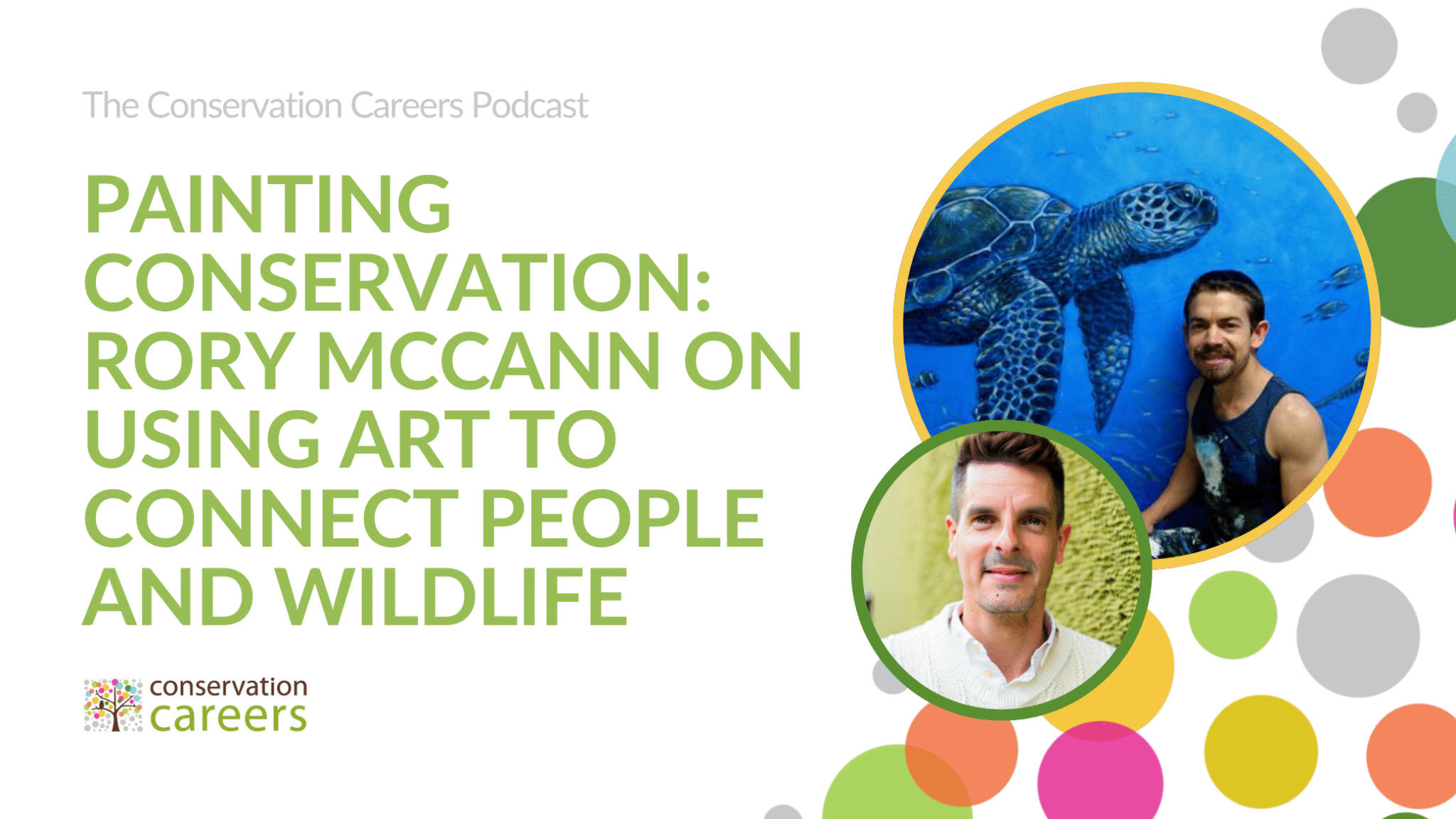
Hi there, Nick here from Conservation Careers, and welcome to the podcast. When was the last time a piece of art changed how you thought or felt about the natural world? Today’s guest is Rory McCann — a conservation artist and muralist who uses large-scale, community-driven art to inspire awareness, connection, and action for nature.
In this conversation, Rory shares what it’s like to create wildlife-inspired murals, and how involving schools and communities in the creative process can help people fall in love with wildlife.
We explore the power of art in conservation, education and behaviour change — and how Rory’s own journey, shaped by childhood arthritis and a deep love of nature, led him to forge a creative career outside the traditional path.
Whether you’re a career switcher, student, artist or conservationist, this is a beautiful reminder that there’s no one way to make a difference.
It’s a bold, personal, and inspiring episode.
Enjoy.
Listen
Watch
Subscribe
You can listen and subscribe to the Conservation Careers Podcast on iTunes, Spotify or Stitcher using the following links, or search for ‘conservation careers’ and you’ll find us!
Resources
- https://www.linkedin.com/in/rory-mccann-artist/
- https://www.instagram.com/rorymccannart/
- https://www.facebook.com/RoryMcCannMurals
- https://rorymccannmurals.com/about/
Showreel
Join our live podcast audience!
All our podcasts are now recorded in front of a live audience who sit in and listen to the chat, and then after the mics are turned off get a chance to talk to the guest, share their thoughts and ask questions.
If you’d like to be in the audience all you need to do is join our CC Academy.
In the CC Academy you’ll get access to the world’s biggest conservation job board – listing over 80,000 jobs, volunteer and internships across the globe each year.
You’ll also enjoy access to our amazing CC Pro private members community with regular events, networking and support.
Plus you’ll get full access to our growing library of career-boosting resources, guides and templates.
And best of all it only costs a few dollars, pounds or euros per month to join the Academy.
To find out more please visit the CC Academy, or simply click the join button at the top of our website.
See you on the inside!
Transcript
[00:00:07] Hi there, Nick here from Conservation Careers, and welcome to the podcast. Now, when was the last time a piece of art changed how you thought or felt? About the natural world. Today’s guest is Rory McCann, a conservation artist and muralist who uses large scale community driven art to inspire awareness, connection, and action for nature.
[00:00:27] In this conversation, Rory shares what it’s like to create wildlife inspired murals and how involving schools and communities in the creative process can help people to fall in love with wildlife. We explore the power of art in conservation. Education and behavior change and how Rory’s own journey shaped by childhood arthritis and a deep love for nature led him to forge a career outside of the traditional path.
[00:00:54] Whether you’re a career switcher, a student artist, or conservationist, it’s a beautiful reminder that there’s no one way to make a difference. It’s a bold, personal and deeply inspiring episode. Enjoy.
[00:01:06]
[00:01:13] So my name is Rory McCann and I consider myself to be a conservation mural artist.
[00:01:22] It’s so. Fun and exciting to have you on the podcast, Roy. It’s so nice to connect.
[00:01:27] Thank you. Personal
[00:01:27] disclaimer, we’ve known each other for a number of years and we’re sort of old friends.
[00:01:30] I think about 15 years, something like that. On a roll. It
[00:01:33] would be so since I would say 2010 or there about, so yeah, that would be right. That’s when I started at Bird Life. And you were at Bird Life at the time.
[00:01:42] Yeah, a small world and so nice to kind of, to see how your career’s developed and progressed and some of the inspiring artwork and murals and other projects that you’re kind of working on.
[00:01:53] And today we’re here to kinda share your story really and to understand. I think you’re the first artist actually we’ve had on the podcast, which we’ve been running five, six years now. Something like that. So interesting to hear about your. Your work and how that is benefiting and involved in conservation.
[00:02:07] Yeah. So, yeah. So welcome. Thank you. Um, where to start? Well, I think the easiest way to get going is just, just tell us a little bit about the work that you do. Like, you know, what, what does your, yeah. What does your work involve? Maybe what does a typical week look like? Just sort of bring, bring your work to life.
[00:02:23] I was gonna say, paint a picture with words. You normally don’t do it on a mural, but paint it with words for us today.
[00:02:28] Okay. So, um, yeah, a typical week for me could be, I mean, you know, I guess the first caveat there is there isn’t really a typical week, um, but it almost invariably would be working in schools that’s sort of 90% or maybe even more than 90% of the work I do.
[00:02:45] Um, that could be a school local to where I am. So I, I’m based in shewsbury. Um, in the county of Srhi, it could be a school further away, so down near Bristol or London, um, or Nottingham. Uh, I, as, as it happens, I do a lot of work on Jersey in the Channel Islands. That’s just sort of evolved over the years and I’ve been working there quite regularly for the last 12 years or so.
[00:03:10] Um. I’ve done se several projects a year and I’ve literally just got back
[00:03:14] yeah.
[00:03:14] Today, um, on the overnight ferry. Um, and then it, on, on rare occasions, particularly a little bit further back in my past, it, it would involve working even further away. So I’ve worked in parts of Central Asia and Oman and Japan and the Seychelles and a bunch of different places.
[00:03:32] Um, but that was pre kids. Um, so I now have a five-year-old and a three-year-old, and that steers my existence and where I try and find work a little bit. Um, but uh, yeah, I’ll still basically just go where the work is, you know, uh, to try and, and, and fill the time.
[00:03:53] Yeah. So, yeah. Um. Tell us about like, what does a typical project look like? I know there isn’t a typical project, I know there isn’t a typical week, but sort of Yeah. Just tell us about some of the things that you’ve been involved with and how it connects to wildlife and conservation.
[00:04:06] Yeah, absolutely. Okay. So the, the, the, the murals that I paint, um, could be, I sort of quite a diverse array of different themes, but for me nature is always central and there’s never any objection to that. Um, so a good example could be in a lot of schools I’ll do a huge world map. Um, and so there’s sort of the educational value there might be at the back of their hall, so it could be as much as kind of 10 meters wide, five meters high.
[00:04:33] Um, and onto that will be montaged. Um, a, you know, a great array of different things. So there could be cultural things, they could be historical, but more often than not, there’ll be environmental things. Yeah. Um, and that’s what schools, you know, really buy into as well. So that would be one possible theme.
[00:04:50] I also do a lot of murals that help with, let’s say, emotional regulation. So a lot of projects in schools that, um. Provide alternative provision, uh, for, for, for young people. And so it could be a mural of let’s say just a big underwater scene or a rainforest scene that helps, that would help, helps them with their emotional regulation where they can go into that, that calming space.
[00:05:15] And, um. Yeah, you’re using the power of nature, I guess, to, to feel a certain way and nature can feel help. You feel any number of different ways. I think it can help you feel excited, but equally depending on what you select from the natural world, it can help you to feel very calm and and soothed as well.
[00:05:32] So the project that I’ve just done on Jersey was precisely that. It was next to the learning support provision in this school, and it was a big underwater scene. With manta rays and whales and a diver in there so you could project your mind into it. Um, and yeah, all very just sort of soothing and calming to look upon.
[00:05:55] Um, and as you can probably quite imagine it, it creates this great talking point.
[00:05:59] Yeah.
[00:06:00] Um, for just all ages and I think all backgrounds as well. Um, so during the course of painting any one project, so like this last couple of weeks that I’ve been out there, um, I might interact with, you know, a hundred or more students even in a day of having just a small chat.
[00:06:17] So a step away from the painting, chat with ’em about what I’m doing. The, the conversation might be about art, but it could be about nature. It could be about their own interests. Um, and it just appeals to all ages so, so young and old. And I think it’s a great sort of unifying thing that, um, everyone can kind of get behind.
[00:06:37] So yeah, there’s, there’s a couple of kind of themes, Nick. Sorry I digress Massively. But yeah, big world maps, um, lots of, um. Yeah, projects that link in with school values, but again, you can use nature in so many ways. I do a lot of library projects, but again, nature comes into it. So we can have Hedwig, we can have Aslan.
[00:06:56] So I’m always, um, if I need to, I’ll, I’ll shoehorn some nature in there basically.
[00:07:01] I love that it’s like your own passion and interest in nature’s kind of there and it just provides the kind of the perfect, um, yeah. Connection with almost any theme of work that the kind of schools are bringing to you.
[00:07:12] Absolute, completely.
[00:07:13] Yeah. Yeah, you can, you can take from nature and, and yeah, sort of steer that message or that idea in any direction you want to, I think using, using nature.
[00:07:23] Yeah, and even like, you know, metaphors. I just think about Hedwig there for a minute too. Like, my kids, as you know, that they’re into Harry Potter, they’re also into Nia now too.
[00:07:32] So Aslan would be relevant to them too and brilliant. Yeah. Things like Hedwig is, is really about sort of knowledge and wisdom isn’t there, and people think about owls and delivery of messages quite literally there too, and connecting to different themes through the kind of visual elements of, of wildlife.
[00:07:46] Yeah, completely. And I’ve used many other species to represent. Different, um, values or character traits over the years. So, you know, lion would be courage, I suppose. Yeah. But you could probably, you know, go in different directions with that. And, um, I’ve used elephants for community and teamwork and kindness and all these attributes that we can see in particular species that again, can be woven into the messages that I might be imparting through a certain mural that I’m doing.
[00:08:16] Yeah.
[00:08:17] What does a typical process look like for you as a kind of, as an artist in particular is like a mural artist who might go into a community or a school or a conservation project or even, yeah. What, what are the classical steps you, I, I’m sure it varies a lot, but what typically is the process you lead people through?
[00:08:32] Yeah.
[00:08:33] Okay. I mean, it, it could be as much as sort of two years worth of, um, emails and communication leading up to, to actually doing a project. So there is a fair bit of admin behind all of it.
[00:08:44] Yeah.
[00:08:44] Um, but then, yeah, there, there’s a few ways it could work. But I’ll, I’ll, I’ll take one recent example. This one that I did, uh, locally on a shipping container.
[00:08:53] Linking in with a local, um, meadow conservation project. So the, the next thing there, um, was to go into the school where the, the project was gonna be painted, um, and given assembly. And tell the, the, the whole school about my own artistic journey, um, how I got to where I am, give them some examples of other projects that I’ve done and try and get them super geed up and excited in advance of me coming in to get that sort of maximum engagement with what I’m gonna do, rather than coming in quietly and, and sort of, um.
[00:09:29] Yeah. You know, waiting for them to build up the confidence to interact with me. Yeah. Offer them to, to interact with me as much as they please and, and just sort of, you know, do that big introduction straight off.
[00:09:42] You sort of hit them with a bang at the beginning. Yeah, yeah, exactly. An assembly and an interaction.
[00:09:46] What, what is the response like from. From the kids or the community or you know, the audience you’re talking to, typically,
[00:09:53] yeah, normally great excitement because this just, this ticks so many boxes for young people in that certainly, at least at primary school age, a lot of them will be interested in nature just anyhow.
[00:10:06] Yeah, I
[00:10:06] think unfortunately. It’s more so their interests get steered elsewhere as they get a bit older, and then they might circle back in in adulthood. But certainly at primary school, you know, the, the enthusiasm is just bubbling over and it’s great to feed off that. I’d say in my, in my career, I’ve fed off that a lot.
[00:10:23] Yeah. Um, and then, so yeah, so nature and then arts, you know, a a lot of them will be at the very least, interested in art. Whether they think they’re good at it or not is another question. Um, but it’d be a rare young person that wasn’t interested in the artistic process.
[00:10:39] Yeah. And
[00:10:39] meeting, uh, a real life artist.
[00:10:42] Yeah.
[00:10:42] So yeah, that it is great that that’s then the starting point is one of great excitement, um, you know, a lot of engagement, you know, straight away. And then this sort of invitation to come and talk to me while I work. Um, talk to me about whatever you are interested in. Um, and then sure enough, as I go along, there’ll be various other ways for them to be involved.
[00:11:04] So that could be that whole class has come out and watch me work and sort of take it as a demonstration and they could ask me how I might, um, do certain things and I could show them that specific skill, be it using a roller to do blending or even detail or how I might, um, you know, use the sort of the finer brushes, for example.
[00:11:24] Mm.
[00:11:24] Um, and then sometimes there’ll be probably just a select few students, uh, that get to contribute something to the mural themselves. And there’s quite, um. I, so I, I’ve learned over the years the sort of, the more effective ways to sort of damage, uh, limit on that. Um, they’re my very early murals. It just has sort of any number of students coming along and helping, let’s say.
[00:11:48] Um, but I can recall one particular one I did on Jersey where I had about a hundred students helping, which is, you know, great from the engagement point of view, but an absolute disaster from the point of view of sort of, uh, uh, regulating, controlling what direction the mural went in. And one girl was painting in black paint and started painting what was gonna be a fish, I think, but ended up being a completely enormous conga eel that was sort of really amorphous.
[00:12:14] And it’s one of the rare occasions where I’ve had to paint over something that a student has done.
[00:12:18] Yeah.
[00:12:19] Um, these days I’ll often do it that I outline something for them. Um, so it could be that there’s a, a stencil there of a butterfly, let’s say, and then they can come along and paint the butterfly however they please.
[00:12:30] Mm. And
[00:12:31] so that they can then show all their friends. That’s what I did. That’s, that’s my design. Um, and feel that sense of sort of, um, pride, I guess, and, and ownership over, over, uh, um, over the mural project, uh, in their schools. So yeah, that’s a. Of a bit of an idea of the process there, I guess. Yeah, Nick, including, you know, of course the, sort of the, the main part of, you know, maybe up to two weeks, me being in the school and, um, you know, painting the project and maybe going into classrooms and doing workshops as well.
[00:13:02] So you can, you can build a lot into. The process of painting a mural and make it almost like an artist in residence sort of experience, I guess.
[00:13:11] Yeah. And I guess before we sort of talk more about the kind of conservation action photos, focus parts of your career as well, um, like what’s the process you go through for actually doing the design of the mural?
[00:13:22] Is it something that evolves as you go during those one or two weeks? Is it something that’s fixed at the beginning? Do you involve teachers, students in that process? What does, how does that work? How do you get to that kind of design?
[00:13:33] Yeah. Okay. It could be by a number of route. Um, sometimes it is purely organic sometimes.
[00:13:39] Mm-hmm. I feel as I just go along and start painting and see where it goes. Mm. Um, and that can be really fun. And obviously, you know, being receptive to suggestions along the way. A few conversations I have and that can be quite nice, I guess, you know, day one normally is just getting a background color on, so it’s still effectively a blank canvas.
[00:13:58] Even at the end of day one, day two, I start getting sort of bigger blocks of color and tone in there with, with the roller. So there’s lots of opportunity for it to be steered and guided along the way.
[00:14:11] Yeah.
[00:14:12] But sure enough, there’d be some occasions where I do spend a, a day or so coming up with a design, and that itself might be based on designs the students have come up with.
[00:14:21] Mm-hmm.
[00:14:22] And
[00:14:22] normally from those I’d pick, let’s say sort of four or five best designs. And roll them into one final design.
[00:14:30] So
[00:14:30] rather than picking just one of theirs where it might not have quite all the elements that would work really well for mural, but if you, if you select sort of yeah, four or five or so, then probably between them you can put together a really good composition.
[00:14:45] Um, so yeah, there might be some design winners and it might be those individuals that then get to come along and paint with me later in the process. Um, yeah, so for example, with this Mily Meadows one, I did do a design in advance of doing that because I wanted to make sure that I had a really good cross-section of the biodiversity that uses, um, a meadow.
[00:15:08] Mm-hmm. And everything from what’s underground to just above the ground to. Up in the air and, and yeah, sort of all, all those, all those levels. So I, I don’t think I could have just gone along and got started and painted that one organically. I think that one required a bit more thought.
[00:15:25] Yeah.
[00:15:26] Um, and, and, and sure enough, using that more scientific background that, that I, that I have, um, to sort of bring that, um, attention to.
[00:15:36] Um, sort of environmental detail that I think these projects need.
[00:15:40] Mm-hmm. And we’ll drop some links into some of your work actually, if people want to know in the kind of description, because particularly that mural you were talking about on the shipping container at Minsky Metal. Yeah, you warned me over.
[00:15:50] ’cause it’s kind of beautiful barn. I remember on the side of it it was a barn lover. Yeah, it was absolutely glorious. Yeah. Thank you. Tell us a bit about some of the, the conservation projects that you’ve been involved with as an artist. Yeah, yeah. I know you’re trained as a conservationist for your masters.
[00:16:05] We’ll talk about your career journey, but yeah, I know that you’ve been involved in projects as an artist. Like what sort of work have you done as an artist and how has that been integrated or benefited? Kind of conservation specifically? I’m really interested to kind of understand the role that artists can play within conservation.
[00:16:20] Yeah. Okay. I think, I mean, later on, I think we’re gonna talk a bit about my. So-called Korea, um, progression.
[00:16:27] Yeah.
[00:16:27] Um, but in the early days it, it, it all began with commissions, but then exhibitions as well.
[00:16:33] Mm.
[00:16:34] Um, so I had a, a number of exhibitions where, uh, all of it was wildlife themed, and I might’ve been taking a portion of the proceeds myself, but then a portion was going to.
[00:16:45] Conservation efforts, conservation charities as well. And you know, as far back as I can remember, that was something that mattered to me was to be supporting conservation however I could. Um, but I guess we’d cut. Sort of, um, cut ahead probably to, to 2006, which is when I finished my undergraduate degree, which was in Zoology.
[00:17:06] Mm-hmm.
[00:17:07] Um, and I did that, that at Durham, I studied at Durham. Um, I had my first opportunity then to work on a bigger scale and to be more directly involved in conservation efforts. Um, and we are very lucky to know someone that was working out in thes shops. Um, so over the winter of 2006, I was in the Seychelles, which is a great place to be, um, over the British winter.
[00:17:32] Poor you. Yeah. And
[00:17:33] it was, yeah, it was working for Nature Seychelles, which is a partner of Bird Life International. Um, and it was producing. Five big canvas paintings. So not murals as such as, as far as I’m concerned, a mural is where you go straight onto the wall. Yeah. Which has its own quite unique magic, I think, in transforming that environment and the whole feeling of the environment.
[00:17:55] And that’s why I love mural painting. Um, but the canvas paintings, you know, they, they, they were still a fair size. I think they’re 1.5 meters square each. And they were of what? Um. They came up with us, the five main environments in the Seychelles. We had small island mangrove, uh, marine wetland, and mangrove.
[00:18:15] Have I said mangrove? Not mangrove. Twice. One other that I can’t currently remember.
[00:18:18] Maybe Reef. Yeah.
[00:18:20] Yes. Thank you Reef. Um, and. Yeah, that, that was, that was my first experience of sort of more directly working in conservation, um, and using my art in that way. So that was brilliant. Cut to then, um, a number of years later, and I did this set of projects in Central Asia.
[00:18:39] Mm-hmm. And really
[00:18:40] that came about and, and this would be one of my main sort of. Takeaways from this is just, um, build relationships and, you know, um, use the people that you know.
[00:18:50] Mm-hmm.
[00:18:51] So I’d, I’d, uh, those few years later, I’d just done a master’s in conservation Science. So the art really for a long time was running either in the background or alongside my career progression as, as, as a scientist, as a conservationist.
[00:19:06] And then at a certain point it came more into the fall. Hmm. Um, but yeah, just off the back of the Masters, um. I was able to use the contact of the, the director of Masters, EJ Milner Gulen, who some of your audience might know. Um, and she herself, um, ran this set of projects, um, look, uh, conserving the saga antelope in, in Central Asia.
[00:19:28] So the S antelope, um, not so long ago was critically endang. It is now no longer critically endangered due to some amazing conservation efforts that have taken place in the last few years. And who knows, maybe the, the mural projects that I’ve done have had some small part to play. So over successive years, I went to Uzbekistan, then Kazakhstan, then Russia, then Mongolia.
[00:19:50] And in each of those countries I worked in a school or a number of schools and painted some large scale murals. And had that whole process that I’ve talked about of engaging by giving assemblies that were translated, um, sometimes needed to be doubly translated. Uh, so those were some very long assemblies.
[00:20:10] Um, and then getting the students involved and doing workshops and doing just all of that. But in these, um, yeah, very unusual from my point of view countries to be in, in terms of the sort of cultural differences, for example. Yeah. Um. And then sales. Good to that. I’ve done some more sort of local conservation projects, but tho those four were the sort of the most noteworthy ones.
[00:20:33] The, the work you again describing there in Central Asia. Yeah. Sorry to interject, like what was the goal of the work there? Like what was, yeah, what was the kind of conservation goal and how were you connecting to it as an artist?
[00:20:44] Yeah. Okay. Um, I mean the, the, one of the main threats to the saga antelope was persecution.
[00:20:50] So them being, uh, hunted. For primarily their horns, um, which were used in Chinese medicine, I think still, still would be to this day. Um, and so really it was, um, the aim was to engage with the local communities, um, engage with all ages from, from young to old. So, you know, you bring a Western person into some remote village in Uzbekistan and it’s gonna.
[00:21:17] Generate a, you know, a lot of interest and engagement, you know, whether you like it or not, it’s gonna do that. So, you know, the, the, the whole village would be interesting. Who is this person? Why are they here? Yeah. Um, and I guess what I would say, you know, the real value of, of artwork is in this case is it is universally appealing.
[00:21:40] Yeah.
[00:21:40] But it’s also a very passive way to engage. You’re not telling. If anyone on how to think or what to do, which a lot of people would react to quite badly, I think, and then quite possibly do the opposite. Um, it’s something that just very softly and very gently and very passively brings people on board.
[00:21:58] Um, maybe helps them see what is around them in their environment in a slightly different light. It generates and creates conversations. Um, again, between generations and between, you know, the, the different cultures. Um, and then it, it, it, it lasts a long time. You know, these projects that, you know, I’m hoping they’re still out there and the first of them was painted in 2014.
[00:22:22] Hmm. So
[00:22:22] you’re not talking about just a one time thing of going out and, you know, sort of. Speaking with people, maybe over the course of a few days or weeks, you’re talking about something that then lasts years and years.
[00:22:33] Mm-hmm. And
[00:22:33] hopefully has that cumulative positive influence on people.
[00:22:38] Mm.
[00:22:39] You are never gonna be able to measure the outcome.
[00:22:41] Mm-hmm. And that’s
[00:22:42] the thing I think with lots of sort of, um, avenues of education and particularly what I do, I guess, but you have to have faith and belief, and I genuinely do believe that. That it can have a really positive impact on the way people perceive nature. It brings it to them. Yeah. And it presents it to them every day that they’re in that space.
[00:23:03] Yeah.
[00:23:04] Um,
[00:23:04] yeah, there you go.
[00:23:06] I love that. Absolutely love that. And it’s, it, as you sort of said, it’s, it’s a lasting legacy, isn’t it? Yeah. You know, you can go and have a meeting, you can deliver a report or whatever it might be. Yeah. Create a video even, something like that, but actually a mural or an image on the wall that’s there in a school for years, every child that comes through is gonna see that, gonna talk about it.
[00:23:24] Yeah. There’s gonna be stories told about when you came. Yeah. You know, and that message will continue and live on for a long time. Yeah. So, absolutely.
[00:23:31] Spread outwards and you just, you, you can’t know where that, that message ends, but, um, yeah. You know, limitless potentially.
[00:23:38] Yeah. Well, it’s still alive here today with us.
[00:23:40] Yeah. I, I love that. Yeah.
[00:23:42] Yeah. Yeah.
[00:23:43] Um, I wanna kind of change gears ever so slightly then and talk about your actual career, not your so-called careers. You said your actual inspiring career. ’cause I obviously, I’ve been following you for a number of years, but let’s start in sort of childhood. Yeah. ’cause Okay.
[00:23:57] I’m lucky enough to know your family, uh, your, we’ve had Nile, your brother on the podcast before and actually we talk a lot on, on the podcast and elsewhere about how conservation is a small world. And how the connections matter. You’ve mentioned then Natures Shells, we’ve talked to Neal, she on the podcast, who’s the Yeah.
[00:24:13] Oh, of Natures, she, I’m sure you probably know Neal. He was,
[00:24:16] he was, he was the ceo, EO when I was out there.
[00:24:18] There you go. In
[00:24:19] 2006, I think he’d already been the, the, the, the director for a few years up to that point. So yeah, he’s well embedded.
[00:24:26] So nice. And EJ as well. You mentioned as well Ghislaine, she’s been on the podcast.
[00:24:30] It’s a very small world. We’ve all connected. Wonderful. We’re all working together and you’ve got such an inspiring family around you of Yeah. Amazing parents and uh, brothers as well that you grew up with. Just tell me a little bit about your childhood and also the connection, importance of wildlife in that, because I know that was so important to you in the great outdoors.
[00:24:47] Yeah, yeah,
[00:24:48] absolutely. Okay. So yeah, sort of. A brief history. Um, so my dad worked for the British Untucked Survey for a period of time, both before having children and then once he had children. So over a period of about 13 years. Um, initially for him it was, um, a PhD looking at the elephant seals, and then it went on to being looking at, uh, the first seal populations.
[00:25:12] Yeah. Um, so that was his background was as a zoologist and he very much brought that to our childhood and to our family life and all the holidays that we, we ever went on. Mm-hmm. Um, mum, likewise background in, in. Zoology and conservation. Um, worked in Africa for a number of years, um, studying the behavior of the vervet monkeys and Osages as well.
[00:25:36] Um, and then she’s gone on to have a career in conservation, working for the field studies council, and then, um, endless hours of volunteering as well for wildlife trusts, et cetera. So yeah, both very passionate individuals themselves. Um, I’d say it was then, you know, a part of. Our childhood in, in every regard, really.
[00:25:59] I mean, every walk we went on was looking for nature. Every holiday we went on, we were making lists of what we’d seen. Um, we were lucky enough to go to Australia for a year, um, when I was 12 and, and turned 13, and my dad had become a teacher, um, a biology teacher, and did a job exchange out there. And it was this most phenomenal nature.
[00:26:23] Extravaganza year that we had out there, that I think for each of the three of us boys, sorry, I’ve got my two brothers, um, spurred us on to one to devote more of our, our lives to, to nature conservation. So we all went on to study zoology at university. Um, n and Finn both studied Bristol and I I studied at Durham.
[00:26:44] Um, so my own, um, story is a little different from, from theirs. Um. Then at aged eight I fell very ill with juvenile arthritis.
[00:26:55] Mm-hmm.
[00:26:56] Um, and this stopped me growing. It had me in hospital for quite a while. Uh, I then went on to be in a wheelchair for six years or so and relied on friends, um, pushed me around, which they didn’t always do.
[00:27:10] Um, so it, it’s often just sort of left contemplating in, you know, one random location to another. Um. But yeah. So suddenly loads of doors closed or that’s how it felt, and suddenly a lot of things felt quite inaccessible, um, physically. So my, my ability to access nature physically was, was much reduced.
[00:27:31] Yeah.
[00:27:31] Um, but even before that point, I’d already been into drawing even from age two or three. I was drawing and we’ve got, you know, my old drawings from that age, and already it was, you know, what? Might be birds and what might be animals, but clearly influenced already by nature. Um, and so at aged eight, even while in hospital, that’s what I turned to.
[00:27:53] And that really became my way to, um, experience nature and experience the natural world was through my drawings. And I would just completely lose myself in, in those drawings. And for a long time it was, you know, I’d spend days and days on single pieces.
[00:28:10] Mm-hmm. Um.
[00:28:11] And working in pencil and pen and charcoal and getting every last detail into these pieces that I, that I could, and I guess marveling at the details, um, of those animals that I was drawing, um, marveling at the wrinkles on an elephant and marveling at the sort of the, the, the patterns on, you know, a particular bird’s feathers or whatever it might be.
[00:28:35] Um, and that that developed a sort of an even greater fascination and, and interest with, with the natural world. Um, so that, yeah, that over the years, I guess just sort of grew and grew, but I, as most people probably would, I never thought that that was gonna be my career path because who makes any kind of career, uh, career outta being an artist?
[00:29:00] I knew that there were sort of a, a lucky few people who, who did, um, but I. Didn’t believe at the time that I was gonna be one of those people. So I pursued the sciences, um, which was, you know, felt, felt at the time as, as just a good, just as good a thing to be pursuing and, and certainly more, more viable as a career path.
[00:29:20] Uh, so yeah, that was the case at a level and then degree and then the masters, and then even beyond the Masters, uh, working at Bird Life International. Am I, am I going off tangent here, Nick, or
[00:29:31] am I Okay? No, this is good. I was gonna ask about your career history and you’re filling it in for us beautifully actually.
[00:29:36] Yeah. Like the key steps that you’ve taken. Yeah.
[00:29:38] Okay. Um, so I guess then even while at Bird Life International, because that was my first job in conservation. Um, even during that time, the art was just slowly moving from being the thing in the background to being the thing in the foreground. And I’d already had enough of these other sort of.
[00:29:58] Um, one-off experiences like being in the Seychelles and for example, after I finished the, the, the Master’s and before I came to Bird Life, I went straight out to see my best friend from my degree, um, in Zoology, who was in Oman at the time. He’s also an artist as well. I just stand an artist and he had this opportunity, um, to paint at the Muscat Marina, uh, to, to do a mural.
[00:30:23] And it was my first occasion of painting what, you know, can actually be described as a mural. So straight onto the wall
[00:30:29] and, um.
[00:30:29] By doing it together, we had the confidence to take it on. I think individually we wouldn’t have, but together we did, and we just had the best time. We, we were paid with as much as we could eat and drink, which was absolutely fine by us.
[00:30:45] And probably, um, yeah, it was, yeah, we, we, we definitely made the most of that. Um, there was a swimming pool next to where we were working. We could jump in and out. We were listening to Disney music and we just had the best time. And it sowed this seed in my mind of like, wow, this. This was great fun and it was a big underwater scene, so it was a brilliant theme as well.
[00:31:04] And um, that seed of like, wow, if I could do anything, I’d love to do this, but not sure. It’s very realistic. Anyhow, so onto bird life, um, and the work that I was doing there was. Enjoyable enough. And I think more than anything, I really enjoyed, um, being in that environment and meeting people like yourself.
[00:31:26] But it certainly wasn’t the vision I’d had as a child of what my career in conservation was gonna be. I, I knew that it was early days. Um, I didn’t think I was using my skills and abilities to best affect basically. Um, and so like I say, the art was sort of slowly coming into the foreground and I remember at Bird Life I had opportunities to do, um.
[00:31:50] Cartoons, for example, that were used for certain websites for certain characters. Like I remember, um, spoony, the Spoon Build Sandpiper, and I did a little character for Spoony. So I was using the art there. I got to paint a mural in the entranceway.
[00:32:06] Yes.
[00:32:06] And all of this, again, was just sort of adding weights.
[00:32:09] That idea of like, wait a minute, could I be using this more? Um, more effectively, and then a few, a few things kind of happened all at once. Um, and one of the key things, I guess, and I think it has relevance enough, is that my dad was very ill at the time.
[00:32:30] Mm-hmm.
[00:32:31] And, um, I felt like I just really needed to spend as much time with him as I could.
[00:32:37] So that, um, thought alongside this sort of, okay, I think there’s a different direction I could be taking with my, with my life, um, that the combination of those things helped me to decide that I was gonna move home. Back to Shewsbury. Mm-hmm. So I left Bird Life, um, moved back to Shrewsbury, where I could see more of my dad with this notion of, you know, um, life’s too short.
[00:33:00] I need to spend that time with him and I need to do something that, that makes me tick and makes me feel invigorated. Um. So I didn’t have much of a plan, I’ll be honest. Um, but what plan I did have was to have an exhibition and invite lots of local artists and make it all about love of nature. So that was the theme.
[00:33:20] Um, love of nature. And I went into two schools, um, my old primary school and then another local primary school to get the children involved as well. I wanted this to be a sort of. Um, multi-generational thing.
[00:33:32] Hmm.
[00:33:33] So I gave my first assemblies, which for me was hugely nerve wracking. So this was definitely sort of having to, um, overcome certain anxieties.
[00:33:42] ’cause the arthritis, one of, one of the things that, uh, resulted from it is, um, stunted growth. So I’m, I’m four foot six, and so really, you know. Of any environment I could walk into schools for a long time were absolutely the last environment. And you know, I’d,
[00:33:58] yeah,
[00:33:59] uh, I’d go to supermarkets at times where I knew that children were least likely to be than I avoided children.
[00:34:05] Mm-hmm.
[00:34:05] Basically. So this was massive for me to go into schools and, and speak to them about, um. My, my passion for nature and my passion for art. So I got these two schools involved. We have this exhibition, um, at the Short Wildlife Trust, which was, I think itself a great success. Loads of people came. We raised some money for the Wildlife Trust.
[00:34:26] Um, a few artists sold a few bits of artwork. Um, but the key thing that came off the back of it was one of those schools got me into paint a mural. And it was, and all I had to show them was the mural that I’d done at in Oman. So again, all these things, you know, sort of these key moments of making the most of opportunities and never quite knowing what it might lead on to and never quite knowing what the value of it might be, but.
[00:34:53] One of my main perspectives was, has always been to, if at all possible, say yes.
[00:34:58] Yeah, take
[00:34:59] that opportunity, seize it with both hands. You never quite know what it might lead on to, or you know who you might get to know and how they might be able to help you out.
[00:35:07] Yeah. Yeah. Um,
[00:35:08] and that’s been pivotal for me.
[00:35:10] So yeah, that school got me in, I, I painted a mural. Of a climbing adventure all around the world. So it was seven continents that transitioned across one another and it was a climbing wall that they had outside and it had loads of nature from all those different places. And that kickstarted, um, my, again, so-called career as a mural artist ’cause it led on to one other project and that led on to Yeah.
[00:35:34] One other project.
[00:35:36] Yeah.
[00:35:36] Um, and, and so it’s gone and, and you know, that’s the last 13 years really.
[00:35:41] That’s, yeah, that’s so, it’s so interesting to hear, and I’ve got a thousand questions I could ask. Mm-hmm. But what comes out listening to that and reflecting on that a little bit is, well, a, the importance of community and that’s like friends, family connections, connections of connections, you know, and sort of that sort of word of mouth and uh, and the relationships that are built in there.
[00:36:00] And, and I was talking today is a, is a result of that too.
[00:36:02] Yeah.
[00:36:03] Great. And also just confidence. I think you mentioned confidence there a few times in different context. That really kinda struck me. Yeah. Like the mural you did with your friend, you know, the first mural and how you wouldn’t have done it on your own, but with someone else.
[00:36:14] Hi there, Nick here from Conservation Careers, and welcome to the podcast. Now, when was the last time a piece of art changed how you thought or felt about the natural world? Today’s guest is Rory McCann, a conservation artist and muralist who uses large scale community driven art to inspire awareness, connection, and action for nature.
[00:36:36] In this conversation, Rory shares what it’s like to create wildlife inspired murals and how involving schools in. In this conversation, Rory shares what it’s like to create wildlife inspired murals and how involving schools and communities in the creative process can help people to fall in love with wildlife.
[00:36:54] We explore the power of art in conservation, education and behavior change, and how Rory’s own journey shaped by childhood arthritis and. Deep love for nature led him to forge a creative career outside of the traditional path. Whether you’re a career switcher, a student, an artist, or conservationist, it’s a beautiful reminder that there’s no one way to make a difference.
[00:37:17] It’s a bold, personal and inspiring episode. Enjoy.
[00:37:22] And I’d never thought, actually you need confidence to doing mural. Of course you do, you know, but it’s a big thing, isn’t it? And the confidence standing in front of, you know, children, you know, is a huge deal too, isn’t it? The
[00:37:32] confidence for sure. But I mean, just the, you know, a bit of courage as well, I guess.
[00:37:40] ’cause it, it sort of starts with that, doesn’t it? And then that leads on to confidence. Um, I guess you need a threshold level of confidence to do it at all. Yeah. But also, um, yeah, just, just that, that, that courage to think, right, this is gonna get me to a better place. And if I do it once. I’m gonna be more confident the next time I do it as well.
[00:38:01] And, and then more and more and more. And now, you know, I, I barely need to draw on any courage at all when I go into a school and when I’m painting a new mural. And even that would be, let’s say, so this, uh, this most recent one, Jersey is an all boys school.
[00:38:15] Mm-hmm.
[00:38:16] Um, and you know, the. These boys, it’s all about sort of being loud and you know, being, being the one to stand out.
[00:38:24] And it’s quite an intimidating environment to go into actually. Mm.
[00:38:28] Uh,
[00:38:28] particularly I guess looking the way I do.
[00:38:31] Mm-hmm. But.
[00:38:32] I don’t have those nerves anymore. Mm-hmm. And I guess that’s built on all those years of experience and all those years of just stepping a little bit outside of my comfort zone.
[00:38:41] And um, yeah, that’s a lovely feeling to have. I guess it comes with age, just naturally. And I’m now, you know, I’m 41 and there’s something very nice about sort of stepping into your forties and not um, yeah, not minding so much, I suppose what people think and that’s very liberating.
[00:38:59] Yeah, it’s lovely to hear as well.
[00:39:01] And it’s good for other people to hear too, I think how confidence builds. Yeah. And how you It does. Absolutely. You have to take those first
[00:39:07] steps. It doesn’t build on its own.
[00:39:09] Yeah. Yeah, yeah. Um, tell me a little bit about working as a freelancer. That’s, that’s another interesting area I’d like to discover, um, with you.
[00:39:18] Yeah. You are self-employed, so you have to Yes. Find your own work, you know, and be proactive with that. And you’ve been doing that, as you say, for now, like 13 years or so? Yeah. What, what have you learned about freelancing? What’s it like? Um, yeah, what are kind of the, some of the pros and cons, what advice might you give someone else who might be thinking about freelancing?
[00:39:38] Any hints or tips? Yeah. Talk about as you wish. Yeah.
[00:39:41] Okay. It’s in equal measure. Terrifying and wonderful. Um, it was a lot easier. Before children
[00:39:51] and
[00:39:52] that I could, you know, I, I didn’t feel as though I needed to pass, you know, the same kind of threshold of earnings that I feel as I need to pass now that I’ve got all these trappings of kind of slightly later life of having the house of, you know, having the, the two girls and their childcare, um, and, you know, trying to, you know, live that modern life of, well we have to go on holidays and all of those sorts of things as well.
[00:40:15] So, um, having children has. Has changed things. Um, so yeah, let’s start with the, the terrifying side.
[00:40:22] Yeah.
[00:40:23] Um, I have, I, I often think of it as a bit of a cliff etch, you know, I have work laid out before me and it might be laid out before me by anything up to sort of, let’s say eight months if it’s that much.
[00:40:37] I feel great and I’m in a very comfortable place and I feel like I don’t even need to be looking for work for a little while. Mm. That I can just let it rest. And the fact is that most people wouldn’t be interested in booking me in to do a mural more than about eight months into the future anyhow. So it would be a waste of my time to be trying, and that’s, that’s a lovely place to be.
[00:40:56] And just occasionally I’m in that place. Um, at other times that cliff edge is more like a month or two away. And that’s quite anxious making.
[00:41:07] Mm.
[00:41:07] Um, and it, you know, but sure enough, it does make, make me feel. Anxious. Uh, which is not, which is not pleasant, especially, you know, having the house and the kids.
[00:41:18] Yeah.
[00:41:19] But I don’t just sit back and, you know, let myself sort of get close and closer to that cliff edge without doing anything. So I am very lucky, I guess, at this stage, and that I’ve got 13 years worth of contacts. Mm. 13 years worth of networking that I’ve already done, of schools that I’ve worked in, of ways of putting myself out there too.
[00:41:41] New audiences and new people and even, you know, this conversation we’re having now, Nick, I think is a little bit off the back of that feeling that I have been having last month or so. I’ve been closer to that Cliff ech. So, okay. You know, here’s a new audience. Brilliant. Um, so that’s the, the terrifying side.
[00:41:57] You know, it’s no longer the case that I find the work itself terrifying. Um, I, like I said, I’ve built enough confidence that I can go in and say, right. I think as long as, um. I can, I’m, I’m given the space to do the work. Uh, as long as something disastrous doesn’t happen, like I fall off a ladder, then I can do this.
[00:42:19] I, I know I can. So, yeah, the wonderful side, um, I get to decide, you know, on the projects I, I take on, I get to steer them in a direction that I want to steer them. I get to work with different, wonderful, beautiful, brilliant people each week. Everything from, you know, those aged four up to the, you know, the, the jaded, um, adults in some of these working environments who then are engaged by what I do I’m doing and, you know, sort of brings a bit of life, um, back into the environment they work in.
[00:42:54] Yeah. Um, so I, I, I love the human interaction side of it. I don’t think I could be an artist working on my own in a studio at home. I don’t think that would do it for me. I, I think that would’ve been my comfort zone and as a child, that’s what I would’ve thought it would involve.
[00:43:10] Mm-hmm.
[00:43:10] Um, and that would’ve suited my personality, but I was wrong.
[00:43:14] Um, you know, I, I, I, I love getting out there and, and traveling and meeting people. Um. I, I, I love that I can bring, um, nature into what I do and have conversations about nature. Um, and so that seed or, or water, that seed, I guess in many cases for young people of, of their interest in nature. And, and that’s such a privilege as well, to be able to just quite casually as, as I’m doing these projects, stop for five minutes, 10 minutes and not be stressed by it and just have a nice conversation about.
[00:43:50] The beauty of the, the natural world and what it means to us as well. Um, and I, I guess I love that I get to, you know, for example, tell my own kids that this is what I do and it’s something that they think is really interesting and, and cool and different and something tangible as well. I guess loads of children have parents who do something where they don’t really know what it is they do.
[00:44:12] Um, they might have been told several times, but it feels, um, intangible and, and foreign and very adult, whereas. Basically I’m, I have the job of, of, of a kid and various children have pointed that out to me that, you know, you basically get to be a, a, a, a professional child and just do paintings every day.
[00:44:31] Yeah. And, uh, yeah, so that’s truly wonderful. So, yeah, it’s, it’s both those things, um, in fairly equal measure, but different amounts at different times. Yeah.
[00:44:42] And what advice would you give someone who might be interested in perhaps following your footsteps? They, yeah. Of any age, you know, but they might be young right now.
[00:44:49] Yeah. They might be, you know, young teenage or something like that. Yeah. What have you learned that that might help them?
[00:44:55] Okay. I mean, if you were younger, just. Just draw and draw and paint and paint and just do it loads and build that confidence and build your portfolio. Um. Later on, I would say, you know, the, the, the, the, the safer and probably more sensible approach would be to see it as initially a side hustle.
[00:45:17] Mm-hmm.
[00:45:18] Um, and that’s how it was for me. And that allowed me to build up that confidence and have it as that background thing that slowly but surely came to the foreground.
[00:45:27] Yeah.
[00:45:27] Um, so yeah. Have exhibitions take on commissions. Build your online presence, um, across all platforms. I mean, I do think for me at this stage, LinkedIn is, is the best platform.
[00:45:39] Yep.
[00:45:40] Um, but that’s the, based on the sort of work that I do and the audience that I have and that I work in schools and I need to be linking in with head teachers, for example, but maybe the best platform for a different artist would be TikTok or Instagram. So, you know, find your audience and engage with ’em as much as you can.
[00:45:59] Thank them for engaging with you. I think I’ve definitely seen the value in that and seen other people benefit from that as well. So yeah, have it as that side hustle initially, build relationships, build contacts, seize opportunities that come your way. Um, and be willing, at least initially to work for either free or very little to, to build that portfolio and start to be able to impress people with what you can do.
[00:46:26] Yeah.
[00:46:26] Um, yeah, there’s a few things.
[00:46:28] Loads of practical tips there. Yeah. We really appreciate that. Thank you. Yeah. And as we start to wrap up, we’ve got some people waiting, our audience, who I’m sure want to ask their questions. After our recording’s finished, I want to ask you some more sort of open questions as well, just to kind of get to how you think and feel about the conservation sector more generally.
[00:46:46] Um, the first one is, uh. You are a well traveled individual that you’re passionate about wildlife. If we could take you anywhere on the planet and you could see any species, where would you go and what would you hope to to see?
[00:46:58] I prepared for this one. Ah, um, Chloe, my, my wife, had said, this is one that you sometimes ask, and I thought, right.
[00:47:06] Um, and initially I’m glad I prepared because I think initially I wasn’t gonna give a very good answer. Um, but I thought, well, it better be good
[00:47:12] now then. Yeah, go on. Well,
[00:47:13] it better, it better be, um. Okay. If it, if sort of air miles and carbon footprint wasn’t an issue, I would get myself down to the Antarctic and I would see what my dad saw that inspired him so much.
[00:47:27] ’cause he was so passionate about the time he’d spent down there. Yeah. And if he could have, he would’ve remained working. Down there and, you know, sort of stayed on with bass. Um, so I would love to get down there and hang out with the penguins and maybe even sit on an elephant seal as he once did, and got a iconic picture that I’ve used in assemblies many times.
[00:47:49] Um, I’d love to just, yeah, sit and sketch the incredible species that there are, the really unique species and yeah, so soak up that incredible environment.
[00:48:00] Yeah, I love that and I hope it happens for you. Yeah, thank you. Um. We hear a lot of like doom and gloo messages in conservation. If you look at global reports about biodiversity, nature, wildlife, whatever you want to call it, you know, yes we are winning some, some key battles as conservationists, but generally speaking we seem to be sort of yeah, losing the war to use that sort of metaphor.
[00:48:22] Yeah. Um, yeah. Two questions relating to that. Firstly, what do you think conservationists need to be better at or to do more of? If we are really gonna turn things around and really have the impact that, that we need within conservation.
[00:48:36] Okay. Um. The messages need to be positive. I, I, I think we’ve had conversations about this in the past.
[00:48:44] Mm-hmm. Um, there’s so much doom and gloom and it’s the fastest way to get people to turn off is to, to focus on that. And I think in the world of conservation, we’re, we’re learning that that’s, that’s important. That the messages need to be ones of positivity, need to avoid people becoming. Um, apathetic.
[00:49:02] Yeah.
[00:49:03] You need to give them ways of being engaged. And then I think more than anything, and this has been the most important thing for me, and this might answer your ne next question, um, to be Yeah. Proactive and, and actively involved. So for me, as, as a 14-year-old, I, you know, started to become a lot more aware of the state of the planet and initially was just hugely depressed by that.
[00:49:25] Yeah. As, as many young people would be. The thing that then got me outta that was being proactive. Um, so I started by doing walks for wildlife walks for uh, WWF and instantly that just made me feel a hundred times better that I was doing something. And over all the years that followed, that’s what’s mattered is to be.
[00:49:44] On the inside and being involved and getting my hands. You know, a bit, a bit dirty sort of soil wise and feeling like, yeah, I’m doing something, I’m doing my bit. Um, and yes, things still aren’t going quite the way that we as environmentalists would like them to be going, but we’re, we’re doing what we can and we’re, you know, slowly but surely having a positive impact and influencing others.
[00:50:10] And we, we, we’ll hopefully move in a more positive direction. Yeah. Um, and my, my favorite quote to think of is. Even if the world was to end tomorrow, I’d still plant my apple tree today. Or it’s something like that, isn’t it? So just, you know, do all those right things, do all those good things, and just have faith that, that it’s moving us in in a good direction.
[00:50:30] I love that.
[00:50:31] Yeah. And I was gonna ask you, I think you probably saw it coming actually, you’ve mentioned the hope a few times as well. Are you hopeful for the future, the future that your wonderful daughters are growing up into? Like what, how are you feeling about that?
[00:50:43] Yeah, well that’s precisely it. I think, you know.
[00:50:45] Having had children at, at all as, um, a pair of environmentalists, we, we know, we thought about it a lot and we decided that we still would. And I guess it’s one of the most sort of hopeful and optimistic things you can do. There’s gonna be every good argument to, to not have children, especially from an environmental point of view.
[00:51:03] But we still did because we, we both believe in, in, you know, a positive and hopeful and wonderful, you know, future for our children.
[00:51:13] Yeah.
[00:51:13] Um, and, um, yeah, so absolutely I, I, I believe that, um, you know, the world, you know, as the, as the, it’s as it go. Placidly, the world is still a beautiful place. Um, you know, be, be cheerful, strive to be happy, and it, it still is and it will remain this incredible planet when you compare it to anything else out there that we know of in the wider universe.
[00:51:36] I mean, there’s all this nonsense about the prospect of living on Mars, you know, look at Earth compared to Mars and, and just how incredible a planet it is and what we have here. And, you know, the, the amazing diversity of life. Just that, that, that there’s life at all. Um. Yeah. I think it’s, it is just this incredible planet and the more, the more we appreciate that, the, the better a future we’ll have.
[00:52:02] Amazing. Yeah. And on that really inspiring, hopeful message, Roy, thank you so much for jumping on the podcast and sharing your time, your energy, your advice, and your, your story with us. Yeah. It’s been great. Great to connect, connect. Thank you. If people wanna find out a bit more about you and to connect with you, where should we send them?
[00:52:18] Where should they go?
[00:52:19] Yeah. Um. I think, like I was mentioning, LinkedIn is the platform that I’m using most at the moment. So I think I am, um, down there as Rory McCann artist.
[00:52:30] Mm-hmm.
[00:52:30] Uh, on LinkedIn you’ll see a picture of me, I think painting a very large lion’s head.
[00:52:35] Mm-hmm.
[00:52:36] Um, equally I am on Instagram and Facebook.
[00:52:39] I think both of those, it’s Rory McCann murals. I need to be probably a bit more consistent with my branding and, and messaging. Um, yeah. So those would be the best platforms to start with. And yeah, it’d be great to. Have a conversation and if you want any more advice or to see some examples of my work, then yeah, those are the places to, to go initially.
[00:52:59] Great, and we’ll drop the links into the show next. Wherever you’re listening, Rory, once again, thank you so much. It’s been great fun.
[00:53:04] Absolute pleasure. Thank you, Nick.