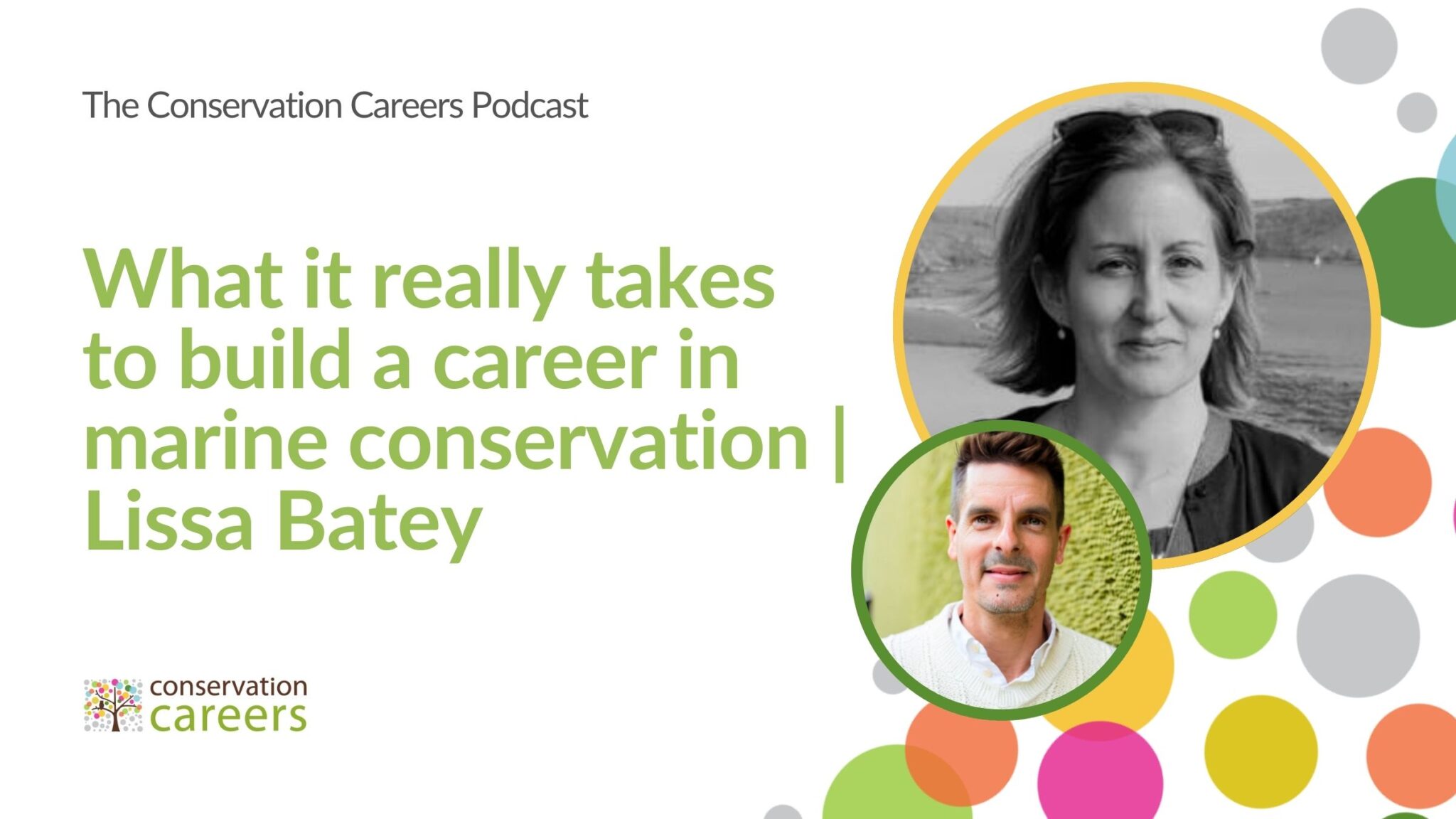
Podcast | What it really takes to build a career in marine conservation | Dr Lissa Batey

How to build a meaningful career protecting the ocean by working with people, communities, and partners, with our guest Lissa Batey.
If you’re interested in building a career in marine conservation, this episode is for you.
Today’s guest is Dr Lissa Batey, a marine conservation professional whose work brings together communities, partners, and organisations to deliver meaningful change for marine ecosystems.
In our conversation, we explore what a marine conservation career really looks like. Lissa shares her own career journey, what her role involves day-to-day, and how working with people – rather than just species or habitats – is often the key to protecting our oceans in the long term.
We talk about the skills needed to succeed in marine conservation beyond technical science, including communication, facilitation, and collaboration.
Lissa also offers practical advice for students, early-career professionals, and career switchers who want to work in marine conservation but aren’t sure where they fit, or whether they need to follow a traditional scientific pathway.
It’s an honest, grounded conversation about marine conservation careers, the realities of working in the sector, and how to build impact by working with people, not around them.
It’s a thoughtful, practical, and people-powered episode.
Enjoy.
Listen
Watch
Subscribe
You can listen and subscribe to the Conservation Careers Podcast on iTunes, Spotify or Stitcher using the following links, or search for ‘conservation careers’ and you’ll find us!
Resources
- Join CC – www.conservation-careers.com/join
- Lissa Batey – https://www.linkedin.com/in/lissa-batey-b2538567/
Join our live podcast audience!
If you enjoyed the episode, please follow or subscribe so you never miss a new release – and if you can, leave a quick rating or review; it really helps others find the show.
A quick reminder – we record these conversations live with our members. If you’d like to be in the audience next time, stay on for the off‑mic Q&A, and put your questions to our guests, there are two ways to join:
- CC Pro – our members’ community with a busy schedule of events, access to the live Pro Chats audience, resources and templates, plus our job board with 4,000+ live roles at any time.
- CC Pass – access to all our premium training courses, including Conservation Standards Project Management & Design, Communications, Fundraising, Rewilding, Community-based Conservation, Marine Conservation plus our careers-trainings on applications, securing experiences, scholarships and more.
You can compare options and join at conservation-careers.com/join
Thanks again for being here – see you in the next episode.
Transcript
[00:00:20] So I’m Lisa Beaty and I’m director of LB Ocean Consulting.
[00:00:25] Speaker: Great. Welcome, Lisa. It’s really nice to have you on the podcast. Um, yeah, to get to know you a little bit more and to share your story as well. Like we’re here to kinda talk about working as a, a marine conservationist.
[00:00:36] I know you’ve been doing that for, well, 20 plus years from here in the UK and also overseas. As your background kind of shows the world, you know, you kind of traveled around and worked at different places. Um, and as a kind of marine conservation, before we kind of talk about your career and what you’re doing now and the various advice you might offer others as well, looking into the sector, uh, maybe we can start with like, you know, where did your passion for marine biology and kind of conservation come from, or sort a time or moment or something in your past, whether your interest started.
[00:01:07] Speaker 2: So. All began, um, with dolphins. I am the classic marine biologist, uh, who loves dolphins. Um, but that drilled down further into the fact I was bought one Christmas. Um, the book Orca, a Whale called Killer, um, by Eric Hoyt and. That really drove my passion into Orca and their community groups, their structure, the difference between resident and transient pods, the fact they have different dialects depending on where they live in the world.
[00:01:40] Um, as much the same as, uh, you know, we are accented whether you live up north or down south or in the Midlands. Um, and the fact that orcas, uh, you know, different. Types feed on different prey. So you get the fish eating transients and uh, the residents, sorry. And then the mammal eating, uh, transients. And the fact that they use their echolocation differently and they have the ability to go into sort of stealth mode when they’re hunting.
[00:02:10] And, and this whole thing just really inspired me at, at the time that I was, uh, reading that I was also pursuing and doing a lot of, uh, work experience in the field of graphic design. So I spent a period of time not sure which route to take. Um. But I remember having a conversation, uh, with my mom and she said to me, you know, follow your heart.
[00:02:37] But I said, well, I love art, but if I go down an art route, who’s gonna save the whales and dolphins? And that I could never. Reconcile that I could never sort of put that down and go, well, someone else will come along and someone else will do it. And say that real passion and drive was well, what if somebody else doesn’t come along?
[00:02:58] Um, and that meant I took the decision to, to go to university to study marine biology.
[00:03:06] Speaker: Yeah. And just out of interest, do you still do art like in your free time? Is that still a passion that’s there?
[00:03:12] Speaker 2: I have all the materials, um, and, uh, life before children came along. Yeah, I would say yes. Uh, now it’s, uh, it, it’s few and far between.
[00:03:24] There are moments and I sit and paint with the kids, and, uh, sometimes if we go away, I’ll, I’ll get the sketchbook out. Um, but uh, yeah, it’s just down to time.
[00:03:34] Speaker: Okay. Yeah. So orcas, whale Dolphins really interested you and it sounds like you’re interested from a very kind of, almost like a scientific viewpoint as well about different dialects, the different hunting habits.
[00:03:47] Yeah. And to follow your passion into that. So you went to university to study it at Plymouth. What happened next? Then, you know, how, what, what did you study and then what were the kind of key stepping stones be before we start talking about what you’re doing now, like Yeah, sure. Tell us about your painters, your, your career path.
[00:04:03] Speaker 2: So, um, the marine biology course at Plymouth, uh, was, was quite broad. There was perhaps, uh, back then a greater focus on the intertidal and the smaller species, so less on the top predators. Um. There were a couple of modules, but um, it didn’t stop me wanting to pursue a, a doctorate in citation research. Um, and back then I was able to, um.
[00:04:34] Design my PhD and take it to the university, and I did it as a self-funded PhD, which, you know, the fee structure is completely different now. Yeah. Um, I worked part-time in a local shop, um, to help sort of pay my way and did, did things on the side of doing the PhD in order to fund it. Um. As part of that, I got, I progressed from being a demonstrator in labs to, uh, doing some teaching for the university.
[00:05:02] Speaker: Yeah.
[00:05:02] Speaker 2: Um, and as the PhD near completion, I then started properly teaching third year marine biology. And I was then teaching the marine converts, um, and the top predators that had been missing sort of from the program up until that point. Um. I then took on supervisory roles with other students, with, with undergrads and with Masters.
[00:05:24] Um, and because I was, uh, keeping lots of plates spinning whilst I was writing up, um, I, I got the opportunity to do some freelance consultancy work, um, and, uh, juggled doing pieces for Natural England. Um, a couple of environmental impact assessments, um, but also I, I got introduced to the wildlife trusts and I then did some, again, freelance work for them, report writing assessments, uh, policy briefings, and that then led me into the world of policy.
[00:06:04] Um, so I, when I completed the PhD, I initially. Again, there wasn’t a full-time job with the trusts at that point. Um, so I was working about two days a week for them, and I fortunately found another, uh, charity job working as a fisheries and policy officer three days a week. Um, so again, I was, I was, I was still teaching at that point.
[00:06:29] I was doing these, these other two pieces of work. I was volunteering for British Divers Marine Life Rescue, and I became their West Seven coordinator at the time. Um. And then, uh, things changed. The country went into recession. Um, the university ran out of money, you know, in order to pay some of the freelance, uh, lecturers on the side.
[00:06:53] And so the lecturing job disappeared overnight, as did the fisheries and policy officer job. Um, and fortunately within a month, the wildlife trust were advertising for a full-time marine policy officer. And I then got enough. Experience under my belt to be able to, to, to apply for that and, and got the job.
[00:07:15] Um, and I then spent 15 years with the Trusts, um, and worked my way up to become head of marine conservation for the uk, um, before, uh, branching out into, uh, the world of consultancy, which is where I find myself now.
[00:07:32] Speaker: There’s so much kind of hustle and drive in that story that I think you just told in terms of making things happen for yourself.
[00:07:39] Yeah. Although opportunities came along and you made the most of them before that you were juggling, you were kind of, yeah. Self-funding, creating your own PhD. You picking up consultancies, which don’t just kind of fall in your lap. You’ve gotta. Go off and find them and make them happen, and deliver them and make a name for yourself.
[00:07:55] Yeah. What, what has that kind of taught you about sort of starting and progressing in your, your career? Like what have you learned about, like, making things happen for yourself that you think you could share that might help others?
[00:08:08] Speaker 2: I think it, it. The people who get, get on and, and eventually get a job, um, in the marine sector because competition has always been fierce.
[00:08:17] I mean, when I studied marine biology, uh, now many moons ago, there were only 30 of us on the degree course, and, and there were far fewer marine jobs than there are today. I mean, we, we didn’t have a marine and coastal access act. We didn’t have statutory bodies with huge marine teams. We didn’t have the consultancy sector.
[00:08:37] Looking to develop offshore wind back then. So Marine was, was really, really small. Um, and although we’ve got this wider world now in which Marine is in some respects quite vast, the competition is still fierce. So I think, um. As much as it was true when I was starting, I think it’s true today that the people get on, have drive and determination and grit and, and tenacity and mm-hmm.
[00:09:08] And you know, they, they don’t. Fall at the first hurdle, or you know, the first time they get a knock back or they don’t get that volunteering or that internship or, you know, that that placement, they go, oh, well that one didn’t work out. What’s the next thing? Mm. And, and you do have to be a bit like that, sort of just determined and go, well, that hasn’t worked, that didn’t come off.
[00:09:31] You know, I’ll just keep pushing and pushing and, and eventually something will, um. Because as much as the marine scene is, is a lot more diverse as I’ve just said.
[00:09:42] Speaker: Mm-hmm.
[00:09:43] Speaker 2: Um, the competition still remains and, and there are still, there were probably more people coming through the universities with now a Marine or a marine combined degree.
[00:09:53] Mm-hmm. So there are more people flooding the market each year when they graduate, when they finish their masters, you know, if they’re coming out of, uh, a doctorate who then want to, to get. Get into the sector and it’s still, it’s still tough.
[00:10:08] Speaker: Mm. And I think just from my side, that’s something that we see as well in the job market.
[00:10:12] You know, Marine is probably the most popular area of the con conservation movement, if you like. Um, it’s also a growth area, so you’ve got like lots of people looking and also opportunities that are kind of growing and therefore it maintains its competitiveness. You know, getting started and getting going is.
[00:10:29] Often the hardest bit of the kind of career step and something that you kind of navigated really deathly. Yeah. Um, let’s talk about your PhD. I want to talk about your time at the trusts and what you’re doing now as well. Um, before talking more generally about the marine sector, but I’m really interested in your PhD.
[00:10:44] I feel we sort of skipped over that and I want go dig a bit more in it. What were you studying specifically? What questions were you trying to answer? Um, and then sort of, you know, briefly then how, you know, what did your research then actually look like on a, on like a practical level to answer those questions.
[00:10:59] Speaker 2: Uh, so the, the title was The Ecology and Conservation of the Harbor Porus along the west coast of the uk. So that encompasses just about everything,
[00:11:10] Speaker: whatever you fancy do within that reit. A
[00:11:12] Speaker 2: capsule. Yeah. Um, but it was largely driven, like any citation, PhD, you know, what data could I, could I gather? Um.
[00:11:26] What questions could I, I, I pose to, uh, you know, and, and it was, it was a case of, okay, Harpo are known to be shy and elusive. Um, really difficult to study. So it was, it was a combination of shore based work. Well, we’re, yes, they are. The UK’s most frequently cited citation. But where locally could I sit and reliably observe?
[00:11:52] Um. Because as much as there is information in where they’re not, obviously if I’d chosen a site that where I never saw a held pul, I wouldn’t have anything to to write up other than reporting that they’re not found in that place. So where could I sit and observe? Um. What information could I gain from being on a boat and could I get myself on a boat with being self-funded PhD?
[00:12:17] Um, and then, uh, what information could I gained from using acoustics? Um, and, uh, I ended up, um. Sitting on the north coast of Devon, um, and studying two separate sites. Um, and that gave me the ability to look at activity and title and diurnal patterns mm-hmm. Um, in the, in their behavior. Um, and I, I was very fortunate.
[00:12:48] Again, it’s, it’s, it’s a combination of, of pushing and, and having the opportunity, uh. Come along, but I was introduced to a skipper who was running a basking shark survey back then. He was doing it for the Wildlife trusts, a man called Colin Speedy and who’s
[00:13:10] been
[00:13:10] Speaker: on the podcast, by the way. This show’s, well, a small world.
[00:13:13] It is.
[00:13:13] Speaker 2: Oh,
[00:13:14] Speaker: we’ve had Colin, we talked about his amazing book about basking sharks too. Yeah.
[00:13:18] Speaker 2: Uh, I feature in the book some of my, my. My time is, uh, is reported, uh, in the book. So I, Colin said to me, if you come and work as my first mate, ’cause I’d got some sailing experience, um, you can have a place on the boat to collect your harbor puss data.
[00:13:38] Yeah. And I went. On and off the boat for three years. I’d do two weeks at a time. Um, Colin would collect data on purposes when I wasn’t there, so I would get the full seasons, uh, available data. Um, and then at the end of three years when actually I didn’t need any more data for the doctorate, he said, I’ve been let down by one of my first mates.
[00:14:02] Do you want to. Come back on the boat and I worked for Colin in TTO for about six years before the BA Shop project came to an end. Oh. Um, and that was on and off the boat from. Uh, operating at Falmouth in the Southwest.
[00:14:17] Speaker: Yeah.
[00:14:18] Speaker 2: Um, all the way up to the Western a off the coast of Scotland. Um, so occasionally I would train it up to Glasgow, then get the train from Glasgow to Arisa and join the boat either in Arisa or sometimes open.
[00:14:31] And then we would have two weeks sailing off the west coast.
[00:14:34] Speaker: Oh.
[00:14:35] Speaker 2: Um, it was fan. Yeah. Fantastic. Um, you know, I was there. Happily leaning over the rails. Cameron hand photo, IDing citations, you know, bottom nose, dolphins, commons that we came across. Um, whilst, you know, collecting the data on the harbor porus, but delighting in my first ever hump back off the aisle of Sky.
[00:14:59] Um. Minky whales, fin whales off in the distance. And of course basking sharks that, you know, tail one side of the boat, mouth the other. And, and our volunteer crew who were sort of paid holiday and guests just aghast, you know, the sheer size of, of the animals. So, uh, and in all weathers, I should say, had a few hairy moments as well.
[00:15:22] It wasn’t all just, you know, plain sailing. Uh, we had some interesting. Storms and lightning and, uh, gale conditions as well. So,
[00:15:33] Speaker: wow. What a, what an experience that must have been though. Yeah. Tell us a bit about the sort of practicalities of working on a boat as a kind of marine scientist, uh, as you kind of were right then.
[00:15:43] Yeah. What, yeah. Bring it to life for us. Like what does a day typically look like for someone doing the sort of work you were doing?
[00:15:49] Speaker 2: Um, well, to kick off to, to, uh, uh, on a slight. Comedic element, um, was the fact that I was the most junior member on board when I first, you know, it would be yeah, the skipper and the first mate and volunteer crew.
[00:16:04] The volunteer crew were paying guests, so they got the best bunks.
[00:16:07] Speaker: Yeah.
[00:16:07] Speaker 2: Um, I got what was known as the pipe cop bunk. I was also one of the smallest, quite petite. Um, so I fit as well. But that meant, um, sleeping in the main saloon and, and there would quite often be somebody. Uh, you know, beneath me on what was the sort of, uh, seating around the dining table, if you like.
[00:16:26] Mm-hmm. Mm-hmm. But there was this shelf, the, at the back of the seats that tapered towards your feet and the, and then there was a bar about elbow level, and it was a proper bunk, but it was known as pipe cop bunk. And you, you literally. Could, I could just about sleep on my side, but most of the time you slept on your back, um, arms by your side or across on your chest and you didn’t move and you, you just learn to sleep like that.
[00:16:52] And to be honest, after a day in the fresh air and hard work, you climbed into your bunk and you were out. But, um, uh, yeah, some of my friends afterwards, um. Uh, observed me and, and they said I, I slept like a dead person. ’cause I slept with my, my hands across my,
[00:17:11] Speaker: like
[00:17:11] Speaker 2: in a coff I didn’t move. Yeah, exactly.
[00:17:14] It’s, um, uh, a coughing with an open side. Um, so, uh, so yeah, it wasn’t all, you know, luxurious and, uh, you know, but. Colin is a great chef. Um, he cooked and we had some fantastic food. I learned to make a cup of tea on a 45 degree angle. Um, but you know, when you pour, pour water out of the kettle and it doesn’t come down straight, it comes.
[00:17:40] So you have to know where to put the mug to catch the hot water. Um, and. The, the best time on, on being on board the boat was normally breakfast because if, if you, the weather was fine and dry and you wanted a moment to yourself, you know, you, I’m not particularly a morning person and if everyone’s getting up and chatting to go up on deck, um, with your breakfast, no cup of tea and just.
[00:18:09] Be still. And we would always, we wouldn’t, um, we would occasionally go into, into Harbo, you know, showers and facilities, but quite often we would be in a lock or around the coast or tucked up a river. Um, so it was quite nice to just go up a really still calm morning before the day began.
[00:18:28] Speaker: Mm-hmm.
[00:18:29] Speaker 2: Um, and then we would always go out on transact.
[00:18:31] So it would be, uh. Working sort of from the moment we kind of hit the start transect line and then we would do, uh, zigzag patterns along the coast. We would break for lunch, but come dinner we would always be, be maed up somewhere, um, tucked away out of the weather and saying that would be chance to relax.
[00:18:52] Talk about the day sightings. Um. And obviously if the weather was, was slightly hairy, sometimes, you know, you couldn’t get out or um, you would be sitting out. ’cause once the sea state gets over a a certain level, then actually your chances of seeing anything diminish unless it’s right beside the boat.
[00:19:10] Speaker: Mm-hmm.
[00:19:11] Speaker 2: Um, so sometimes we would be. Dodging weather, but it would be hard work long days in the summer. You’d, you could go on until, you know, um, ’cause you’ve got the daylight. Um, and until really everyone got hungry. Um, and we would work Saturday to Thursday and then Friday we’d turn around the boat again, um, do all the washing, cleaning, restocking of food, um, and then ready for the next guests on the Saturday morning and off we go again.
[00:19:41] Mm.
[00:19:43] Speaker: Amazing. Sounds like an amazing experience. Hard work, but yeah. What an adventure as well.
[00:19:48] Speaker 2: Absolutely.
[00:19:49] Speaker: Yeah. Let’s cycle forwards then. So you then, for best part of, I think, was it 15 years, you then worked for the Wildlife Trust and you became their head of marine conservation. Yeah. What was that like?
[00:20:01] What was that? What did that role entail? Yeah, and, and let’s hear about how things had changed for you. Like what was it like being the head of conservation at the Wildlife Trust?
[00:20:10] Speaker 2: Uh, so central team is, uh. They, they don’t have a public membership. So if you are a mem a member of the Wildlife Trust, you become a member of your local wildlife trust,
[00:20:22] Speaker: of which there is
[00:20:23] Speaker 2: something like
[00:20:23] Speaker: 50 or so in different wildlife
[00:20:25] Speaker 2: trust 46 on the county
[00:20:26] Speaker: level.
[00:20:26] Thank
[00:20:26] Speaker 2: you very much. Yeah. Yeah. Um, but then those 46 individuals are members of the central team. Yeah. And effectively, uh. Central team’s role is to support the 46 and to provide the voice to government. ’cause if you’ve got a minister, you don’t want 46 individual marine staff trying to vie for your attention and a meeting.
[00:20:49] Yeah. And et cetera. So central team do that on behalf of the trusts. Um. Which means it’s heavily involved in trying to change and influence government policy.
[00:21:01] Speaker: Mm-hmm.
[00:21:01] Speaker 2: It’s fast-paced. It’s, uh, supported by, uh, a comms team and a campaigns team to ensure that you’ve got the, the public messaging, social media, um.
[00:21:14] The reports you are writing are glossy and interesting, and they’re converted into a policy briefing for, um, a parliamentarian. Um, it might be engaging with the campaigns team to run a campaign to get the members to all descend and on London and March on Westminster. Mm-hmm. Um. It is every day was different.
[00:21:38] Um, you know, you, you might be campaigning on marine research areas one day, meeting with fishermen. The next, uh, supporting the, the communities team with, uh, running a marine awareness event. Um, so. It, it, it was fast paced and exciting, and for me it was about delivering change. It was knowing that what I was doing was making a difference.
[00:22:07] Mm-hmm. And that’s what really drove me into the, the policy sector.
[00:22:12] Speaker: How did you find that transition from being a kind of research. Not on the ground, but out at sea to now being at the more national kind of policy. Yeah. Influencing level where you say it’s a different type of impact, but like how did you find that transition and what sort of impact do you feel you were having when you were, you know, at that kind of more national level?
[00:22:33] Speaker 2: So I. I think it came along at the right time in my life, in that, um, uh, you know, personally I was getting married, I was having children.
[00:22:43] Speaker: Mm-hmm.
[00:22:44] Speaker 2: Life at sea would no longer have worked anyway, even if the project had still continued. So, uh, uh, as much as I miss not being out on a boat and, and suddenly people would go, oh, but you’re a marine biologist, you must be on a boat all the time.
[00:22:59] Speaker: Mm-hmm.
[00:22:59] Speaker 2: Um, and I would say. Now I sit behind a laptop screen and I spend my time on trains to, to and from London, and I’m in meetings a lot. Mm-hmm. Um, so it, it was no longer the, what people think a marine biologist is and does. Mm-hmm. Mm-hmm. Um, but incredibly rewarding when you know that. Government has made a decision and it’s perhaps been on a lot of behind the scenes, engagement, conversations, co-creating, sometimes sitting there and going, okay, we’ve got a problem.
[00:23:36] How do we solve it? You know, what, what can we come up with? And, and maybe it wasn’t so, uh, out there in the public domain, but, um. On a personal level to know when something’s announced for nature for conservation and, you know, you’ve been, uh, influential in that, then it’s hugely rewarding.
[00:23:56] Speaker: Yeah. What happened after your time at the Wildlife Trust then let’s sort of complete the, the career story before we think a bit more broadly about marine careers.
[00:24:06] Yeah. What happened next? Uh,
[00:24:09] Speaker 2: so I. I decided I need, needed a change. Mm-hmm. And, uh, where, where to go next? Do I stay in the sector? And, uh, that felt like. You know, I, I could have stayed within the NGOs, but actually it would’ve been a very similar job under a different banner. Mm-hmm. Um, or do something different.
[00:24:31] And I made the decision to join a small environmental consultancy called Nature Bureau. Mm-hmm. Um, where I was Senior Marine Ecologist, and that, that enabled me to step outside of the UK Wildlife Trust are a uk.
[00:24:50] Speaker: Mm-hmm.
[00:24:51] Speaker 2: Uh, NGO, uh, unlike sort of WWF or RSPB or even a, uh, Marine Conservation Society. Um, but I’d been very UK focused.
[00:25:01] I’d only dabbled in EU when we were still part of Europe. Um, and so working for Nature Bureau meant I was able to broaden my horizons and work with the European Commission. Uh, do some work on marine strategy framework directive, uh, lead, uh, a project which is still ongoing, which is due to complete this year, looking at seabed carbon for European waters.
[00:25:28] Um, and it gave me a different way of working. It was more about actual on the ground delivery rather than trying to convince somebody else to do it. I was sort of not getting back to roots on. Research, it was, its delivery of, of the projects as opposed to, um, pushing for them.
[00:25:51] Speaker: Mm-hmm.
[00:25:52] Speaker 2: And then, um, just this last year, I made the decision had a, the confidence to do it.
[00:26:00] ’cause I think, um, if you’d asked me even two years ago, um. People said to me when I was leaving the Wildlife Trust, have you not thought about going freelance? And at the time I was like, no, no, no, no. Even, even already having, you know, having been in the sector 20 odd years. Um, but having made a a, a Step to Nature Bureau, it gave me the confidence to think, actually no, I can do this.
[00:26:28] Um, and so from the start of January this year, I set up my own company and, uh. I’m now completely freelance.
[00:26:37] Speaker: LB Ocean Consulting.
[00:26:39] Speaker 2: Yeah. I’ve joined, uh, NLA International as an associate.
[00:26:45] Speaker: Mm-hmm.
[00:26:45] Speaker 2: Um, so I. Do have a team of freelance fellows mm-hmm. To work with. Mm-hmm. And to, to collaborate with. So not completely, uh, out there on my own.
[00:26:58] And, um, it is so much about having, having a network. Um, but I’ve got some really interesting work in the pipeline and, uh, yeah, it’s exciting times.
[00:27:10] Speaker: Exciting. Yeah. So you’re a month in. Yeah. Really exciting times for you. Um. What does it look like being a freelancer? Like Yeah, obviously a network’s there.
[00:27:23] It’s all about generating business. And securing projects. Yeah. What have you learned? I know it’s very early days. Let’s caveat that, you know, um, but what have you learned about like, being a freelancer? That if there’s someone out, they’re thinking, you know, I might want to be a freelancer at some point.
[00:27:37] Like, just painters. Yeah. Just bring it to life for us. Like, you know, what, what’s it like and what have you learned about what, what’s, what helps to make it successful?
[00:27:46] Speaker 2: Um, having a network helps to make it success. Successful. Having experience of. Delivering consultancy projects means you, you know, how to tender.
[00:27:59] Speaker: Mm-hmm.
[00:27:59] Speaker 2: Um, you know how to use the scoring criteria and evaluation. Um, you know what to expect. You also know how to cost things. Mm-hmm. Um. Like I said, I don’t think I could have done it straight from the wildlife trusts, even though the network existed, networks broader because I, I moved into a, uh, a Europe, you know, mainly European, but, but global, uh, consultancy.
[00:28:26] Speaker: Yeah.
[00:28:26] Speaker 2: Um, and again, you know, to go back to the sort of tenacious, start the. The always looking for the next thing or, uh, the next contact or thinking outside the box and thinking, well actually that person’s doing that there. How could that relate to over here? And could I connect the dots and could I join them?
[00:28:52] And, and, and also. A few, uh, something I’ve said to a number of people is that if I can’t help you, ’cause maybe my skillset isn’t across what you are looking for, I probably know who can.
[00:29:06] Speaker: Mm-hmm.
[00:29:08] Speaker 2: And, and that is working, um, in a mutually beneficial way. ’cause people are pulling me in when they can’t and I’m pulling them in when, so, so it’s, it’s working collaboratively.
[00:29:21] Um. There is a certain amount of, uh, of freedom and, uh, you know, I, I got a message from a friend, uh, just a couple of weeks after Christmas and she said, how’s the new boss working out? You know,
[00:29:37] Speaker: yourself?
[00:29:38] Speaker 2: Um, yeah, exactly. Um, uh, but having that freedom to. And my own diary and manage my meetings and, uh, not be, uh, quite so stretched, um, is, is a joy.
[00:29:52] Speaker: Mm-hmm.
[00:29:53] Speaker 2: It’s, it’s fun and games juggling, you know, because you have to do, you can’t just do the project work. Because if you don’t do the business development on side, then you get to the end of the project and you’re gonna fall off a cliff.
[00:30:05] Speaker: Yeah.
[00:30:05] Speaker 2: So you have to be good at multitasking. Yeah. ’cause you have to do the business development.
[00:30:09] You have to do the relationship management. You have to be tendering all the while, while delivering projects so that you’ve got that just constant tick over of work. Um, yeah. Otherwise you’ll be doing sort of a rollercoaster.
[00:30:24] Speaker: Yes. It’s that management of workflow, so you’re not too quiet and you’re not too busy, which can be equally as stressful.
[00:30:31] Yeah. To kind of, and you have enough in front of you that you can actually relax and focus on what you’re doing. It’s, it’s a real balancing act, but it Yeah. It sounds like exciting times for you as well. Yeah. Let’s talk about the kind of the marine sector a bit more broadly, like just sort of pan out a little bit then if we can.
[00:30:46] So. If someone said to you like, you know, what does, uh, what is a marine conservation job? Or what are the different types of jobs available within the marine environment? I mean, to me, the marine environment is, is a job market in itself. You know, Marine being like a cause of work. And within that there are so many different roles, so many different jobs you can, that you could, you know, follow and develop.
[00:31:07] But yeah, just you are so much more expert on this than I am. Like, tell us a bit about what the, the kind of key marine jobs are that you see. Not just in the uk, but like, you know, just a, a kind of sector wide level. Could you, is that even possible to answer? Like what, what are the different, well, the key marine jobs that are out there and, and maybe skill sets that are useful?
[00:31:28] Speaker 2: Yeah, I’ve been, I’ve, uh, you know, as soon as um, my children’s primary school teachers have discovered what I do for a living,
[00:31:37] Speaker: you’ll be called
[00:31:37] Speaker 2: in. I have been roped in on, on both years to go and, you know, talk to the class and, uh, tell them what it’s like to become a marine biologist. And the point I’ve made to them is that a.
[00:31:51] If you’re going to choose a degree and, and, and there are now a whole wealth of avenues into, uh, the job market. It doesn’t have to be the degree group, but if you are going to choose a degree, then do one you’re gonna enjoy.
[00:32:06] Speaker: Mm-hmm.
[00:32:06] Speaker 2: Which obviously does lead a lot of people into Marine because they, oh, it’s gonna be fantastic.
[00:32:11] I wanna learn about the sea and everything that lives in it.
[00:32:14] Speaker: Mm.
[00:32:14] Speaker 2: Um. Really that can take you anywhere. And if I just look at my cohort that came through. Yeah. Um, you know, those 30 people who did marine biology, um, some of them have moved outside the sector. ’cause at the end of the day, the degree demonstrated that they could apply themselves.
[00:32:33] So some of them are doing completely different things. Others have gone into teaching. ’cause they’ve used it as a stepping stone to become a, a science, a secondary school science teacher. Or, you know, they’ve, they’ve taken it down, down that route. Some have gone into laboratories, some have stayed in research and they’ve done doctorates and they’ve become post grads and now they’re lecturers and they’re, um, they.
[00:32:59] Heading up, uh, departments or their associate professors Now, um, other people have gone into the conservation sector in terms of, uh, charity working, uh, non-government organizations campaigning.
[00:33:15] Speaker: Mm-hmm.
[00:33:15] Speaker 2: Um. Others have gone into consultancy and, uh, some have gone into, uh, you know, worldwide, uh, problem solving.
[00:33:28] Others are working, uh, in terms of delivering environmental impact, um, understanding, uh, whether it’s ports shipping. Renewable energy. Um, so some of them have specialized more in, in the development field, which of course is a growing market. Mm-hmm. Um, and so some of them are working for, for offshore wind farm developers.
[00:33:56] Some of them are, are, uh, within oil and gas sector. So it really is broad and can be anything you want to make it. Some people have gone, um. Down the route of the tourism sector. Mm-hmm. So they’re on cruise ships and they’re acting as guides. Mm-hmm. Um, and or they’re sort of expedition leaders for some of the more, um, uh, out there, you know, experiences that you can have with new scientists or National Geographic, you know, when you go and book a holiday, it’s not necessarily what we all think of.
[00:34:34] It’s, it could be on a crew, it could be on a, uh. Expedition. Um, and so sometimes people have gone to support those, those roots as well.
[00:34:45] Speaker: It just shows the sort of breadth of work that you could do actually really nicely. Yeah. So what, what was in there? Communications, education, science and research. Um, ecotourism.
[00:34:56] Yeah. Broader sort of development. Yeah. Through to consultancy now, which is sort of project management as well, there’s all sorts of kinda skill sets wrapped up in there that you could deploy to help the marine. Yeah. Environment. What advice would you give someone? Well, actually no, before I ask that question, I want you to ask like, how important is like an academic degree or a master’s or Yeah, the kind of the, you know, the, the more formalized qualifications for a career in the marine environment.
[00:35:22] It, someone says to you, I wanna be a marine conservationist. Um, do I need a degree? Do I need a master’s? Do I need a PhD? Like, what would be your response to that?
[00:35:32] Speaker 2: I think it depends where you want to go. If you want to be a conservationist. No, you don’t necessarily need a degree. Mm-hmm. There are other ways and means in through experience.
[00:35:41] Um, if you want to become a formalized researcher, they will ask for a degree. You know, they, you’ll, you, you’ll have a, a career path that takes you through the academia. Um, equally, when I applied for my marine policy job, they asked for a degree. Mm-hmm. Um. So I think it depends on your route and your pathway.
[00:36:09] They are becoming more, more diverse in, and I think that’s the nature of the world we now live in, in that, when I first started, I think just about everything asked for a degree, whereas they don’t so much now. If you are, if you’re going into, uh, into the conservation sector as opposed to, um, like I say, academia, um.
[00:36:34] Again, consultancy would probably, again, depends what sort of consultancy. So I think there are, there are multiple avenues, but I think it depends on really what your ultimate goal is, um, and, and how you want to, you know, the pathway you want to take to get there.
[00:36:54] Speaker: Yeah. Which is totally aligned to, yeah.
[00:36:58] What we see from our side too, really does depend upon that ultimate goal. And there’s different routes to getting there. It’s not always academic, although it can absolutely help in certain situations. Yeah. More than others. Um, what advice would you give someone? Yeah. Who’s really wanting to follow a career into marine conservation and follow their passion like you did?
[00:37:18] What? Yeah. What practical hints or tips do you think might really help someone to kind of move forwards with a bit of confidence or a little bit quicker?
[00:37:26] Speaker 2: Um, the very, very simple one. I, I can give a more broader answer, but the very simple one is don’t be afraid to pick up the phone. Somebody said it to me and it, and it didn’t at the time.
[00:37:40] I remember thinking, you are, I don’t know. Um, and it’s, but it’s probably more so true today because, um. I know from, from talking to my, my kids and from some of the early career starters that I’ve managed, um, they don’t pick up the phone like we used to.
[00:38:03] Speaker: Yeah.
[00:38:03] Speaker 2: Um, they have to have an agreed time that has been prearranged by text before they phone.
[00:38:09] And even then, would it be a phone? Would it be a video call? You know, it’s not the just pick up the phone as we would’ve had. And the reason I say that is when I. I met somebody, um, who had already started getting out on a boat, seeing dolphins, and doing a bit of research whilst we were at university together.
[00:38:29] Mm. And I said to him, how, how did you find that? How did you, how did you get that opportunity to be on a boat and see dolphins? ’cause that was at the time, my goal, I want, I wanted to be out there and see the animals. And he said, I picked up the phone. And at the time I remember thinking. How do you get from picking up the phone to actually being on a boat?
[00:38:50] And it was basically, don’t be afraid to call people cold. Don’t be afraid to reach out and say, what advice would you have for me? Or, you know, could you see a route to, or, I want to be out on a boat with dolphins, or I want to be on a plankton survey, or I want to, you know, pick up the phone and or make reach out.
[00:39:12] Nowadays, you could send an email, but the risk is you get lost in somebody’s inbox.
[00:39:16] Speaker: Mm-hmm.
[00:39:17] Speaker 2: Whereas a phone call is much more personable.
[00:39:19] Speaker: Mm-hmm.
[00:39:20] Speaker 2: And. I remember him saying it stuck with me. And when it came to wanting to pursue an undergraduate project on Ations, I went and knocked on lecturer’s doors and sort of didn’t stop until someone went, I’ve heard there are some bot news dolphins off of Tin Ma.
[00:39:41] Maybe we could make a project out of that. Um, and it, and it stuck with me that essentially I had. Picked up the phone to that extra.
[00:39:49] Speaker: Yeah.
[00:39:49] Speaker 2: Um, and, and that advice to, to not be scared to reach out, um, and to take the initiative, don’t wait for it to fall in your lap, was something that, that really stuck with me.
[00:40:01] Speaker: Yeah. I think that’s really good advice. Yeah. It’s something we often sort of say, if you are going, if you are applying for a job, you know you’re trying to secure an interview, it’s quite good to pick up the phone and have a chat before you put your application in. It builds, it, builds the rapport. You know, you, you become a
[00:40:17] Speaker 2: mm-hmm.
[00:40:18] Speaker: A name that they recognize when your application drops in. It also helps to kind of glean knowledge and information. It’s gonna help the application as well. So it’s good to have some questions. Obviously that’s gonna. You couldn’t figure out any other way. They’re not just stupid questions. You could have just read it on the website or whatever, but you know, there’ll be some things you’re not quite sure about you’d like to discuss, and it’s a really nice Yeah.
[00:40:37] First approach when kind of Yeah. Building that relationship. Yeah. But it does take a leap of confidence. Absolutely. I’m, I’m still someone who doesn’t like, particularly picking up the phone. I’m sure many people are like that too, but when you do it, it’s not that bad. Um, yeah. It just needs to, you know, you just need to kind of think about it as.
[00:40:54] Making friends, I dunno about you, but I often find, and I, I see this all the time through these sorts of conversations that conservationists we’re a friendly bunch, typically.
[00:41:02] Speaker 2: Yeah.
[00:41:02] Speaker: We all, we’re all here for, you know, the same purpose and reason. We want to help, you know, the animals and, and habitats that we care about.
[00:41:10] And,
[00:41:11] Speaker 2: and we all started where people, where early career starters are now. We were all there originally, you know. I attended the Coastal Futures Conference last week in London, and I was there originally standing at the, the sidelines watching all these people who appeared to know each other mingle and, and chat and not knowing how to break into it.
[00:41:35] And then, you know, last week I was being approached by students saying, how do you, how did you. End up where you are. Um, and, and some of those being brave enough to kind of, you know, come over with a, a, a coffee in hand and to, to start the conversation, but totally appreciate how, how tough it’s when, when, when you look in from the sidelines, it looks as though everyone else knows each other.
[00:41:59] Speaker: Mm-hmm.
[00:41:59] Speaker 2: Um, but it. Yeah, it’s, and the other piece of advice I would have is try and get as much experience as you can by any which way. Mm-hmm. Because that just adds color to your cv. Mm-hmm. So you’re not just saying, I’ve done this, this, and this, and I’ve ticked these boxes. It shows that you are, you are thinking outside the box.
[00:42:24] Speaker: Mm-hmm. Absolutely. It shows you don’t just know something, you have done it and you can do it as well. And, and again, it’s that networking piece. ’cause you meet other people doing similar things and Yeah.
[00:42:35] Speaker 2: Even if it’s something in your own time at the weekend, you know, go, going along the shore rock pooling or, or joining in a, you know, a, an organized rock pool session.
[00:42:45] Um, and learning species. Again, it’s, it’s, it’s just something else that you can, you can comment on that you’ve done. Been to or seen.
[00:42:56] Speaker: Yeah. Yeah. Great advice. Um, as we sort of start to wrap up our conversation, we’ve got some people who are listening as well from our audience. We’re gonna, after our recording, we’re gonna hand over to them to ask, so they can ask their questions of you.
[00:43:09] I wanna ask some kind of more open questions if I can. Then, Lisa, like, so the first point I, I usually like to ask is if we could take you anywhere on the planet and you could see any species, like where would you love to go and what would you love to see?
[00:43:25] Speaker 2: Orca, I’ve missed them despite them being the reason I became a marine biologist.
[00:43:31] I’ve missed them by days.
[00:43:33] Speaker: Mm-hmm.
[00:43:33] Speaker 2: I’ve been, I’ve, I’ve just, no, not quite been in the right place at the right time. Um, so whether that’s Shetland, Vancouver,
[00:43:43] Speaker: mm-hmm.
[00:43:44] Speaker 2: Uh, or elsewhere, you know, straight to Gibraltar even. Um, yeah, I would love to see Orca.
[00:43:51] Speaker: That sounds fantastic. When was the last time you saw an orca?
[00:43:56] Speaker 2: I’ve, I’ve never seen them in the wild.
[00:43:59] Speaker: Mm. There’s unfinished business.
[00:44:01] Speaker 2: Exactly. Yeah. I, I met somebody, um, uh, in London last week and he lives on Shetland, and I said, I need to come up to Shetland. And he said, need, need, that sounds quite, you know, determined. And I said, it’s to see Orca.
[00:44:16] Speaker: Yeah. Yeah, there was some great,
[00:44:19] Speaker 2: yeah, he had, he, he had them go under his, uh, rowing boat, which he said was slightly hairy.
[00:44:25] When, when the, when the pod were coming down and he said he just stopped rowing and they, they ducked under him and carried on going, oh.
[00:44:33] Speaker: So charismatic. Yeah. Some great natural history. I, I remember watching David Attenberg orcas feeding off Shetland. It just looked and really coming right into shore.
[00:44:41] Yeah. I’ve never seen a whale in the wild and it’s unfinished business for me. And I have a whale watching trip booked in about three weeks time in San Diego. So I’m really looking forward to my morning in a boat and I’m hoping I’m gonna see something. Yeah. But we’ll, we’ll see. No guarantees. Yeah,
[00:44:58] Speaker 2: you’ve gotta keep me posted.
[00:44:59] I want pictures.
[00:45:00] Speaker: Yes, yes. Yeah, I’ll send, um, when we think, let’s think about the marine environment more generally, and it, it’s the same with conservation, um, globally, is that, you know, when we look at figures, assessments, reports, there are really startling worrying trends that things just progressively get worse.
[00:45:20] Yeah. Um, what do you think we need to do as marine conservationists to really. Turn things around to really see things starting to improve again, to really tackle the problems that the marine environment is facing, you know, at, at the level and at the speed that we require.
[00:45:40] Speaker 2: I think we’ve got to start delivering on the ground.
[00:45:44] Um, it’s, it’s, no, it’s great when you get world leaders coming together and committing to change. How long does that actually take to happen? Or, or how, how often do we find ourselves back in the press with a further meeting and they’re reaffirming a commitment to climate change? They’re reaff or, or they’re accepting that we’ve passed the 1.5 threshold and, um, but we’ve now got to make sure that we don’t exceed 2%, uh, two degrees.
[00:46:19] Um. So there is always creep in politics. It it, you know, you commit to something and quite often that deadline comes and goes or that target comes and goes and then you suddenly go, oh, well we, well we didn’t quite make, um, the deadline by 2020, but we’ll make it by 2030. And so for me, yes, it’s important to have the international.
[00:46:47] Uh, world leaders on a stage raising awareness, making commitments, but they’ve got to be stuck to.
[00:46:55] Speaker: Mm-hmm.
[00:46:55] Speaker 2: And if, if you’re going to get that political creep, it’s then for me about what, what we can do as conservationists to actually not wait for, um, politics to catch up with us and where, where we can deliver on the ground and where those in the marine sector.
[00:47:16] The businesses who are operating in that, who are extracting or, um, benefiting what they can do, let’s, let’s not wait for governments to, to, uh, legislate for it. Everybody’s got responsibility and, and capability to do things now.
[00:47:36] Speaker: Mm-hmm. Love that. Politicians need to step up and deliver against the promises they’ve made.
[00:47:42] Um, but in parallel to that, the conservation movement needs to just drive ahead regardless. Yeah. Is what I heard. Yeah. Um, and how are you feeling about, um, the future of the marine environment? Are you feeling optimistic, hopeful? Do you think we can turn things around? Have we got a shot? Are we going in the right direction?
[00:48:04] Or are you pessimistic, do you think actually. Much of this is lost. Like, where’s your feeling for the future?
[00:48:12] Speaker 2: I have always prided myself on being glass half full, so I’m, I’m positive. I, there are some things I don’t think we can turn around. I think we have already gone too far. I think it’s now more about, um.
[00:48:32] Where we can restore and what we can learn to adapt to it. You know, there’s so much, uh, talk around, uh, climate and con conservation mitigation, but it’s also about giving nature the space to be able to adapt. Because sea level rise is happening, sea warming is happening.
[00:48:56] Speaker: Mm-hmm.
[00:48:57] Speaker 2: Um, we’ve got to ensure that there is enough resilience in the environment to allow them to change and adapt to a new future.
[00:49:05] Speaker: Mm-hmm.
[00:49:06] Speaker 2: We can’t, we are not going to get them back to where we were a hundred years ago.
[00:49:11] Speaker: Yeah. Okay. On that. Largely hopeful note. Lisa, it’s been really nice talking to you. Thank you for jumping on the podcast and sharing your story and all the very best with your consultancy as well. Thank you. LB Ocean Consultant.
[00:49:24] Yeah. I’m really excited to see how you grow and expand and where that takes you. Yeah. If people wanna find out more about you and connect with you, uh, where should they go? Where should we send them?
[00:49:36] Speaker 2: Um, I’m on LinkedIn, um, but shortly there will be a, uh, lb ocean consulting.com website. It’s currently in build, so watch this space.
[00:49:48] Speaker: Lovely. We’ll drop your LinkedIn link below wherever people are listening to this. Uh, yeah. And thanks again. It’s been lovely to chat.
[00:49:56] Speaker 2: You too. Thank you.