

From alps to action: A wildlife biologist’s journey in alpine conservation
Alessandro Forti’s path to wildlife conservation was set at a young age. Alessandro’s parents would often take him to the Alps for long days hiking, climbing and spotting wildlife, and there he developed a profound connection with the natural world which left a lasting mark.
Those early days in the mountains sparked his curiosity about the complexity of alpine ecosystems, and ultimately led him to a career as a wildlife biologist, preserving the very environment that shaped him.
Today, Alessandro is a PhD student at the University of Turin, Italy, and his research focuses on One Health with a special focus on wild animal abundance, hard ticks, and pathogens. He also continues to work on alpine species and ecosystems to understand the challenges these environments face, from climate change to human impact.
His research has taken him to some of the most remote and challenging environments in the Alps, where he has witnessed firsthand the threats facing species in these fragile ecosystems. His passion for the Alps and its wildlife runs deep, and it drives everything he does, from his research to his hands-on conservation efforts.
The beginning of a conservation journey
Although his love for the mountains began as a child, let’s rewind to 2012, when Alessandro’s journey into wildlife conservation began in earnest as a bachelor’s student still getting his feet wet in the world of wildlife ecology.
He undertook an internship in the Adamello-Brenta Nature Park, located in the Central-Western Dolomites in Italy. This park is historically significant as, at the end of the 1990s, it was the last stronghold of Brown bears (Ursus arctos) in the Italian Alps. Today, thanks to the concerted reintroduction efforts led by the park, the region is home to a population of approximately 100 brown bears.
During his internship, Alessandro worked closely with park rangers to monitor these large carnivores, gaining invaluable field experience. However, it was the focus of his first research that truly captivated him – the Rock Ptarmigan: a mountain bird that lives at altitudes above 2,500 metres.
“I was obsessed with the ptarmigan” he laughs, having spent countless hours in the high-altitude environment of the Dolomites observing their behaviour and ecology. This solidified his commitment to understanding and protecting alpine wildlife.
Looking back, Alessandro credits these early experiences with shaping his career. “I didn’t just work there, I lived there,” he explains. “The more I learned, the more I realised this is what I wanted to do for the rest of my life. It was an adventure, and a calling all rolled into one.”
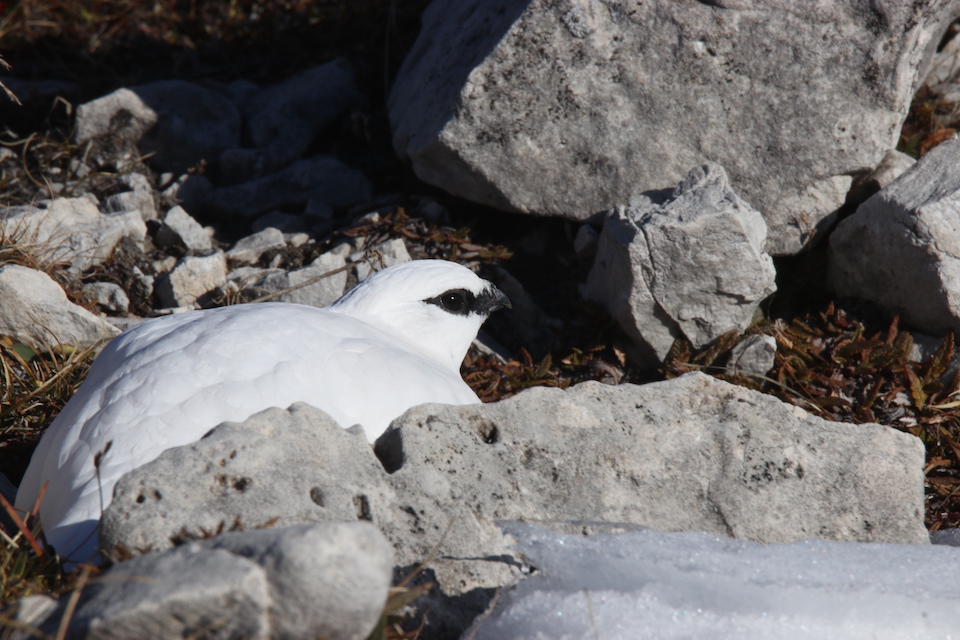
A rock ptarmigan male in winter. This bird, which molts seasonally, experiences phenological mismatch caused by climate change. With warmer temperatures, snow may melt earlier in the year, leading to a mismatch where the bird’s camouflage no longer matches its environment. This can make them more vulnerable to predators and could affect their survival rates, population, and where they can live. Credit: Alessandro Forti.
From early fascination to focused research: Alpine species and habitat challenges
Alessandro’s early exposure to the complexities of alpine ecosystems helped him recognise the mounting challenges facing these habitats. Global warming, overharvesting of resources, and the rapid growth of tourism all contribute to their degradation. These changes have had significant impacts on species that rely on the unique characteristics of alpine environments.
For example, the mismatch between the plumage of the rock ptarmigan and the altered snowless winters, and the changing coat of the snow hare, are a direct consequence of climate change. Alessandro has witnessed these challenges firsthand, further fuelling his drive to study and protect alpine species.
Alessandro’s deep connection to the region, combined with his scientific curiosity, has driven him to make the protection of these species a lifelong mission. “The awareness of the need to protect these delicate species and habitats, not only for ourselves but also for future generations, has inspired me to focus on alpine wildlife,” he explains.
Research on alpine Marmots: Tracking movement in a changing landscape
Fast forward to 2019, and Alessandro found himself knee-deep in the world of Alpine marmots (Marmota marmota). These charming, burrowing rodents native to Western and Central Europe are social creatures that live in high-altitude grasslands.
From 2019 to 2023, Alessandro coordinated fieldwork at the Paneveggio-Pale di San Martino Natural Park, to understand the ecology, abundance and the spatial behaviour of Alpine marmots and their interactions with their environment. The study area consisted of subalpine grasslands, which, like many alpine habitats, are undergoing rapid changes due to global warming and human activity, such shrub encroachment due to the abandonment of pastures.
Now, tracking marmots isn’t like tracking your average house cat (as fun as that might be). You can’t just stick a GPS collar on them, so Alessandro and his team had to get creative.
“We marked them with individual coloured ear tags,” he explains. “Then, we tracked their movements using binoculars and high-tech map grids. It was like playing a giant game of hide and seek…with marmots!”
The team’s research revealed some surprising findings which highlighted the importance of habitat quality in determining the behaviour and survival of species in rapidly changing environments. The question became clear: “How are these creatures adapting to a world that’s changing beneath their paws?”
Alessandro’s research brought much-needed insights into how wildlife responds to environmental shifts, a crucial piece of the conservation puzzle.
The challenges of alpine fieldwork: Not for the faint-hearted
Let’s be real: fieldwork in the Alps is no joke. Imagine hiking up steep, rugged terrain, often in freezing temperatures, with a backpack full of equipment. Sounds fun, right? But Alessandro is no stranger to the demands of alpine research. In fact, he thrives on it.
“I’m a bit of a mountain junkie,” he says with a grin. “I love free climbing, ski mountaineering and long hikes. It keeps me in shape for fieldwork.”
But it’s not all sunshine and marmots. “Fieldwork can be gruelling,” Alessandro admits. “You have to be physically fit, mentally sharp and always ready for anything. Sometimes, you’re out there for hours, even days, without any guarantee that your research will yield results. But that’s part of the excitement. There’s always something to learn – even from the failures.”
And for the record, Alessandro’s fieldwork motto? “Practice makes perfect.” But he also adds, “At some point, stop and think. You don’t want to get so caught up in the routine that you miss the bigger picture.”
Alessandro emphasises the importance of maintaining a reflective mindset while in the field. “The more time we spend in the field, the more we learn,” he says. “But fieldwork is a journey, not a sprint. Experience helps us become more confident, but it’s essential to remain humble and reflect on our work.”
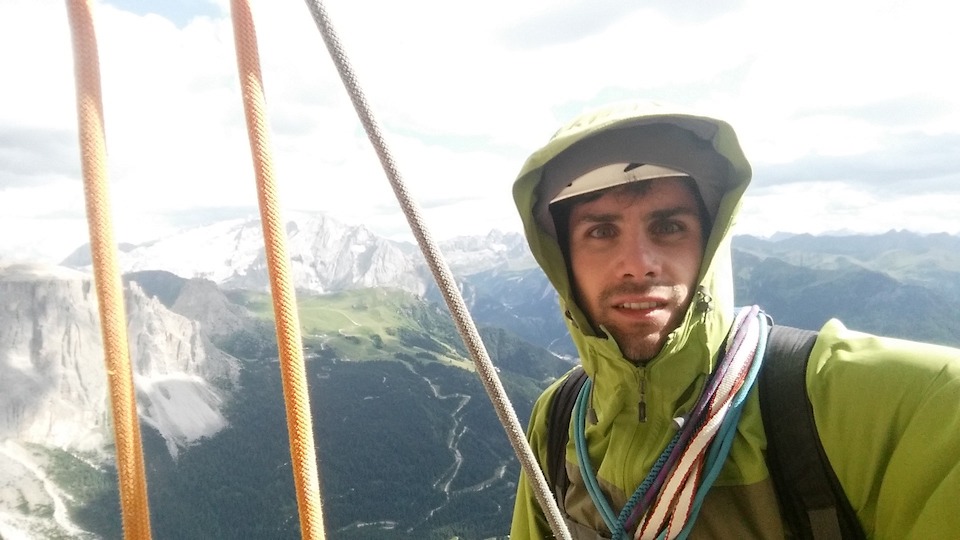
Free climbing, one of Alessandro’s favourite outdoor activities. Picture taken on “La lavagna” climbing route (Piz Ciavazes south face, Sella Group, Italy). Credit Alessandro Forti.
Conservation in the Anthropocene: Striving for balance
The reality is that, as beautiful and pristine as the Alps are, they’re not exactly a wildlife utopia. Human activities like tourism, farming, and deforestation put pressure on these ecosystems and achieving a balance between conservation and human needs is tricky.

But Alessandro’s optimistic. “We live in the Anthropocene,” he says, “and the Alps are no exception. But that doesn’t mean we can’t find ways for wildlife and humans to coexist.”
Alessandro believes it’s all about promoting sustainable practices. “Sustainable agriculture, responsible tourism, and proper land management can create a win-win situation for both wildlife and local communities,” he explains. “It’s all about balance.”
The role of interdisciplinary collaboration and cross-border initiatives
Alessandro is a strong advocate for cross-border cooperation, particularly when it comes to conservation in the Alps.
“Wildlife doesn’t know political boundaries,” he explains. “To protect species like wolves and other large carnivores, we need cross-border cooperation.”
This sentiment is especially true when it comes to species like the Western Capercaillie (Tetrao urogallus), which is experiencing a severe decline across much of Europe, including the Alps.
“Imagine a mountain without Capercaillie,” Alessandro says. “It’s a poorer place.” For him, this bird is a symbol of the fragile balance of alpine ecosystems, and a reminder of why it’s so important to protect these areas. Furthermore, as the Western Capercaillie is an “umbrella species”, protecting it will also protect other species in the ecosystem.
Alessandro points to the LIFE Programme and ENETWILD, two initiatives that promote collaboration between countries to tackle shared conservation challenges.
“The Western Capercaillie, like many other species, needs coordinated efforts across regions to ensure its survival,” he says. These international partnerships are crucial for maintaining where species roam freely between countries.
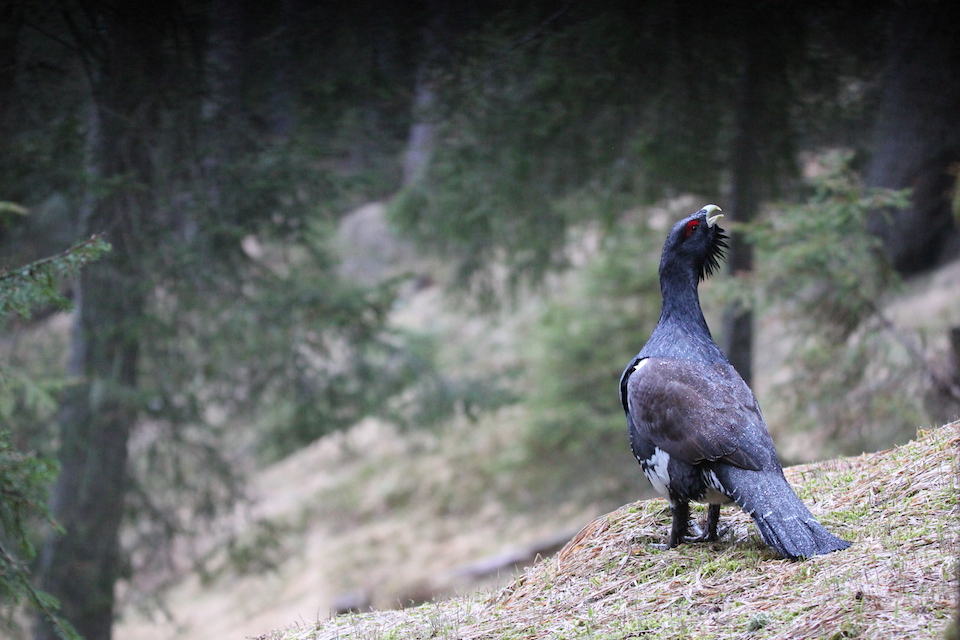
Sunset at a capercaillie lek in the eastern Alps. A lek is a gathering of male animals, usually birds, that come together to compete for female attention during mating season. Each male displays or performs to attract mates, and females choose their mates based on the best performances. Credit: Alessandro Forti.
Advice for aspiring conservationists: Stay curious, resilient and open-minded
Alessandro’s advice for aspiring conservationists is both practical and inspiring. “Sometimes, it’s a dirty job,” he laughs. “The work can be physically demanding with long hikes, little sleep, and data collection that doesn’t always go as planned. But don’t give up!”
His simple message: stay curious and keep moving forward. “Conservation is a journey, not a sprint,” he says. “Resilience and an open mind are essential.”
Another thing that Alessandro highlights is that research methods may not be quite what you imagined, mentioning the under-appreciated, and often overlooked, value of faeces or ‘scat’. “People don’t realise how much valuable information you can get from scat”, he explains, outlining its value in determining diet, an animal’s role in the ecosystem, interactions with other species, habitat selection, home range and density.
One thing Alessandro strongly believes in the under-appreciated value of faeces. While methods like camera traps and direct observations are popular, scat is often overlooked. “People don’t realise how much valuable info you can get from scat,” Alessandro explains. “It tells you about an animal’s diet, its role in the ecosystem, and even interactions with other species”
Scat also provides insight into habitat selection, home range, and population density. “For animals in marginal habitats, larger home ranges can mean they have to roam more for food,” he says. Examining scat also helps measure stress levels through corticosterone, revealing how animals react to stressors like predators or human disturbances.
Additionally, scat (and carcasses) can help detect diseases and pathogens, offering valuable data on wildlife health and how illnesses spread through populations,” Alessandro says.
His key takeaway: “Don’t have blinders on. Be open to all methods and topics. Sometimes, the most unexpected sources, like scat, unlock the answers you need.” Stay open-minded, embrace the unexpected, and keep learning, whether from fieldwork or, yes, even faeces!
Looking to the future: Bridging the gap between research and policy
Looking ahead, Alessandro hopes to continue his work in wildlife conservation, focusing on bridging the gap between scientific research and practical conservation efforts.
“The outputs of our research, such as scientific papers, are important,” he acknowledges, “but they don’t always capture the attention of policymakers. I want my work to help bridge that gap and guide decision-making processes.”
He adds: “I hope my work helps ensure the survival of the species and environments I’ve studied. I want my research to be a contribution to a broader conservation effort that helps protect these fragile ecosystems for future generations.”
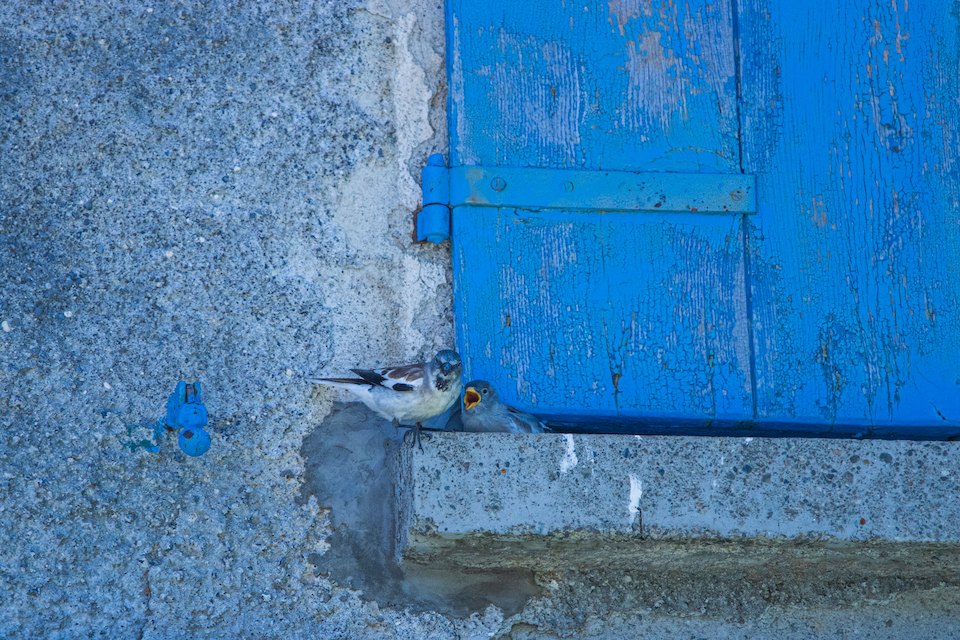
A White-Winged Snowfinch nest located in an artificial cavity within the Stelvio National Park (Italy). This high-elevation species, during the nestling-rearing period, feeds its youngsters with arthropods collected from alpine grasslands and snow patches. Credit: Alessandro Forti.
Further resources
If you’re inspired by Alessandro’s journey and want to explore more about his work, as well as the key organisations that are making a difference in conservation, dive into the following resources:
- ResearchGate Profile: Explore Alessandro’s academic contributions and recent publications.
- ENETWILD: Discover the pan-European project that addresses wildlife diseases and enhances wildlife population monitoring across Europe.
- European Observatory for Wildlife: Learn more about this initiative focused on wildlife density data collection and management.
- Adamello Brenta Natural Park: Visit the heart of the brown bear reintroduction project and one of the most significant conservation areas in the Italian Alps.
Are you interested in becoming a wildlife biologist yourself? Check out our Conservation Scientist role profile.
Author Profile | Stephanie Nicolaides
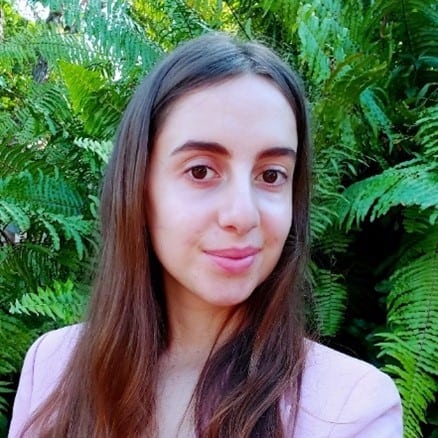 Stephanie Nicolaides is a dedicated PhD candidate in Environmental Management at the University of the Western Cape. Her research delves into the impact of plastic pollution on the Mossel Bay coastline (South Africa), with a particular focus on the effects on marine biodiversity. Her work focuses on assessing plastic presence, local knowledge, and developing sustainable solutions. Stephanie holds an MSc in Life Sciences from the University of South Africa, where her dissertation examined the behavioural ecology of African clawless otters. She also earned her BSc Hons in Life Sciences, graduating cum laude, with an honours project on personality in Leopard Tortoises. Passionate about environmental sustainability, Stephanie is committed to advancing knowledge in marine biology and contributing to efforts to protect and preserve coastal ecosystems. Connect with Stephanie on LinkedIn.