A creative leap: From fine art to ocean research
From beginning with tools such as brushes and paint to now navigating across the Atlantic aboard a research vessel, Dr Philippa Rickard’s journey from fine art to marine biogeochemistry is as fluid and captivating as the waters she studies.
Now she’s a postdoctoral research conducting the ocean’s crucial surface microlayer, its importance for air-sea gas exchange and its interaction with climate change.
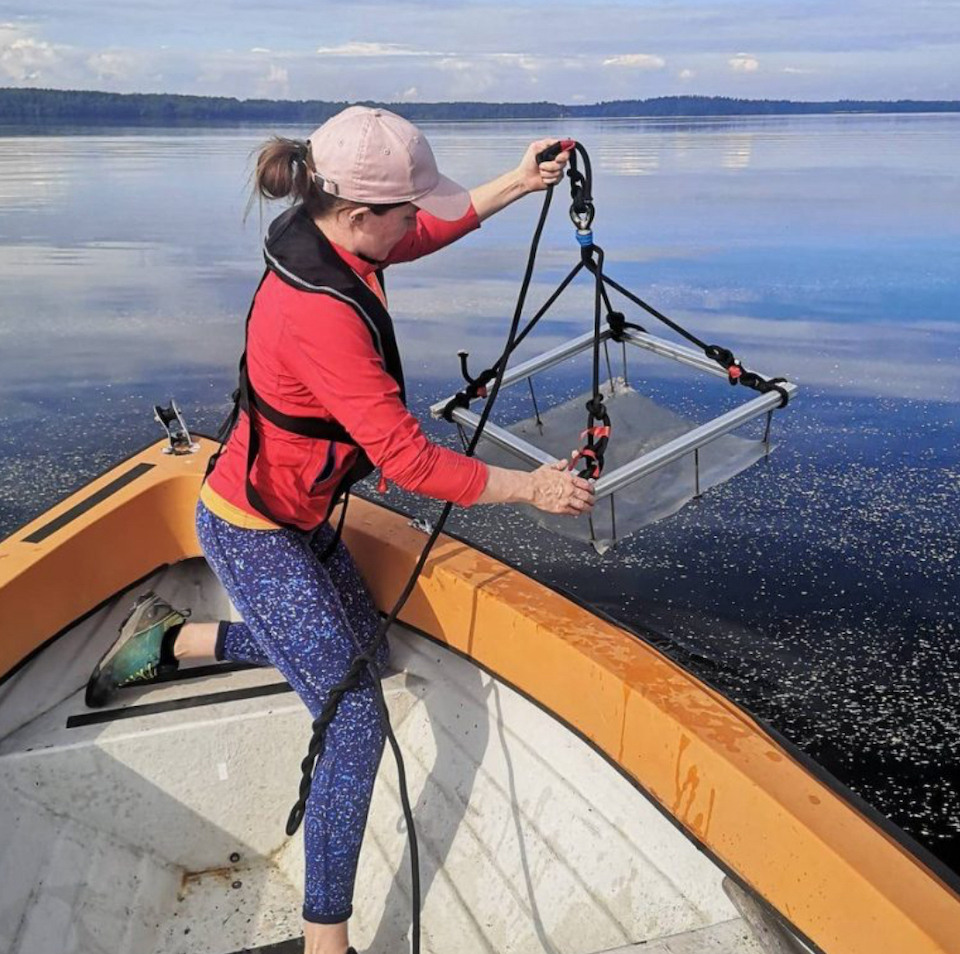
How it all started
Philippa began her journey not in a lab, but in a studio, studying fine art. She says, “I was always going to be an artist. It was one of those things that sparked in me from very, very young”. Yet as life unfolded, so too did her direction. In her mid-20s, after periods of work and self reflection, she decided she was ready to return to education.
Philippa wanted to study environmental science because she was really motivated to be able to have informed conversations about pressing issues on climate change. This was not an easy choice as she had to study hard during a part time distance learning course with the Open University whilst still working full time before being eligible to a degree in the science field.
Environmental science is a broad field no doubt and it was not until studying her degree at University of York that she discovered something that changed her outlook entirely:
“About half of Earth’s oxygen is produced in the oceans, by phytoplankton – microscopic organisms that play a crucial role in the planet’s oxygen and carbon cycles.” That revelation sparked her fascination with marine science and set her on a course toward research.
Her creative roots, far from being left behind, have been important in her research and endeavours in science. She makes the point that, “science is inherently creative, particularly in research, you’ve got to be a problem solver. You must have confidence to approach things creatively.” Science and art are inherently linked; they become partners in discovery.
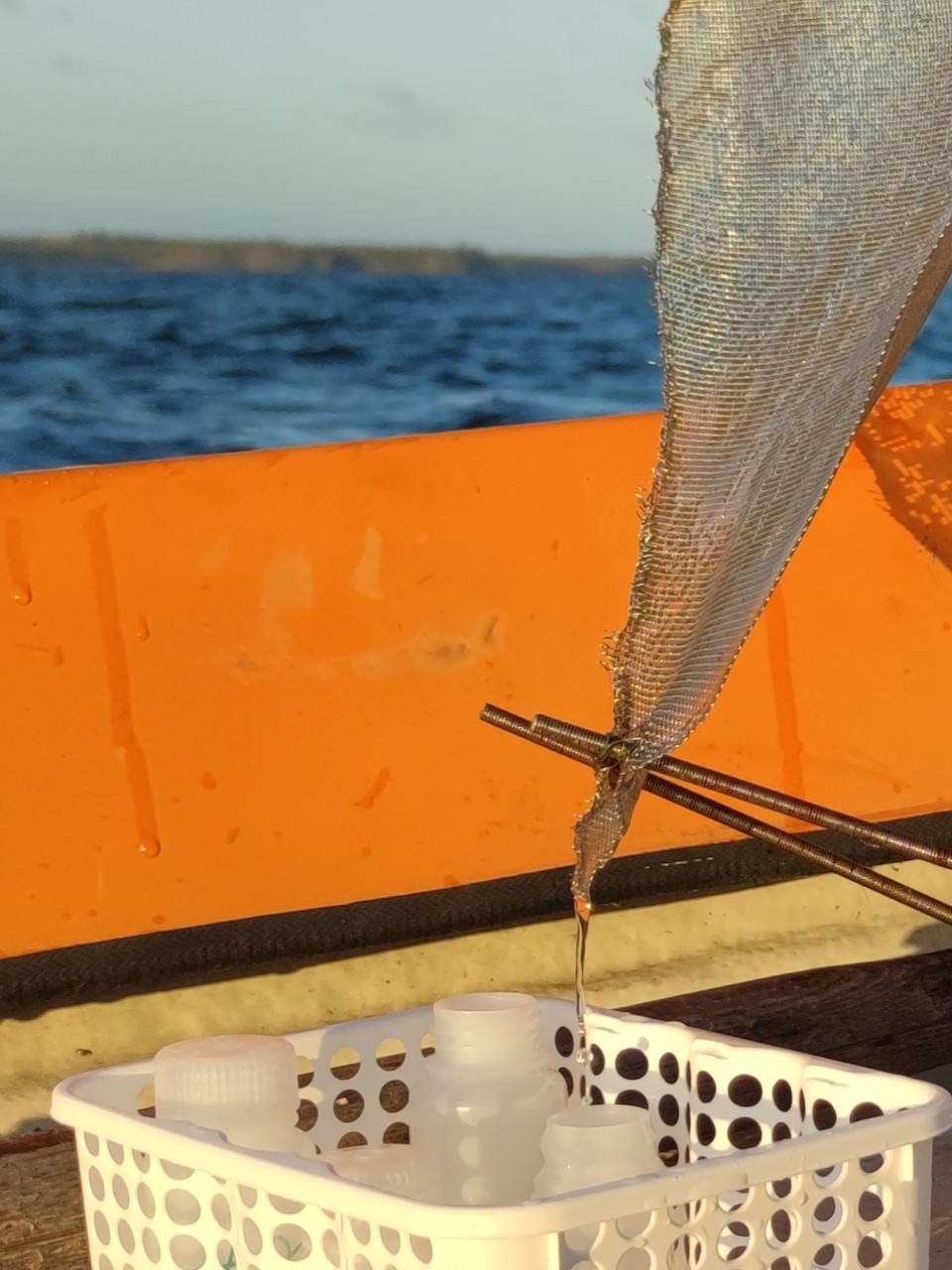
“Science is inherently creative” – Dr Philippa Rickard.
Working in the field of oceanography, marine biogeochemistry and conservation
The world of oceanography and biogeochemistry is, as Philippa puts it, both competitive and collaborative. She emphasised the importance of surrounding oneself with supportive people who can help uplift and motivate each other, and reflects that she would not be working in research today if it were not for proactive and supportive role models.
This field can be, as she puts it, “emotionally demanding, and that is not uncommon to feel disheartened or frustrated at times”. However, she stresses that being perseverant and motivated to make a positive impact is what keeps her going.
The beauty of working in the field of environmental science is that everyone is working towards a common goal, and knowing that our work, no matter how small, contributes to that. This is an important note for early-career professionals: find your people – even though the work can be challenging it’s the community that makes it doable.
What does her research and work entail?
Philippa’s current research is focussing on the ocean’s surface microlayer, a very tiny (1mm thick to be precise) layer of water at the ocean’s surface that plays a crucial role in gas exchange between the atmosphere and our ocean. She is specifically studying the unique properties of this microlayer which is often referred to as a ‘bioreactor’.
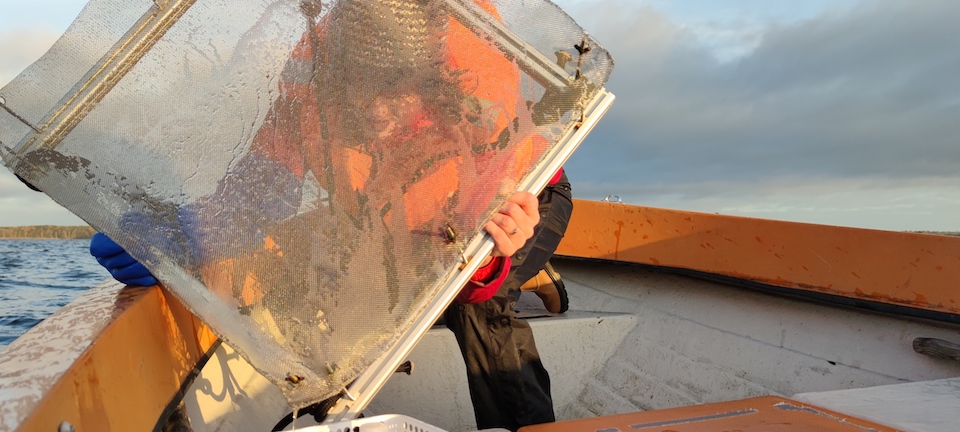
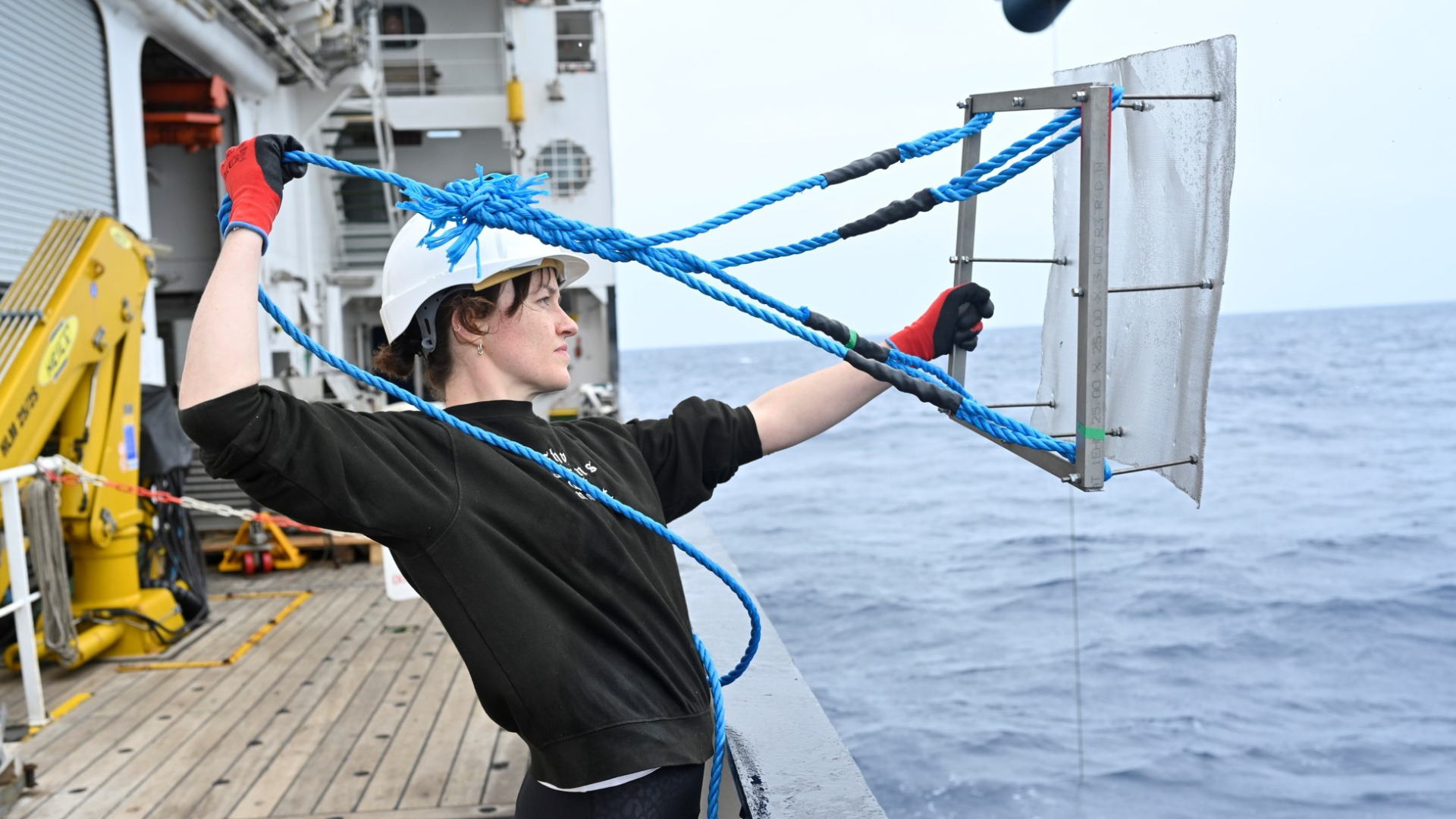
Onboard RRS Discovery on the Atlantic Ocean, using a Garrett Screen to sample the surface microlayer. Photo Credit: Dr Federico Ienna.
This research is important to helping us understand the implications of this gas exchange between the atmosphere and the ocean and its interaction with climate change. In terms of conservation, “the structure of ecological communities is largely driven by the local biogeochemical processes within that ecosystem”, and to mitigate the impacts of climate change on the ocean ecosystem, we need to understand these processes.
When asked how to visualise this elusive microlayer, Philippa offers a charming metaphor: it’s like “really, really tiny jelly.” She explains, “If you try walking through water versus jelly, which would be harder? That’s what happens to gases passing through the microlayer.”
When there is more jelly they move slower between the atmosphere and the ocean, which is why the microlayer is important. This natural jelly-like layer, produced by microscopic marine life such as phytoplankton, acts like a sticky net, slowing gas exchange and accumulating substances like pollutants and dissolved organic material.
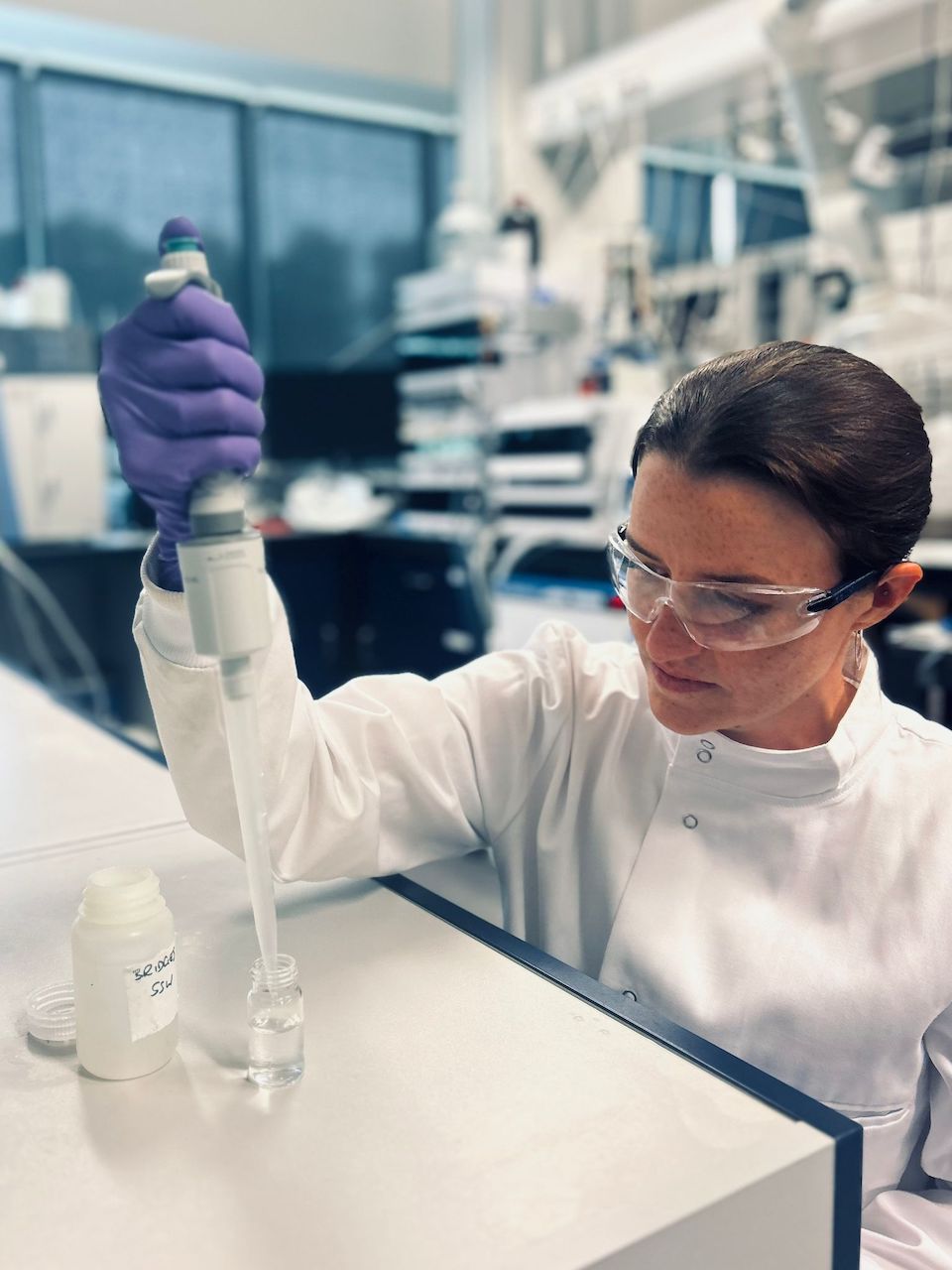
Water sample in the labs at Lyell Centre, a research facility in Scotland.
She mentions that the jelly-like substance is produced by all life, including phytoplankton, and that it can vary in concentration depending on the location and conditions. By studying this process, she is helping to improve our understanding of how the ocean supports life on Earth, and how human activities are impacting the ocean’s ability to support biodiversity.
Expedition aboard the RRS Discovery
One of her personal highlights was a six-week research expedition aboard the RRS Discovery (a multidisciplinary ship, specifically designed for the challenges of 21st century oceanography), travelling from the Falkland Islands back to the UK. On board she was joined by over 25 scientists exploring different topics like gas exchange, microbial diversity, zooplankton diversity and nutrient distribution.
Her activities onboard included collecting samples of the surface microlayer using a specialised device called the Garrett screen. This technique is a simple method that takes advantage of water surface tension. The stainless steel mesh lifts the thin surface layer from the water, which is crucial to Philippa’s research.
She would conduct the screen at noon every day collecting up to five litres of water at a time which she would then bring into the state of the art on board labs to process for analysis of the chemical properties and behaviour of this layer.
Being out at sea for six weeks was, in her words, “a very positive experience, a very intense experience because you’re all living and working together”. These opportunities are not that frequent so maximising the research time is critical; she would be working long hours seven days a week. On board is a fully equipped gym, however she jokingly mentioned, “everyone put weight on”, highlighting that the food on board was good and all prepared for you.
With no phone signal and only patchy internet, the experience could also feel isolating, but for Philippa, that disconnection became a gift. “It was beautiful,” she said. It allowed for less distractions and gave the opportunity to enjoy the sense of community and camaraderie among the fellow scientists and crew.
One moment stood out above the rest. As the ship approached the equator, she lay on the front deck under a canopy of stars, completely immersed in the awe of the universe and the endless expanse of the sea.
She said that it was a truly unforgettable experience, and one that she would always treasure. It’s moments like these that really fuel her ambition and drive to continue with this important kind of work.
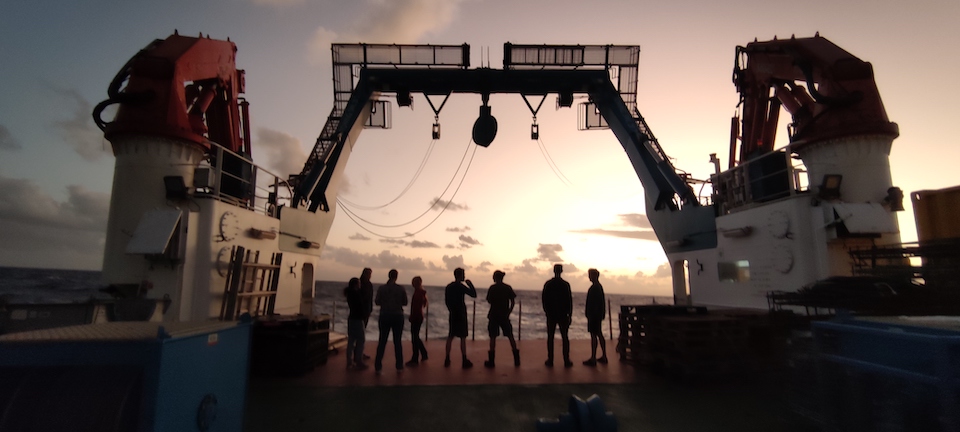
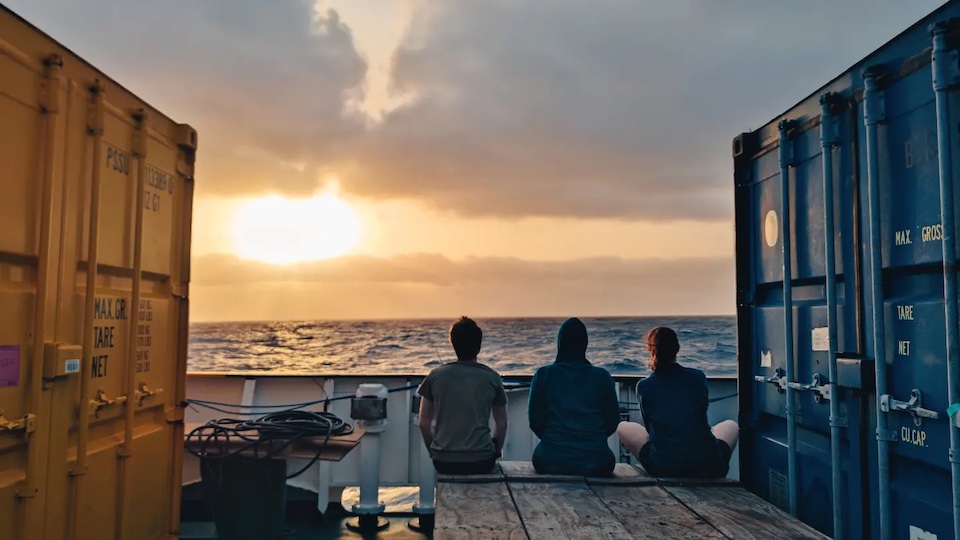
Onboard RRS Discovery, gathering with other scientists and crew after finishing work for the day to watch the sunset over the Atlantic Ocean.
Embed your values in your career path
For anyone hoping to forge a career in environmental or conservation science, Philippa’s guidance is clear: “there is no one defined singular linear career path into conservation and science. And if you embed your values in your career path, you will end up where you want to be”.
You must be persistent in your values and for her it meant studying hard before even beginning her journey at the University of York. Being flexible and not afraid to pivot is something to be encouraged. It could be from volunteering which is a very good start when finding where your values take root.
Philippa also encourages others to connect, communicate and participate, something that’s been key to her journey. She seizes opportunities to be included in scientific journals, scientific presentations and even a guest on podcasts.
Engagement with the public and local communities is something she feels strongly about, “because every single voice and perspective and lived experience is valid in this conversation.” It is not just about interacting with a community but being a proactive community member as well, something which the Conservation Careers community does an excellent job at.
Her final piece of advice still lingers: “If you find yourself in a position where you don’t feel supported, go somewhere else.” Wherever you are on your own path, whether starting out or looking to grow, remember that finding the right environment and community is just as important as the work you do.
Want to learn more? Check out Dr Rickard’s website and other handles!
- Instagram: @surfacescientist
- BlueSky: @philipparickard
- LinkedIn: philippa-rickard
Interested in becoming a scientist or oceanographer? Check out this Conservation Scientist role profile and How to become an oceanographer ultimate guide.
Featured image: Onboard the RRS Discovery on the Atlantic Ocean, using a Garrett Screen to sample the surface microlayer. Photo Credit: Dr Federico Ienna.
Author Profile | Andrew Monks
 Andrew is a avid PADI Divemaster with several years experience working in the field of 3D & XR design. He is interested in the digitisation of the underwater world, whether this is through photogrammetry, videography, animations or photography – aiming to both preserve it for future generations and make it more accessible throughout the world.