Belonging to the bush: A South African conservation story
“Conservation is more like a passion than a career.”
Forgive Maluleke spends weekdays as a nature conservationist with the South African National Defence Force (SANDF), and weekends running his own organisation – the Nhlalala Nature Conservation Project (NNCP). He walks miles through the South African bush, not just to protect nature, but to understand it.
For him, conservation is not a job. It is how he connects with the natural world and feels a sense of belonging.
Raised by nature, driven by purpose
Forgive grew up in a rural village surrounded by wild landscapes, spending his early years caring for his grandfather’s goats. It was there, immersed in open land, that he developed “a sense of belonging with the natural environment.”
“Since then, I think I have fallen in love with our mother nature, and I have decided to pursue a career in nature conservation.”
He later worked at Letaba Ranch Provincial Park, doing tasks including ecological monitoring, visitor management, law enforcement, wildfire management and wildlife rehabilitation assistance.
Fuelled by a strong sense of purpose, he studied nature conservation at university but his career officially started when he began work in his current role as a nature conservationist at the SANDF.
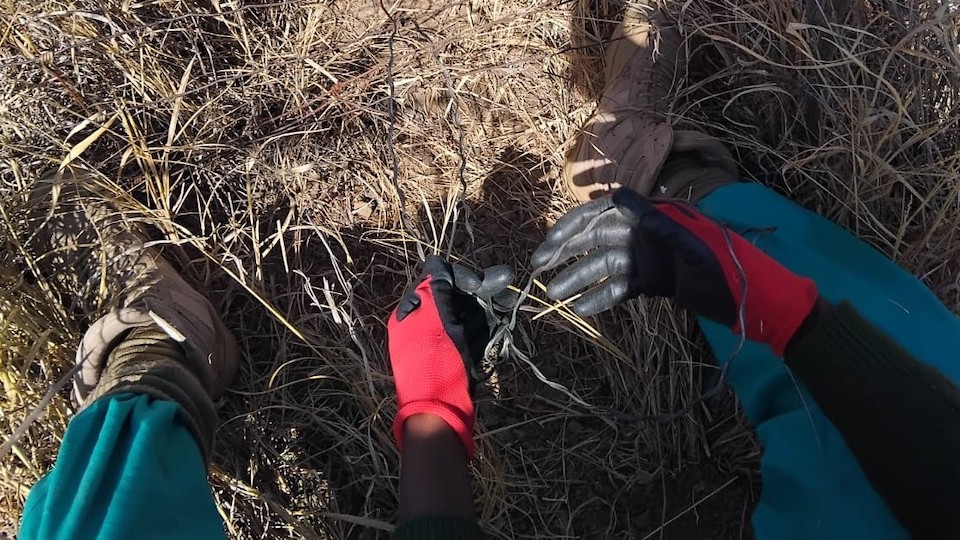
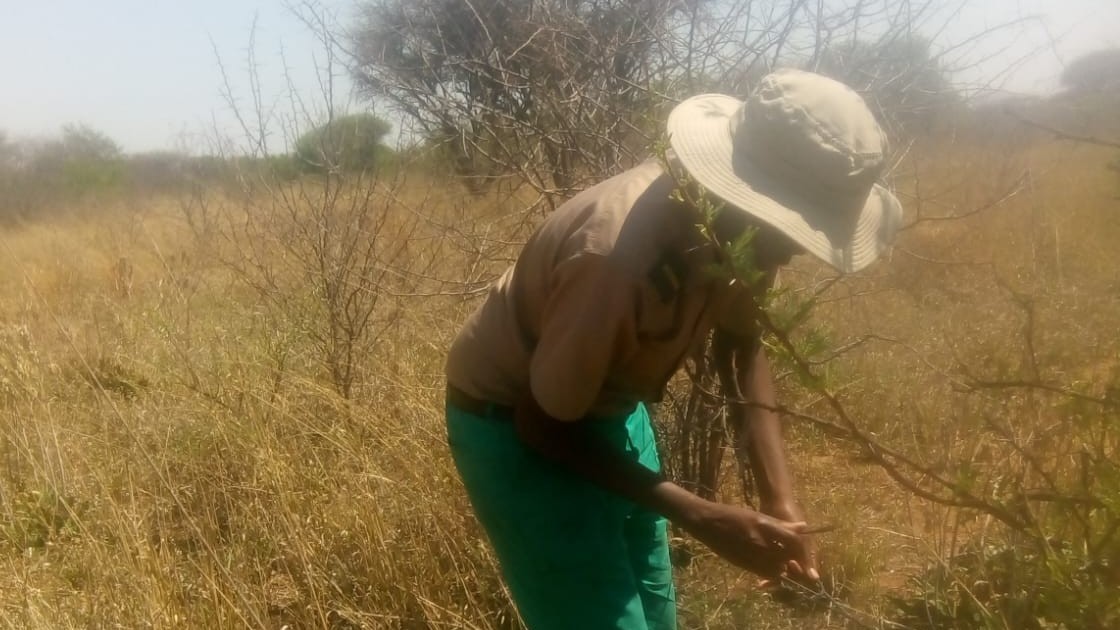
Forgive holding an animal snare he removed.
What a nature conservationist really does each day
A typical day for Forgive involves a variety of physically demanding tasks aimed at protecting nature. His work is as much flora as it is fauna. He patrols the bush to locate and remove snares, cares for injured wildlife by finding veterinary support, and combats invasive plants like eucalyptus and Lantana camara.
He also monitors for over-harvesting of natural resources. In addition, Forgive inspects and maintains boundary fences to prevent tampering and repairs road gullies to control soil erosion.
Protecting biodiversity also means eradicating invasive species like eucalyptus and Lantana camara, and monitoring over-harvesting of plants and other resources. Beyond fieldwork, Forgive educates local communities on the importance of protecting the environment, something he believes is vital for conservation.
“Education, I think, is the most important thing that we must do.”
Forgive teaches people about vulnerable species, such as pangolins and the weeping wattle tree (Peltophorum africanum). During winter, when this tree is over-harvested for medicinal use, he promotes sustainable practices like harvesting from one side of the tree before moving to the next instead of stripping entire trees.
Taking conservation into his own hands
Forgive’s dedication to conservation does not stop at his job at the SANDF. In his own time, he runs the Nhlalala Nature Conservation Project (NNCP), created to strengthen conservation efforts and involve local communities. Separate from his day job, the NNCP reflects his deep commitment to nature and education.
He collaborates with several youth and biodiversity networks that support grassroots projects like his, such as the South African Youth Biodiversity Network. These partnerships help with logistics so he can focus on content. As he says, “I can choose what to do, I come with my own topics.”
The NNCP educates local communities on reducing human-wildlife conflict and protecting the environment. This includes lessons on climate change, pollution and sustainable living practices. Forgive promotes the use of indigenous and organic foods over GMOs (genetically modified organisms), encourages saving water and electricity, and supports farmers in adopting eco-friendly methods like reducing fertiliser and pesticide use.
For Forgive, this work is necessary in ensuring he contributes “positively to the conservation of our natural environment.” Although environmental education can be challenging, he believes the efforts will pay off.
“If I can convince one percent, the one percent can convince maybe two people, so the hierarchy is growing up, until it reaches a wider range of audiences.”
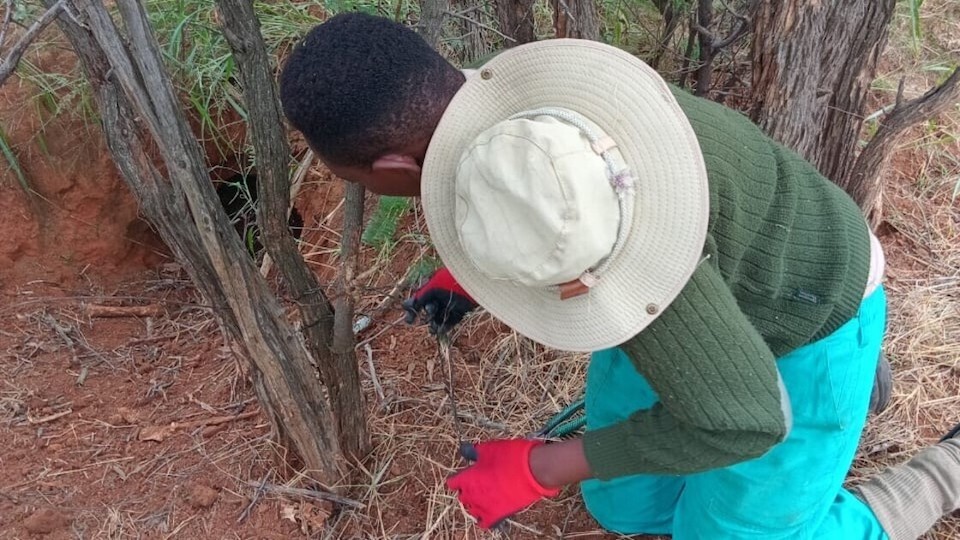
Forgive removing an animal snare from a tree.
Harmony and honeybees: Reimagining human-wildlife conflict
Conservation is not just about animals and plants. It is about people, too. Forgive’s mission is to show that humans and wildlife can coexist peacefully and that it is vital for conservation.
“We have to make sure we balance between animals and people.”
His work requires him to be responsible for human-wildlife conflict, acting as “damage control,” making sure animals don’t damage property and people do not harm animals. The man in the middle, representing and rooting for both sides.
“People destroy what they’re scared of, they destroy what they don’t understand.”
Wildlife education removes fear. Too often, animals are mistaken as a threat and killed out of fear, like snakes wrongly believed to be venomous.“If people can have general knowledge of animals, I think it’s going to be easy for us to make sure that everything is safe, irrespective of how creepy the animal is,” Forgive explains.
Forgive works closely with farmers to reduce conflict with elephants in compassionate ways. Instead of harmful traps, he teaches them to use beehives as natural barriers. “Elephants are so afraid of bees,” he explains with a laugh. These gentle giants steer clear of crops protected by bees, who are not only great bodyguards but also great for biodiversity.
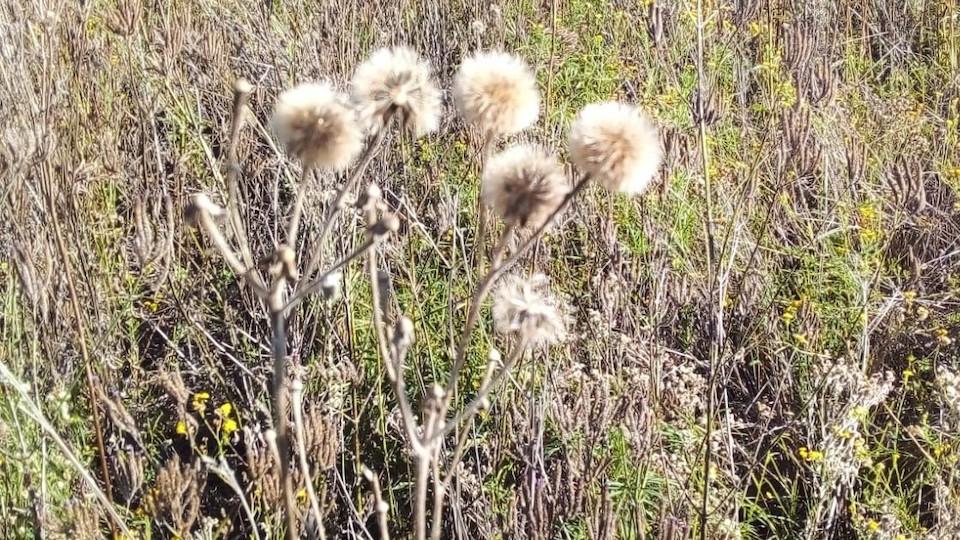
Pom pom weed.
The fight to protect: Impacts and obstacles in the field
“It’s so rewarding when I see the positive results of the hard work that I do.”
Seeing his impact is the only reward that Forgive needs in life. “I feel fulfilled when I see my work, when I see biodiversity start to connect, and animals start to live their lives.”
One proud moment was successfully eradicating an invasive plant species called pom pom weed (Eupatorium macrocephalum) on the SANDF nature reserve. The plant, which was dominating the nature reserve, has easily dispersed flowers, making removal tricky.
Forgive devised a clever way to remove the pom pom weed without spreading its seeds. He covered the flowers with plastic bags secured by cable ties, allowing them to dry out without falling off. Once the risk of dispersal was gone, he cut the plants at the base and burned them in a steel bin. The following year, the weed didn’t return.
“It was so fulfilling to see that the pom pom was no longer causing a problem in my nature reserve,” he says. Not only had Forgive solved the issue, his innovative approach was gaining recognition. It was a big win for the reserve and its wildlife.
These conservation successes do not come easily. One challenge is the low budget for the conservation department. Forgive explains that the importance of conservation is not fully understood, meaning he often goes without proper gear or equipment. For someone walking 5 to 10 km a day in the bush, this makes an already tough job even harder.
“I have to go into the bush without proper PPE, and it’s so difficult to do the job.”
At the moment, Forgive often has to justify his requests for personal protective equipment (PPE), which is essential gear like gloves or boots. Still, he remains hopeful that conservation will be recognised as a priority.
“I think they will see the importance of conservation, and they will meet me halfway so that I can make sure that I continue to protect our ecosystem.”
In the meantime, technology is helping to ease some of the challenges. Tools like cameras allow him to monitor animals remotely, while drones and sensors provide early warnings of potential threats. “You don’t have to go to the bush every time and get pricked by thorns,” he jokes.
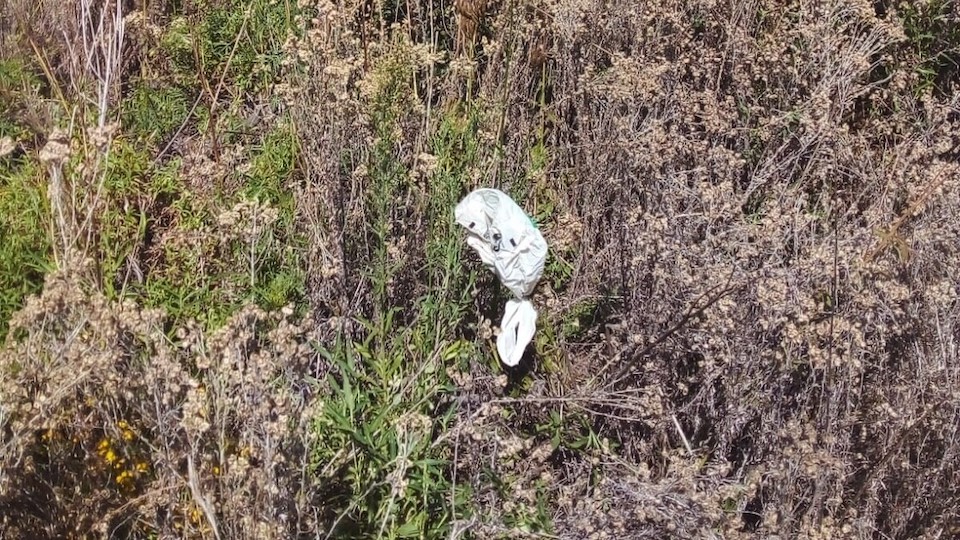
Pom pom weed with a plastic bag tied over its flowers, to prevent the invasive plant from spreading.
The core of conservation: Passion, patience and wisdom
At the heart of Forgive’s work are qualities he believes every conservationist should have. The first is passion. Without a deep love for nature, he believes it is hard to face the challenges of the job.
Education is just as important. “We never stop learning,” Forgive says, and he believes knowledge should come not only from books and science, but also from local communities and indigenous wisdom.
“When we do conservation, we should involve local communities, we should involve indigenous people.”
Finally, Forgive advises aspiring conservationists to have patience. Conservation “doesn’t happen overnight.” Gaining the knowledge and experience to protect nature takes time, as does seeing your hard work pay off.
When he removed the pom pom weed from the reserve, it took a whole year to know if his plan had worked. The wait was worth it. Forgive didn’t feel the results of a year’s effort; he felt the reward of a lifetime of passion and hard work.
Explore your path
Discover more about the Nhlalala Nature Conservation Project and the important work Forgive does by visiting the NNCP website and Facebook page.
If you’d like to connect with Forgive and follow his conservation journey, you can find him on LinkedIn.
Interested in becoming a conservationist like Forgive? Check out our Conservation Land Manager and Organisational Manager role profiles, or explore all Key Conservation Roles.
Want to learn more about Forgive’s conservation philosophy, his commitment to educating local communities, his hopes for the future and his advice for aspiring conservationists.? Check out From ants to elephants: Forgive Maluleke’s mission to protect nature from the ground up.
Author profile | Emily Pickett
 Emily is a marketing graduate and a conservation volunteer with a lifelong passion for wildlife and the natural world. After working on a nature reserve and in environmental education, she now combines her love of conservation and writing to inspire others to connect with nature and take action to protect it.