Africa through a camera lens: From capturing stories to supporting the anti-poaching fight
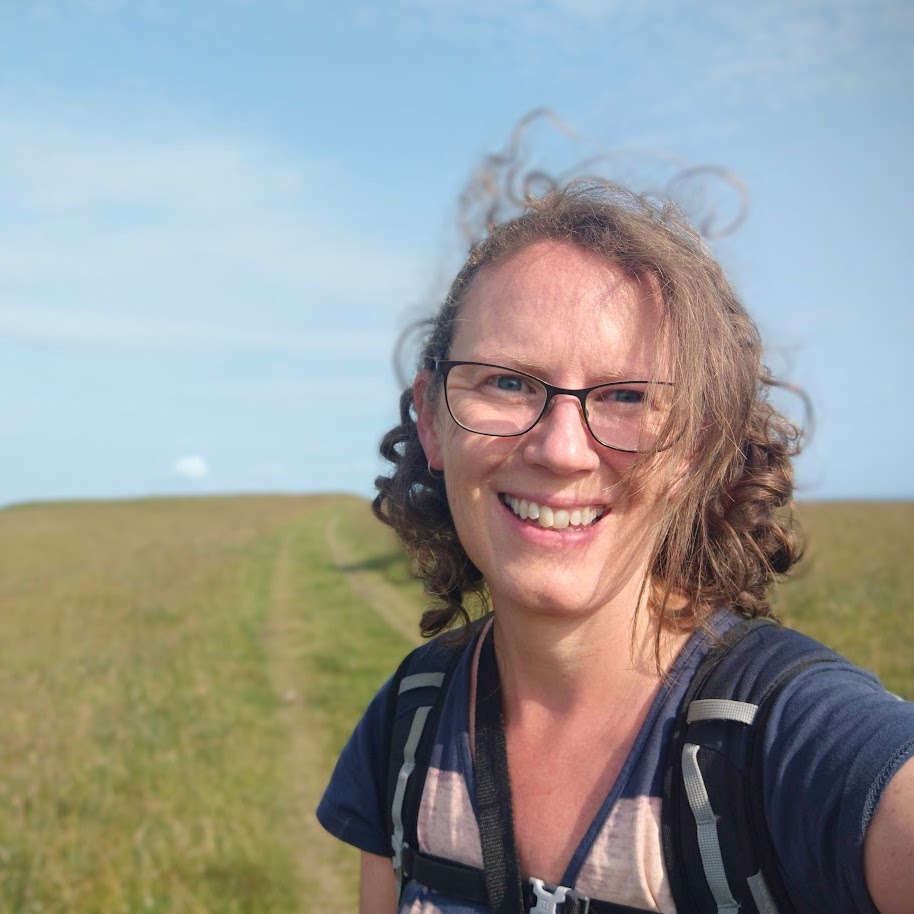
“Armed with my camera and a curiosity for the extraordinary, the wild and the unexpected, I boarded a plane, never looked back and dove headfirst into the vibrant chaos that is Africa and the world of wildlife protection”.
Angela Raab speaks fast when sharing her experiences, and it soon becomes clear that the same energy evident in her storytelling has helped shape her journey over the last decade.
From helicopter pilot and project manager, to photographer, to K9 handler, to someone immersed in the world of African anti-poaching – it has taken determination and boldness to create her own opportunities.
“I’m always saying, that listen, people cannot say more than ‘No’. I mean, the only answer you can get that’s maybe not ideal is no. So just ask!”
Currently back in Europe, Angela’s preparing to embark on a new summer project in her native Greece, working for a sea turtle non-profit, Archelon, which protects turtles over the breeding season on Crete.
Angela describes the role as utilising her ‘communication’ experience, but in reality may span several areas: raising public awareness, leading tours, training local hospitality staff on how to behave around turtles, helping with funding and guiding inexperienced volunteers.
One key takeaway from Angela’s story is that offering a variety of skills to an employer can often be a benefit. While photography, which started her journey, has taken a bit of a professional back seat and become part of the communication ‘package’, she laughs that “everybody loves to have a free photographer, you know what I mean – so it’s an excellent ‘add on’ to have”.
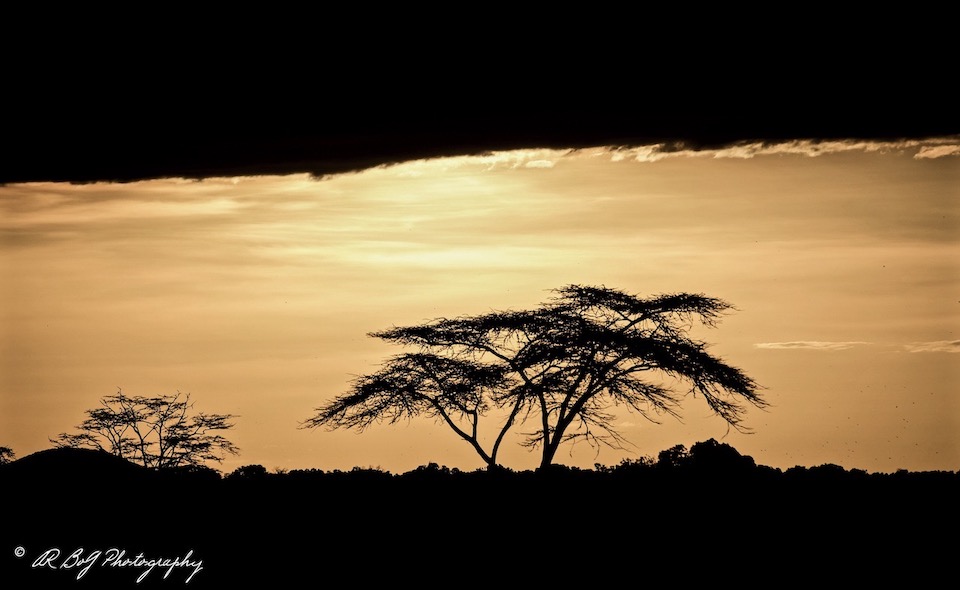
Sunset in Kenya. Credit: Angela Raab.
Angela’s journey through conservation
Angela’s route into conservation hasn’t been typical. Still relatively fresh out of school, Angela earned her helicopter licence and began work as a helicopter pilot in the US.
Following September 11th US visas became more difficult to come by, and Angela returned to Europe. Over the next 14 years she worked as a project manager, planning high-profile events which encompassed helicopter-based experiences and nature incentive programmes.
Despite no educational background in conservation, Angela seized every opportunity to volunteer with wildlife, and in doing so also developed her love for photography. A back injury ultimately halted her flying career and led to a period of frustration. However, it was her two passions that drove her to pack up and head to South Africa in 2014 for a wildlife and conservation photography course.
Through the course she had the opportunity to photograph the work of rangers and anti-poaching units at a variety of African reserves, and this planted the seed for her future work in the field.
Angela initially partnered with her course instructor, and then assembled a group of international conservation friends and photographers, all keen to continue highlighting the rangers’ work. Using their shared contacts they travelled throughout the continent (Zambia, Kenya, Zimbabwe, South Africa …), embedding themselves with anti-poaching units – taking photos and making small documentaries.
Things took off, and it was also through a friend that Angela made contact with Rory Young of the Chengeta Foundation, which resulted in them filming his training with anti-poaching units for desert elephant protection.
Over the years Angela (along with her now ex-husband) also set up her own grassroots non-profit organisation, supporting canine and antipoaching units.
They collaborated with established organisations such as Zoo Magdeburg in Germany, acting as someone on the ground in South Africa to figure out the needs of a project and to ensure that donated funds made it to the right place – enabling projects such as breeding Ground Hornbills and de-horning rhinos as an anti-poaching measure.
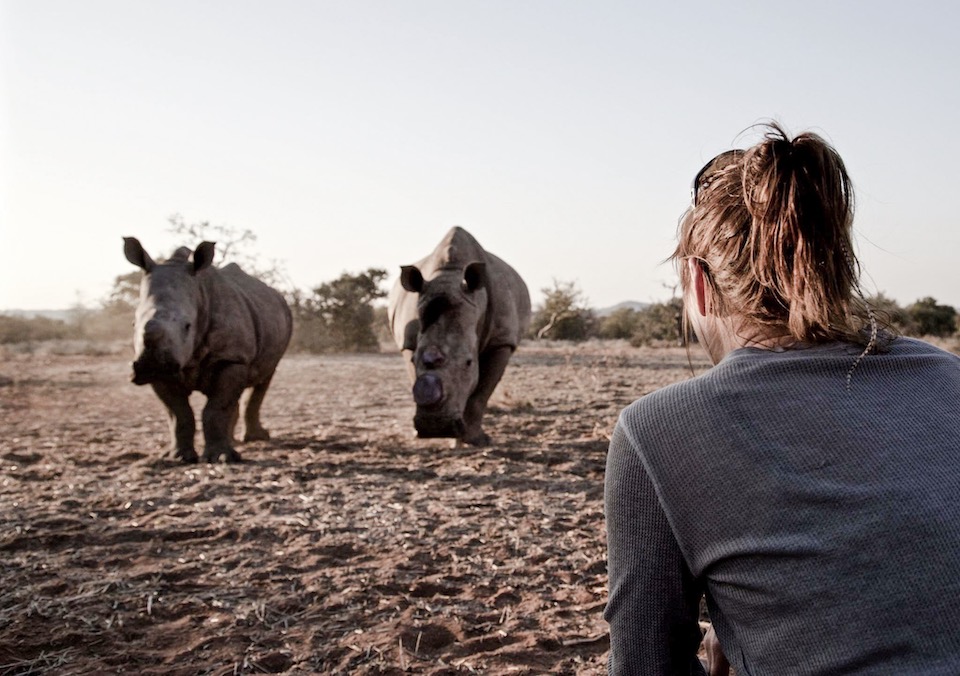
After a rhino dehorning. Credit: Angela Raab.
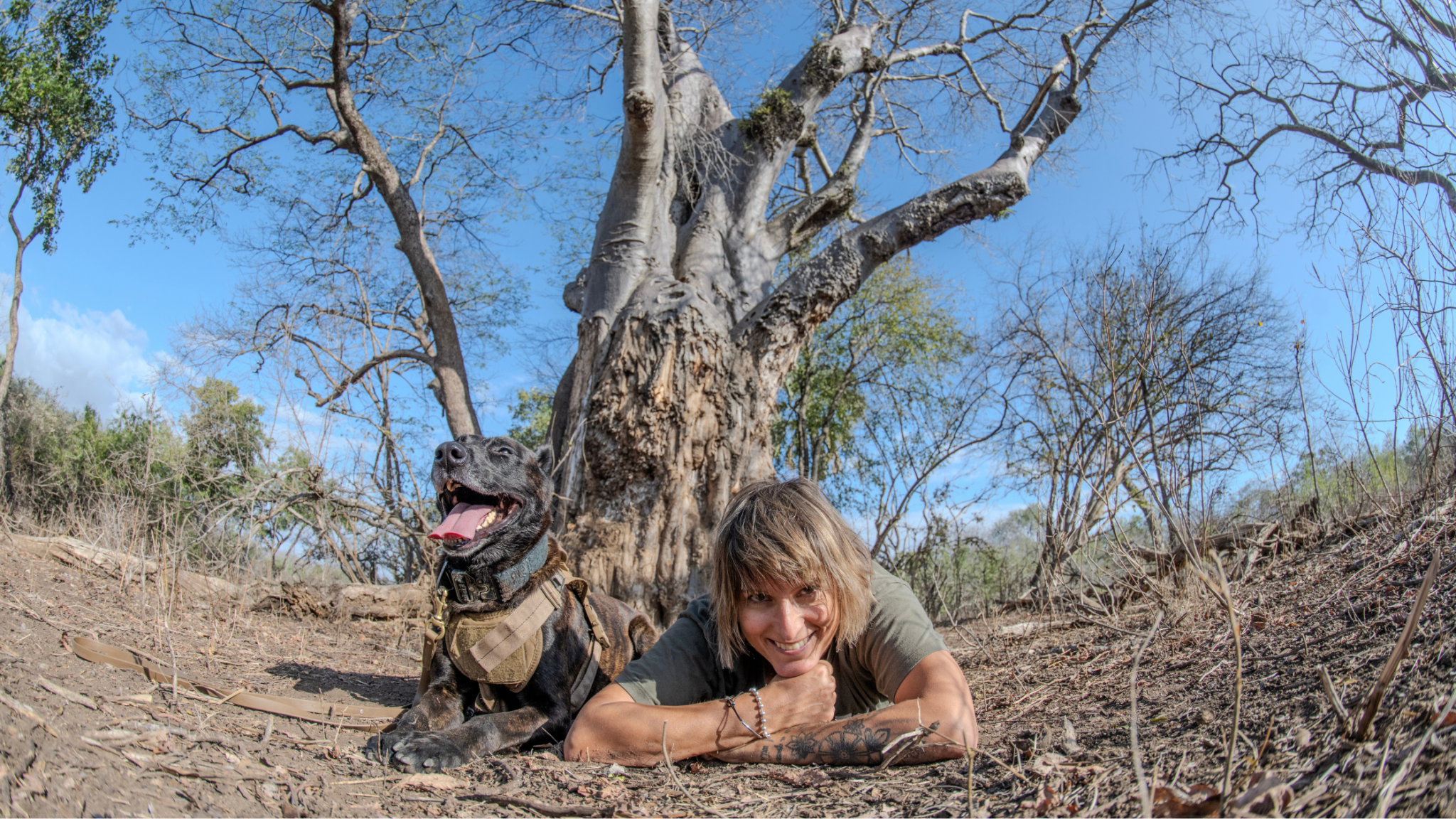
Having found her passion, Angela also undertook a K9 (canine) handling course training anti-poaching sniffer dogs, something she really loved. Since then, she’s worked as a consultant in the field, establishing and evaluating K9 units in several countries. This work has continued alongside her communication work.
For example, in 2021, when she first established a K9 unit for African Parks in Congo and went on to develop communication strategies to raise awareness for conservation initiatives. This even took her to EXPO 2020 in Dubai as part of the Congo Pavillion.
“I set out to capture stories of bravery and passion of our rangers, and ended up not just being a storyteller; today I am a proud advocate of the wild.”
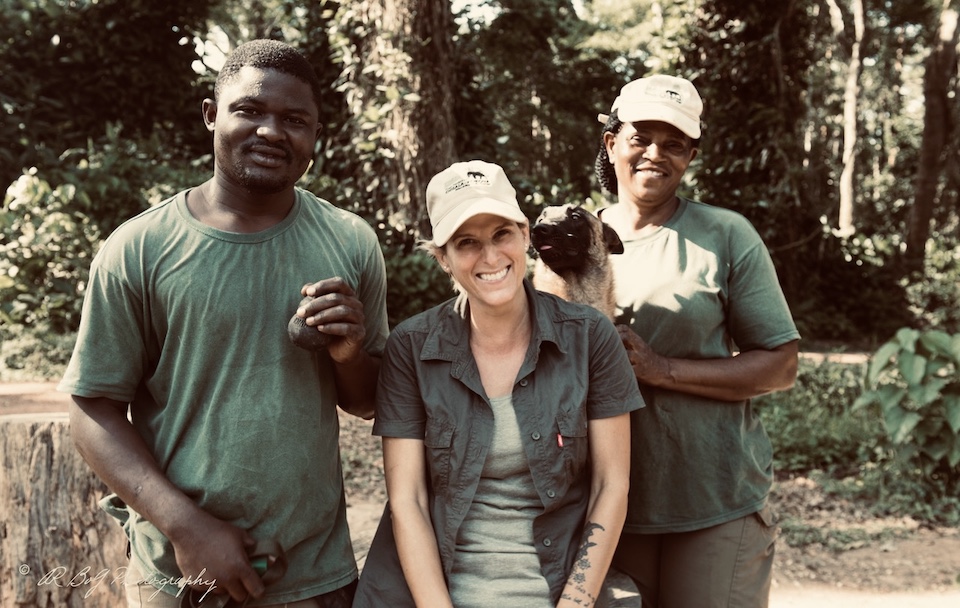
Odzala Kokoua, Rep of Congo, K9 unit training. Credit: Angela Raab.
Far from glamorous
Despite these incredible experiences in a place of mesmerising landscapes, Angela’s keen to point out that working in the conservation sector, in Africa in particular, is often far from glamorous.
Working for organisations like African Parks or even large international charities the work can be incredibly lonely, she emphasises. You may meet up with expats in towns or cities, “but then you go to your little corner of the country, and the only people you see are your close colleagues; you may be the only foreigner there or the only woman”.
The majority of people you work with are local, and differences in culture, behaviour and language barriers can be confronting. Your colleagues may vary from rangers from poor backgrounds with limited education to highly educated local experts, and while things may take a little longer – ‘Africa time’ is, after all, legendary – it’s important to recognise their knowledge and not take frustration out on those around you.
Addressing women in particular, she acknowledges that in male dominated fields like anti-poaching you can easily feel undermined. “Take it with humour, and don’t take it personally” she asserts:
“If you know that you’re competent enough to do your job then just tell them. Don’t let them intimidate you, and show them you can do it. At the end of the day, I became really good friends with them, and professionally, when I called them, they showed up”.
While these are important considerations, Angela is, however, keen to emphasise the positives:
“I really enjoyed working with my local colleagues, though. They were extremely protective of me and made sure that I had everything I needed – often spoiling me with local goodies or cooking lessons!”
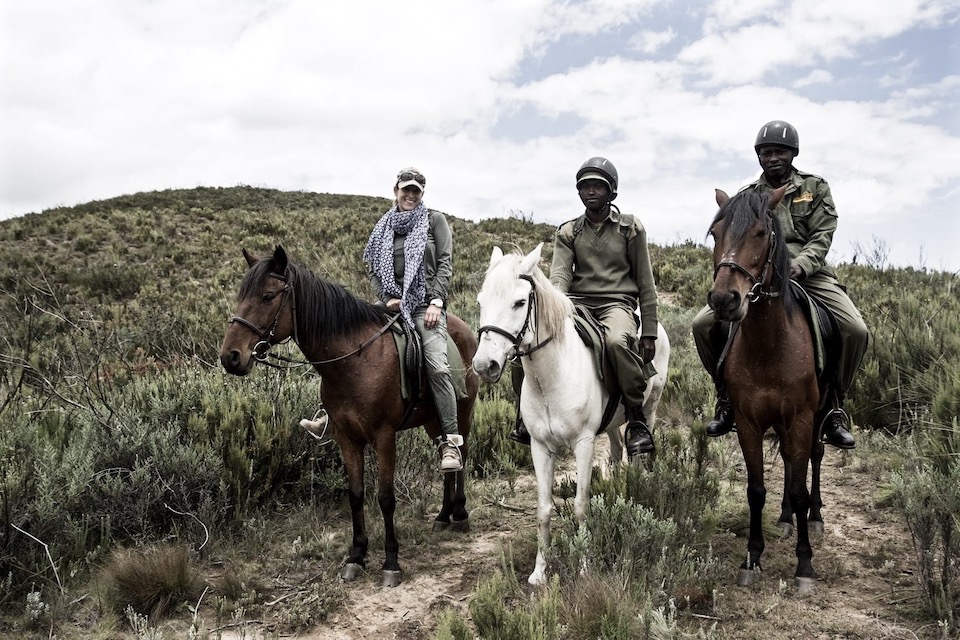
Embedded with Anti-Poaching Unit, Mount Kenya National Park. Credit: Angela Raab.
The practicalities
As Africa has such a hold on Angela, it may be surprising to hear her advise against fixating on it – “There are so many other amazing places in the world with opportunities and options”, she encourages.
One reason she gives is that since COVID, work visas (which have always been troublesome for African countries) have become even more difficult to obtain. Although larger NGOs like African Parks still offer opportunities, they’re increasingly hiring local talent, and only looking more widely for highly qualified/experienced conservation professionals that fit a required role 100%.
Things were easier for her in South Africa as she was married to a citizen. However, she explains, the country does have a critical skills list, with specific jobs that allow people to apply for a work visa. This includes roles applicable to the conservation section. Angela recommends checking that list and approaching reserves directly to find jobs that require that specific skill.
Wildlife vets always have options, so if you’re qualified and interested, she recommends checking out Jungle Doctor (Australia) or Dr William Fowlds (South Africa) for advice. Several places offer courses for vets working in conservation which, while not cheap, give you the opportunity to see if you are suited to the unique challenges involved – things like darting wildlife.
African frustrations aside, having worked alongside the non-profit sector for a while, Angela has general advice for conservation applicants:
“If you’re not 100% qualified, but you tick most boxes, just try. Make sure you have most of the points in the application covered, and if your experience is only one year instead of two, it doesn’t mean they’re not going to look at you.
And if you apply for a position and don’t get a reply, don’t give up. You can’t afford to be shy. A lot of the time a non-profit can be really overwhelmed, overworked and understaffed. Follow up if you want the job – be annoying, up to a point!”
If unsure what to write at that point, Angela notes that Chat GPT has good tips and examples of short email ideas you can send off to knock again on the door.
Angela acknowledges that things have also become less certain in the non-profit sector in many African countries since the early 2025 change in US funding towards aid and conservation programmes. Much funding that had already been approved has gone, and organisations are now struggling, or hovering to see how things play out.
Short term contracts
Angela’s resume reflects the sector’s nature of short-term contracts. She’s undertaken projects that have lasted between four months and one to two years at most, with more flexible freelance work in between.
Additionally, all the travelling involved has taken a bit of a toll, as has her recent autumn season working for the Committee Against Bird Slaughter in Cyprus (preventing illegal hunting of migratory birds). She says “that was when I basically hit my wall, because that was actually tough and exhausting.”
While Angela’s happy to now spend time in one place for a while – summer in a tent on Crete! – she acknowledges that even though she is probably overqualified for her new role at Archelon, she still has no idea if this contract will last much beyond the summer months either.
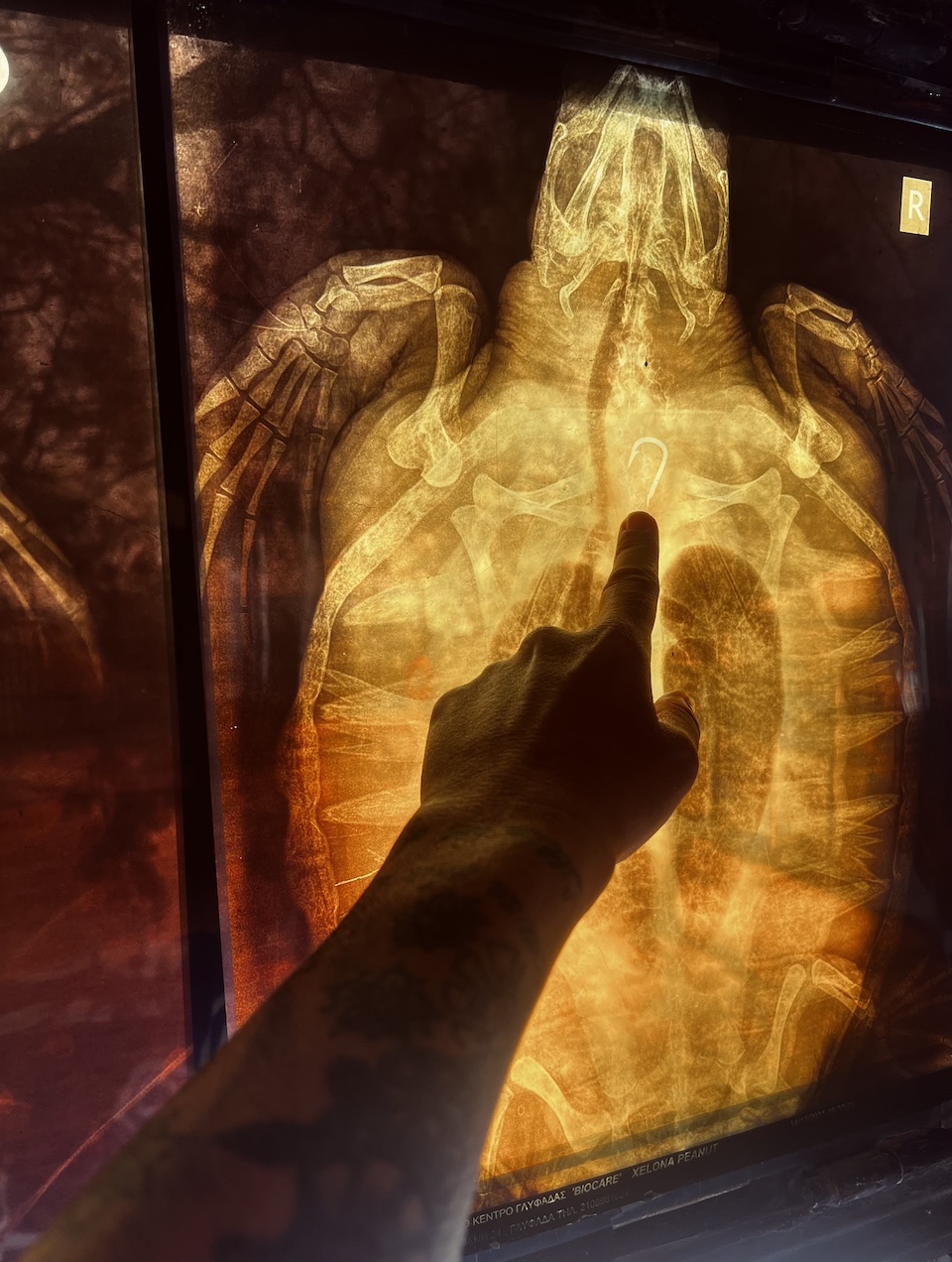
X-ray of a sea turtle. Credit: Angela Raab.
But contributing to the anti-poaching cause has been Angela’s highlight in all that she’s accomplished over the last decade, and she has already taken her own advice and reached out again to African Parks to see what opportunities are available.
It’s not an easy career path to choose, but as Angela’s online Bio makes clear:
“Why stick around, you ask?
Because dreams are like stubborn bushveld shrubs – they don’t wither easily.”
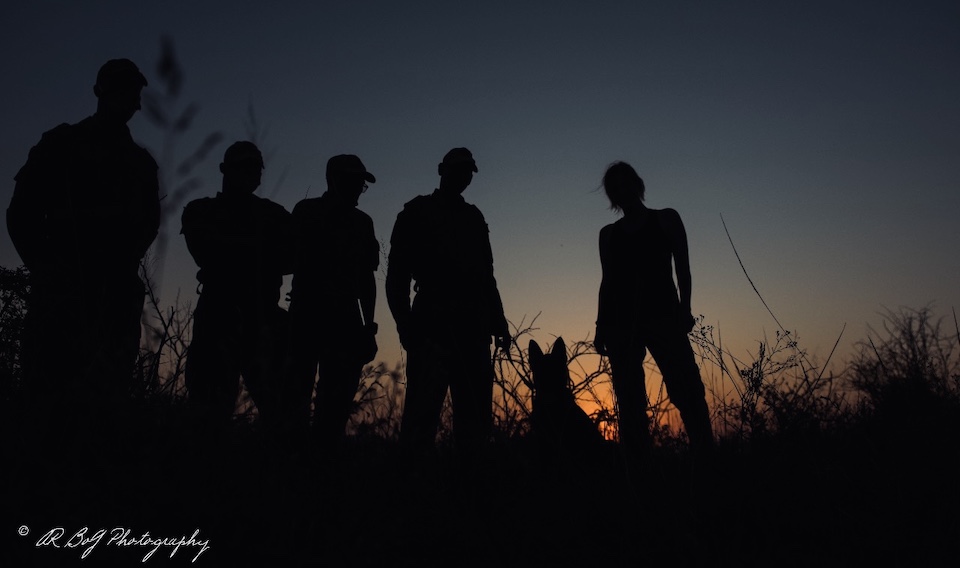
Sunset patrol, South Africa. Credit: Angela Raab.
Follow Angela on LinkedIn and Instagram
To get a better idea of Angela’s work and photography go to www.intothewylde.net.
Featured image credit: Angela Raab
Author Profile | Claire Tyrrell
 Claire is a wildlife enthusiast and keen amateur conservationist, and has volunteered long-term in wildlife rescue and rehabilitation centres across Africa and Asia – largely working with primates. Having worked in the TEFL industry for quite some years (teaching, writing and editing) she now works for the National Trust in visitor welcome and volunteers when possible for the Hampshire Wildlife Trust.
Connect with Claire on LinkedIn.
Read more conservation careers advice interviews by Claire.