Anybody can be a marine conservationist: Finding your place in the ocean
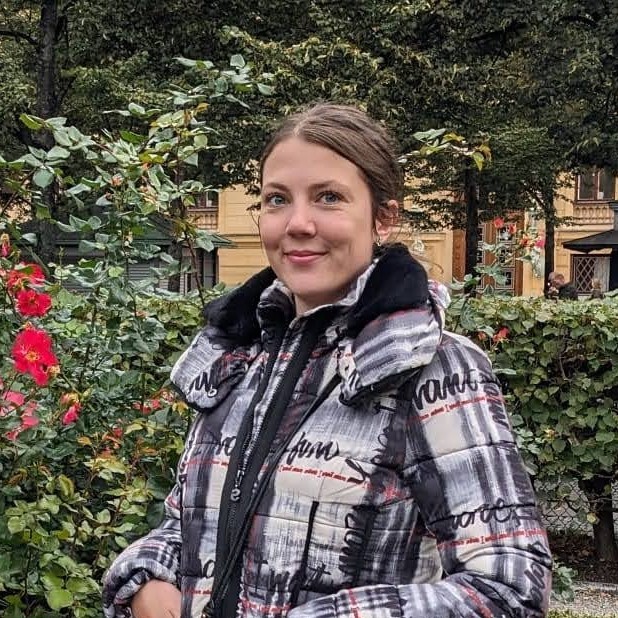
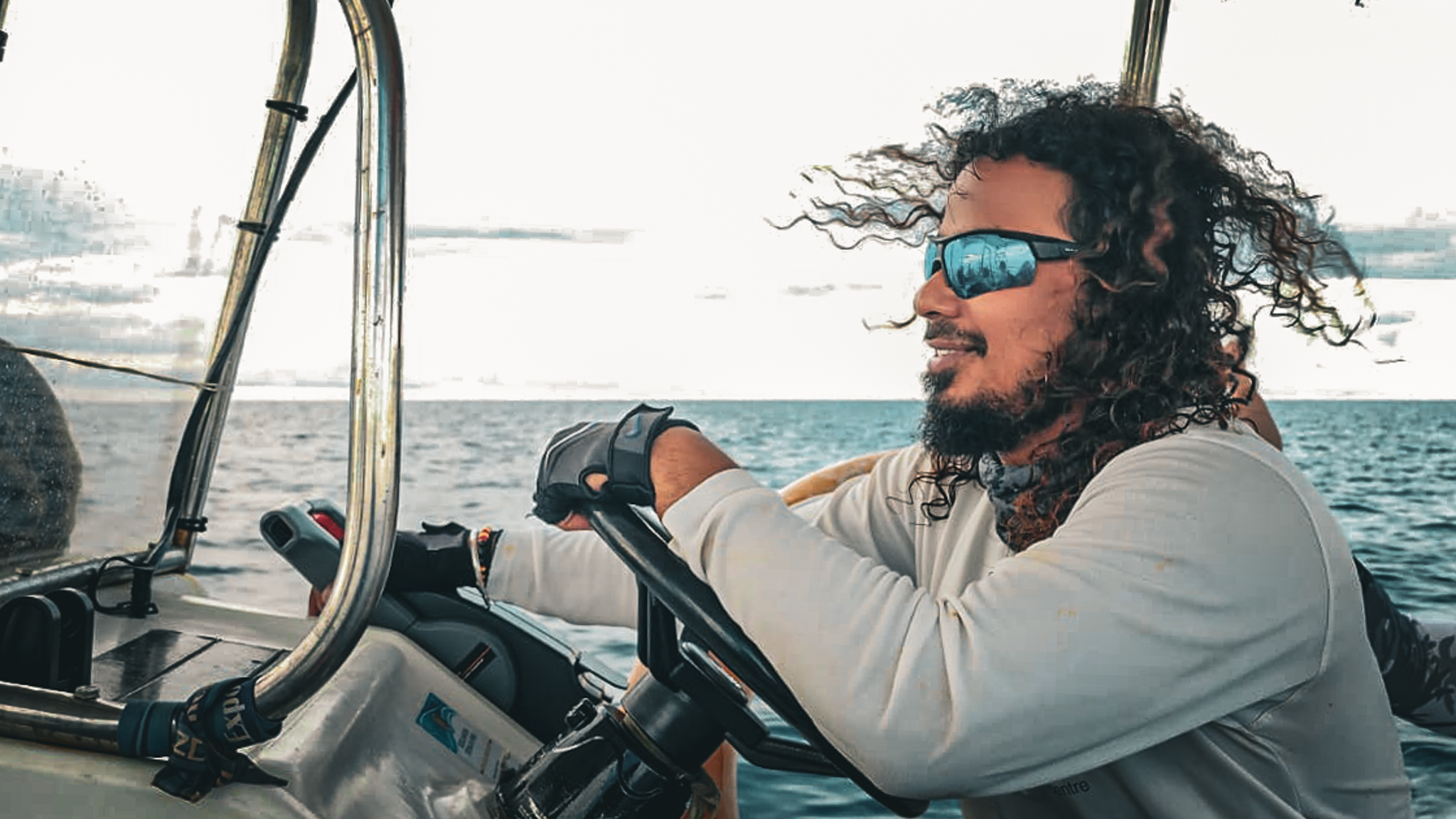
Based in Malaysia, Jeethvendra Kirishnamoorthie combines his work in turtle conservation with underwater photography and a commitment to the message that marine conservation is something everyone can do.
Having recently completed his master’s degree in marine biology, and finishing seven years with TRACC (Tropical Research and Conservation Centre), he’s now transitioning into environmental consultancy.
At the heart of his journey is a clear message: you don’t need to follow a traditional path to make an impact. If you’ve got curiosity and a love for the ocean, Jeethvendra believes there’s a place for you in marine conservation.
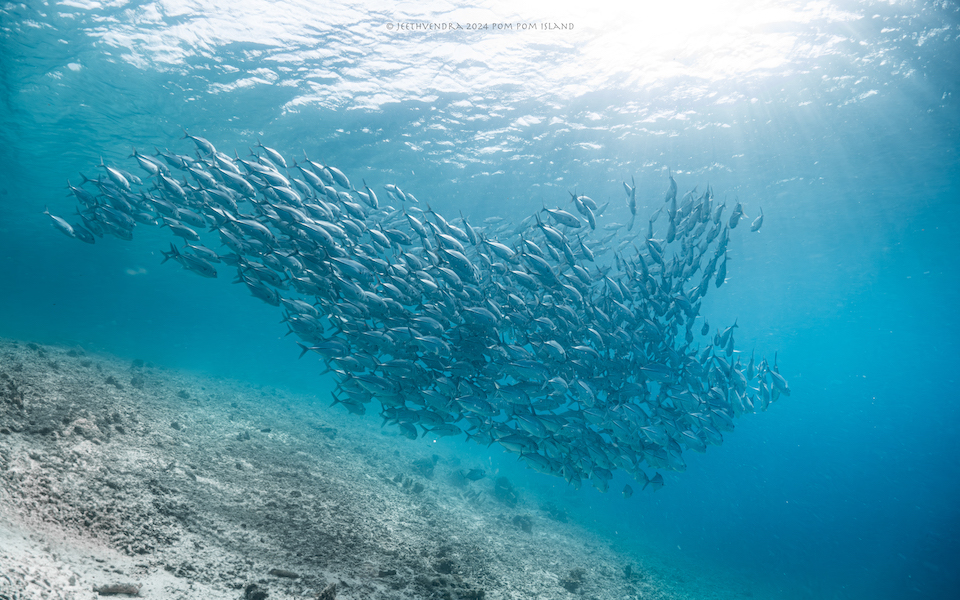
Credit: Jeethvendra Kirishnamoorthie.
When the ocean picks you
“I would say that marine biology chose me”.
Marine Biology wasn’t his first choice; in fact when applying for university, his top pick was physiotherapy. Marine Biology was sixth on the list. But it was the course he was accepted into and, as it turns out, exactly where he was meant to be.
It all started in one of his first lectures where he was shown images of deep sea creatures. “What crazy alien world is this?” he remembers thinking. Captivated by the mystery and wonder of the underwater world, he decided to throw himself into it. “Okay let’s do this” he thought. “Let’s see where I can go with it”.
Just as marine biology found him, so did sea turtles. He volunteered for a turtle conservation centre even though he thought turtles were, in his words, “overrated”. But something shifted; gradually he became “the turtle person” at his first job after university. Now he even says sea turtles are his spirit animal.
Speaking on marine biology now, Jeethvendra says it’s “the best thing that has happened to me, I can’t really see myself doing anything else”.
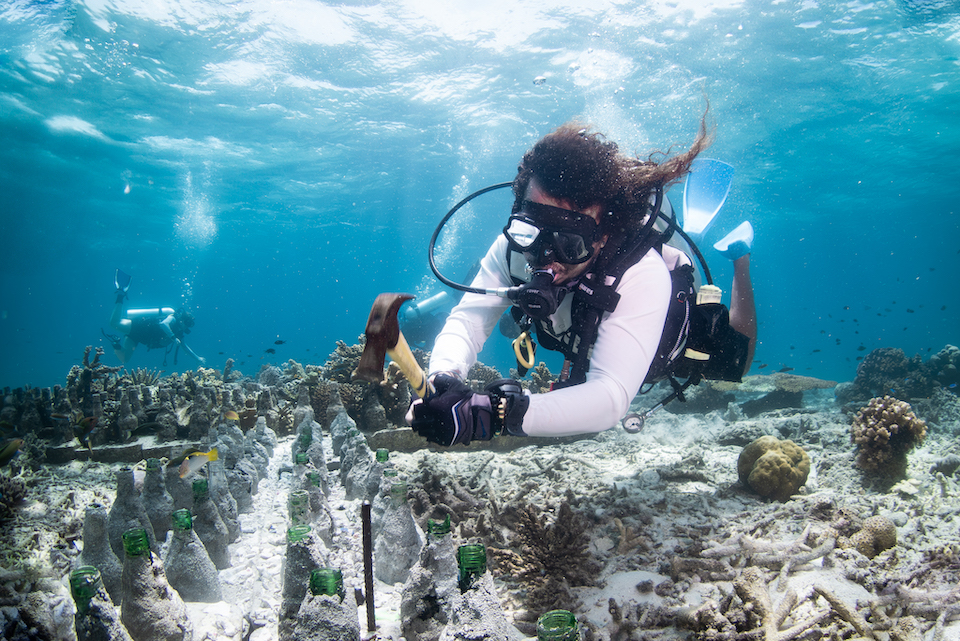
Credit: Jeethvendra Kirishnamoorthie.
You don’t need a degree to make a difference
For many people, the words marine biology bring to mind sun-drenched dives, vibrant coral reefs and encounters with exotic sea creatures. But Jeethvendra is quick to set the record straight. “It’s not all diving and fun”, he says. A more realistic idea of marine biology, he adds, “is a lot of office time”.
It’s a message he feels strongly about sharing, especially with those drawn to the ocean more for adventure than science. If you love diving but aren’t interested in the research side, he says, a marine biology degree might not be the right path. He’s not trying to deter people – far from it – but wants them to know that marine conservation is for everyone.
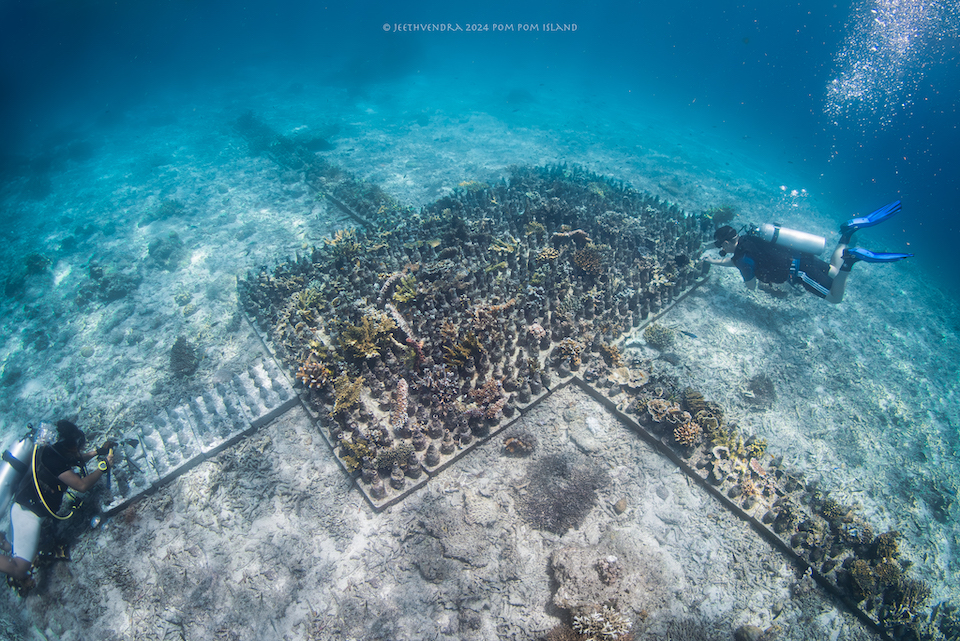
“You don’t need a degree to do marine conservation”, he explains. There are many ways to make an impact without formal training, from hands-on work like coral planting to citizen science projects. You can even become a published author and still contribute to science, he points out, “without the hassle of the degree”.
That inclusive spirit is something he carries into his own work. Over the years, whilst at TRACC, he’s mentored many volunteers, and it’s their energy that gave him the “spark” to keep doing what he was doing. “You leech off their excitement”. A reminder that conservation thrives not just on credentials, but on a shared enthusiasm.
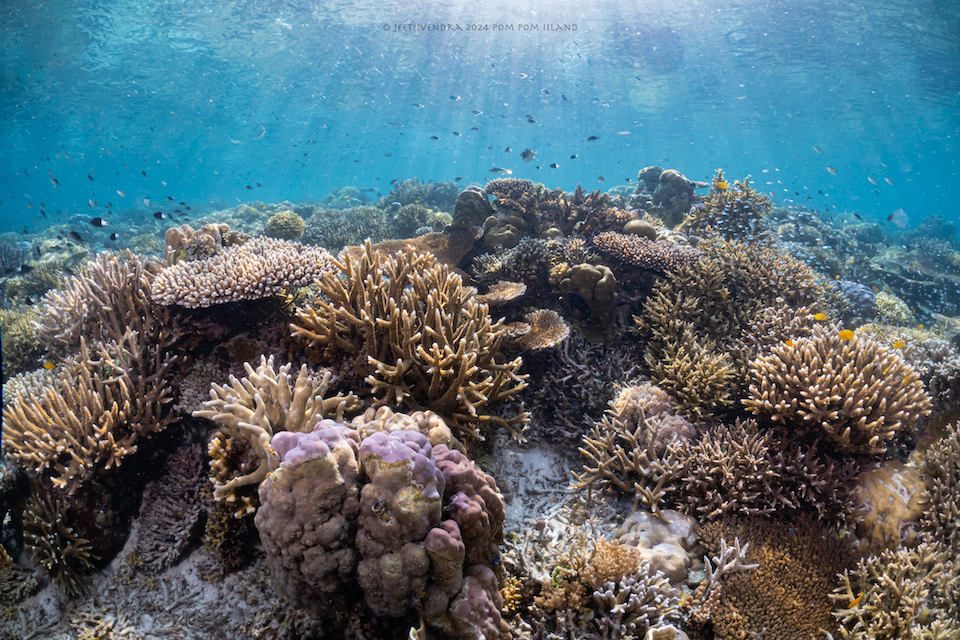
Credit: Jeethvendra Kirishnamoorthie.
Caring for sea turtles: From hatchlings to heartache
For Jeethvendra, few moments compare to the magic of releasing baby turtles into the ocean during his time at TRACC on Pom Pom Island.
“It’s the most tangible reward” he says. After weeks of monitoring, collecting eggs and guarding the hatchery – watching the hatchlings scramble toward the waves is a powerful reminder of why the work matters.
But those joyful moments are shadowed by darker realities. Jeethvendra buried the carcasses of 30 to 40 turtles that had washed up on the beach on Pom Pom Island. “Every carcass that arrived is still a tragedy” he says. The causes aren’t always clear, but many are believed to have died from human-related threats: drowning in trawling nets, blast fishing, boat strikes or poaching.
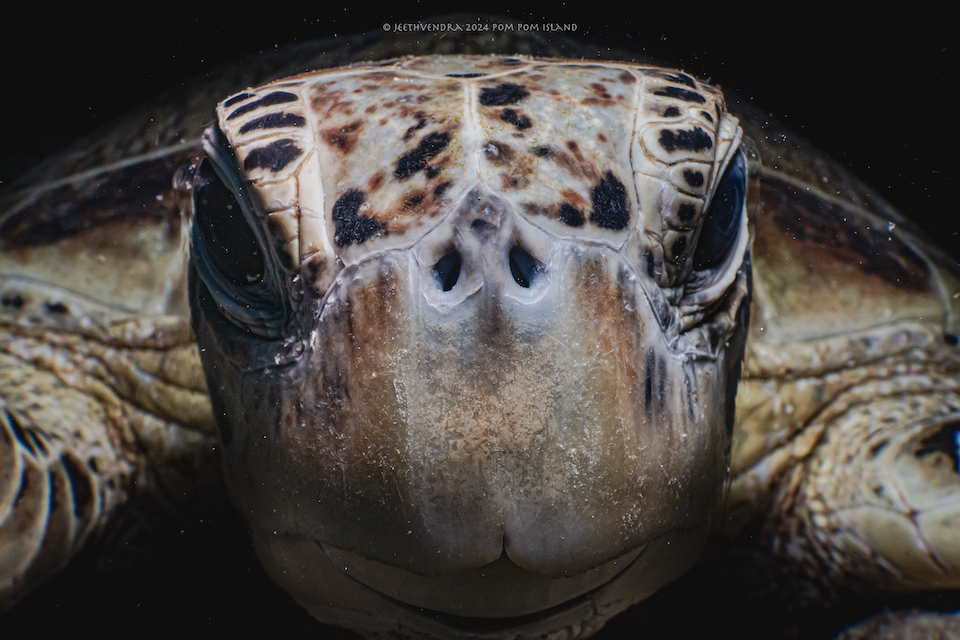
And yet, amidst the devastation, there have been moments that surprised him. In one rare and haunting case, he encountered a turtle that had survived an attack by poachers, its back shell partially removed, but still alive and swimming. Jeethvendra suspects the turtle may eventually succumb to disease. But that encounter stayed with him. It revealed the resilience of these creatures and the urgency of protecting them.
Credit: Jeethvendra Kirishnamoorthie.
Jeethvendra shares that thanks to ongoing conservation efforts the green turtle population in parts of Borneo is steadily increasing. On Pom Pom Island, sightings have become so frequent that it’s not unusual to see 15 turtles in a single dive.
But even success brings complexity. Without natural predators nearby, too many turtles grazing seagrass can disrupt the nurseries for smaller fish. Globally, the picture remains urgent. Green turtles, while recovering in some regions, are still Endangered. Hawksbill turtles, poached for their ornate shells used in jewellery, are Critically Endangered.
The work is far from over. But as Jeethvendra’s journey shows, each life released, each tragedy witnessed, and each turtle spotted beneath the waves tells a story – not just of vulnerability, but of resilience, recovery and the delicate balance of the ocean.
Credit: Jeethvendra Kirishnamoorthie.
From reef to research: Where marine biology can lead and how to dive in
Whilst working for TRACC, Jeethvendra spent a lot of his time underwater, taking part in turtle facial ID, collecting a database of the turtles on the island. His hair was always wet.
Having finished his master’s degree and looking for more financial stability, and perhaps drier hair, he decided it was a good time to end his chapter at TRACC and start a new one in Singapore as an environmental consultant.
Jeethvendra highlights how a marine biology degree can lead to a surprising range of career paths. He has a peer who studied marine biology and now has the unique job of studying the microbiome of marine sponges for a pharmaceutical company. Other paths include entering the diving industry or becoming a lecturer of marine biology.
Jeethvendra is quick to bring up the topic of AI when discussing how the world of marine biology has changed over the years. He explains how drones are already being used to patrol beaches, being able to cover a much larger area in a much shorter time than humans.
Currently, turtle facial ID is done manually, with researchers like himself having to compare one photo with up to 50 others. It can take an hour to ID ten turtles. AI could streamline this and allow for larger datasets, but there’s little incentive to develop the technology.
His advice to aspiring marine biologists? Stay curious. Watch ocean documentaries and listen to podcasts. He emphasises the importance of reading scientific papers and suggests Google Scholar or SciHub.
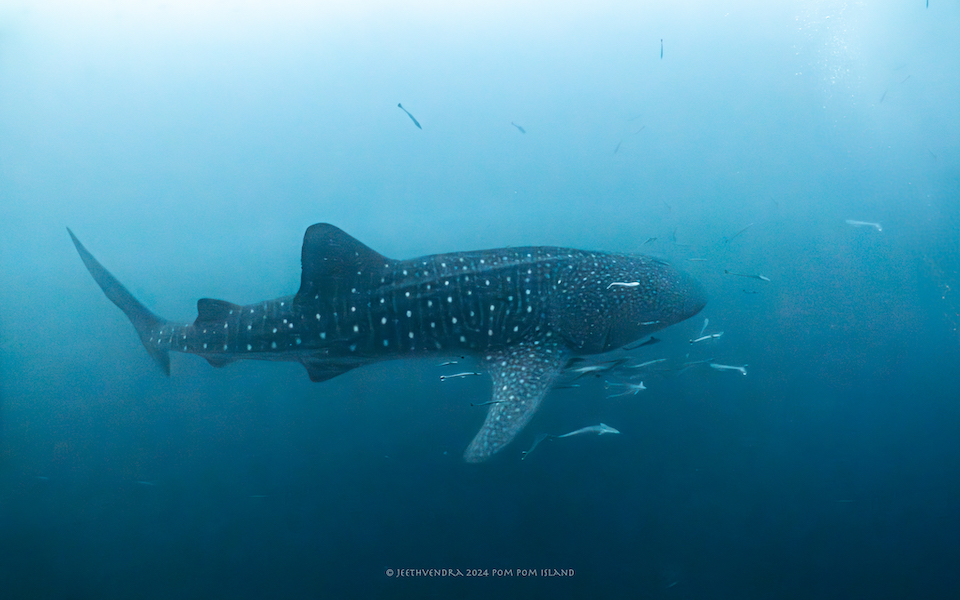
A whale shark. Credit: Jeethvendra Kirishnamoorthie.
Capturing the ocean through a lens
When diving started to lose its excitement for Jeethvendra, he picked up a camera in an attempt “to spice it up”. Sill working for TRACC, with each dive he honed his photography skills and what started as a hobby became something more. He landed a photography job on an island in the South China sea and hopes to publish a book of his photos one day.
Of course underwater photography isn’t without its challenges. Jeethvendra admits one of the hardest parts is simply not flooding your camera gear, a lesson he’s learned the hard way.
Sharing the best thing he’s ever photographed underwater, two creatures come to mind. The first was one of the ocean’s most majestic creatures – an oceanic manta ray, the largest ray species and a rare sight. The other was a whale shark, the world’s largest fish and a favourite among divers. Both were unforgettable moments.
Jeethvendra’s journey may have begun with a twist of fate, but it’s become something far deeper – a calling rooted in passion and curiosity. From the awe of releasing baby turtles under moonlit skies to burying their fallen kin in the sand, his path has been one of joy and heartbreak.
Yet through it all, his purpose has remained strong: to protect the ocean he loves and to inspire others to find their own role in conservation.
“The idea that anyone can be a conservationist really resonates with me”, he says. He believes the future of marine conservation rests on the shoulders of everyone. “We don’t need a few perfect conservationists but rather many people doing what they can, however small, to help protect our environment”.
For him, that collective effort is key. As he puts it, “a group of so-called imperfect conservationists can collectively make a greater impact”.
Jeethvendra’s message is simple but powerful: “Anybody can be a marine conservationist; everyone should be”.
Explore your path
If you’d like to see more of Jeethvendra’s work, including his breathtaking underwater photography, you can follow him on Instagram.
Interested in becoming a marine biologist? Explore the detailed guide How to become a marine biologist? to learn more about the path, from degree to fieldwork.
Prefer to focus more on diving and hands-on marine conservation work? Check out this amazing Divemaster and Marine Conservation Apprenticeship in Mexico, along with other unique opportunities we regularly share on our Volunteer & Internships Board.
Author profile | Emily Pickett
 Emily is a marketing graduate and a conservation volunteer with a lifelong passion for wildlife and the natural world. After working on a nature reserve and in environmental education, she now combines her love of conservation and writing to inspire others to connect with nature and take action to protect it.