Field notes and flight paths: A career in conservation research
Long before fieldwork and research papers, Dr Jamie McKaughan was the kind of child who brought home worms as gifts and tracked frogs through damp grass with his dad.
“I was wildlife-obsessed,” he laughs. “Peregrines were my first obsession -everything fast, I loved. Then came cheetahs, then tigers… I just seemed to go through phases of obsession with extreme skill.”
That early fascination with speed and power eventually gave way to something deeper: a desire to understand, to connect and to protect, and now finds its purpose in his work as a Conservation and Research Co-ordinator at the Hawk Conservancy Trust.
For Jamie, the Trust is more than a workplace; it’s a community rooted in integrity, where rigorous research meets authentic stewardship of the natural world.
Outback spirit and path finding
“My dad was Australian and spent loads of his school holidays in the outback – always animal-minded, always exploring,” explains Jamie.
“Even though I didn’t grow up in Australia, Dad’s mindset definitely stuck with me. He was always encouraging us to go off and explore – “Look for snakes,” “Check under that log” – and I loved it.
I got completely obsessed with Steve Irwin. There are actual videos of me tearing around the neighbour’s vegetable patch doing full-on impressions: “G’day! Today we’re gonna talk about…” My brother still threatens to dig them out. That mix of Dad’s outback stories, and my own wild enthusiasm definitely planted the seed for my love of wildlife.”
That passion stayed with Jamie, even as school became more of a challenge. “School was mostly alright, but I struggled without really knowing why. I’m dyslexic, though I didn’t find that out until after my AS levels (Advanced Subsidiary levels) – by then, I’d really hit a wall. I always knew I was bright enough (not to sound arrogant), but I just couldn’t seem to do things the way they wanted. My coursework was great, but exams were a disaster.”
Geography was the one subject Jamie loved, so that’s what he chose to study at undergraduate level.
“I think it was partly the human element – how we fit into space and time, how we interact with the environment. I’d always loved animals and wildlife, but I hadn’t really considered something like Zoology. I think confidence also played a big part. At that point, geography felt like the only thing I could see myself doing, so I went with it and figured I’d work the rest out later.”
After graduating, Jamie hoped to move into wildlife or environmental project management, but opportunities were scarce. “I ended up in financial data – partly because it was a job, and partly because I thought, if I can get project management experience, maybe I can transfer it over.”
That gamble paid off. After four years, he left the corporate world and headed to South Africa at 26, ready to reconnect with conservation.
From big cats to birds of prey
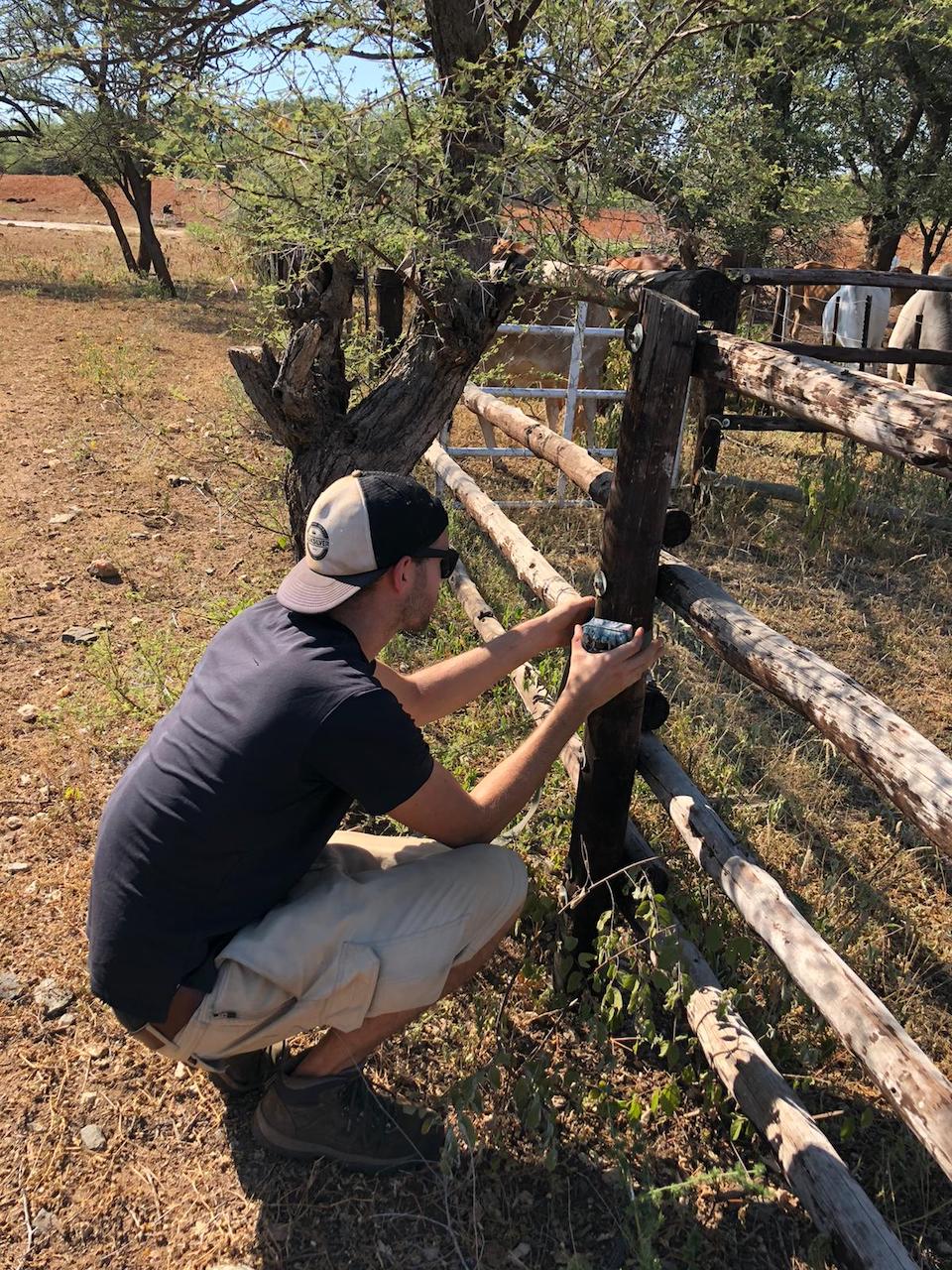
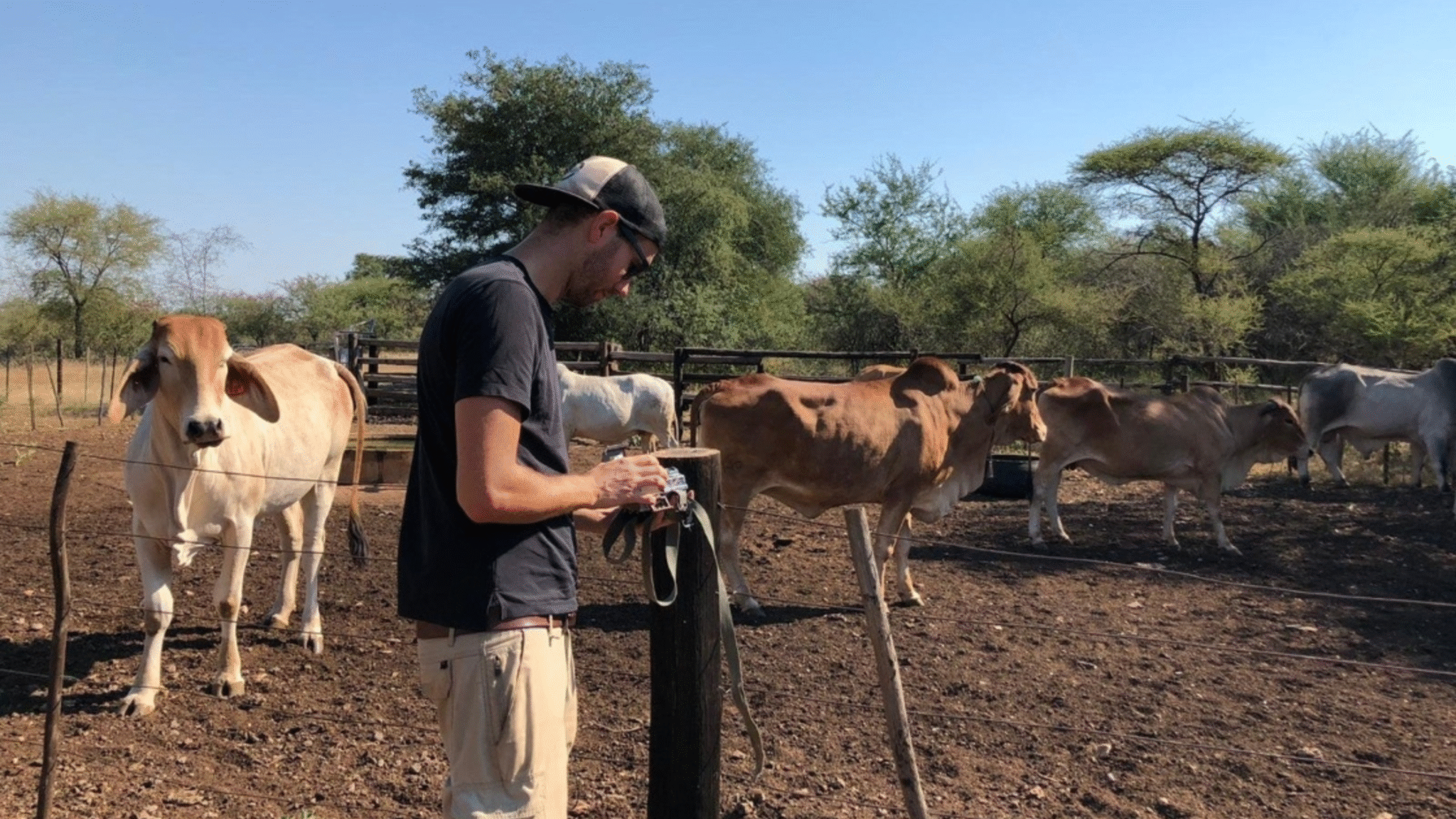
“Originally, I went to South Africa for six months as a volunteer. It was a bit of a trade-off – they were setting up a new research centre, and I could help project manage parts of it in exchange for experience I didn’t yet have on paper.”
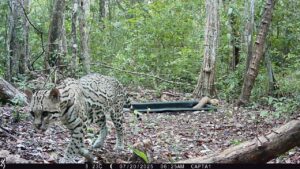
By the end of those six months, Jamie was offered a job to stay on, help run the project and dive deeper into carnivore research. His boss had completed her PhD on baboon-human conflict, which shaped the centre’s early focus, but Jamie was drawn to carnivores.
“I’d already been to India for a month doing an environmental education project around tiger conflict, and once I got to South Africa, I threw myself into everything I could, starting a Master’s there two years later.”
Then COVID hit.
Jamie returned home to care for his dad full-time. With travel and work off the table, he felt stuck – unsure how to move forward. But he’d collected a wealth of data beyond his original project and had plenty of questions to explore. So, he asked the university if he could convert his Master’s into a PhD. After a few interviews, they said yes.
“It wasn’t the most straightforward route, but I wouldn’t change it. I made the right decisions for the right reasons, even if it meant having less energy for other things. If I hadn’t come home, I wouldn’t have had the PhD – and I’d have been stuck, unoccupied and unemployed.”
By the time he finished, Jamie knew he didn’t want to return to Africa. “Suddenly it didn’t feel right. I wasn’t there anymore.”
A place of integrity
That shift in direction led Jamie to the Hawk Conservancy Trust. “Some jobs just give you a feeling,” he says. “That’s what happened when I saw the advert.” The crossover between birds and wild cats – predator-prey dynamics, human conflict, coexistence strategies – made the role feel both familiar and exciting.
“I thought, this place is really nice,” he recalls. “And when I came for the interview, I just knew – I want this.” That instinct proved right. From the inside, the Trust is everything it promised to be – full of integrity and good people.
“It doesn’t try to be something it isn’t,” he says. “It works hard to do what it can do – and it focuses on doing what it thinks is right, not necessarily what’s easy or appealing to everyone else.” For him, it’s not just a workplace – it’s a place that feels true.
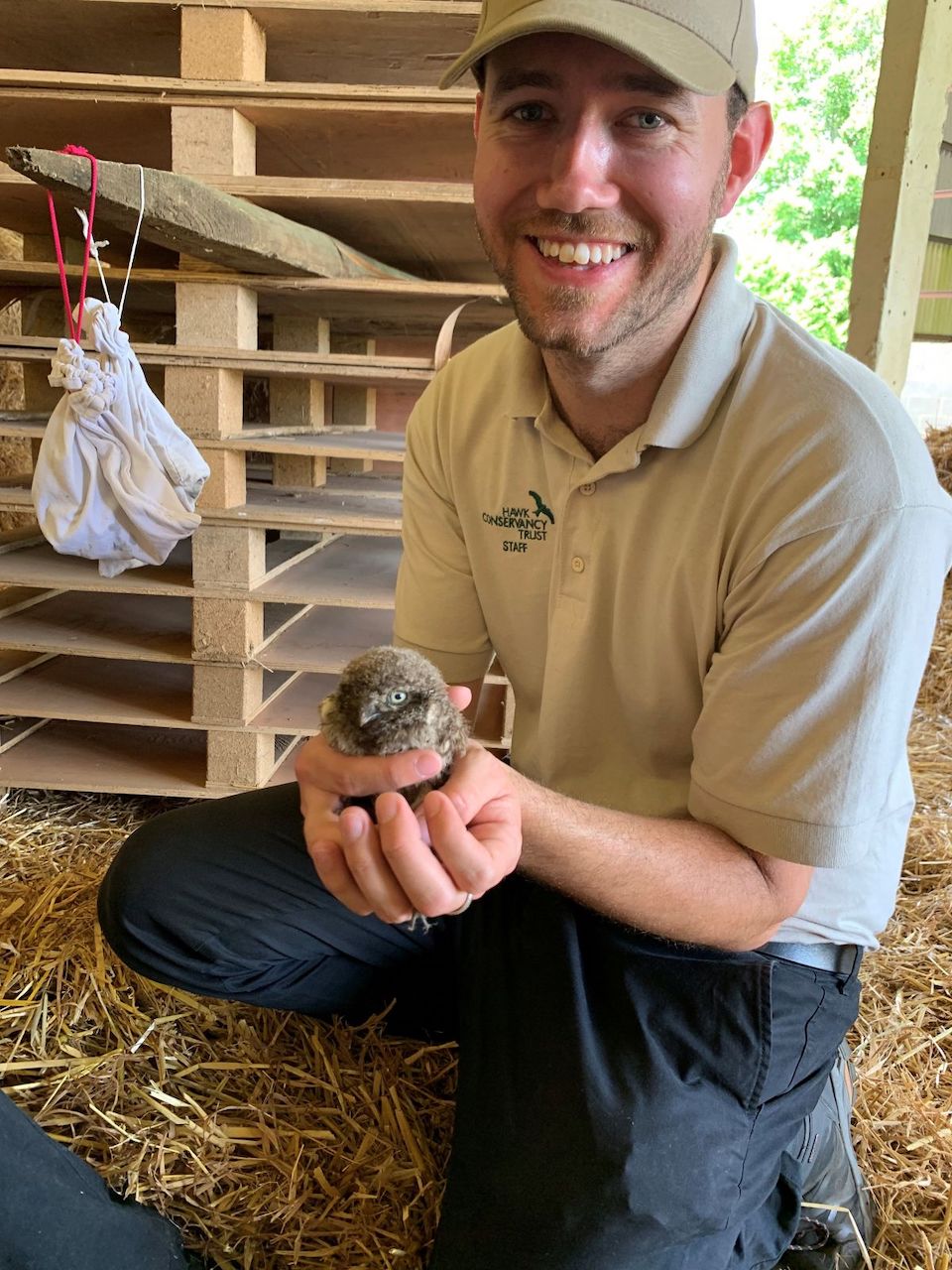
Dr Jamie McKaughan holding a little owl chick during conservation research fieldwork for the Hawk Conservancy.
As Conservation and Research Coordinator, Jamie’s role is wonderfully varied, with a strong focus on British birds of prey. He works closely with Dr Matt Stevens, the British Projects Manager, on several research initiatives – including one linked to their bird of prey hospital.
“We’re investigating the risks birds of prey face across different habitats, road types, regions, and even times of day or year. The aim is to build a detailed map of these threats and ultimately find ways to mitigate them. It’s a complex picture, and gathering robust data is key to understanding and protecting these species more effectively.”
There are three key areas to Jamie’s work: research, science communication and fundraising. “On the funding side, I support grant applications and liaise with major donors, specifically for conservation and research initiatives. Science communication is a major focus too, spanning on-site displays, educational updates, and responses to public queries – ensuring our team shares accurate, evidence-based information.”
That same integrity carries through to their online presence and social media, where the goal is long-term public trust. “Not for branding’s sake, but to ensure people support our work because they believe in its scientific and ethical foundation.”
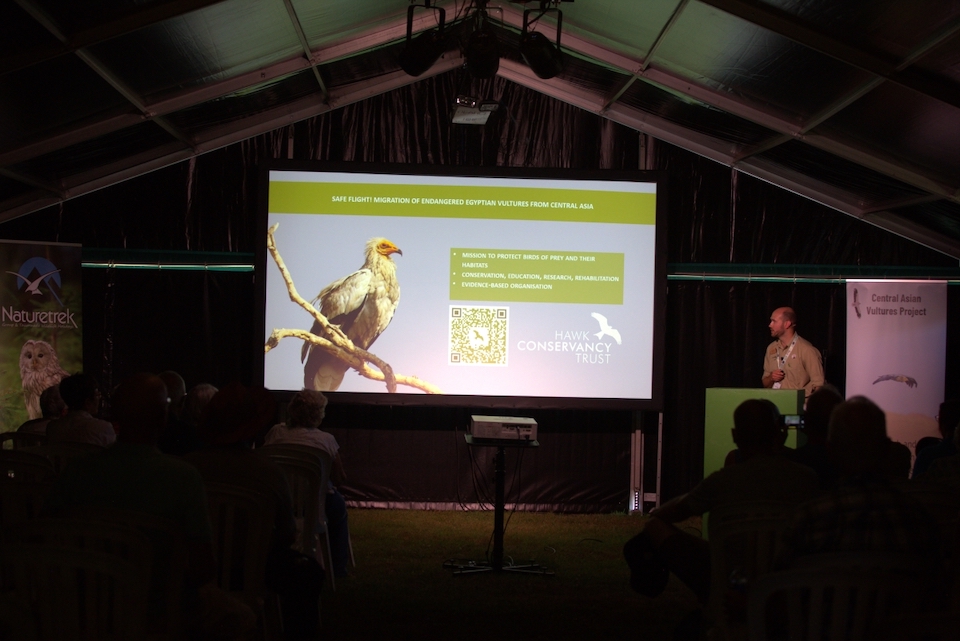
Dr Jamie McKaughan giving a talk on Egyptian Vultures as part of his conservation research work for the Hawk Conservancy Trust.
A big part of Jamie’s role involves making science accessible. “Whether it’s through on-site displays, social media, or supporting our education team, the goal is always to boost public understanding and engagement with birds of prey and their habitats.” He loves the collaborative process of shaping messaging and also enjoys the research itself – even if it’s slower-paced.
“Recently, I helped Matt fit trackers to kestrels, which was a great learning experience. It’s a tough year for cavity nesters, but getting hands-on and learning from someone with decades of field experience has been brilliant.”
Of course, not every day is easy. “There are days when it feels like no matter what you do, some attitudes won’t shift – and that can weigh heavily, especially when you’re already running on low energy, sunburned from a full day in the field, and still feeling like you haven’t done enough.”
It’s a familiar struggle in conservation: the fear that your efforts might never be enough. “It’s not something people often talk about, but the mental health statistics in this sector are sobering. But while the work can be emotionally tough, especially when species decline despite your best efforts, I still believe it’s worth trying. Even if we fail, I’d rather be someone who tried.”
Advice for budding conservationists
Jamie’s advice to anyone entering conservation is grounded in realism and hope. “It’s true that our sector leans heavily on volunteering and unpaid experience, and while I don’t think that’s right, it’s often the reality. But experience doesn’t have to mean handling animals or being in the field – it can be transferable skills from other sectors: project management, communications, finance, even just a sense of how the world works.”
His biggest message? “Take opportunities, and don’t close doors too early. Be kind, be curious and be someone people want to work with. Honestly, more doors open through integrity and warmth than through credentials alone.”
Qualifications matter, yes – but they’re not everything. “Some of the most influential people in our field haven’t done PhDs. What matters more is how you show up – especially in small, underfunded teams working in tough field conditions. Your attitude can be the deciding factor. If someone’s going to spend twelve hours in a hide with you every day, they’ll choose the person who mucks in and gets on.”
Jamie’s career may have taken unexpected turns – from financial data to fieldwork, from big cats to kestrels—but each step has been shaped by curiosity, compassion, and a refusal to give up. For those still finding their flight path, his message is clear – start where you are, stay open, and never underestimate the power of integrity.
Find out more about the work of the Hawk Conservancy Trust at: https://www.hawk-conservancy.org/.
Author Profile | Julie Singleton
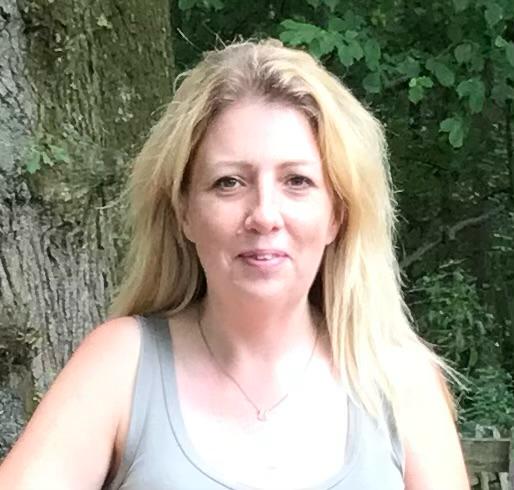 Julie is a storyteller, fundraiser and lifelong wildlife enthusiast who’s turned passion into purpose. With a Masters in Creative Writing (Distinction) and current studies in Conservation Management, she blends communication with conservation – bringing nature’s narrative to life for diverse audiences.
Whether surveying raptors with the Hawk Conservancy, guiding visitors at the Chichester Peregrine Project or championing swifts as part of her local group, Julie thrives where communication meets ecology. A keen birder and devoted wildlife gardener, she finds magic in feathers, foliage and the power of community-driven change. Connect with Julie on LinkedIn.