How can oceanography and data science save marine wildlife?

When Dr. Iury Simoes-Sousa, Computational Physical Oceanographer and Postdoctoral Investigator at Woods Hole Oceanographic Institute, started his career as an oceanographer and data scientist, he would never have expected that a manatee named Tico would introduce a new meaning to his research and professional career.
Born and raised in Fortaleza, Brazil, Iury was surrounded by a stunning, colourful, and, as the locals would emphasise, a “hungry” coast. His conversations with local fisherman sparked an early interest in coastal erosion and ocean processes, eventually leading him to pursue a bachelor’s and master’s degree in Oceanography.
After moving to the United States and completed his PhD in Computational Science and Engineering at the University of Massachusetts Dartmouth, he joined the Woods Hole Oceanographic Institute to use computational tools and data science to model, research, and visualise oceanic and atmospheric processes.
Iury sees his current position as a bridge where, on one side, lies his academic and graduate career, and on the other awaits his future as a professor.
Most of the time, postdoctoral positions are temporary under the umbrella of a principal investigator for a specific project or area of study. For Iury, the best part of his position is the freedom to choose the research questions he wants to answer while ensuring a personal goal: he wants his science to transform people’s lives.
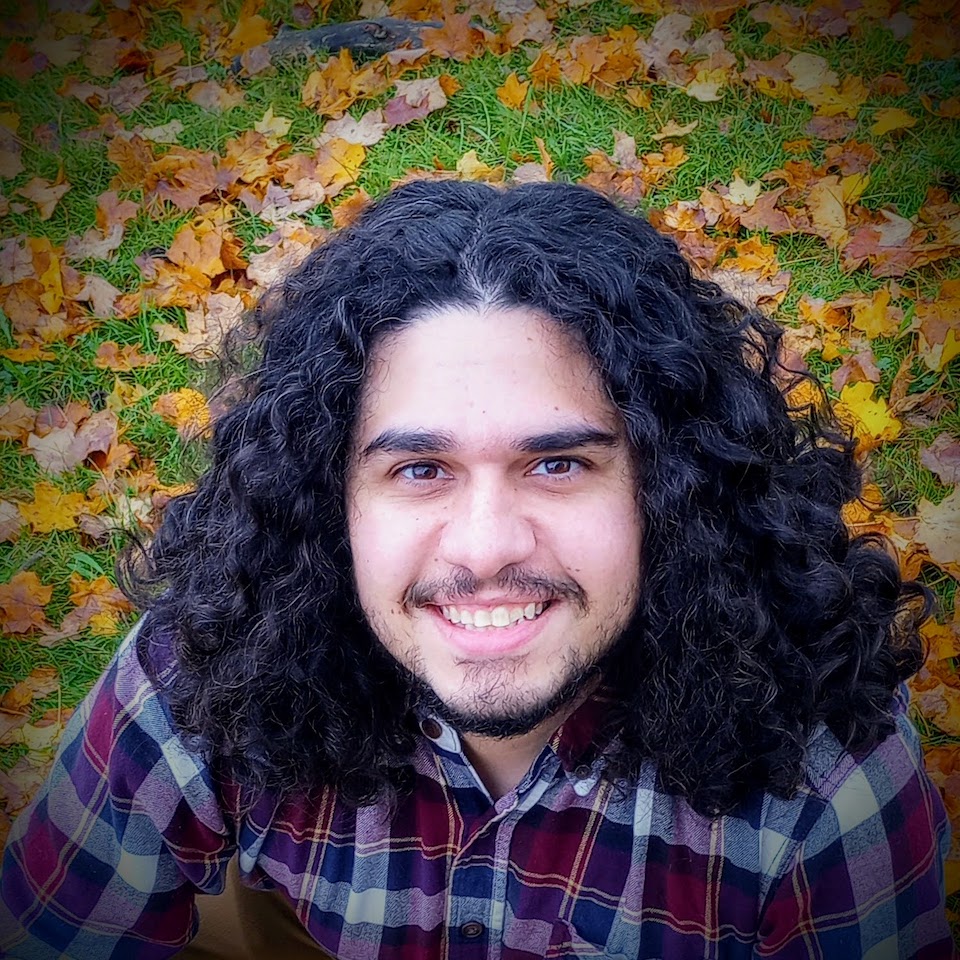
“I’m drawn to work that can be applied and change reality – while never forgetting that impactful solutions often begin with fundamental research”. (Photo by: Iury Simoes-Sousa.)
From ocean models to marine rescue
As you read, you might picture Iury abroad, on a huge oceanographic vessel, among gigantic waves and stronger winds. Or at least, that’s the oceanographer prototype we are used to seeing.
The reality is, such a prototype only represents a portion of an oceanographer’s daily life. Since Oceanography is such a broad discipline in ocean science, the life of an oceanographer can differ from one professional to another.
As a Computational Physical Oceanographer, Iury spends most of his time working with big data sets collected by satellites and autonomous platforms. With such data, he codes and creates models that explain oceanographic processes, which later can answer questions and make decisions in terms of ecosystem management. Such as climate change impacts, harmful algae blooms impacts and more.
However, two years ago, Iury’s research took an unexpected turn, when he was called to explain the surprising behaviour of a manatee named Tico.
A new meaning: making models to save marine mammals.
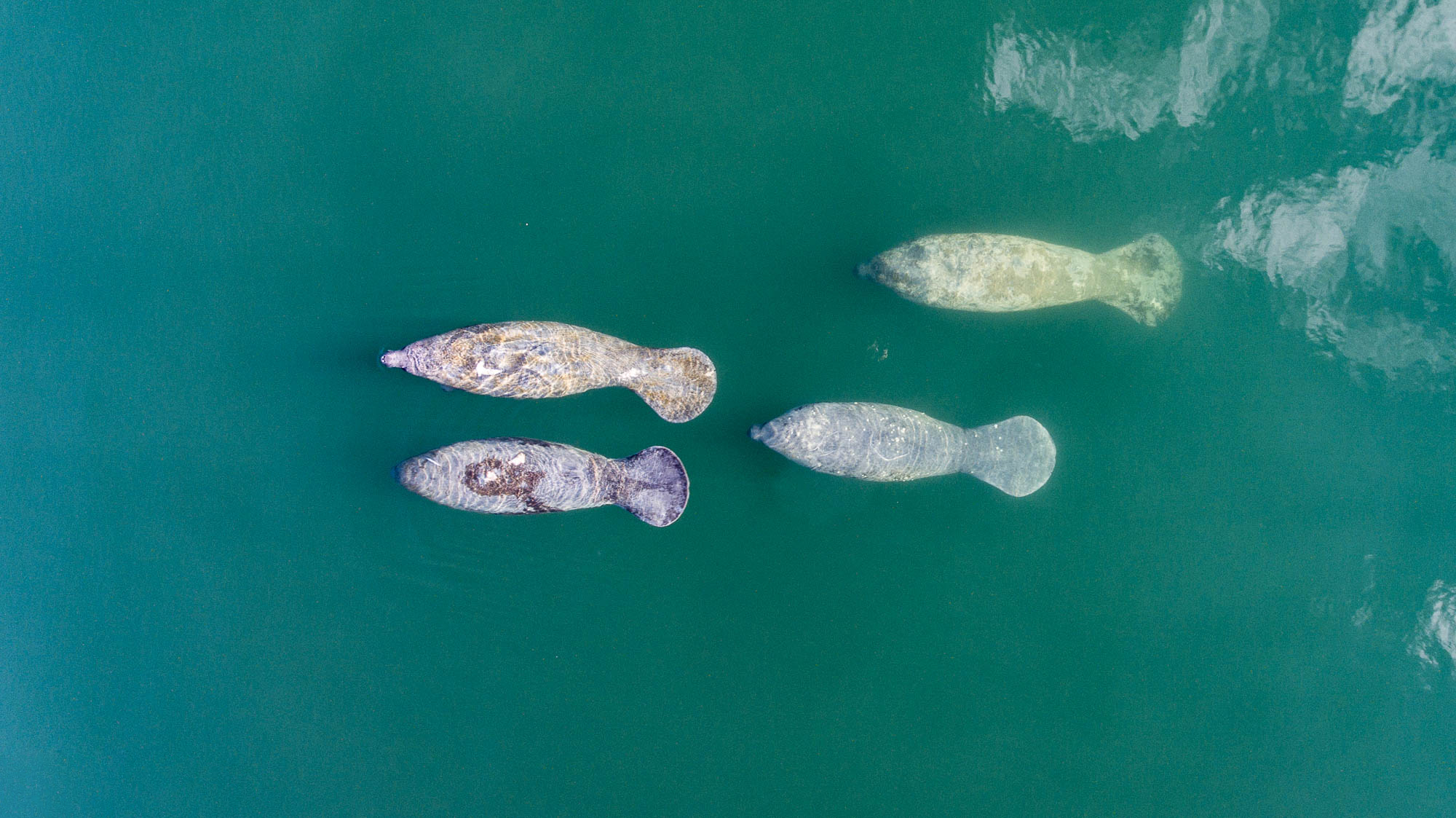
Tico is an eleven-year-old West Indian manatee rescued by Aquasis, a nonprofit organisation rescuing and rehabilitating endangered species based in Ceará, Iury’s home state. Aquasis rescued Tico in 2014, when he was found stranded as a newborn in Praia das Agulhas.
After eight years of rehabilitation with his twin brother, he was ready to be back in his habitat, the wild south of the Amazon River mouth. In 2022, Tico was released in Icapuí, on the northeast coast of Brazil, with a GPS (Global Positioning System) tracker above him to track his path back home.
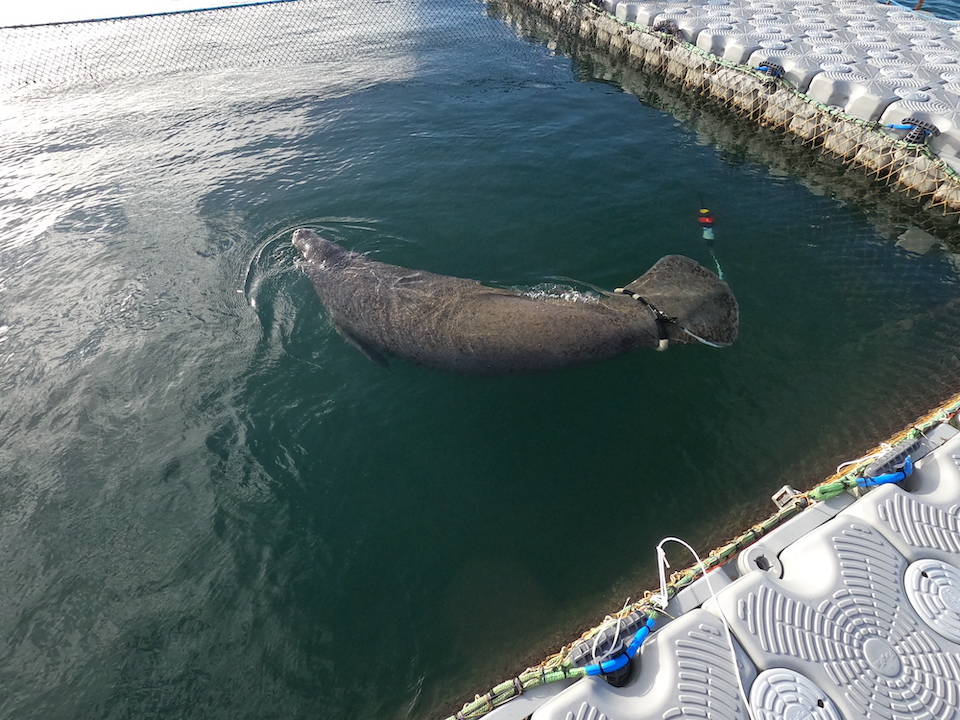
Tico spent time acclimating to an ocean environment and swimming with a tracker before being returned to open seas in July of 2022. (Photo by: Miquel Garcia, ©Aquasis).
After just twelve days of monitoring, a sudden change of direction caused concern. Instead of swimming to estuarine waters, Tico was heading to the open sea at a very fast speed. This behaviour was unusual for a manatee, and the Aquasis team needed an oceanographer to better understand his movements. That’s when Iury collaborated with Aquasis to understand such a pattern.
When Iury analysed the data obtained by Tico’s GPS, combined with Brazilian atmospheric and oceanographic data obtained via satellite, he concluded Tico’s movements were aligned perfectly with the movement of the North Brazil Current! Tico was caught in a powerful ocean current indeed. The current carried Tico 4,023 km (2,500 miles) away from its home in Ceará up to the Margaritas Islands in Venezuela.
Since Tico headed to international waters, any effort to bring him back needed the approval of the Brazilian government. Proving that Tico didn’t choose to swim up to Venezuela by himself was key to success.
Iury’s analysis as an oceanographer was valuable for the organisation to showcase the impact ocean currents can have on marine mammals’ movements and even revealed how rainstorms showered Tico with fresh drinking water at different points of his journey, helping in his survival in the open ocean.
As Iury explains, “Studying his path, we can assume that Tico had a very tiresome journey. Based on simulations of past sea-state conditions and satellite data, it’s likely he encountered multiple violent storms. The two probable sources of freshwater available to him were the storms themselves and the diluted Amazon River plumes (masses of fresh water from a river’s outflow) intersecting with the ocean currents.”
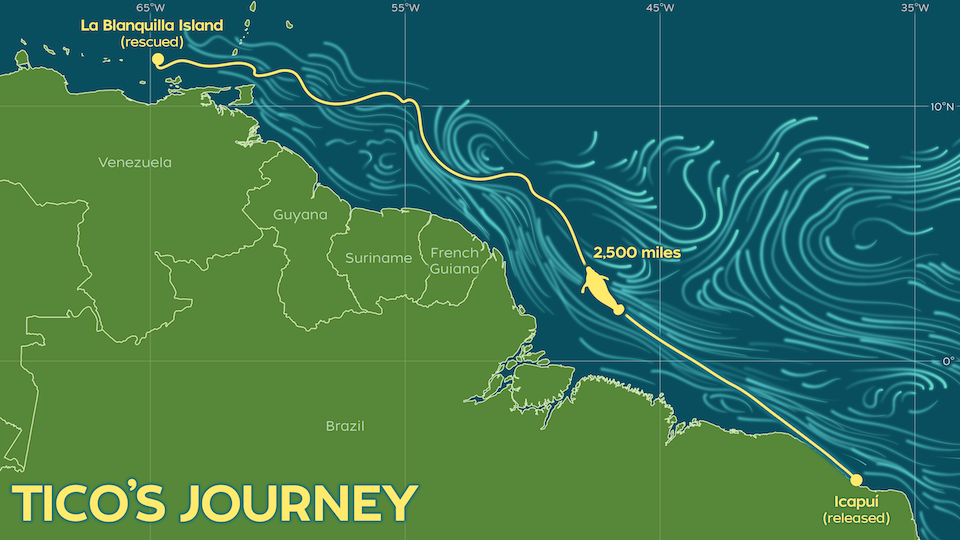
Tico travelled nearly 2,500 miles over 62 days from Icapuí, Ceará, Brazil to La Blanquilla Island in Venezuela. While some manatees are known to travel hundreds, and even thousands of miles, the speed and distance of Tico’s journey was anything but normal. (Photo by: CharinPark, ©Woods Hole Oceanographic Institution).
Making waves of collaboration
For Iury, the key to successful collaboration with Aquasis was to align shared interests and make the experience worthwhile for everyone. Meaning, both his and Aquasis’ goals are being accomplished in the process, while ensuring clear communication and surpassing conflict of interests.
As Iury highlights, “When collaborating, communication is key. I like to start the discussion with the question: What would make the conservation effort more efficient?”
Iury also points out that when collaborating in conservation efforts, there is a need to be open to understanding new processes and finding areas where each expertise collides. Areas of knowledge separately won’t resolve our problems, nor will we make wildlife conservation efforts more efficient.
The variety of perspectives is essential to conservation. Different cultures and disciplines ask different questions and offer distinct answers to the same challenges. Making connections with areas you don’t feel comfortable with when science is in service of the community is crucial for succeeding as a team.
As Iury stresses: “We should make the connections happen. I wasn’t an expert in manatee conservation. I needed to be humble to allow myself to be a student again”.
Transforming people’s and wildlife’s lives with oceanography
The ripple effect Tico’s story has been the biggest surprise in Iury’s career to date. It added a new layer of meaning to his research – and, more importantly, brought him back to the passion that first drew him to ocean sciences. Conservation, education and science communication are now not just possibilities, but central to his evolving path as an oceanographer.
After Tico’s story was published in Oceanus Magazine, he received many emails and calls of interest about Tico’s journey and oceanography. Iury shares that the most special one was from an elementary teacher and her students being interested in how currents work in the ocean.
As he humbly reflects: “To realise that your research can not only be applied, but also change people’s perspective on how science works, and inspire kids to pursue science, that is so touching.”
Tico’s unexpected voyage made Iury realise his role as a Computational Physical Oceanographer goes beyond data sets, coding and ocean processes. It showcases the valuable role oceanographers played in ensuring wildlife rehabilitation efforts are being conducted efficiently for conservation purposes.
Climate change is already changing currents, water temperatures and wind patterns, which have an impact on animals’ movements. In the future, Iury is interested in developing oceanographic models that can strengthen wildlife rehabilitation efforts in planning and understanding animals’ moving patterns to ensure their survival once they are released.
By incorporating the knowledge of oceanographers and data scientists into conservation efforts, we are ensuring science is done in the service of the community. As Tico’s story and Iury’s role highlight, oceanography is a promising field to ensure our rehabilitated marine wildlife finds its way back home.
Where is Tico?
After reading about Iury’s experience, you may be wondering… where is Tico?
Since he comes from a different genetic population and ecosystem than the manatees in Venezuela, the best option is to bring him back to his hometown and attempt a second release, ensuring his survival with the lessons learn from the first attempt. Tico is right now at the Parque Zoologico y Botanico Bararida in Venezuela, waiting for a second release attempt in Brazil.
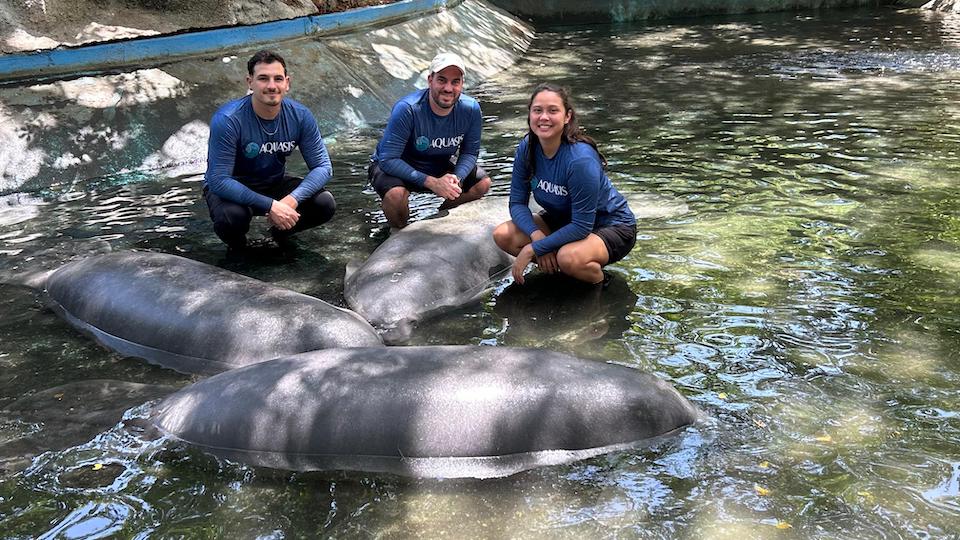
Aquasis veterinarians and rescue experts, Vitor Luz, Felipe Catardo, and Letícia Gonçalves went to Venezuela to check on Tico’s health and plan his transport back to Brazil. (Photo by: Segundo Carrasquero, ©Aquasis).
Learn more about Tico’s story and how Iury’s analysis developed into fascinating storytelling in Oceanus magazine here. Iury is also a co-author of a scientific paper about Tico’s journey now running in the Journal of Marine Biological Association.
If you want to connect with Dr. Iury Simoes-Sousa, you can visit his website.
Are you passionate about ocean processes, physics, chemistry, and data science, but you’re not sure how to be involved in conservation efforts? Check out our new guideline: How to become an Oceanographer?
Featured image credit: David Gross via Ocean Image Bank.
Author Profile | Giuliana Vomero

Giuliana is a Marine Biologist born and raised in Uruguay, South America. She is passionate about bridging ocean and marine science with society. She has gathered experience in coordinating environmental outreach projects, events, and networking building. In her free time she loves to write and share the wonders of the ocean and stories behind the work of passionate conservationists worldwide.
 Connect with Giuliana on LinkedIn, follow her on Twitter or Visit her website.
Check out more conservation interviews by Giuliana.