From ants to elephants: Forgive Maluleke’s mission to protect nature from the ground up
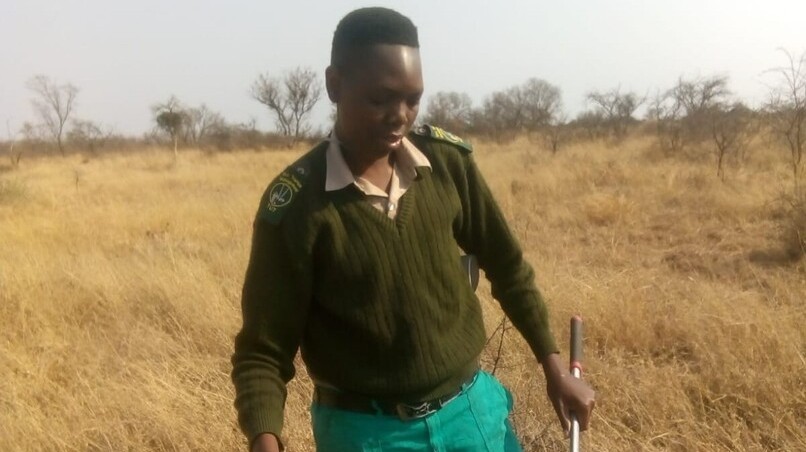
Forgive Maluleke is a nature conservationist working for the South African National Defence Force. He roams the bush every day, protecting the plants and animals that live there.
But he doesn’t stop there. During his weekends, he runs his own organisation called the Nhlalala Nature Conservation Project. Taking conservation into his own hands and with the help of volunteers, he removes snares and educates the local community on the importance of protecting nature, among other tasks.
His vision for conservation extends far beyond the fieldwork. Forgive believes that conservation isn’t just about protecting individual species; it’s about shifting how people see nature and their place within it.
He is driven by a strong purpose and a belief in education and compassion. For Forgive, true conservation must involve everyone and include each part of the natural system, not just the most popular parts.
Changing minds: The challenge and power of education
Much of Forgive’s work focuses on changing how people connect with and understand the natural world, in an effort to encourage more sustainable choices.
This involves educating local communities on how their choices can have a harmful impact on the environment, such as the use of pesticides in farming – a task that can require a lot of persistence and patience.
“I realise a lot of people are not aware,” he explains, “and it’s quite difficult to change the way people see things.”
Working with the local communities, Forgive will return to the same groups again and again, slowly building understanding. As he puts it, “it’s not something that you can do once.” Despite the challenges, he remains hopeful and committed.
“It’s quite a challenge, but I’m trying my hardest.”
Growing up in a rural area, Forgive’s connection with nature was built from childhood. “I realise that I understood nature at a very young age,” he recalls.
This early understanding of the natural world built his passion for conservation, and he believes this is important for future generations. Getting young children out in nature and teaching them about the environment will increase their motivation to protect it.
He advocates for a curriculum that includes both Indigenous and scientific knowledge, where children are taught to identify a range of plant and animal species, and where insects are valued just as much as larger mammals.
“We should start respecting animals from a rat, from an ant, from a ladybird.” Allowing children to see the natural world from a broader perspective and develop a sense of care for every part of it is key to driving lasting change.
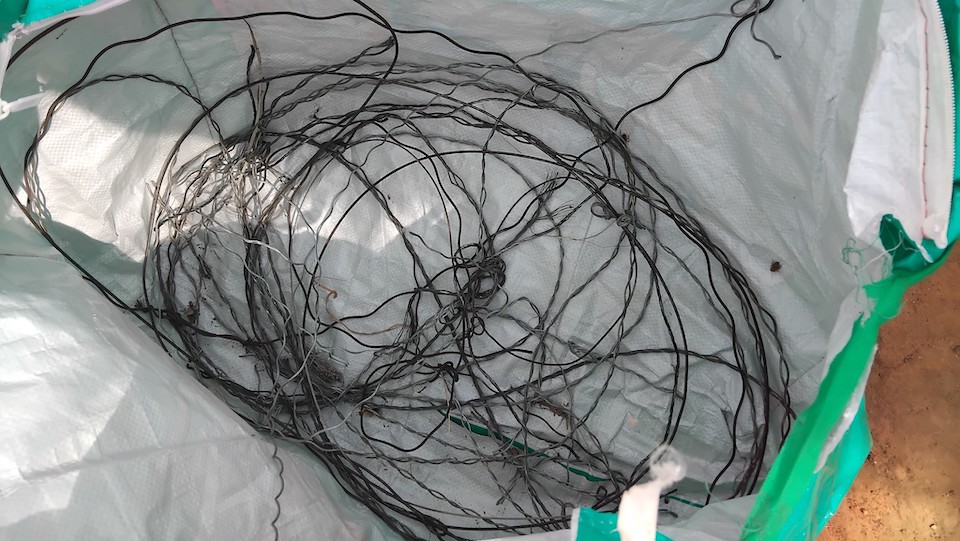
A bag of animal snares that have been removed.
Seeing all life as equal: Rethinking conservation
Forgive challenges the concept that conservation is only about protecting Endangered species. Instead, he explains that we must focus on all creatures and plants to conserve the whole environment and protect the everyday life forms that keep ecosystems functioning. Even the absence of a tiny insect can be a warning sign.
“If you go by a day where you don’t see an ant, you have to start worrying because there is something very wrong.”
Rather than seeing nature as a resource and something to utilise, Forgive wants people to see that we are part of nature. “We are not on top of the hierarchy,” he says, “we are part of the whole system.”
Every day, whilst out in the field, he witnesses animals play their part in the ecosystem while human activity continues to cause damage. “If everything else is playing its part,” he asks, “what about us humans?”
This philosophy reshapes the foundation of how conservation is perceived. If we can understand that we are just as much a part of nature as the trees and the elephants, then we can learn to live in balance with it. And perhaps care more about protecting it.
“Nature is not for us to exploit, it’s for us to share and live in harmony.”
Forgive also addresses misconceptions about what conservationists such as himself actually do all day, out in the bush in South Africa. “People feel the job is boring,” he says. “To me, the job is very engaging.” His understanding of and connection with nature means he knows about all its exciting hidden wonders.
While some assume he wanders around all day with little to do, the reality is far more complex. “It’s not all about anti-poaching of animals,” he explains. His work involves a variety of demanding tasks, from rescuing injured animals from snares and maintaining boundary fences to eliminating invasive plant species and educating local communities.
“Nature needs you to be in it to understand.”
Forgive understands that in order for people to understand his work, they must first understand nature, and for that, they must walk a mile or two in his boots. Then maybe they will have the “sense of oneness with nature” that he is lucky to possess.
There is much more to conservation than meets the eye, but only if you take the time to look closely.
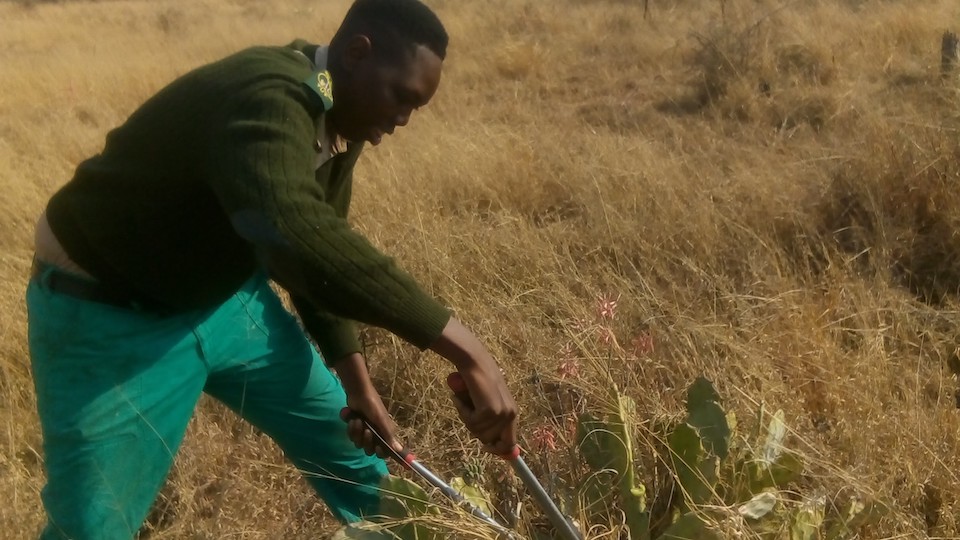
Forgive using shears to remove invasive vegetation.
Nature’s wisdom and the urgency to act
Forgive speaks plainly and firmly about the danger of inaction. “Without conservation,” he says, “we are losing the war on climate change.” We may not be able to see the damage, “but unfortunately, the impacts are invisible,” he says. The consequences are unfolding, and they will be felt most deeply by future generations.
“We should start now so we can spare the future’s wellbeing.”
While he believes strongly in the need for urgent human action, Forgive also recognises the resilience of nature. “Nature will never be destroyed completely,” he explains, “it has its own way of surviving.” If necessary, he warns, the planet will heal itself by removing the threat. Humans.
Nature has its backup, its own sustainable solutions. What’s needed now is the human willingness to learn and take action. “When we work on minimising our impacts, our global footprints,” Forgive says, “we prolong our lifespan in this world.”
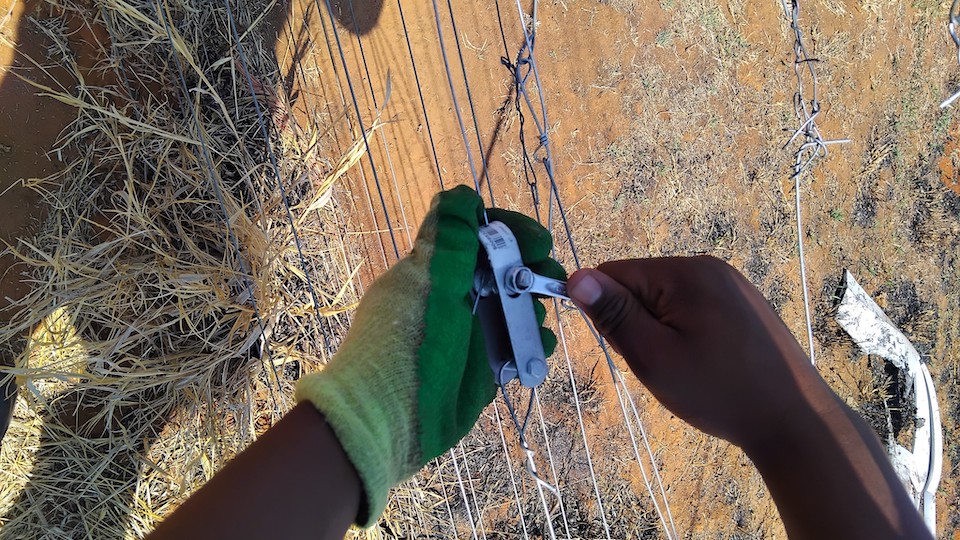
Forgive maintaining a boundary fence by tightening its wires.
The conservationist mindset
For Forgive, the mindset of a conservationist starts with humility. He encourages people to “understand nature from the bottom,” explaining that “if you can protect an ant, it’s going to be easy for you to protect an elephant.”
In other words, you’ve got to work your way up to the top. It’s not all about qualifications; it’s about building a relationship with the environment around you. Start from the smallest living thing and go from there, appreciating every plant and creature that plays a part in the ecosystem.
He advises aspiring conservationists to start by teaching themselves the basics and learning how the natural world works. He believes this helps people to develop a sense of belonging to nature that is important for conservation.
But this involves more than understanding technical knowledge. Forgive believes that, at the heart of every conservationist, should be one essential quality: compassion. “I think conservation goes with compassion,” he says, emphasising that one cannot exist without the other.
“This industry needs someone who is very much aware, who is open-minded, who is compassionate.”
Forgive doesn’t shy away from talking about the financial reality of working in conservation, saying that “you cannot have love for money and love for the environment at the same time.” It’s not a career path for those seeking wealth, but for those seeking a different kind of reward.
“It’s not all about generating income, it’s all about being one with nature,” he explains. Without genuine passion, people can be easily bought and swayed by offers that compromise conservation.
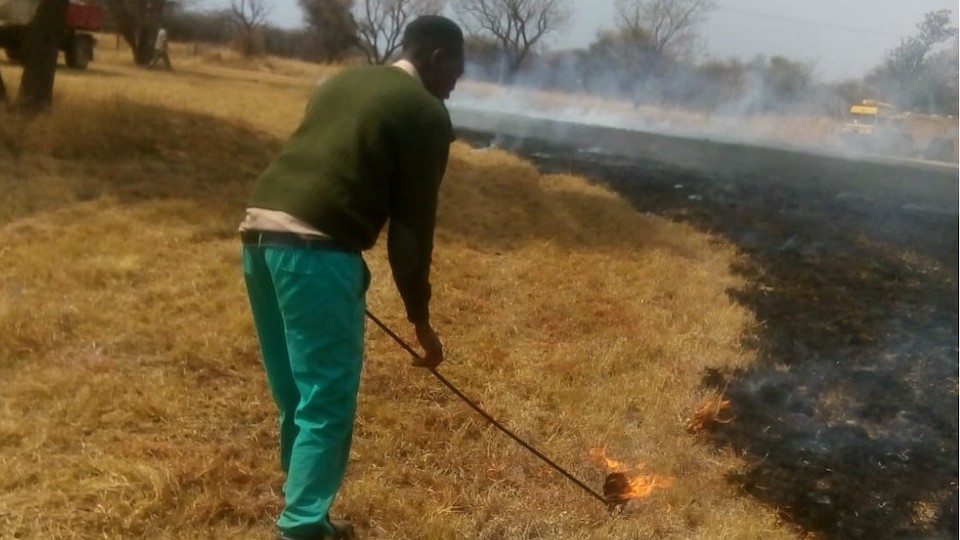
Forgive carries out a controlled burn to remove vegetation.
Hopes for the future
Despite the challenges of conservation, Forgive remains optimistic. For conservation to progress successfully, it’s not enough for a few hard-working and passionate individuals like himself to lead the way.
“We need a wide range of people to come together, to work together, so that we can tackle the issues that we are currently experiencing,” he explains.
Forgive envisions a future where governments, companies, scientists, communities, and conservationists all work in collaboration for the greater good. He believes this collective effort is essential if we are to take on the environmental crisis, with the urgency it demands.
“I am hopeful, but there’s a lot of work that needs to be done.”
Explore your path
Discover more about the Nhlalala Nature Conservation Project and the important work Forgive does by visiting the NNCP website and Facebook page.
If you’d like to connect with Forgive and follow his conservation journey, you can find him on LinkedIn.
Interested in becoming a conservationist like Forgive? Check out our Conservation Land Manager and Organisational Manager role profiles, or explore all Key Conservation Roles.
Author profile | Emily Pickett
 Emily is a marketing graduate and a conservation volunteer with a lifelong passion for wildlife and the natural world. After working on a nature reserve and in environmental education, she now combines her love of conservation and writing to inspire others to connect with nature and take action to protect it.