Communicating conservation with designer, writer and illustrator Helen Walsh
Meet Helen Walsh, a conservationist who’s bridging the power between science and communication. As one of the first graduates of a unique and innovative Masters in Biological Photography and Imaging at the University of Nottingham (UK), she has spent her career cultivating the power of storytelling to drive ecological understanding and conservation efforts.
With a background of working with the Wildlife Trusts, Helen explains why making complex ideas accessible to all is crucial for effective communication in the conservation sector. She gives us insight into her journey and how she uses her blend of creative and scientific skills to make an impact – including through her current role as Design & Publications Manager with NatureBureau.
Educational background and landing that first job
Helen grew up in an area of the United Kingdom that to some extent is still very industrial, Stoke-on-Trent. Despite this, she developed a love for nature through family trips to places like the Shropshire Hills and watching David Attenborough’s nature programmes.
Interestingly Helen says, “one of the things that really set me off on this path was actually watching Jaws when I was very little – it led to a lifetime fascination with sharks and, more broadly, marine biology.”
Despite her interest in marine biology, she couldn’t find a course to suit her, so went to study Zoology at University of Nottingham (UoN). It was during this degree, she discovered photography through a biological photography module that combined both science and creativity. For her at this moment, it felt great, stating, “I love science and I love art and suddenly the two had come together”.
After this degree, she was working on a short-term research project with the University of Liverpool looking at the effects of cabling from offshore wind farms on sharks and rays. She was wondering, like many of us. what to do next once this project is done.
Whilst she was pondering she got a phone call from her old biological photography teacher explaining how he was setting up a new Masters course and asked “will you be one of the first to join us”?
Helen went on to be part of the first ever cohort in a new MSc in Biological Photography and Imaging in 2001-02 at UoN. This covered science communication, website building, scientific report writing and wildlife photography. The course is still running and has produced some award-winning photographers over the years.
Her first proper role in conservation was in promoting biodiversity in the West Midlands (a region of the United Kingdom) for a partnership which included the Wildlife Trust and RSPB (Royal Society for the protection of Birds).
Helen mentions how finding that first job in conservation wasn’t easy. She recalls that she had to send out numerous CVs and applications, and often received little to no feedback. She notes that the job market has changed significantly since then, with the rise of online job boards and social media, but the challenges of breaking into the field remain.
Helen also highlights how there are now many job boards and sites available online such as the one here at Conservation Careers which she thinks is brilliant, “When you look for a job today, you’ve got all sorts of websites and media at your fingertips, making that initial enquiry a much easier process – no more sifting through newspapers!”
Helan’s current work at NatureBureau
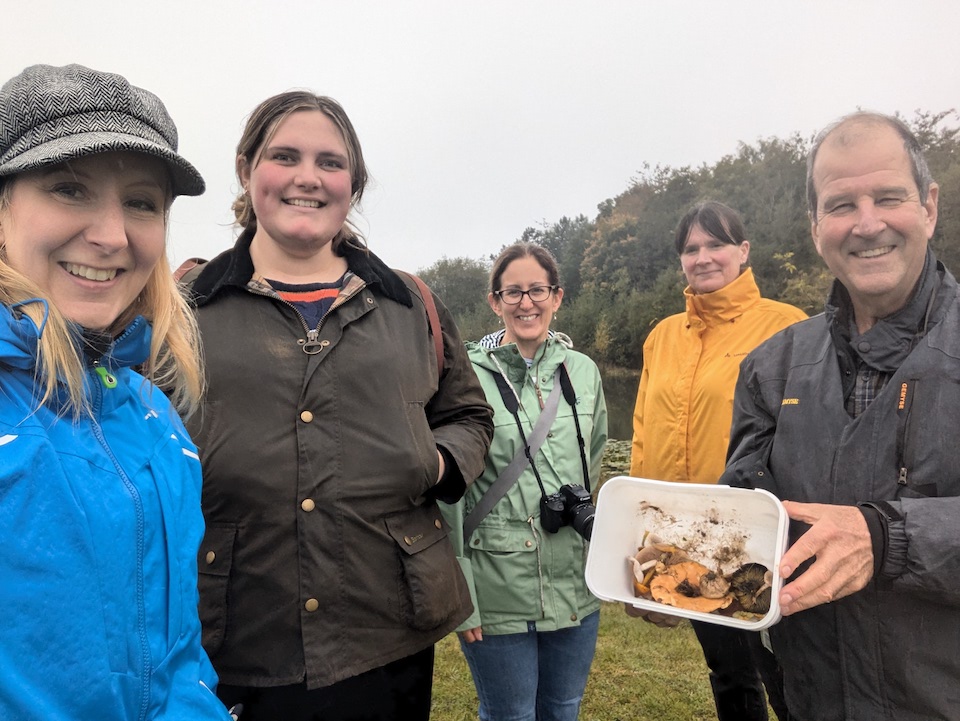
The NatureBureau team foraging for fungi.
Currently, Helen is working with NatureBureau part-time after working with them for several years on a freelance basis as an editor and designer. NatureBureau is an unusual hybrid company combining ecology consultancy with creative communication, offering services such as ecological surveying and reporting, alongside designing leaflets, interpretation materials and natural history books.
Helen’s daily work varies significantly across projects; she is currently working on an illustration of a map for the River Thame Conservation Trust. In the 1950s, this was one of Britain’s most polluted rivers due to its importance in the steel and coal industry. Since then, changes in legislation and decline of heavy industry have helped improve the water quality.
Helen says, “it’s going to be a big, detailed map, it will represent the area highlighting various fauna and flora”. Other activities that Helen is responsible for include managing and developing the business strategy for social media across platforms like LinkedIn, Instagram, X (Twitter) and Facebook.
Much of the engagement that NatureBureau receives through social media is related to its wildlife and work posts, especially those that concern the books they produce. User engagement is key to keeping NatureBureau in people’s minds: “it’s about building long-term and meaningful relationships with our clients, as well as selling our services and products,” Helen explains.
AI usage in creation and conservation work
With the emergence of generative AI across almost all industries, we asked Helen whether it’s something she utilises in her workflow and where she draws the line. Helen has experimented with using it, mostly for the extension of backgrounds of images, something of which she found had some success.
She is very careful, however, when using AI tools for animals or species-specific images. As she often works with a lot of text in the communication department, she found that tools such as ChatGPT can be helpful for quickly summarising reports and creating initial draft documents.
Nature, ecology and biodiversity are often quite complex; this is why Helen reiterates that she must “be really careful when using it to write as it often can get species or details in relation to regulations wrong. That’s why you need to check, check, and check again.”
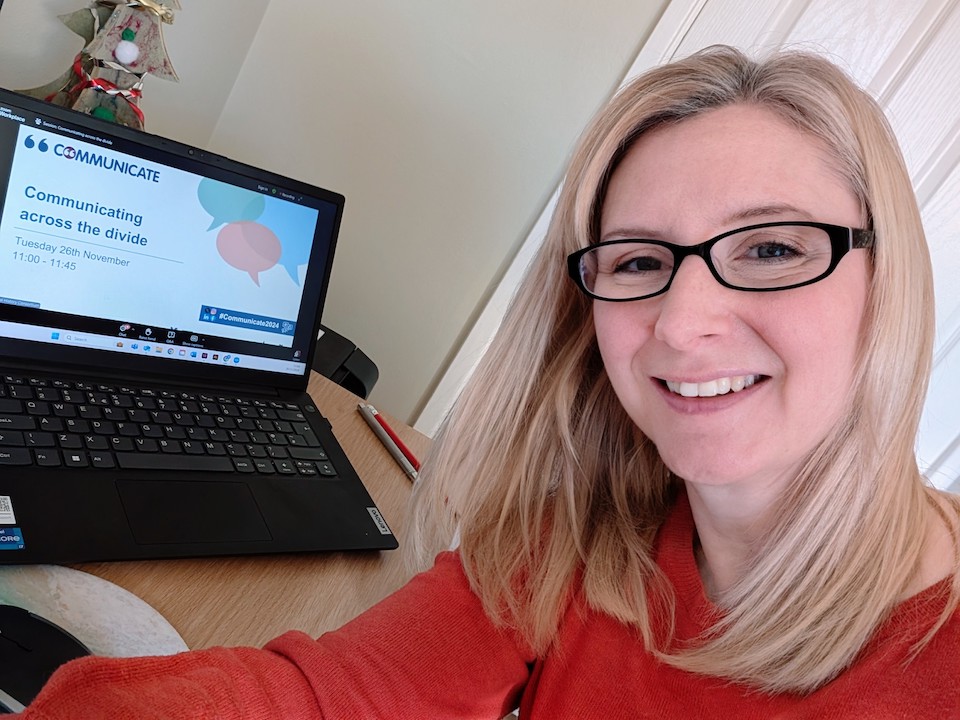
Helen taking part in a communication conference.
Helen still prefers the organic and manual process of creation. Having loved drawing from an early age, the feeling of sketching ideas on paper is something that is impossible to recreate via a prompt.
The illustration she is working on now, which outlines in detail the areas with the river, the curlews, the water voles and the bullrushes, she says: “could be done with AI, probably much quicker and cheaper than I can do it, but it would be a copy of other illustrations, lacking the emotion and creativity we offer as individuals”.
She loves the process of being able to draw and say: “that’s my creation.” Helen acknowledges, however, that it’s a really powerful tool and that there’s certain things where she can see the real benefit of it saving time.
Conservation sector crying out for talented communicators
Helen stresses that conservation organisations are in desperate need for skilled communicators and that people working in communication can bring a unique perspective to the field. She highlights that many people who work in conservation have a scientific background, but often lack the skills to communicate all their great work and complex ideas effectively to the broader audience.
“They’ll be out working on nature reserves, doing surveys or taking samples, but they won’t have any training in comms in order to talk about their work and get their messages across,” says Helen.
People with existing communication expertise have the advantage of transferable skills, but still need to invest in learning about conservation or the environment sector through some form of training. This will give you an edge when it comes to working in the conservation sector.
Helen continues to push her knowledge and ask questions. That’s one of the reasons she enjoys working at NatureBureau because she gets to work in parallel with the ecology team soaking up rafts of new and relevant information on a regular basis, of which she can then communicate in an effective way in the various text and media forms.
A career highlight
Looking back on her career, Helen picks out her involvement in the development of the visitor centre at College Lake, a former chalk quarry turned nature reserve in Buckinghamshire, United Kingdom, as being a highlight. At the time, she was working for one of the 46 trusts that make up the Royal Society of Wildlife Trusts that operate across all of the UK.
She was able to see the whole process from start to finish, undertaking tasks such as interpretation materials, constructing trails, artist commissions, local photographer coordination, and even acquiring a plaster cast of a mammoth tooth found in the quarry.
“Seeing it from start to finish was brilliant. And it’s always interesting going back there. Things have changed, of course, because they do naturally. Exhibitions change, layouts change, but it grows and evolves, which is exciting to see. There’s more of a cafe there now, too, which provides a tasty treat after a walk! It’s got such a lovely atmosphere, and is still one of my favourite local places to visit.” she says.
Another great memory of hers was meeting on several occasions one of her childhood heroes, Chris Packham, a well renowned British naturalist and wildlife photographer. Helen first met him whilst doing her degree at UoN then again a few times through her work and she remembers vividly the shows he did with the BBC in the early 90s.
Ultimately, Helen says there are lots of opportunities in the conservation sector if you are interested in comms, especially with the rise of social media and digital services, but she recognises that it can still be as hard to get into the sector as it was many years ago. Barriers include low wages, perhaps volunteering to get a foot in the door, and a competitive and popular field.
“But don’t be disheartened,” she says, “with the threats of climate change and biodiversity loss looming, alongside economic downturns and humanitarian crises, the sector needs now, more than ever, great storytellers and communicators to get the messages out loud and clear. So, hone your skills and get applying!”
Helen Walsh can be found on Linkedin or through the NatureBureau page.
Author Profile | Andrew Monks
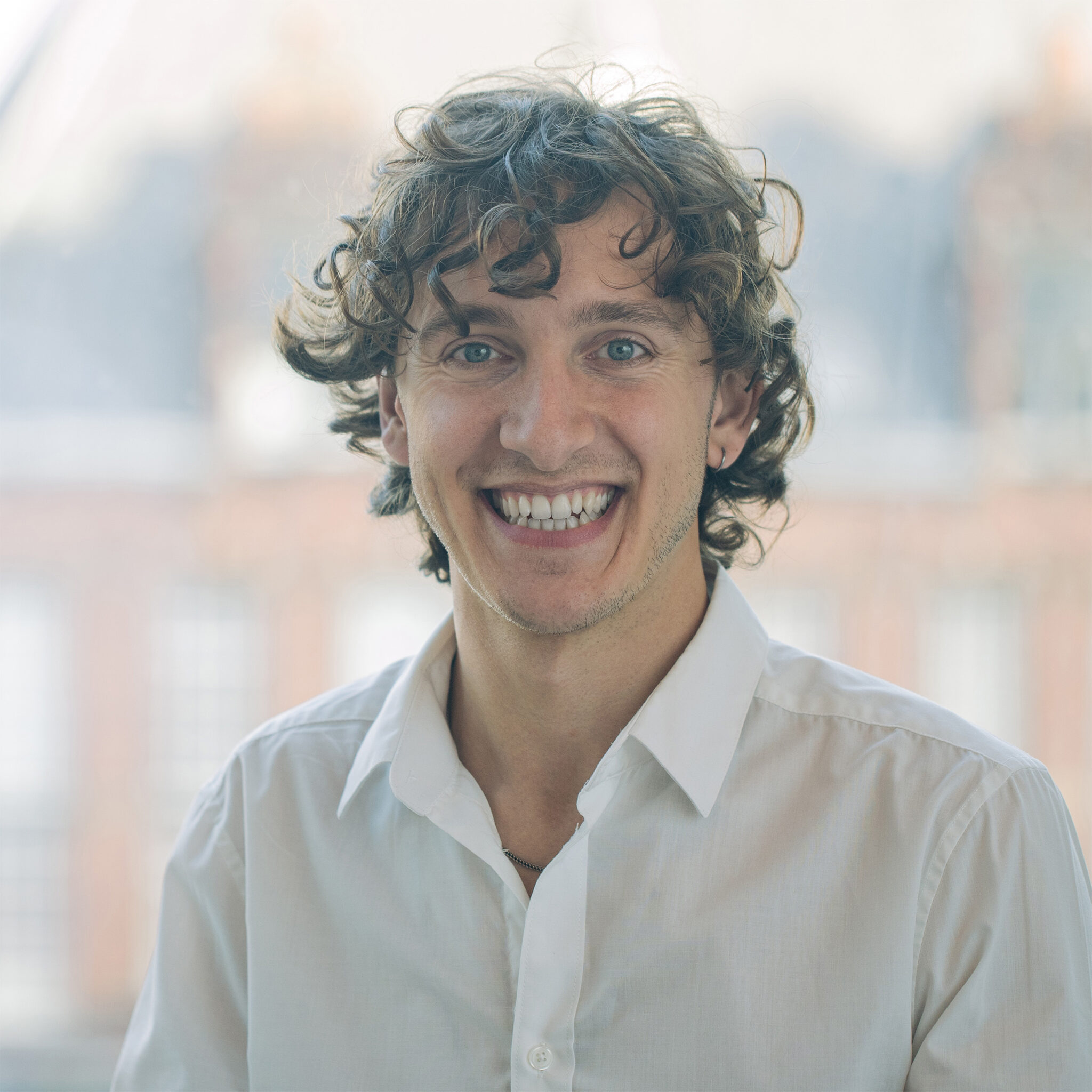 Andrew is a avid PADI Divemaster with several years experience working in the field of 3D & XR design. He is interested in the digitisation of the underwater world, whether this is through photogrammetry, videography, animations or photography – aiming to both preserve it for future generations and make it more accessible throughout the world.