Inspiring young minds and empowering young voices: A primary role in conservation
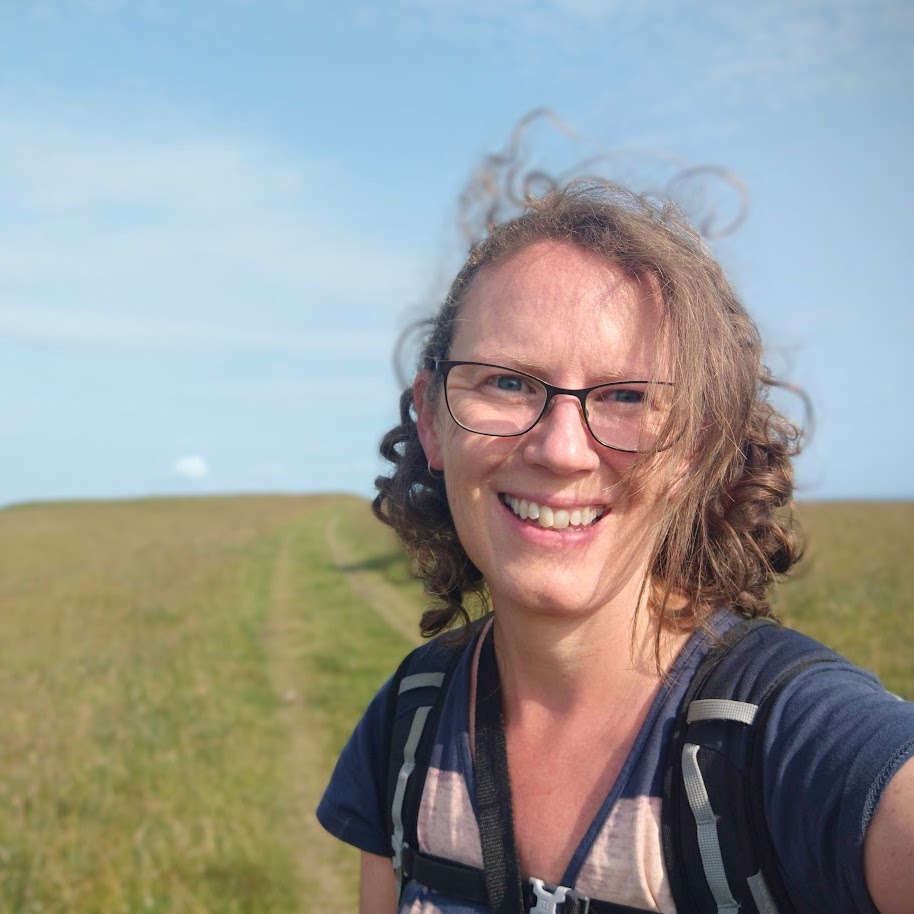
Can a primary (elementary) school teacher be a conservationist?
It wasn’t a question on Edd Moore’s mind when he first took his job as a freshly qualified teacher, trained in sport science. However, having soon decided to create a school garden, he continued along this unexpected path and transformed his campus from an ‘eco’ blank canvas to a multi-award-winning eco-school, with a fully integrated environmental curriculum.
He’s further inspired countless pupils to explore their natural world and to understand the value of their voices as young Eco-ambassadors, and his experience has now taken him to the lush campus of Green School Bali – a fully off-the-grid school with sustainability at its core.
Inspiring young minds
Everything Edd’s achieved grew from beliefs instilled in childhood rather than an academic background in conservation-related study, and from the start it was important to him to lead from the front and set an example “through my eating, through what clothes I wore, or how I got to school.”
Edd was inspired by his grandfather – a school principal who strongly believed in growing his own food, repairing and upcycling. Edd remembers that his grandfather regularly sought out opportunities to share these values with his then students, by creating a garden to help them learn where food came from, and even making his own kayaks to allow them to explore outside.
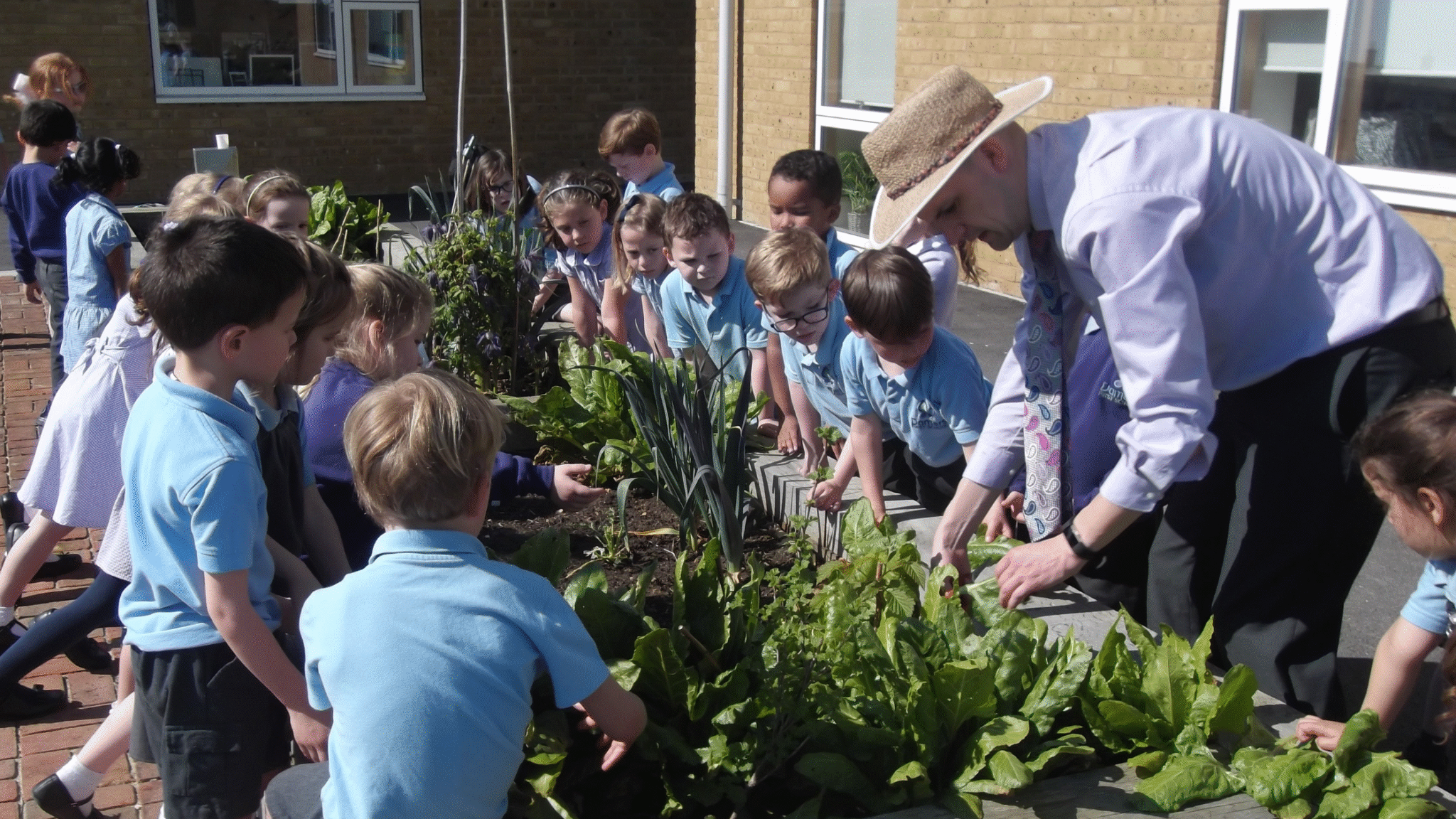
This stuck with Edd, and in 2012 when he arrived at Damers First School (UK), he saw they had a fantastic space on their grounds perfect for a garden of their own. But that was just the beginning. With his class of 7-8-year-olds he added a recycled plastic-bottle greenhouse. He further used the garden to integrate subjects such as geography and science into their learning, and promoted community events to share dishes they produced.
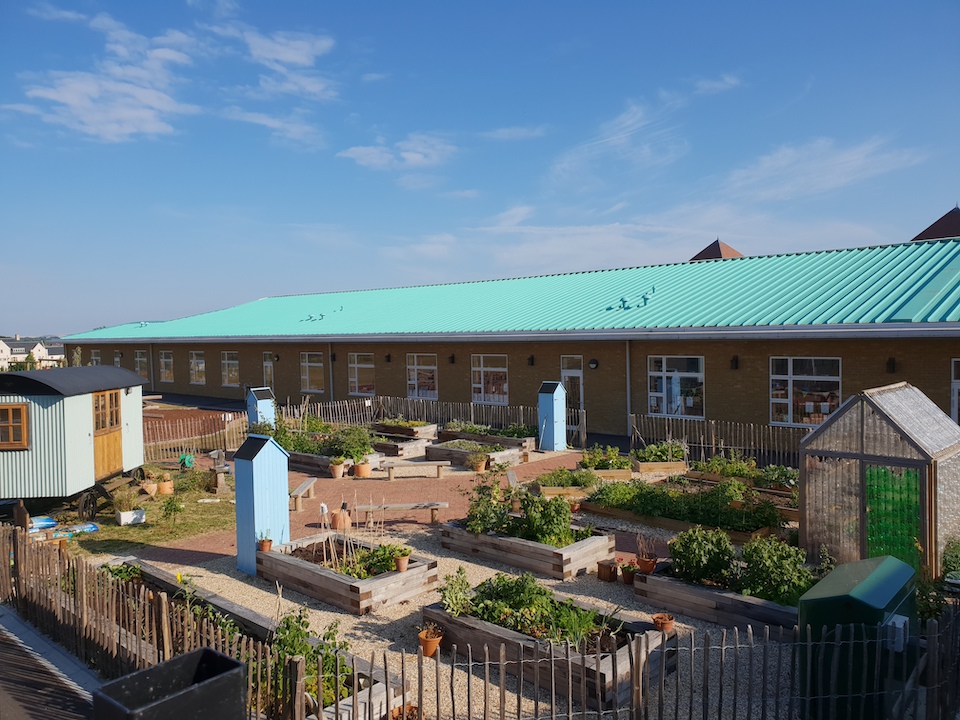
Damers First School garden. Credit: Edd Moore.
With entrepreneurship central to Edd’s teaching, classes went on to make seed bombs, eco-cleaning products and beeswax wraps to actively sell at farmers markets. Edd even invited salesmen into the classroom to teach their ‘top ten tips for selling’, and the money pupils made was enough to create a nature area and pond.
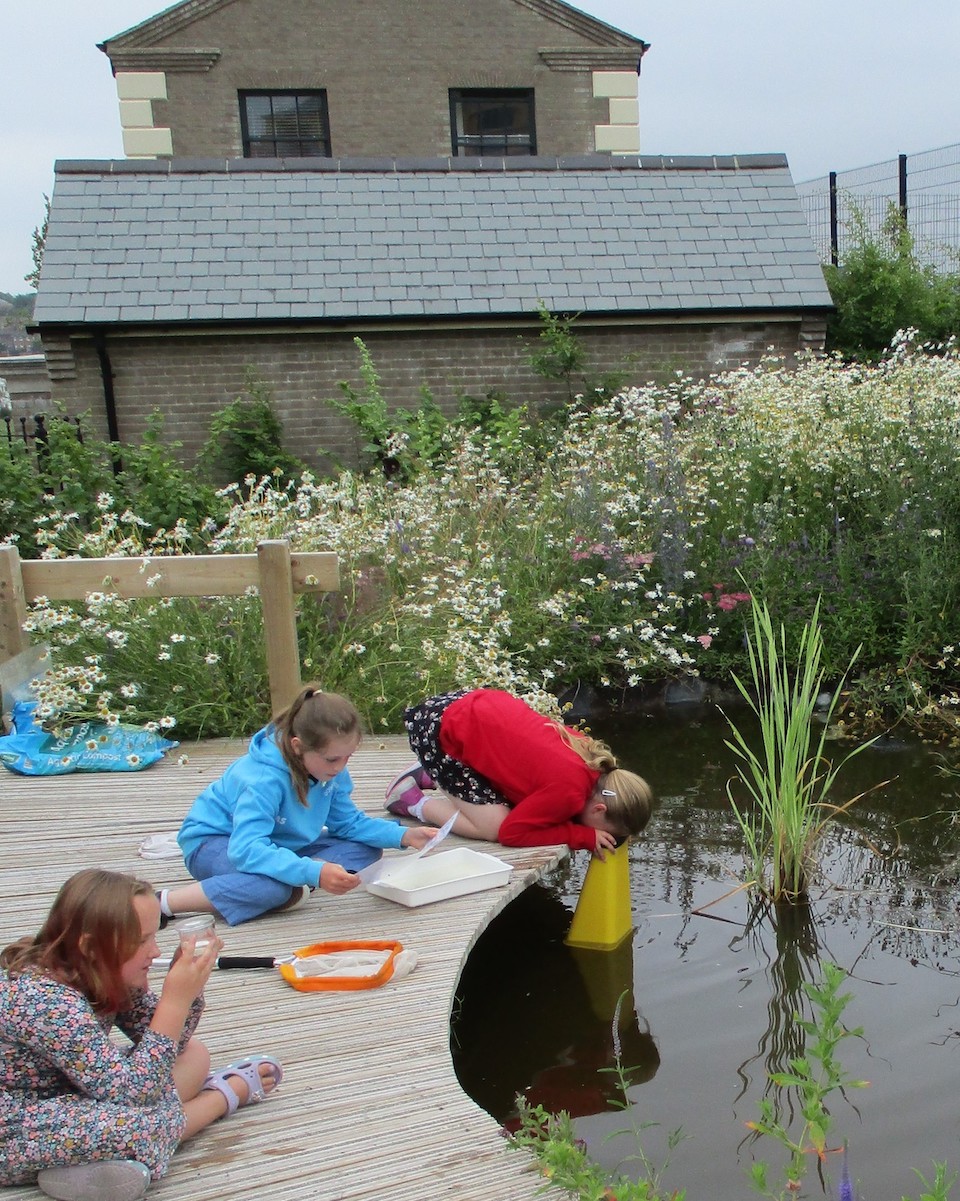
Damers First School nature area and pond, created with money raised by students selling their own ‘eco’ products. Credit: Edd Moore.
Empowering young voices
One early highlight for Edd was when Pupils rewilded a neglected piece of land within the community – a project that allowed them to spend time outside with nature. Not wanting to just buy wildflower seeds, they collected them under expert guidance, and sowed them on their patch of land.
As the pupils progressed through the school and the meadow grew, they asked to carry on with the project and suggested creating a nature board on the site. As they became wildlife experts, the pupils even became local ‘guides’ to the area, and Edd enthuses over how amazing it was to see, and how much money they generated through donations.
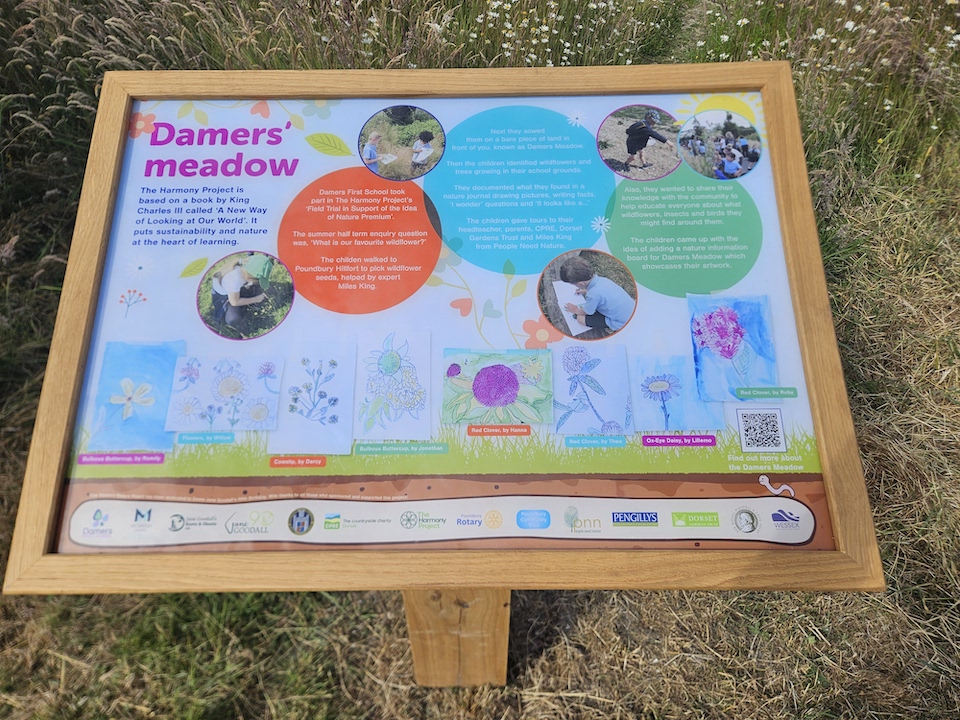
Nature board created by pupils of Damers First School. Credit: Edd Moore.
His pupils have learned not only the importance of community engagement, but also the power of their voices in creating change – not just in the future, but now. When the school pushed to go single-use plastic free, pupils contacted the school’s range of suppliers, and a fruit and veg company reluctant to change their packaging experienced Edd’s pupil-centred approach:
“I’d basically phone them up and say, ‘by the way I’ve got Louis here, he’s eight years old and wants to have a chat …’ and pass over the phone.”
Eventually, after about 12 months, the company succumbed!
Leading institutional change
In those early days (2013) when Edd had gardens in mind, there was also a push by the local authority for schools to attain the Eco Schools ‘Green Flag’. Supported by the principal, Edd also jumped at the chance to lead the organisational changes required:
“It was my first year of teaching, so I just hit the ground running to see where it went. In the end, I sort of made a role for myself – one that had never existed. I became eco-coordinator, and then sometime later progressed to sort of director of sustainability as I started to support other schools in the local educational trust.”
Edd spent a significant amount of time putting together a sustainable curriculum. Although some long-term teachers had initially been resistant to change, he remembers how they ultimately got onboard when they saw the effects on the children – seeing the impact pupils could have at school, at home and in the wider community. Now every class formally has an Eco-ambassador.
He admits that from the start he was driven to be three steps ahead of everyone else, but the degree to which things took off was still somewhat surprising:
“It developed out of passion, but the momentum grew and just kept going from one project to another. Then we started winning national and international awards, which just got crazier. I got to meet Jane Goodall and King Charles, and every day I was thinking how did I get here?!”
His resume/CV also illustrates his keenness to share knowledge with other teaching professionals and schools, and this aspect of his work has expanded considerably.
Challenges of the role
“I love it. It’s my vocation. It’s a hobby. I didn’t mind giving my time away. However, I did all this on weekends, holidays, and after school. I ate, slept and walked ‘eco’ for 12 years and those are the challenges we’re up against.
“They want us to get students engaged with nature, but teachers need to be given the time. There needs to be more funding and the role needs to be respected as well, which I don’t think it always is.”
He adds that one of the differences he appreciates at Green School is that he’s given time each week to prepare, which has finally given him back his weekends.
Despite a positive change in England over recent years, he says many schools are still not engaging due to the barriers – funding, expertise, confidence, or teachers not knowing how to bring nature into more urban school grounds.
Advice for educators
Start small
“It’s really important to get children outside and take them to any wild space you have on your doorstep. Have a block bioblitz and identify what they know, see, hear, smell, and how things feel when they touch them…
“I’m forever telling everyone to get the Seek and iNaturalist phone apps and to go out and record what they find’, he adds, saying it’s a great way to create a nature journal.
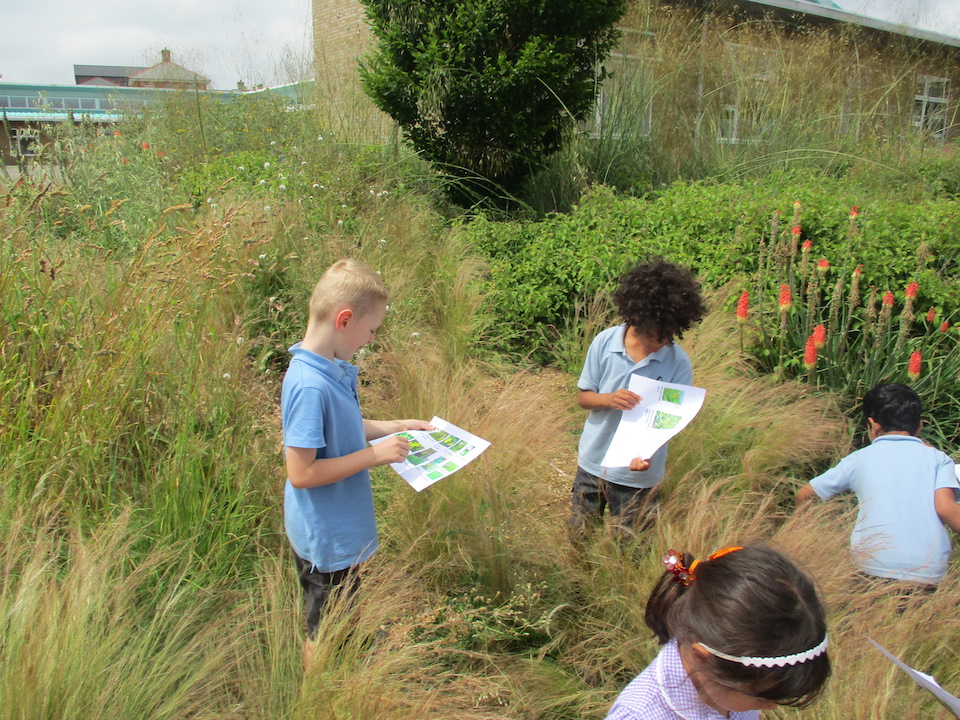
Pupils recording nature in their local area. Credit: Edd Moore.
If you have space for a garden, he recommends the Royal Horticultural Society site (UK), as they offer a free schools gardening programme with different levels to work through. However, wherever you are in the world, he suggests reaching out to local community gardens or garden centres, which can offer expertise and potentially a few freebies to set you up.
Community partnerships
Making community connections is as central to his role in Bali as it was in England, and he recommends contacting any local wildlife organisations and related businesses for help, adding “The more you talk, the more you meet people, the more they point you in the right direction of where you need to go.”
He also emphasises that from his experience there’s often funding out there from different sources, although it’s not always well publicised. It’s worth checking what may be available from local/national wildlife campaigns, and also local government funding for school projects.
Readily accessible resources
There are many online resources. For teachers who want to follow a specific methodology to nature-based education there is plenty of information about Forest School (a child-led approach that takes place in an outdoor natural environment) and the global Roots & Shoots organisation (from the Jane Goodall institute) provides free online training for teachers.
Schools worldwide also use Earth Cubs as a resource- a site related to the Foundation for Environmental Education which also runs Eco Schools. All three sites have a wealth of resources, information and guidance.
For practical, straightforward advice, Edd adds that in September 2025 he’s releasing his own step-by-step guide 100 Ideas for Primary Teachers: Greener School (published by Bloomsbury).
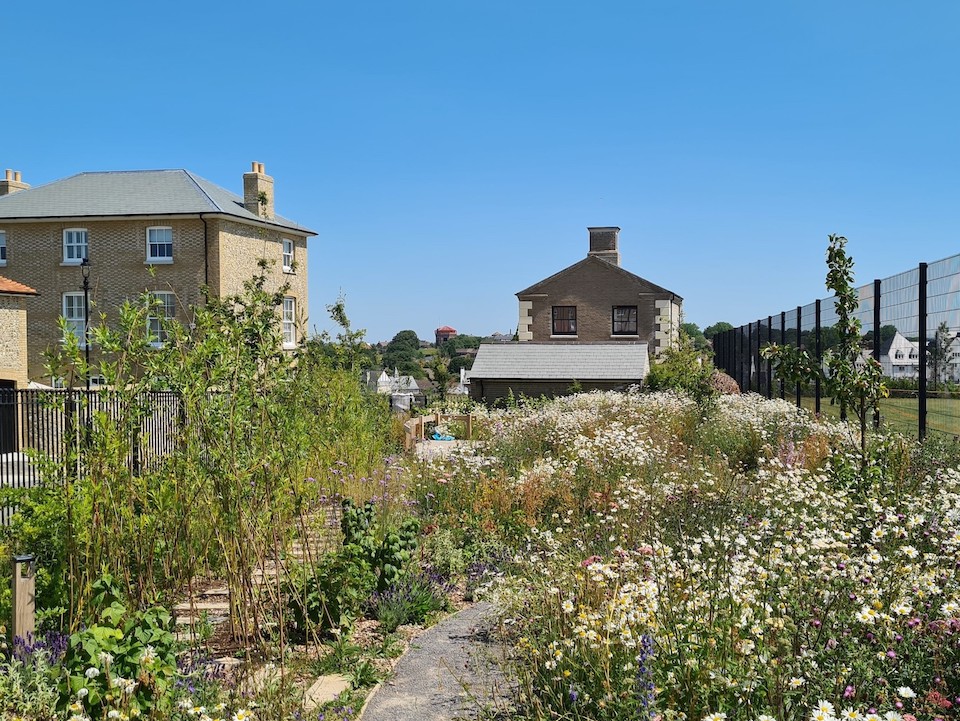
Damers First School nature area. Credit: Edd Moore.
International opportunities
Over 12 years Edd has become an expert in the field, and he shares that he was headhunted for several months before he decided to make the move to Green School Bali in August 2024. The school (with its international teaching staff) had been on his radar for many years as one of the best Eco Schools in the world.
As well as teaching 2nd grade, he’s taken on the role of curriculum coordinator, which again involves connecting with community experts to encourage them to come in and work with the kids.
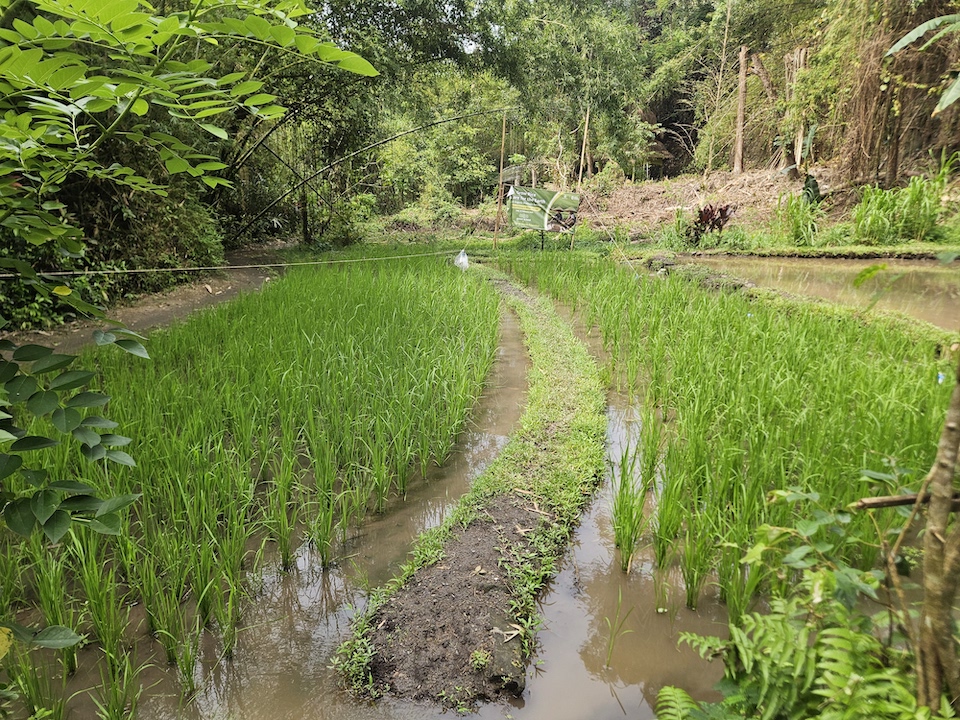
Projects at Green School Bali include focusing on organic fertilisers for rice fields. Credit: Edd Moore.
“Whether I’ll stay here for one year, two years or six years, who knows” he laughs, but he’s clearly enthusiastic about the environmental opportunities he’s discovered in Bali, including a current project in which the pupils are competing to produce the best organic fertiliser for Bali’s world-famous UNESCO rice fields! It doesn’t sound like he’s planning to move on any time soon.
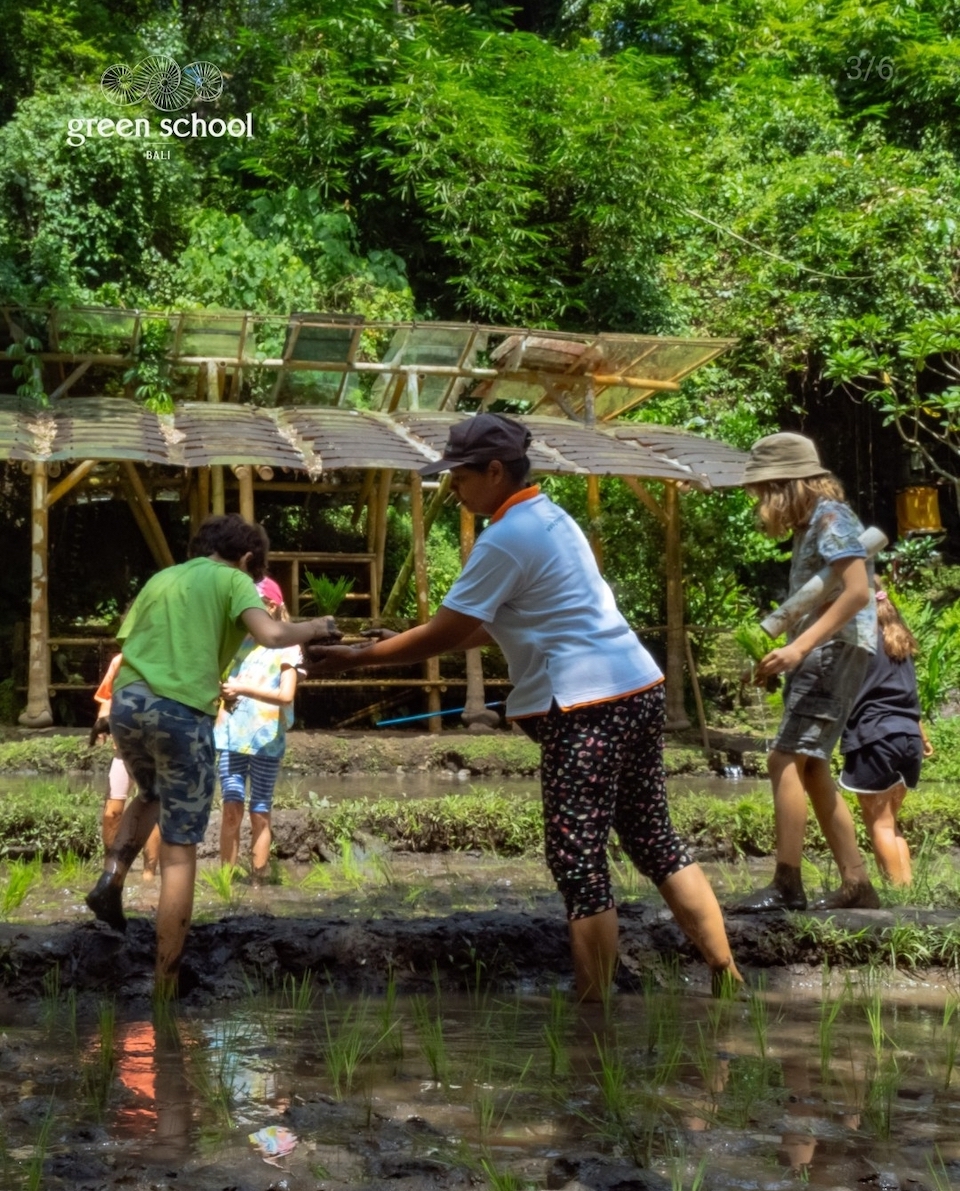
Credit: Edd Moore.
Edd concludes:
“There are children that don’t know what is out there living in nature. They don’t know what’s in their school grounds or further outside, and we inspire them to observe and explore.
“It’s so rewarding to take a child that knew nothing about nature and for them to then be able to have an impact on their parents, family, friends and the greater community. It’s a great opportunity to teach the future of our planet, and what better job is out there?”
In terms of motivations and impact, Edd’s career certainly proves that Primary Teachers can tick all the ‘conservation’ boxes.
Edd posts regularly on LinkedIn, often sharing advice and resources for educators in the field.
For more information on conservation educator roles, check out the Conservation Educator role profile.
Author Profile | Claire Tyrrell
 Claire is a wildlife enthusiast and keen amateur conservationist, and has volunteered long-term in wildlife rescue and rehabilitation centres across Africa and Asia – largely working with primates. Having worked in the TEFL industry for quite some years (teaching, writing and editing) she has just recently also started working part-time for the National Trust in visitor welcome. Closer to home she volunteers with the Hampshire Wildlife Trust for a monthly Wildlife Watch children’s group and contributes to citizen science projects wherever possible.