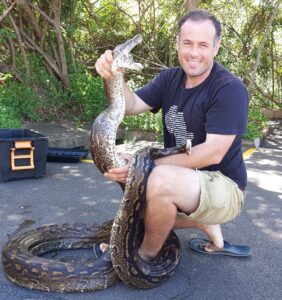
Protecting South Africa’s sharks: A conversation with Sharklife’s Grant Smith

“Fear turns into respect the moment you meet a shark on its own terms.”
It’s a sentence that neatly captures the arc of Grant’s life, a journey that begins with childhood terror, moves through unexpected encounters, and ultimately unfolds into a career dedicated to education, research and practical conservation management inside one of Africa’s most biologically important Marine Protected Areas (MPAs).
Today, Grant oversees Sharklife’s growing education platforms, field programmes, and research partnerships inside the iSimangaliso MPA. But the path that brought him here started somewhere very different.
A childhood fear that became a calling
Grant laughs when he tells the story now, but it was no joke at the time. As a kid growing up in Durban, he watched Jaws at a beachfront cinema, and walked out convinced he’d never enter the sea again. “I was scared to death of sharks after watching that movie,” he says.
And the fear was reinforced by what he saw in real life. His uncle, Trevor Krull, worked for what later became the KwaZulu-Natal Sharks Board, and Grant remembers climbing onto the back of the Land Cruiser as a boy, where sharks retrieved from nets lay stiff and lifeless.
“That early mix of movies and dead sharks really turned sharks into villains for me,” he explains.
But as he grew older, something shifted. Working for his uncle meant he eventually found himself diving with sharks daily. In the water they were nothing like the monsters from his childhood, they were cautious, intelligent, and surprisingly vulnerable. “Seeing them alive made everything I thought I knew collapse. And then seeing those same sharks
butchered on the beach… that really stayed with me.” That discomfort, witnessing the gap between public perception and ecological reality, became the seed that would later grow into Sharklife.
Founding Sharklife: Realising the problem was bigger than fear
By the early 2000s, Grant was working more regularly in the field, supporting research teams, helping operators, and learning the operational side of conservation. Those experiences taught him how much marine protection depends on logistics, permits, communications, and hundreds of decisions that rarely make headlines.
But the turning point came in 2006. While reviewing national quotas for bull sharks, Grant discovered that legislation at the time still allowed fishers to legally take up to ten bull sharks a day, despite the species already facing pressure from nets and trophy fishing.
“It was the first time I realised that overexploitation wasn’t just happening illegally; it was built intopolicy,” he tells me. “That shocked me into action.”
It was the push that transformed Sharklife from an idea into a structured non-profit. Grant and his uncle Krull wanted to do more than raise awareness, they wanted to integrate research, education and responsible field practice into a single conservation system.
What Grant’s work looks like now
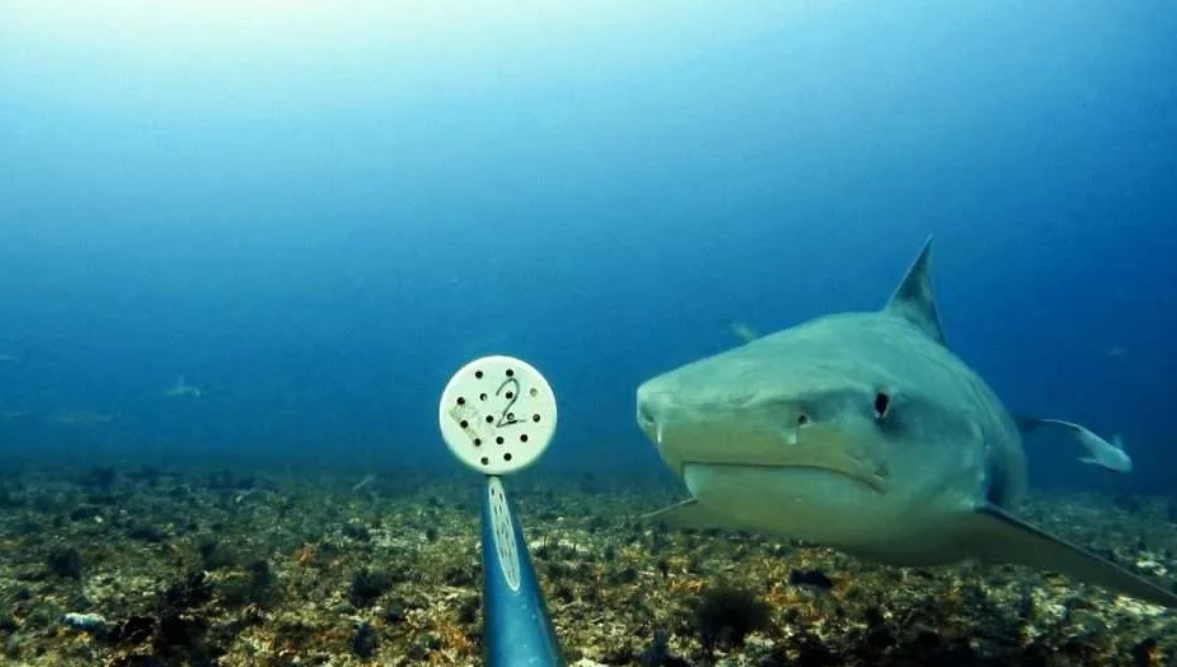
An image from one of Sharklife’s BRUVs. Credit: Sharklife.
Today, Grant manages a programme that brings together students, researchers, authorities, communities and long-term conservation objectives. When I ask him what an average week looks like, he laughs, not because the answer is simple, but because it changes constantly.
“Some days I’m coordinating fieldwork. Other days it’s policy documentation, meetings, or reviewing proposals. The goal stays the same: keep projects functional, compliant, and aligned with conservation outcomes.”
His role bridges two worlds: the biological side of understanding sharks and the administrative side that keeps conservation running, data, permits, management plans, safety protocols, stakeholder expectations etc. It’s not glamorous. But it is essential.
A large bulk of Sharklife’s research output comes from the use of BRUVs which are Baited Remote Underwater Videos. Using this method, Sharklife is able to document not only the different species of sharks in the MPA but start to identify the different individuals through their unique markings.
The parts of the job that matter most
Despite the challenges of funding gaps, administrative delays and unpredictable logistics, there are moments that make everything worthwhile.“Seeing change happen, even if it’s slow… that’s what keeps me going. A better policy. A stronger partnership. Watching students develop real competence. That’s the reward.”
This practical, grounded mindset is what marks Grant’s approach: conservation isn’t defined by dramatic events, but by structured, consistent effort over time.
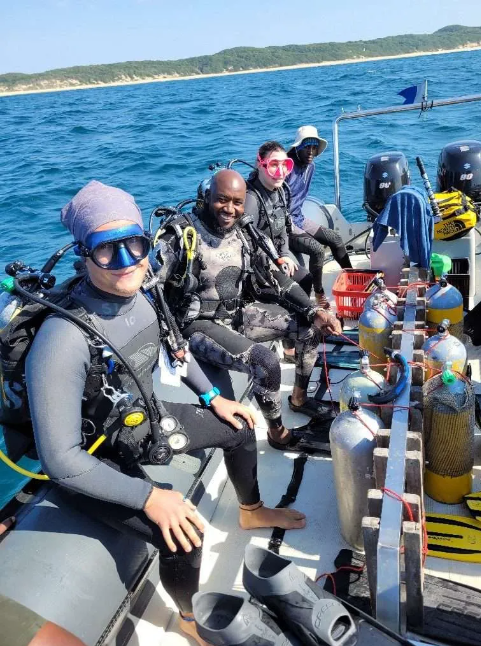
Sharklife team ready to dive. Credit: Sharklife.
Grant’s advice to aspiring conservationists
Because Sharklife hosts interns, field courses and online learning programmes, Grant works closely with young conservationists trying to take their first steps into the sector. His advice reflects years of real-world experience:
“Focus on experience,” he says. “Qualifications matter, but applied skills carry more weight. Even the smallest opportunities add context and capability.”
When asked what makes a great intern, he doesn’t hesitate: “Reliability and initiative. Technical skills can be trained, but attitude can’t.”
He tells his interns to ask questions, embrace responsibility, and understand the bigger picture behind every task, because conservation projects rarely unfold neatly. “Learning to adapt is the most valuable skill,” he says. “Nothing ever goes exactly to plan.”
How people can get involved with Sharklife
One thing that stands out is how accessible Sharklife’s work is for people at any stage of their conservation journey. Sharklife offers free online courses through its Marine Science e-Learning platform, accessible to anyone, anywhere.
These courses introduce students to shark biology, ocean ecology, and conservation ethics. For those wanting to go deeper, members can access more advanced courses, field materials and specialised modules.
Then there are the Marine Biology Field Courses and internships, which Grant describes as a bridge between classroom theory and real-world practice.“We simulate real operational conditions within an MPA,” he explains. “Participants learn the standards expected in research and tourism. It prepares them for actual employability.”
For young conservationists seeking hands-on experience, visiting Sharklife’s project site is one of the most direct ways to support shark protection, because programme fees contribute directly to the organisation’s research and education work.
Grant’s proudest moment
When I ask Grant to reflect on his career so far, he doesn’t talk about campaigns, species, or standout moments. Instead, he speaks about structure.
“Developing Sharklife into a platform that genuinely supports conservation management… that’s what I’m proud of. It was always the goal: to build something that contributes to real outcomes, not just runs parallel to them.”
Looking ahead: A more connected research future
Grant is currently working on expanding the iSimangaliso Marine Research Network, a collaborative system linking researchers, managers, and community partners. The vision is to improve data sharing and collective planning to support evidence-based decisions.
“The next step is improving how projects talk to each other,” he says. “We want conservation decisions guided by shared evidence rather than isolated efforts.”
Final thoughts: Precision, patience, perspective
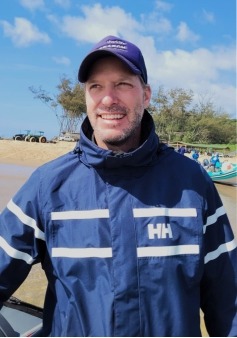
Grant Smith, proud founder of Sharklife. Credit: Sharklife.
What advice would Grant give his younger self, the boy who walked out of the cinema terrified of the ocean? He thought for a moment, before saying: “Be patient with process and precise with execution. Conservation rewards consistency and credibility more than enthusiasm alone.”
It feels like a lesson for all of us, whether we’re just beginning our conservation journey or refining the path we’re already on.
For anyone ready to take that next step into marine conservation, whether through a Sharklife online course, field programme, or internship, Grant’s journey is a reminder that curiosity, courage, and commitment can transform not only your career, but the way we see the world beneath the waves.
Learn more about Sharklife
- Sharklife Learning Portal | www.learn.sharklife.co.za
- Sharklife Marine Biology Internship | www.sharklife.co.za/marine-biology-internships
- Sharklife General Information | www.sharklife.co.za
Take your next career step
Interested in becoming a marine conservationist? Explore our Ultimate Guide to Marine Conservation Jobs | Protecting the Blue Planet.
Curious about starting your own conservation organisation? Read our Organisational Manager Role Profile.
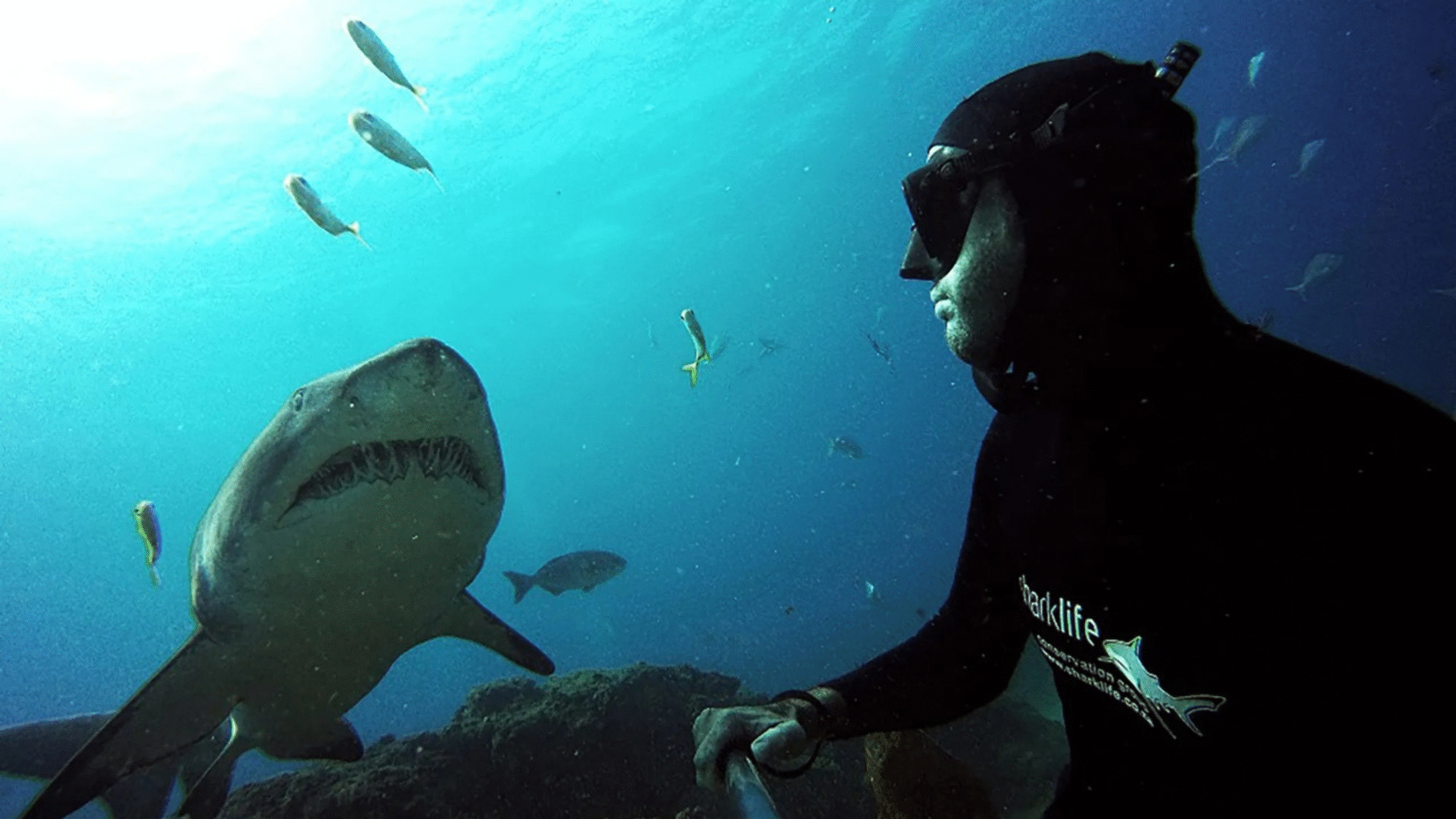
Featured Image: Grant Smith with a beloved spotted ragged tooth shark. Credit: Sharklife.
Author Profile | Jordan Gledhill
 A conservation biologist from the UK, Jordan has worked with and supported conservation projects around the world through One Planet Conservation Awareness. A platform to support, empower and celebrate small NGOs working in conservation. Follow them on Facebook, LinkedIn and Instagram.