A Different Kind of Farming: Riccardo Pavesi’s Reflections on Agroforestry and Conservation

“Throw yourself into an international landscape and environment.” From Mexico to Cameroon, Riccardo Pavesi has worked in almost ten countries across three continents. As an agronomist, his role bridges the critical sectors of agriculture and environment, for a more sustainable future. As of 2026, he works freelance, dividing his time between managing an agroforestry initiative in Spain and consultancy.
FARMING FOR THE FUTURE
In the sun-soaked agricultural fields near Barcelona, Spain, Riccardo Pavesi is on a mission. He is collaborating with SoulFood ForestFarms, an Italian social enterprise that collaborates with farmers to implement successful agroforestry systems that work in harmony with nature. Riccardo aims to replicate the project in Spain.
Riccardo describes himself as a freelance agronomist; he specialises in regenerative agriculture and sustainability. By definition, an agronomist is a science-based agricultural professional who advises farmers on agricultural science, practice and management. In 2025, he lost his job with an American non-governmental organisation (NGO), and that was the catalyst for his decision to go freelance.
“Sometimes the world decides for you before you can decide for yourself.”
The job with the American NGO had been entirely remote, and while Riccardo enjoyed the comfort and flexibility of working from home, he found himself missing the social connection of working with local people.
“It’s important to have an international network, but also to have local connections.”
Having decided to go freelance, Riccardo turned his attention to Spain. He had forged connections with SoulFood ForestFarms years before in Milan, where both he and the project hail from.
Riccardo admired their business model, which includes connecting farmers to financing, planting trees, and rebuilding ecosystem services that benefit the farm.
It’s not just the farmers who benefit from this transformative initiative. Riccardo also connects the project to companies and private businesses, giving them the opportunity to have a real impact on land-based regeneration – as opposed to compensation projects like carbon credits.
“I think we now have the evidence that they [carbon credits] are not really working. So we are trying to bring more entities toward a more land-based approach, rather than just planting trees somewhere in the world and buying carbon credits.”
In summer 2025, Riccardo started managing the project in Spain: “Firstly, I created a network of about 40 regenerative or organic transitioning farmers who agreed to join the initiative. They want to create agroforestry systems in their farms.”
Now, around 70% of Riccardo’s time is spent searching for financial backers. The agroforestry systems he is trying to implement are inspired by the syntropic agricultural approach – a very innovative and complex approach – making it difficult to obtain funding from public subsidy schemes.
When he is not working with SoulFood ForestFarms, Riccardo works as a freelance consultant: “I do regenerative outcome monitoring, mainly. I have experience with all the global frameworks that are used for environmental and social monitoring of regenerative agricultural systems.”
“We try to support companies in adopting these frameworks, in order to guide their strategy in sourcing sustainable materials or delivering their projects.”
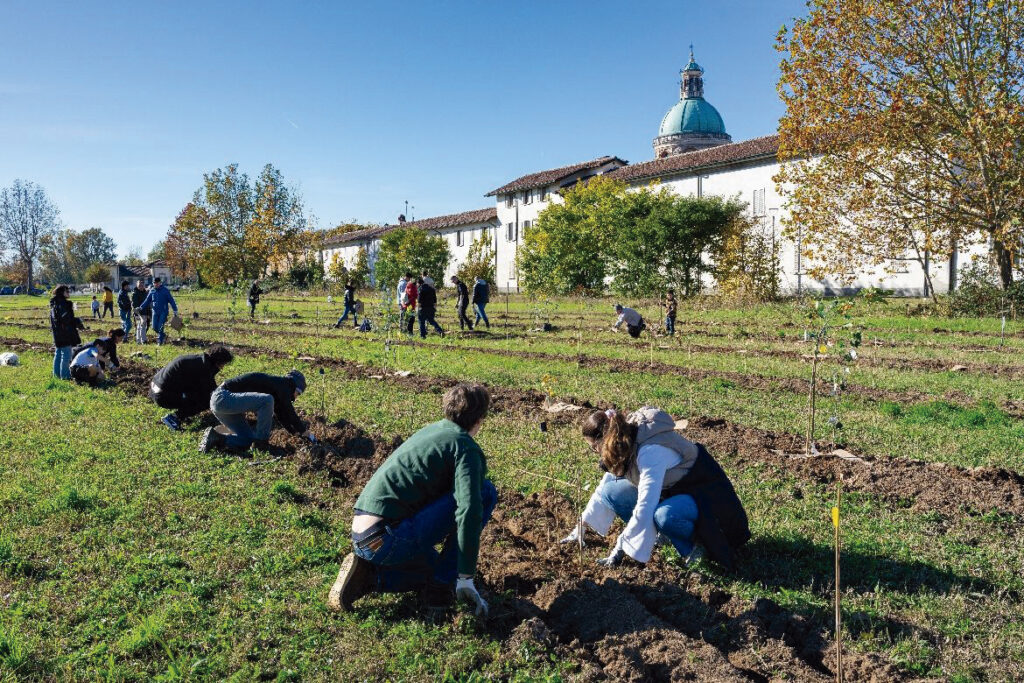
Community tree planting for the Caravaggio agroforestry system (SoulFood ForestFarms)
A GLOBAL JOURNEY
Riccardo’s interest in the agri-environmental sector was driven by the great food imbalances worldwide and the huge ecological footprint of the food industry and agricultural systems, such as the devastating impacts on biodiversity.
“I was really inspired by this challenge, this issue, these problems, to direct my career into contributing to solutions.”
After working on a UK farm, Riccardo completed an MSc in Agri-environmental Science at the University of Milan, followed by a six-month research internship in Mexico with the ECOSUR Institute.
The internship – during which he undertook an assessment of agroforestry systems developed by local communities in rural southern Mexico – was exactly what he was looking for. “They have a very participatory research approach with local indigenous communities.”
The idea was to assess if these agroforestry initiatives were reducing farming pressure on the natural protected area, and Riccardo implemented the Food and Agriculture Organisation’s Sustainable Assessment for Food and Agriculture framework to assess the systems.
His journey then led him to Africa, where he worked on projects in several different countries over five years – including for the German Development Cooperation agency GIZ – before returning to Spain to work remotely for an American NGO.
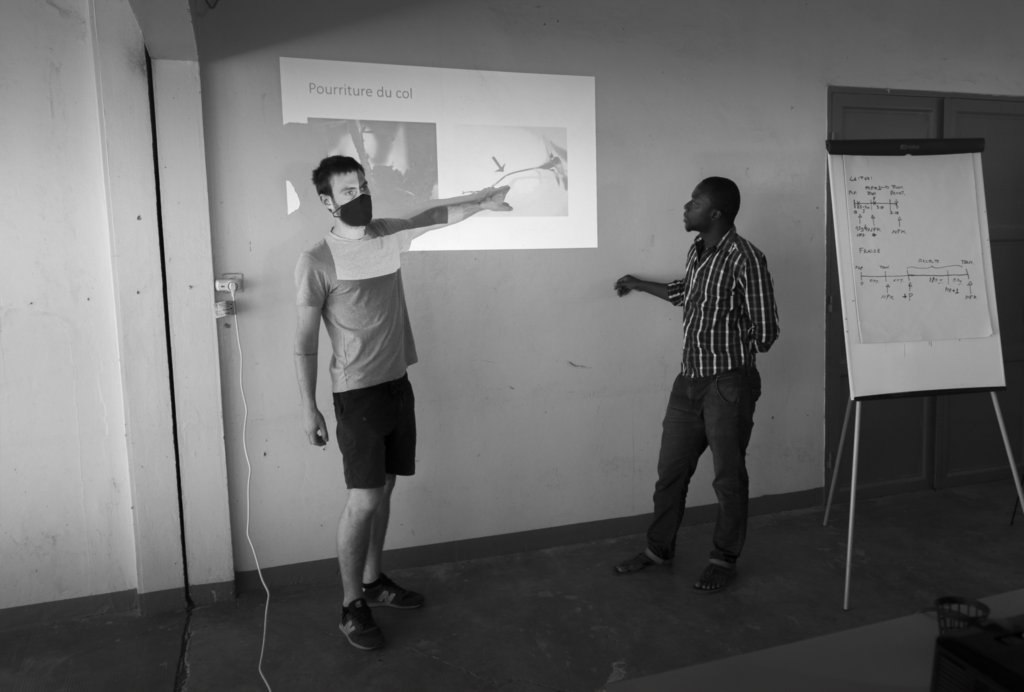
Training session on hydroponic farming in Thies, Senegal
The best part of Riccardo’s work, according to him, is the connections he has made with people from all over the world, and the ability to move in an international landscape.
“Every week I meet people; I hear exciting stories and discover very interesting projects. Every week you learn something new.”
Regenerative agriculture as a sector is growing incredibly quickly, and new initiatives and solutions are being proposed all the time.
On the other hand, the hardest part of his work is getting funding for these remarkable projects. It’s all well and good having great ideas and amazing people to work on them, but Riccardo describes funding as a bottleneck. That’s probably why he spends 70% of his time trying to obtain it.
It’s also challenging to create a robust autonomous business model in such an innovative area as regenerative agriculture. There simply isn’t enough data to go off.
“It’s a new area, so you’ve got to strike out on your own a bit.”
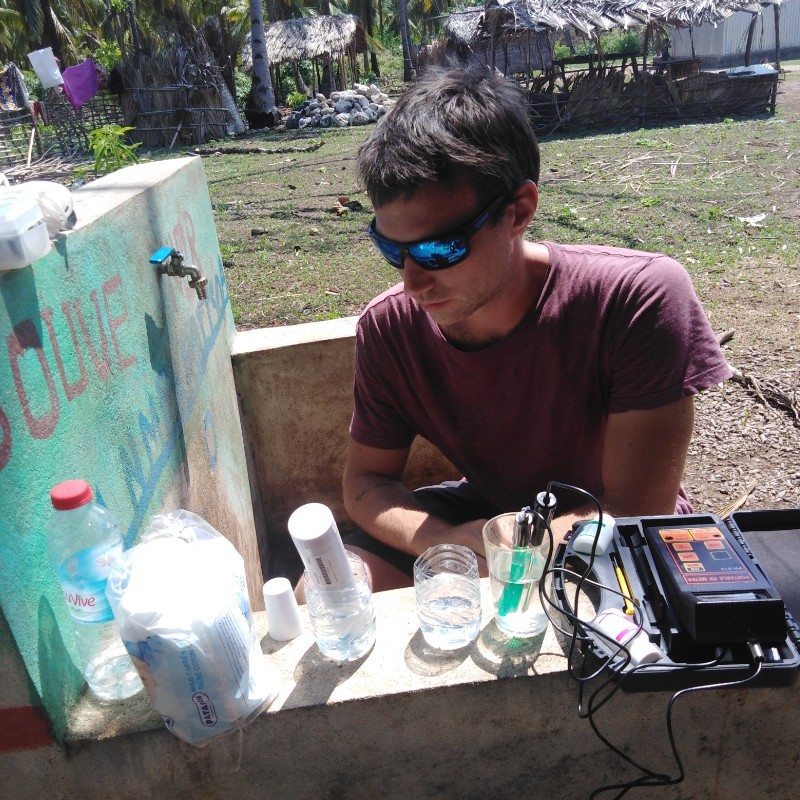
Analysing water quality on Nosy Mitso island, Madagascar, for the Tany Vao project (Kukula NGO)
ADVICE FOR THE NEXT GENERATION
Riccardo has plenty of advice for those hoping to work in conservation and sustainability.
Firstly, never give up. “It can be harsh… The competitiveness out there is huge, and you can have more than 100 candidates for any position.” But you have to keep going, because you will find the position for you.
“You have to build a strong shell for all the ‘no’s and all the negative answers, and keep going, because one positive answer will come.” When Riccardo applied for a job in Cameroon, he received the call for the interview eight months after applying. Huge organisations work like this, he says.
Do the Conservation Careers courses. Yes, really! Riccardo joined Conservation Careers as a free user initially, before signing up as a member. He found the applications training course was particularly useful.
“It’s very good. It completely changed my way to apply. I have already got an interview for an application I sent one week ago.”
Riccardo believes this course definitely increases your chance of getting an interview, particularly because of the detailed methodology and techniques that the course provides for writing CVs and applications.
He also recommends trying to get a role in with a large, well-known company, or on projects that are well-recognised in the market.
“It helps build your place in your field, so that when people come to hire you they can look at that experience and you have a better chance of success.”
In terms of skills, Riccardo highlights critical and complex thinking, in order to understand complex sociological issues and dynamics that affect real-world projects. He also emphasises the importance of technical skills like GIS (Geographic Information System) software.
Finally, he stresses the importance of networking – and not just at a local level. “Be active, participate. Build your network, contact people, don’t be shy to just reach out.”
“Go out from your bubble and really travel, meet people, join projects. Know about the world.”
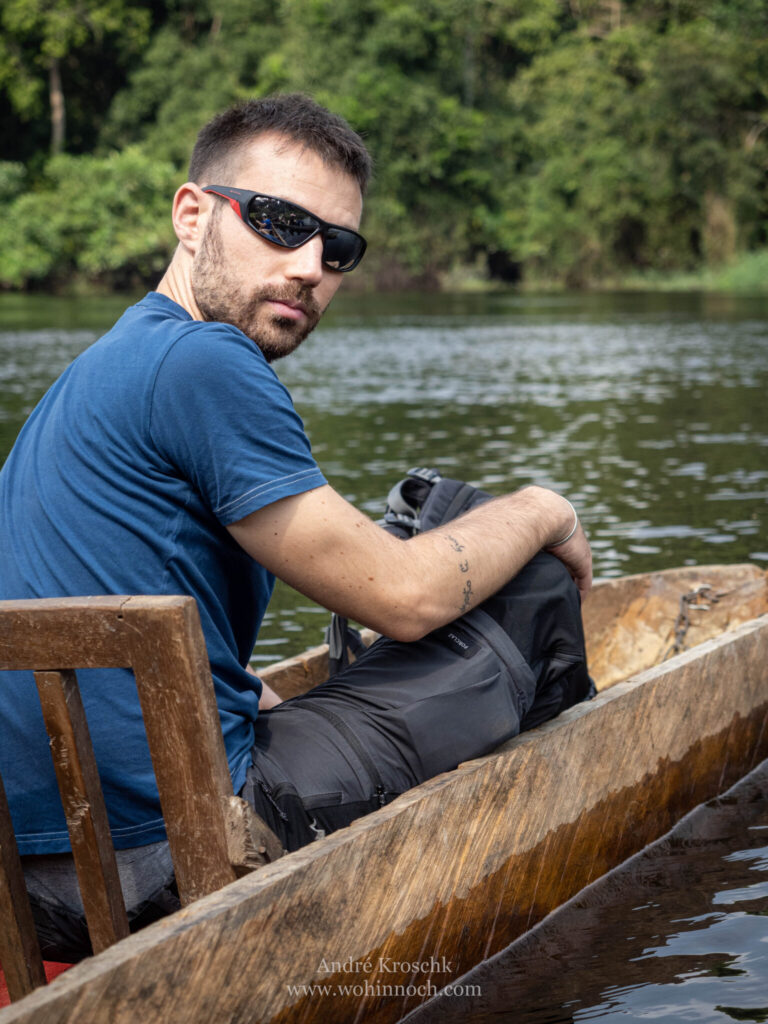
Excursion on the Nyong River, Cameroon
WANT TO LEARN MORE?
If, like Riccardo, you want to join Conservation Careers you can sign up here, and join our applications training course here.
You can also find Riccardo on LinkedIn here.
Author Profile | Jasmine Santilhano
 Jasmine Santilhano is an Ecology student at the University of York, UK, and a volunteer Conservation Careers Blogger. She plans to work in wildlife conservation after she graduates.