A Scientist’s Vision for a Thriving Planet
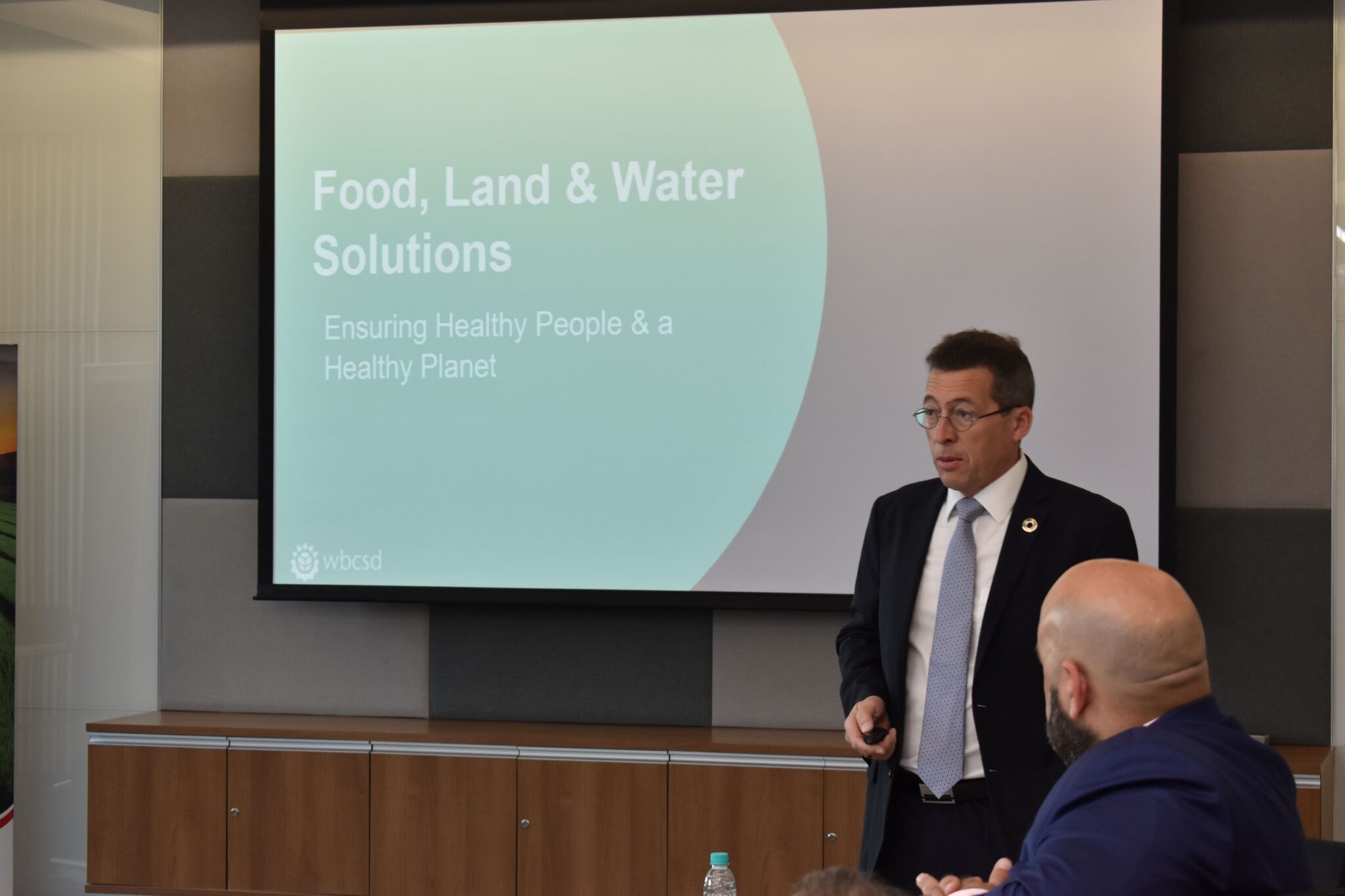
For Alain Vidal, conservation has never been a career switch, it was always the path. From his early days studying bioclimatology (the science studying the relationships between living organisms and the climate) in France to advising global coalitions on biodiversity and regenerative agriculture, Alain’s journey is a testament to the power of science, strategy, and human connection.
This isn’t just a story about sustainable food systems, it’s about a man who, through decades of experience, came to realize that nature and humanity are not at odds, but deeply interdependent. His career spans research, international development, and corporate sustainability, but at its core, it’s about one thing: regenerating life, both in landscapes and in the way we think about food.
The realization: When Science Meets Reality
Alain has always been passionate about conservation, but one moment, in particular, changed the course of his work. Fifteen years ago, while directing an international research program on water and food security, he travelled to Colombia to meet local stakeholders. During a coffee break, a farmer pulled him aside and shared a devastating truth: in her village, people were dying of hunger.
This wasn’t just about water management, it was about the intricate relationship between ecosystems, food security, and poverty. “I realized I needed to understand more about what was happening locally with farmers,” Alain recalls. This moment set him on a path to rethink conservation from the ground up, pushing him beyond engineering solutions to focus on the social, economic, and environmental complexities of agriculture.
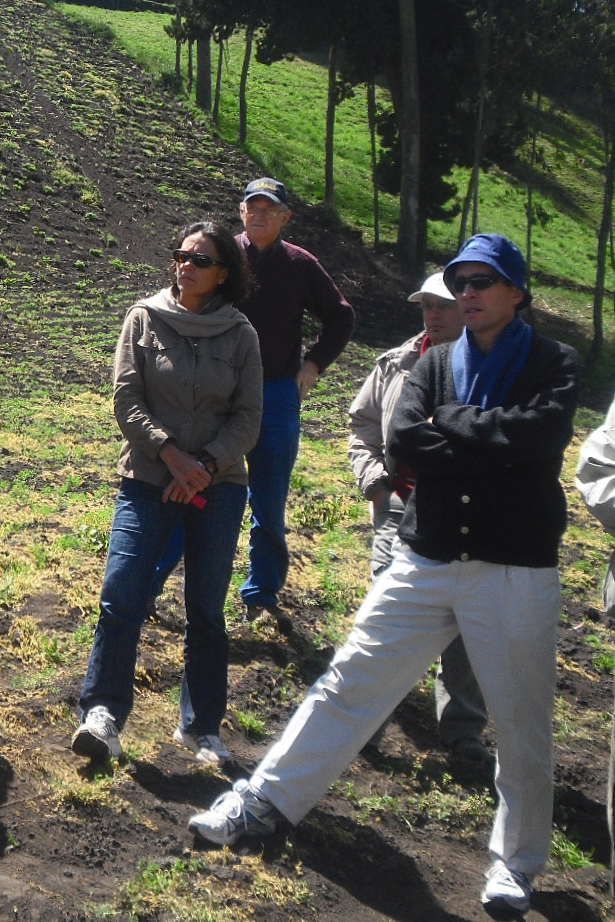
Field visit in Ecuador in 2011, with farmers presenting their conservation agriculture practices (Photo: Sharon Pereira)
Rethinking the Food System: Beyond Productivity
For years, Alain worked at the highest levels of international agricultural research, leading programs aimed at improving food production. But something wasn’t adding up.
“We were obsessed with producing more, yet we weren’t tackling the real issue, how our food system was broken,” he says. With over 2 billion people malnourished and another 2 billion overweight or obese, the crisis wasn’t just about scarcity, it was about a global system that prioritized quantity over quality.
A major driver of both environmental destruction and public health crises is overspecialization. The dominance of a few commodity crops and excessive consumption of animal products. The majority of the 2 billion people who are overweight or obese are in this condition because their diets rely heavily on commodities and animal products. If we shift not only how we produce food but also how we consume it, we can reduce nature loss while significantly improving human health.
According to the World Health Organization (WHO), unhealthy diets are a major risk factor for chronic diseases such as cancer, diabetes, and cardiovascular conditions. Poor dietary habits, including the consumption of ultra-processed foods and exposure to excessive pesticides, are fuelling rising cancer rates globally. The WHO estimates that cancer accounts for nearly 10 million deaths annually, with unhealthy diets playing a significant role. Additionally, type 2 diabetes and heart disease, both directly linked to diet and lifestyle choices, are among the leading causes of mortality worldwide. Unhealthy diets make both people and the planet sick.
Alain saw regenerative agriculture as a key solution to this crisis. By focusing on land biodiversity, healthy soils, and diversified crops, farmers could produce food that was not only better for people but also for the planet. But he also understood that consumer behavior was just as crucial as farming techniques. “If the consumption of a product decreases by 10%, it disappears from supermarket shelves in three to six months,” he explains. Consumers hold immense power to drive change, whether by choosing better food, supporting regenerative farming, or rethinking consumption habits, like boycotting Black Friday’s culture of excess.
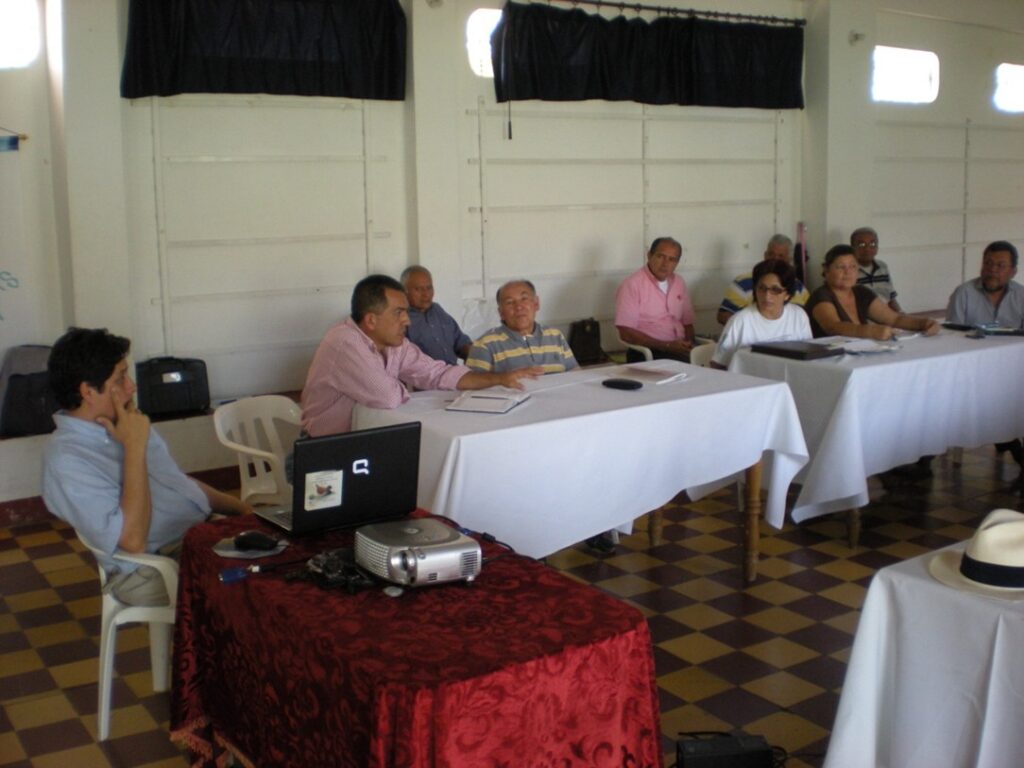
A meeting with farmers and local stakeholders in Ibague, Colombia (Photo: Deepa Maggo)
Breaking Barriers to Regenerative Agriculture
In Alain’s view, regenerative agriculture holds the key to solving many of the challenges surrounding how we consume food today. However, despite its potential, scaling it remains a significant challenge. He identifies two major barriers standing in the way:
- The outdated narrative that we must produce more food to feed a growing population. Many still view regenerative agriculture as a step backward, assuming it leads to lower yields. However, science shows that diversifying crops and restoring ecosystems actually increases resilience, long-term productivity and reduces income variability.1
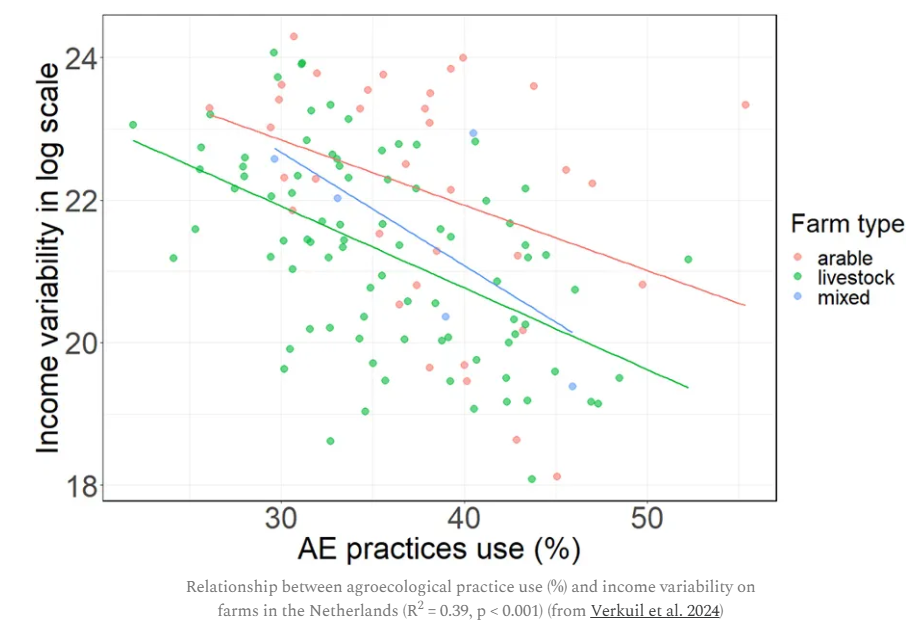
Inverse relationship of agroecological practice use (%) and income variability on farms in the Netherlands (log-transformed, R2 = 0.39, p < 0.001), controlling for farm type and farm size (n = 126). The grey area indicates the 95% confidence interval.
- The entrenched business model of maximizing production at any cost. Companies, governments, and even farmers themselves are often locked into systems that prioritize short-term gains over sustainability. Alain believes the key to shifting this is redefining value, moving beyond sheer output to recognize the economic, environmental and social benefits of regenerative practices
Advice for Conservationists Entering the Field
For Alain, the most rewarding part of his work is witnessing the moment when people, whether farmers, NGOs, or large companies, realize their own power to drive conservation forward. “Only they can do it,” he says, “and sometimes it takes time, but when you see that shift happen, you know real change is coming.”
With major companies now investing in regenerative agriculture, the demand for new talent is growing. But where should aspiring conservationists focus their efforts?
For early-career professionals, Alain advises looking beyond sustainability teams and into procurement departments, where key decisions are made. “Sustainability teams are small, but procurement is where real impact happens,” he explains. He also encourages young professionals to challenge the status quo, as they often bring the fresh ideas and solid arguments needed to drive change. “I’ve seen junior employees push companies toward transformation simply because they dared to question outdated practices: after all, a fraction-of-degree change in the direction of an ocean liner means a big change in the final destination”
For those transitioning from corporate backgrounds, Alain believes their business expertise is invaluable. “Experienced professionals can help build the business models of tomorrow, ones that prove regeneration isn’t just good for the planet, but also profitable.”
By aligning their skills with the growing momentum behind regenerative agriculture, conservation professionals have a unique opportunity to shape a more sustainable future, one that benefits both nature and business.
A Future of Interconnection
Looking ahead, Alain is hopeful. He sees a growing recognition that climate change is only part of the equation, biodiversity loss is an equally pressing threat. “Companies are beginning to realize that protecting and restoring nature isn’t just ethical, it’s essential for their own survival,” he notes.
He also predicts that certain agricultural commodities may collapse in the coming years due to climate and ecosystem failures. Significant productivity declines have already been observed over the past years on some, such as coffee, cocoa, rapeseed, sugar beet, argan oil, while this may be a wake-up call, Alain hopes that proactive action, rather than crisis, will drive change.
His message is clear: We are more connected to nature than we ever realized. Regenerative agriculture isn’t just about farming, it’s about rethinking how we interact with the planet, from the food we eat to the economies we build.
As conservationists, consumers, and decision-makers, we all have a role to play in this transformation. And, as Alain’s journey shows, change starts when we listen; to the land, to the people, and to the deeper truths that shape our world.
Sources:
Author Profile:
 Marketing and communications leader with 20+ years of experience in strategic marketing, commercial growth, and business development. As founder of La Regenera Consulting, I help impact-driven organizations build scalable growth systems that expand market reach, accelerate adoption, and strengthen long-term commercial impact. I also write for Conservation Careers, sharing stories that inspire action in sustainability and conservation. Passionate about systemic change, I am committed to helping regenerative and mission-driven organizations grow their influence and scale their impact.