You never know what the ocean will give you: A story of representation, grit and inclusive conservation
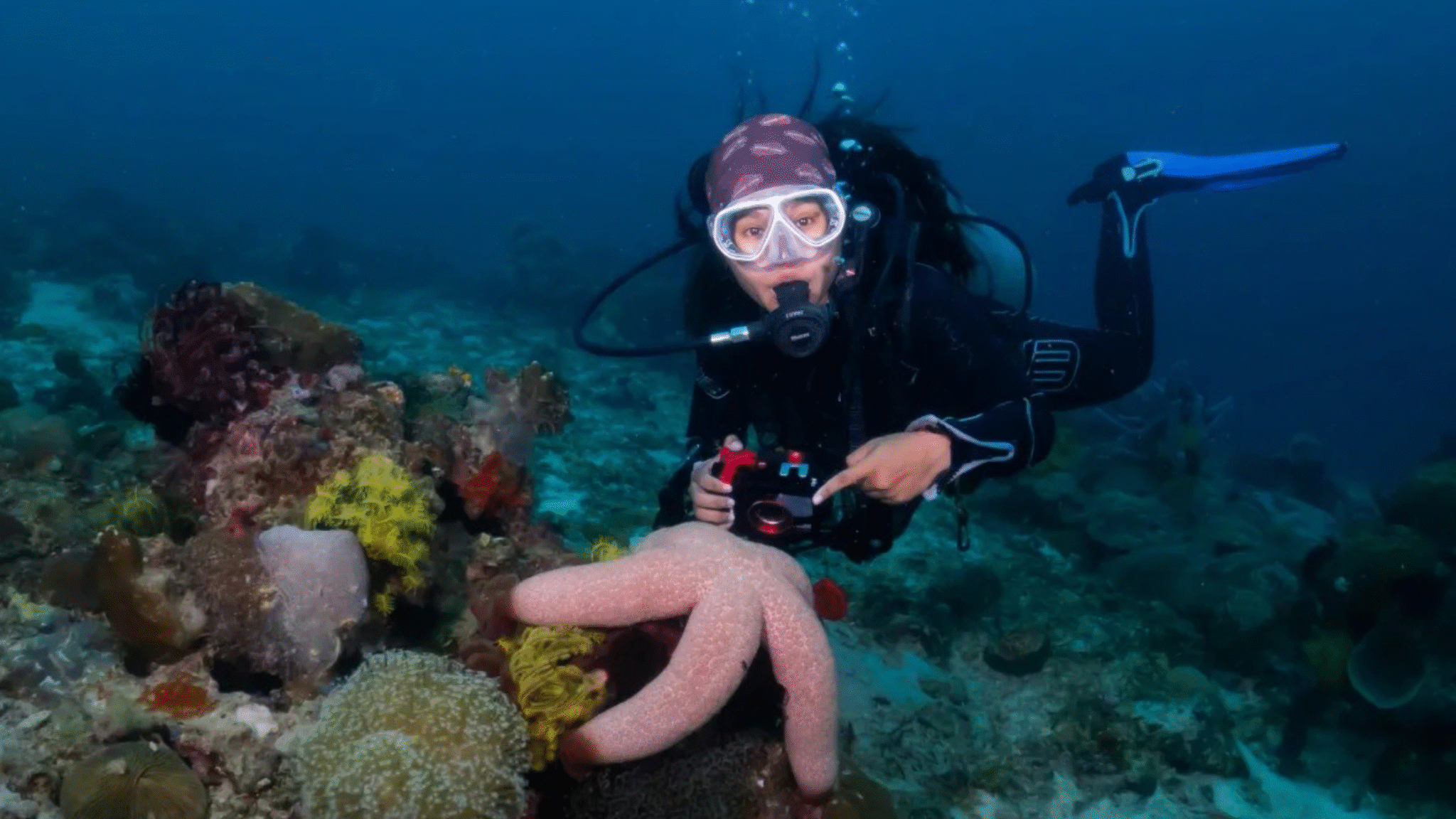
Farhana Azmi, Marine Biologist at TRACC (Tropical Research and Conservation Centre), has an energy that is contagious. Describing herself as a “glass-half-full” kind of person, her passion for the ocean shines through in everything she does.
From her work at TRACC on Pom Pom Island in Malaysia, collaborating with volunteers, to her mission to inspire more Southeast Asians into marine science, Farhana is breaking down barriers – one dive at a time.
Early inspiration: Representation matters
Farhana knew from an early age she wanted to be a marine biologist. But growing up in Malaysia, she rarely saw Southeast Asians represented in the field. Her passion blossomed with the encouragement of her parents who frequently took her to aquariums.
The absence of representation and the limited discussions around marine biology as a viable career intensified her determination to become the representation she never had. It shaped her mission to inspire more Southeast Asians to pursue careers in marine science.
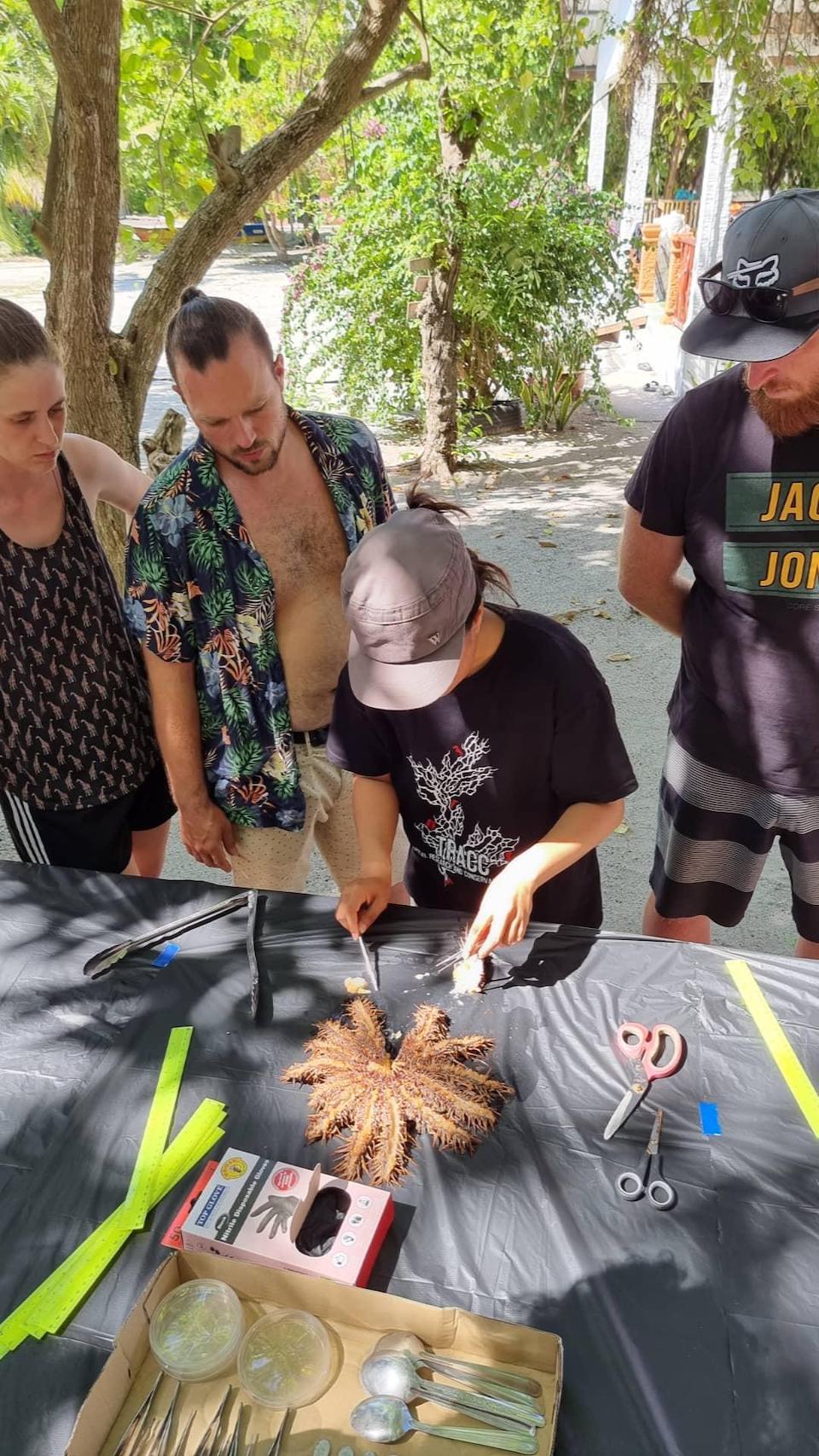
Dissecting a Crown-of-Thorns starfish. Credit: Jeethvendra Krishnamoorthie.
Finding her path: From rejection to research
Farhana’s journey into marine science wasn’t straightforward, but it was driven by determination. When she wasn’t accepted into a marine biology degree, she didn’t give up. Instead she enrolled in conservation biology and strategically shaped her course around the ocean, taking every marine-related module she could find.
Her focus paid off as she landed a marine biology internship, where she put passion into practice. Determined to succeed, she sought out a friend studying marine biology to teach her essential skills, like how to conduct marine surveys. Her success was built, one intentional step at a time.
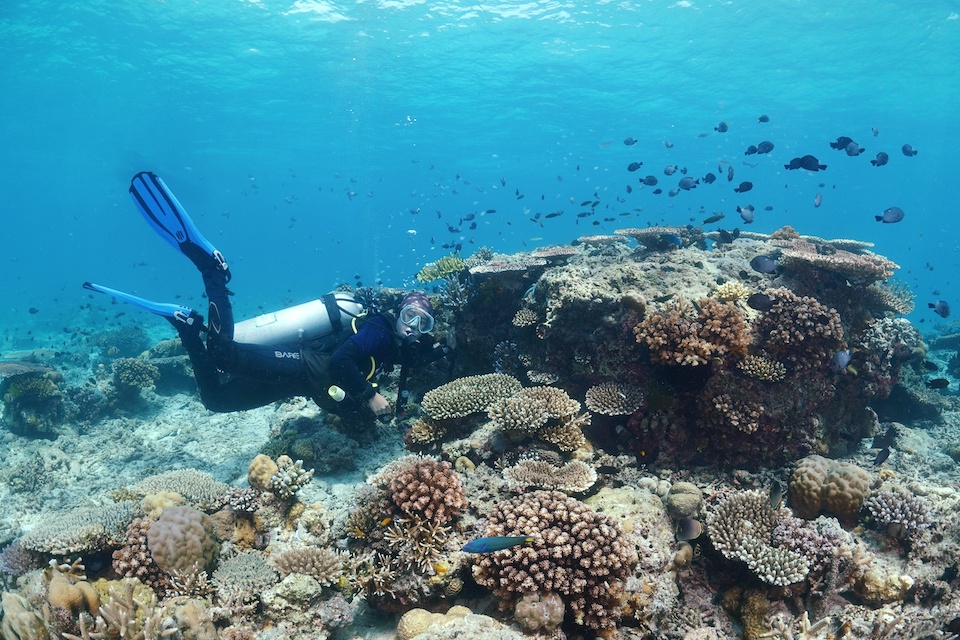
Farhana’s day working as a marine biologist at TRACC on Pom Pom Island often begins beneath the surface of the sea. With her dive gear secured, she descends into blue silence, gliding past coral reefs, eyes sharp – searching for marine life. She photographs the distinct patterns on a turtle’s scales, each one like a human fingerprint, uploading them later to a growing database.
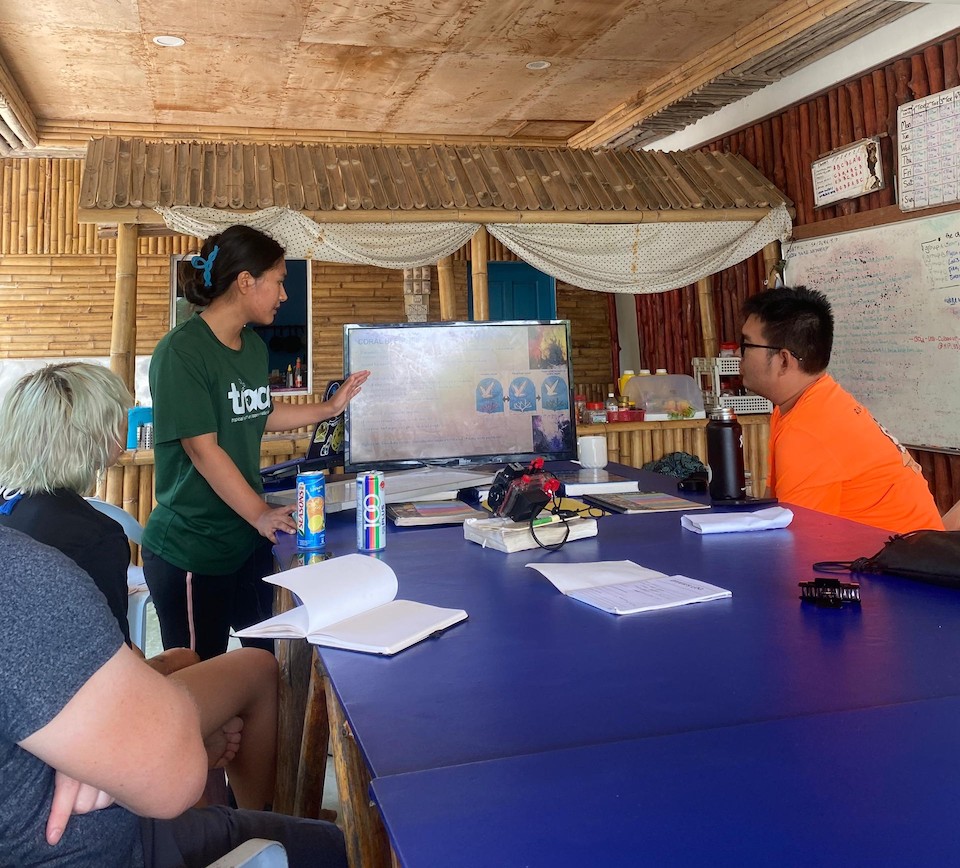
Back on land, she shifts seamlessly from wetsuit to whiteboard – leading workshops for volunteers, analysing data from dives, and refining research plans. In her senior role at TRACC, Farhana has the freedom to shape her own projects, proposing new studies yearly that deepen understanding and connection to the marine world.
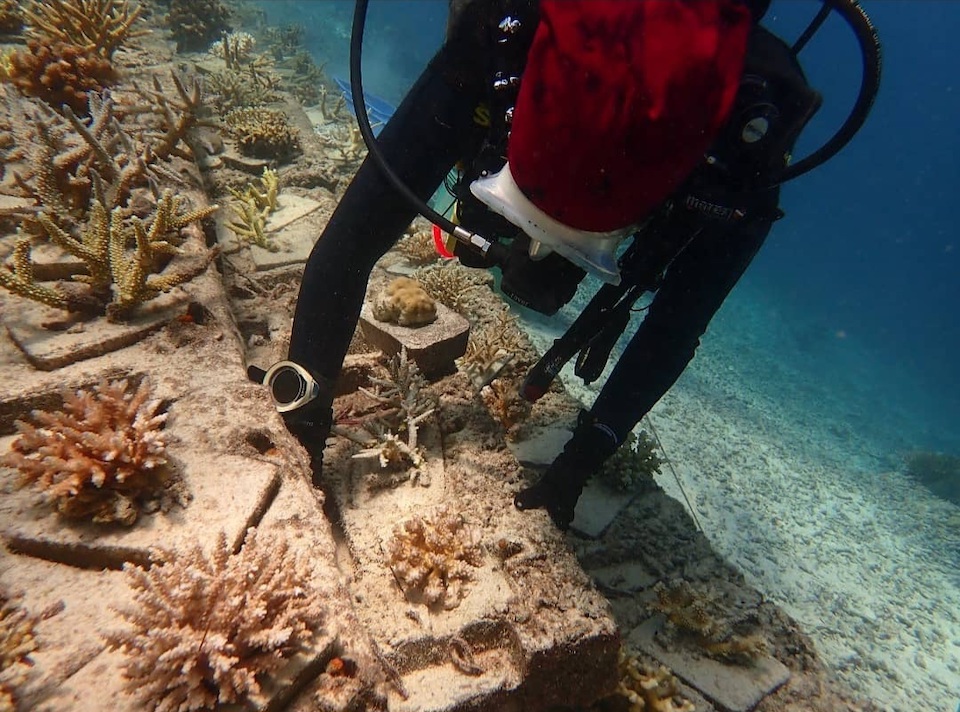
Tending to a coral restoration site. Credit: Jeethvendra Krishnamoorthie.
Valuing all voices in science
To Farhana, science shouldn’t be kept inside the walls of academia. It also belongs in the hands of communities and in the curious minds of volunteers.
She speaks with warmth about the moments she sees the “spark” in the volunteers’ eyes at TRACC. One story that brings her particular joy, is of a student who joined the organisation’s A-level programme in his sixties – a reminder that passion doesn’t fade with age. And for Farhana, there’s no greater reward than witnessing that passion.
Farhana champions citizen science with fierce conviction, eager to move on from the idea that science belongs only to scientists. “We should humble ourselves down” she insists, urging both scientists and the public to step into a space of mutual respect and learning.
She enjoys watching marine biology transform before her eyes, growing richer, and more inclusive, and weaving the wisdom of indigenous communities into its fabric. Farhana stands at this crossroads, a bridge-builder, ensuring that the voices often unheard become central to understanding and protecting the ocean.
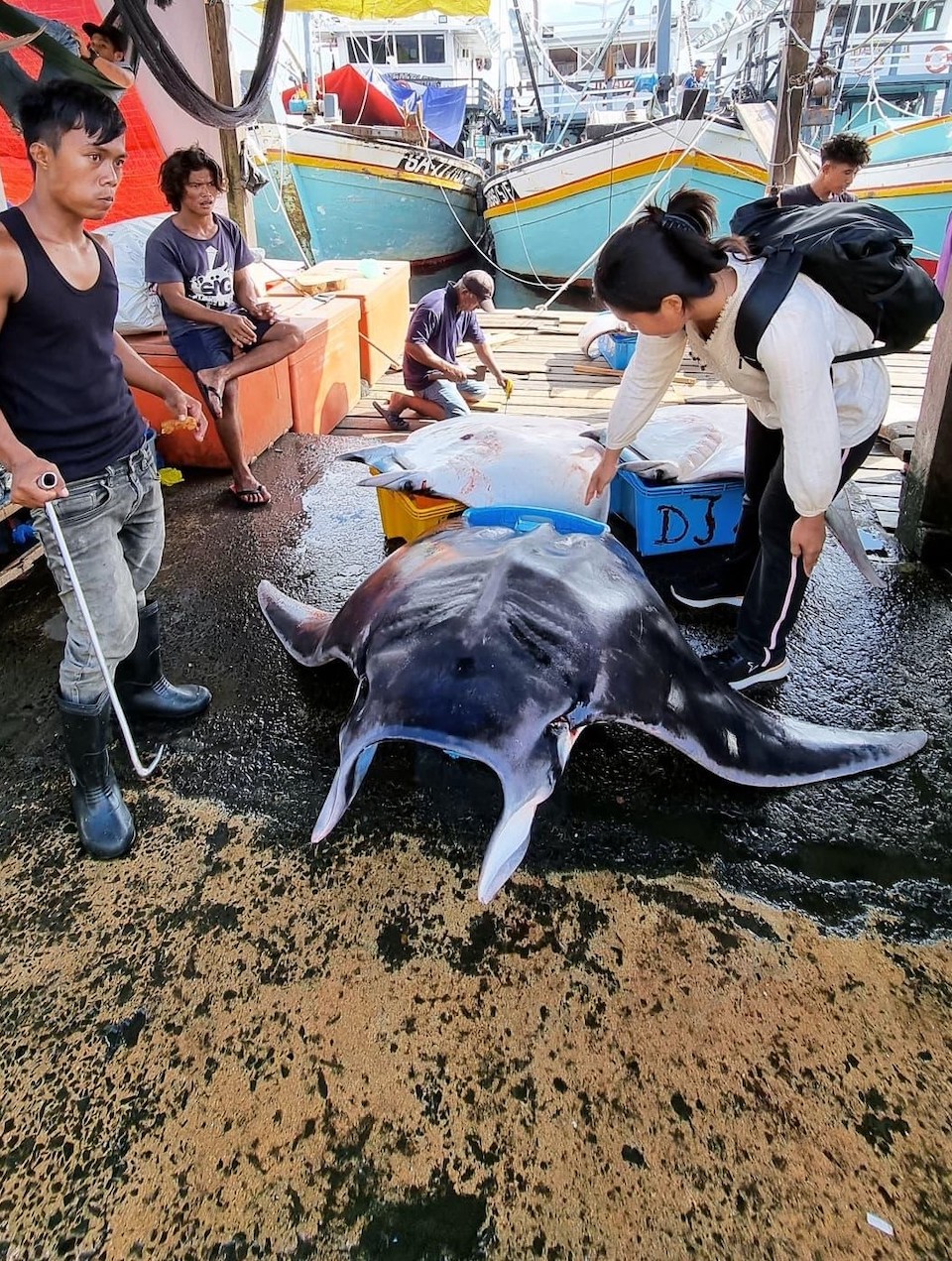
A Manta Ray at a fish market. Credit: Jeethvendra Krishnamoorthie.
Protecting turtles: Beauty amid the battle
One of the most rewarding parts of Farhana’s job at TRACC is collecting turtle eggs, watching them hatch and releasing them back into the ocean, getting to witness new life and knowing she’s played an important part in protecting it.
But the best parts of the job can also bring challenges, such as long repetitive nights walking around the island in the dark and cleaning the turtle hatchery. This routine work can turn to heartbreak when the staff at TRACC realise they’re too late and the turtle eggs have already been poached.
What make poaching even harder to face is understanding who the poachers are. Many are stateless people with no legal status, living on boats in Malaysia. Without rights to work or earn a wage, harvesting the turtle eggs becomes a desperate act to feed themselves.
In these moments, Farhana feels the emotional weight of her work more than ever. Her job is to protect the turtle eggs and retrieve them from poachers, but in doing so, she’s potentially taking food from a hungry family. It’s a reminder that conservation is rarely black and white. Protecting wildlife must go hand in hand with supporting and empowering people.
In the past, Farhana has had the opportunity to work with stateless people and provide them with training in areas such as diving and building turtle hatcheries, allowing them the opportunity to engage with conservation rather than be criminalised by it. There are no simple solutions to the issue, but she hopes that going forward there will be a way for all communities to work together for the good of conservation.
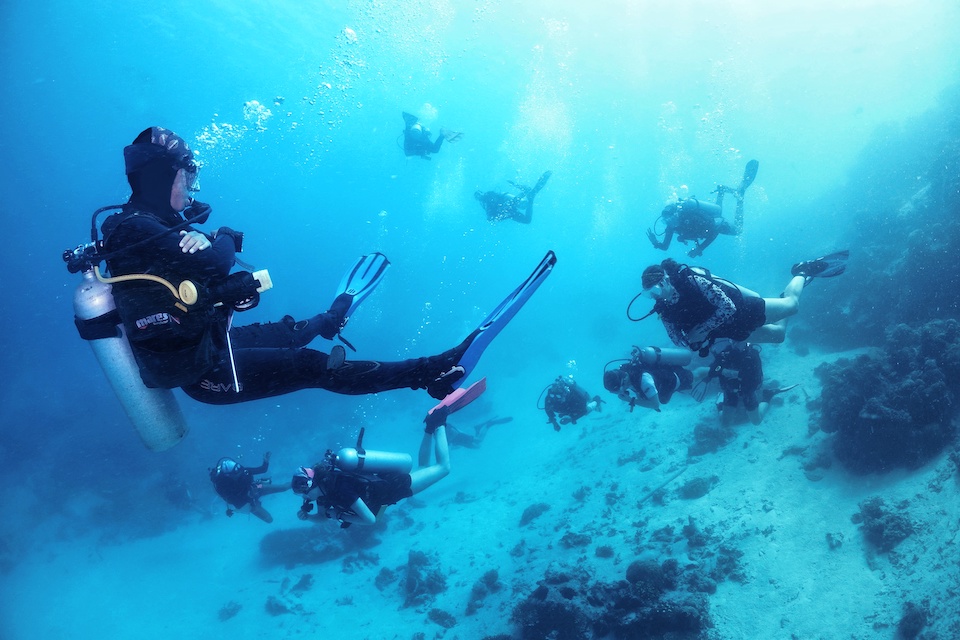
Credit: Jeethvendra Krishnamoorthie.
A life of passion, grit, and unexpected joy
“The best moments are always something you don’t expect.”
Conservation work also comes with life changing moments of beauty and breathtaking encounters. One such moment happened during what began as an ordinary dive with a friend.
She looked up and there it was. A Whale Shark! Vast in size and moving in an elegant and unhurried manner, drifting overhead. She describes the sight as “like looking up at the night sky”. Endless, quiet and full of wonder.
Another magical memory comes just as vividly: a school of Jacks (strong-swimming, predatory fish) moving as one. Hundreds of silver bodies, dancing in perfect harmony – “like a tornado” she says. A flash of power, grace and unity. It’s these unexpected moments that stay with her.
From tiny fish to large predators, Farhana has a fascination with marine creatures of all sizes from Cryptobenthic fish to Sharks. Cryptobenthic fish are tiny creatures, many under 10 millimetres in length, that make up half of the ocean’s biodiversity. She sometimes spends her own time photo-identifying these fish and making up a database, in an effort to discover their diversity on the reef.
Farhana acknowledges Sharks as the beautiful and intelligent creatures they are, despite their unfair portrayal in the media. She understands the crucial role they play in marine ecosystems and hopes to learn more about them, particularly how they’re using certain habitats.
However, not every day in conservation can be so inspiring and exhilarating. A common misconception about marine biology, she says, is that “it’s cool all the time.”
Much of the work can be repetitive, like spending hours during her work at TRACC, comparing a database of turtle photos. It’s during those times, she explains, that grit is most needed. It’s grit and passion that push you through the less interesting parts of the job, and allow you to keep working towards the larger vision.
Credit: Dharkshen Selva.
Advice for the next generation
Farhana speaks with quiet conviction when she says, “conservation is a privilege”.
As someone who has navigated the hurdles herself, she’s aware of the barriers that often stand between passionate people and their dream job. With financial barriers, lack of sponsorships, unpaid volunteering and underpaid work – the price of entry can be steep.
She believes things need to shift, that the future of conservation must be more accessible. She hopes for more organisations to offer sponsorships so that background and bank balance don’t determine who gets to protect the planet.
Farhana’s message for aspiring conservationists is to “put yourself out there” and start where you can, volunteer and take on opportunities to build skills and get to know the community. For those who are not sure what their fields of interest are, she says “get out there and see what you like”.
Where can aspiring conservationists start? Farhana recommends Facebook as a great network for marine biologists, where people regularly share advice. For women specifically, she says the Women in Ocean Science group on Facebook is a brilliant resource. She also suggests two books for ocean lovers – The Sea Around Us by Rachel Carson and The Ocean of Life by Callum Roberts.
Speaking about what she believes the future of marine biology will look like, Farhana is excited to discuss the growing role of Artificial Intelligence (AI). With technology already capturing underwater images, she imagines a time when AI can identify fish species instantly, speeding up data collection and expanding possibilities.
Credit: Jeethvendra Krishnamoorthie.
But the heart of her work remains deeply human, connecting the public with the beauty of marine life and empowering them to protect the world’s oceans.
Farhana’s journey is a vivid reminder that marine conservation is as much about people as it is about wildlife. Her work blends science with compassion – not only for marine species but for the communities that depend on the ocean.
From long nights protecting turtle eggs to the moments of awe beneath the waves, her path is shaped by passion, grit and a lifelong love and respect for the ocean, and its creatures who call it home.
As Farhana puts it, “you never know what the ocean will give you”.
Explore your path
Discover more about TRACC’s impactful work by heading to their website or following them on Facebook or Instagram.
Interested in becoming a marine biologist? Explore the detailed guide How to become a marine biologist? to learn more about the path, from degree to fieldwork.
Check out hundreds of exciting volunteering and job opportunities, including roles in Southeast Asia.
Author profile | Emily Pickett
 Emily is a marketing graduate and a conservation volunteer with a lifelong passion for wildlife and the natural world. After working on a nature reserve and in environmental education, she now combines her love of conservation and writing to inspire others to connect with nature and take action to protect it.
Featured image” A large Thromidia starfish on a coral reef. Credit: Jeethvendra Krishnamoorthie.