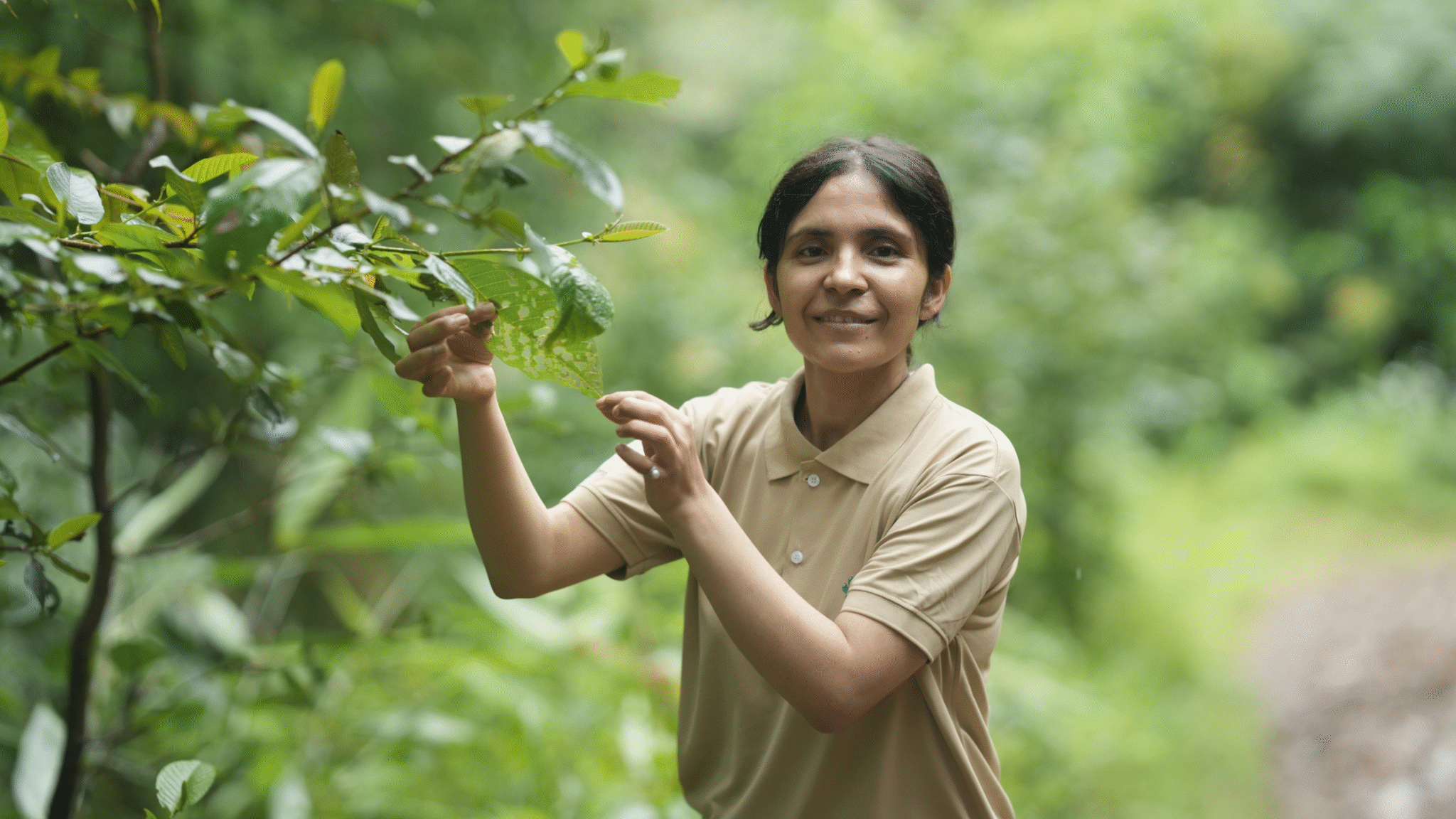
From rural Nepal to global plant conservation: Reshu Bashyal on redefining leadership and finding your passion

Reshu Bashyal is a winner of the 2025 Whitley Awards and the Research and Programme Lead for Greenwood Nepal. Her journey into the world of conservation is a story that begins in a rural Nepalese village, deeply rooted in the natural world. It’s a path that has taken her from the local wisdom of her grandparents to a leadership role in global plant conservation.
The roots of her passion
Reshu’s early life was defined by a close connection to nature. Growing up in a rural village, daily life meant being surrounded by plants and animals. But what truly ignited her passion was her family’s reliance on medicinal plants.
“My grandparents, and other elderly people our village, used medicinal plants to cure ailments, both big and small,” she shared. “That constant connection with the healing power of plants made me wonder how life would look without them. This curiosity about the unique bond between people and nature was what first drew me in.”
As she grew up, Reshu realised this connection wasn’t always a positive one. She learned about the threats facing plants, animals, and even insects due to human behaviours – some intentional, others not. This understanding pushed her to seek opportunities to help people reconnect with nature in a more mindful and sustainable way.
Navigating challenges and redefining leadership
Reshu’s path wasn’t without its obstacles. She spoke candidly about the challenges she faced, some of which were universal to fieldwork, and others that were unique to her as a woman.
“Back when I started, especially in remote field areas, there were hardly any proper facilities, which could be really problematic,” she explained. “But beyond that, there were instances where I was treated differently because I was a female leading a sensitive project on wildlife trade.”
She described how her quiet, polite demeanour and “small tone” were often misunderstood. At first, people would question her leadership, assuming she was just assisting someone. “I often felt like people couldn’t accept me as the leader,” she said.
For a beginner, these comments were tough. But Reshu realised the problem wasn’t with her; it was with a preconceived notion of what a leader “should” look like – someone with a loud voice and commanding presence. Over time, she saw a shift in this mindset. “People are now accepting everyone, including me,” she said, acknowledging a positive change in attitudes.
She also faced the struggle of breaking into the conservation field without connections. With few conservation organisations and no family or friends in the sector, she took on various environmental jobs before dedicating a full year to finding a role in conservation. This persistence paid off, leading her to her current role as Research and Programme Lead at Greenhood Nepal.
The unexplored opportunities in plant conservation
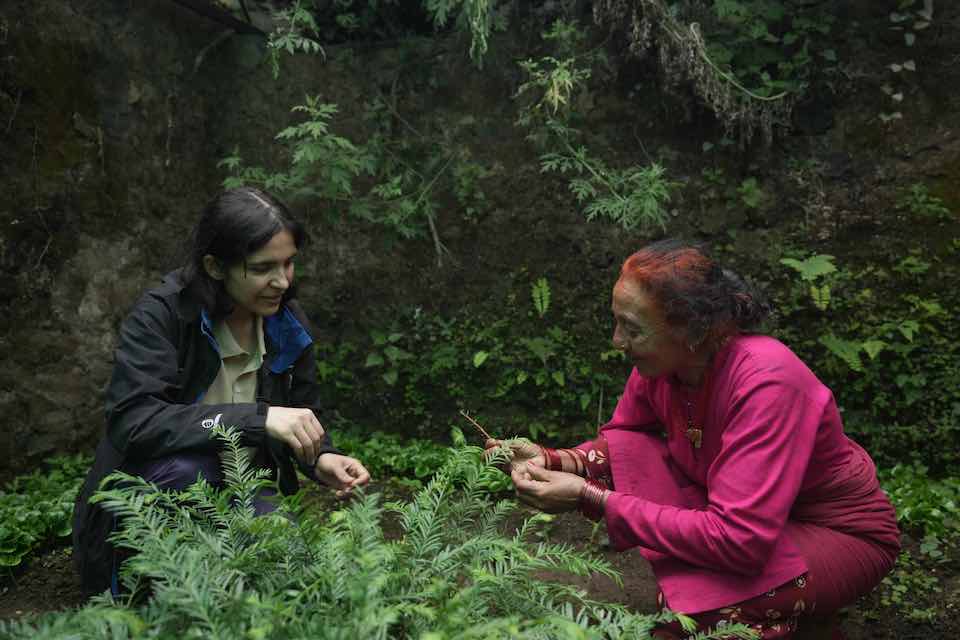
In her role at Greenhood Nepal, Reshu oversees a wide range of projects, from wildlife trade and policy to empowering young conservationists. Her work with plants, particularly medicinal ones, has opened her eyes to the vast, untapped opportunities in the field.
She notes that while traditional areas like ecology and taxonomy are well-explored, there’s a huge gap in understanding the link between plants and people, especially concerning both legal and illegal plant trade.
“I see this lack of data as a huge opportunity,” she explained. “If we can establish a baseline of information, it gives my team and others a starting point to dive into this critical area.”
She broke down the nuances of plant trade, explaining that while some species are banned from trade entirely, others have specific legal quotas or require permits. Exceeding these quotas or failing to follow regulations makes the trade illegal.
She believes there is immense potential for research and conservation efforts in this complex space as the whole trade system is complex and involves many people.
Advice for aspiring plant conservationists
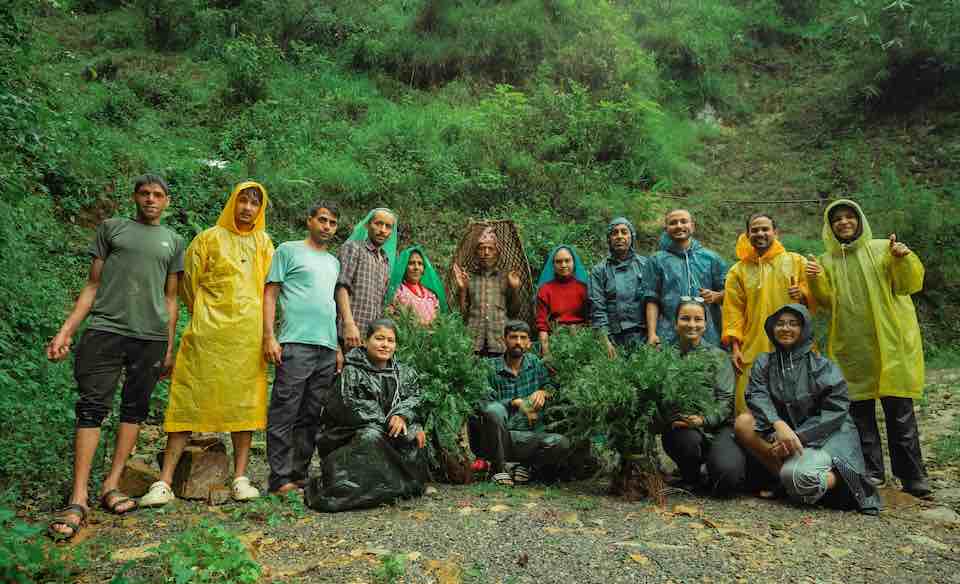
When asked what advice she has for a fresh graduate interested in plant conservation, Reshu’s first point was clear: Find your passion.
“Don’t just follow someone’s path blindly,” she advised. “When things get tough, your passion is what keeps you going.”
She recommends doing thorough research to understand what has already been done and what gaps exist. Thanks to the digital age, it’s easier than ever to find information and connect with people who can act as mentors.
While a degree in botany is a great starting point, she also noted that other fields like forestry or environmental science provide a solid foundation. Reshu herself has two master’s degrees – one in environmental science and a second, more specialised degree in Conservation and International Wildlife Trade, which she earned as a Chevening scholar.
Her own passion for plants was fuelled by a striking fact: out of 60,000 plant species used globally for medicine, only half have documented medicinal values, and protected species like orchids and yews come on the list. This knowledge drove her to dive deeper into the world of plant conservation. Also, she was lucky enough to have wonderful mentors and the team.
Reshu’s journey is a powerful reminder that with passion and perseverance, you can turn a childhood curiosity into a meaningful career, like that of a conservation scientist or even a conservation project manager and in the process, help reshape the world for the better.
Reshu Bashyal can be found on LinkedIn and Instagram @bashyalreshu. She is the Research and Programme Lead at Greenhood Nepal and a 2025 Whitley Award winner.
Author Profile | Sera Samarna
 Sera, is a passion-driven wildlife conservation writer. She aspires to help people reconnect to nature.She has been an educator for about a decade and is now an enthusiast for Urban Nature and Conservation. She writes a nature journal at The Nature Edition her pen name Symrna Darkmorph (www.thenatureedition.com)