Attenborough’s Animals: Ryan Eddowes’ Journey to Honour a Legacy and Spotlight Conservation Accessibility
In his new documentary project, Attenborough’s Animals: An Accessible Adventure, Ryan Eddowes is on a mission to search the globe for the over 40 lifeforms named in honour of Sir David Attenborough. As Ryan was born with bilateral clubfoot (talipes) and recently recovered from a below-knee amputation, his project is unique in that it not only celebrates Sir Attenborough’s legacy, but also shines a light on disability awareness and accessibility in conservation.
Project origin
This series has been a long time in the making.
It all started while Ryan was growing up with his grandparents in Wolverhampton, UK. His Nan inspired his love for flowers, and his Grandad took him fossil hunting and to natural history museums. He also got involved with drama and performing arts, which helped him build confidence and understand that his disability doesn’t need to hold him back.
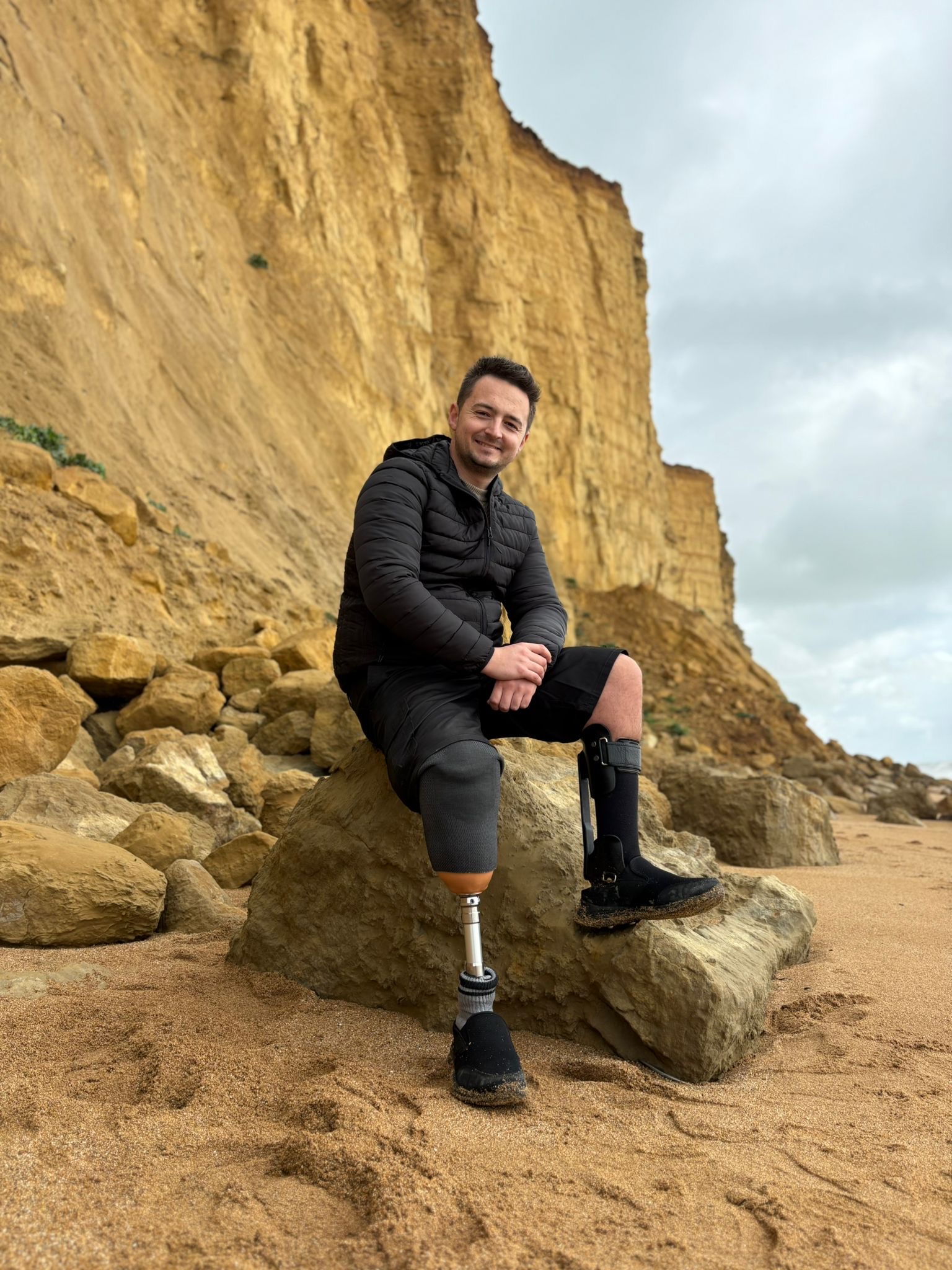
Ryan enjoying Dorset’s West Bay, in his first photo taken with his new brace and prosthetic leg.
Ryan got his BSc degree in Zoology with Herpetology (Bangor University, Wales) with the goal of working in conservation communication as a wildlife presenter. Later, Universities Wales (based in Cardiff, UK) asked him to be a speaker at their Transforming Lives campaign, where he shared his passion for higher education and learning.
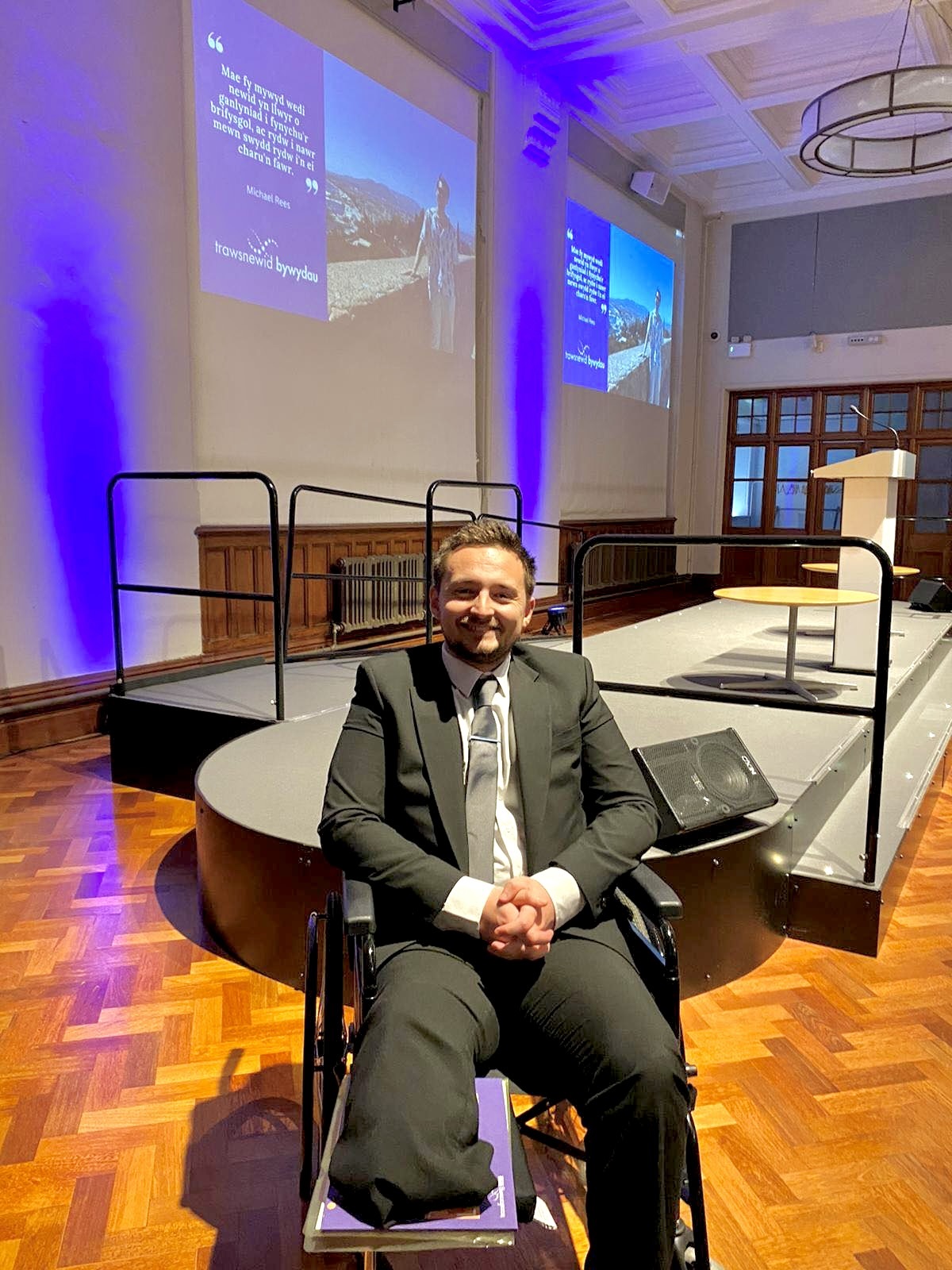
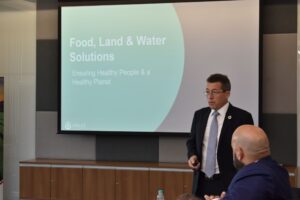
Ryan in his wheelchair as a chosen speaker at the Transforming Lives campaign (Universities Wales).
Fuelled by this, along with his love for Sir David Attenborough, he developed the idea for Attenborough’s Animals.
Connecting with Sir David Attenborough and others
Ryan highly recommends reaching out to people for inspiration. Ten years ago, he wrote a handwritten letter to Sir Attenborough explaining his project idea in hopes of pitching it to the BBC. Humbly, Sir Attenborough wrote back saying he loved the idea but wouldn’t feel comfortable being involved since it was about himself.
Ryan understood and focused on other opportunities, like attending the Wildscreen Film Festival in Bristol. He met conservationist Ian Redmond, who became a great supporter of Ryan. This was special because Redmond helped set up Sir Attenborough’s iconic career moment with mountain gorillas in Life on Earth.
Some of his other biggest inspirations have also come from taking chances and starting up new conversations:
- Ryan contacted Lizzie Daly, wildlife host and scientist, whose kindness and generosity motivates him.
- On an Africa Media wildlife film internship, he was encouraged to become a presenter by Ryan Johnson.
- He was further inspired after a chance conversation with Life on Earth editor Ron Martin while working at West Midlands Safari Park.
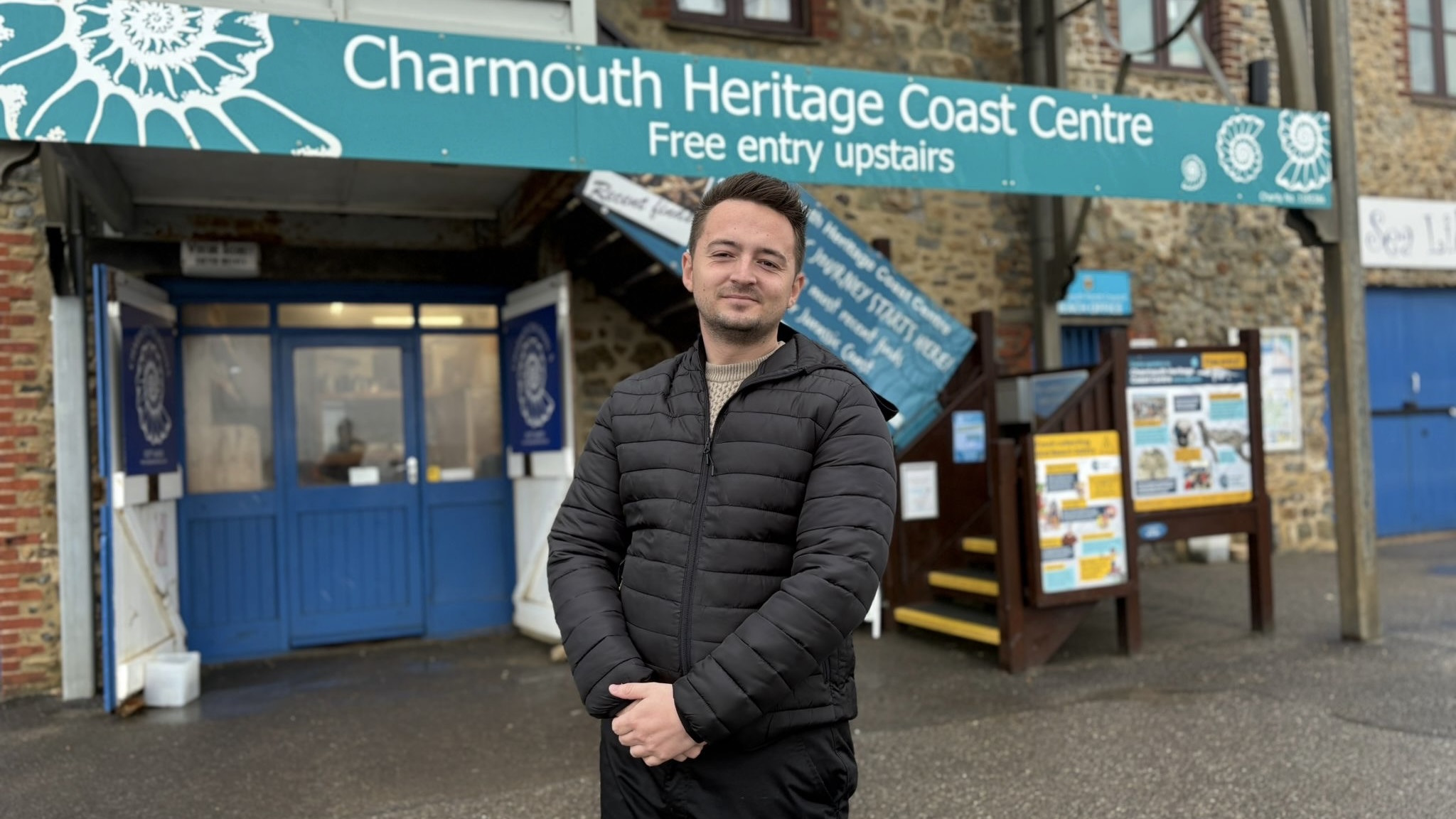
RRyan at Dorset’s Charmouth Heritage Coast Centre, where Sir Attenborough opened the ichthyosaur fossil display featured in Attenborough and the Sea Dragon in 2018.
Time passed, but Ryan never lost sight of Attenborough’s Animals. He realised he could start it himself using YouTube and other social media in honour of Sir David Attenborough’s upcoming 100th birthday in 2026.
However, he didn’t want to move forward without Sir Attenborough’s blessing. Ryan wrote him another letter about his idea to complete it on his own. A few weeks later, Sir Attenborough wrote back:
“He said he’s very humbled by it, and to go for it, and enjoy. It was amazing to get that response from him.”
So, Attenborough’s Animals came to life.
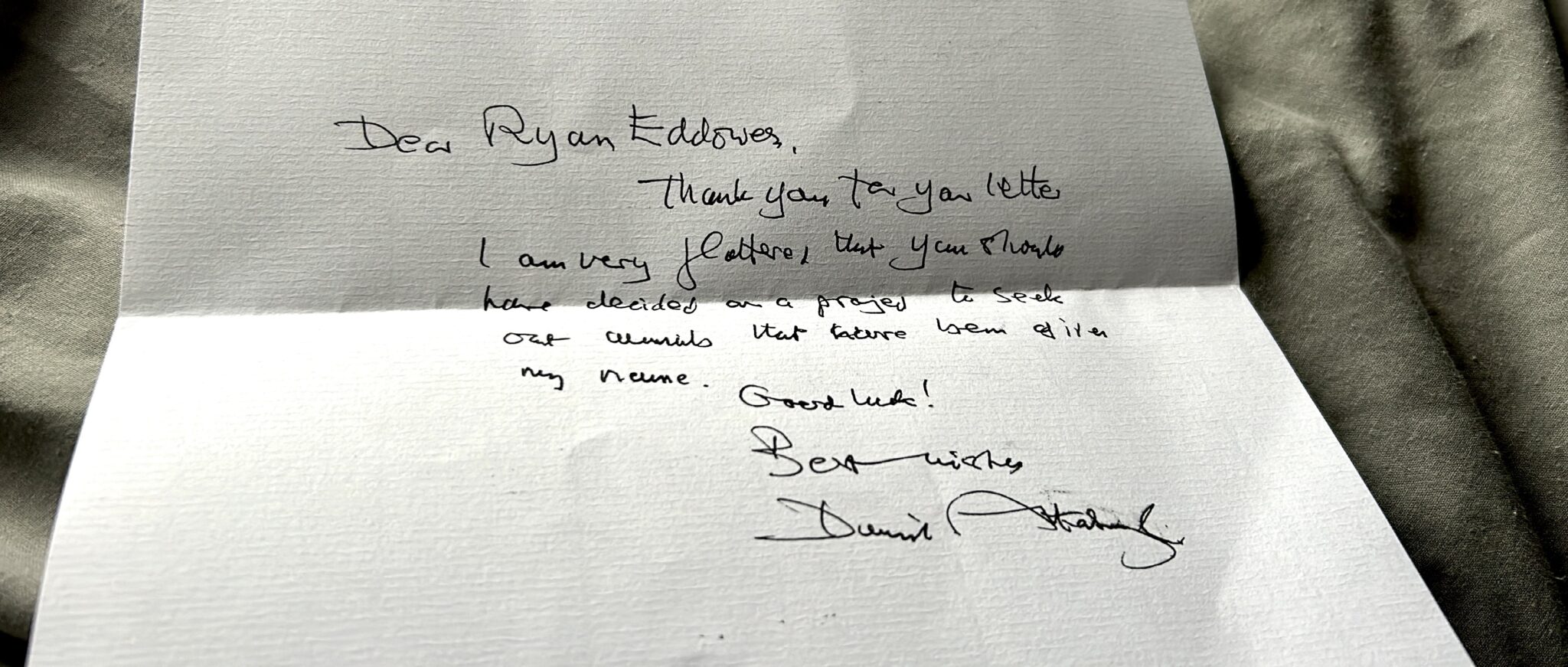
Sir David Attenborough’s reply to Ryan.
What’s the plan?
Ryan currently works with students with learning needs and disabilities at Coppice Performing Arts School, so he’ll complete his project on his time off. As the plants and animals named after Sir David Attenborough are located all over the world, the episodes require a lot of preparation.
Ryan will reach out to researchers and organisations to gain knowledge and make accessible travel plans. While his project is self-funded, he’ll partner with local conservation organisations to raise money for preservation. He also hopes to include interviews with some of Sir Attenborough’s connections.
Ryan does his own filming and editing. His fiancée Lauren is also learning to operate the cameras and drone, so she can help film on their travels. He plans to share wildlife knowledge while respecting the environment:
“I’ll stand back. I’m not someone who’s going to handle these animals, but just observe them, tell you about them, and do it from a standpoint where I’m not affecting the habitat.”
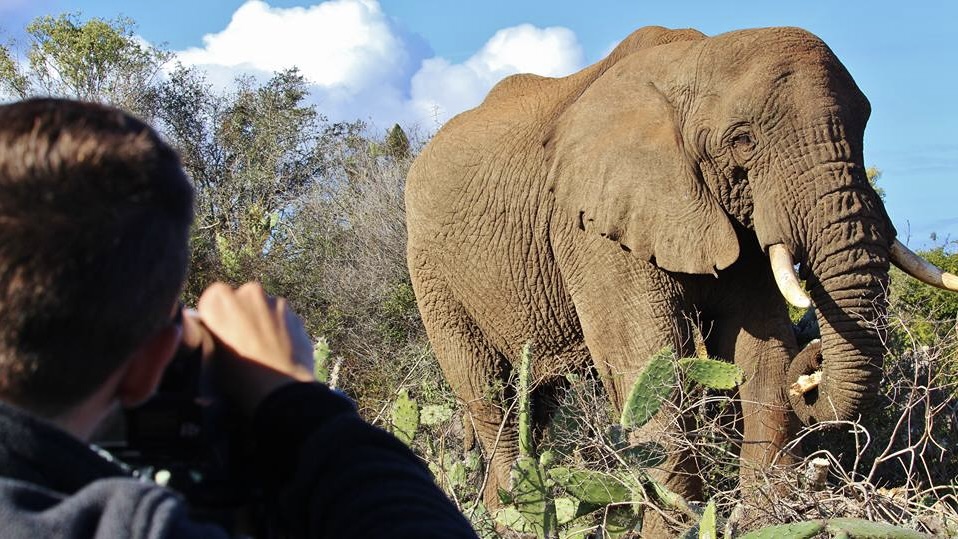
Ryan filming an African Elephant in South Africa in 2017.
He also aims to show people with disabilities that they have an important place in the conservation world, whether their disability is visible or non-visible.
Getting started with Attenborosaurus & what’s next
Ryan has much of the first episode filmed, and it’s close to home! The extinct Attenborosaurus fossil was found in Dorset, UK, and there’s a cast of it in the Natural History Museum, London. He’s especially excited about seeing this cast, as it’s the only genus named after Sir David Attenborough.
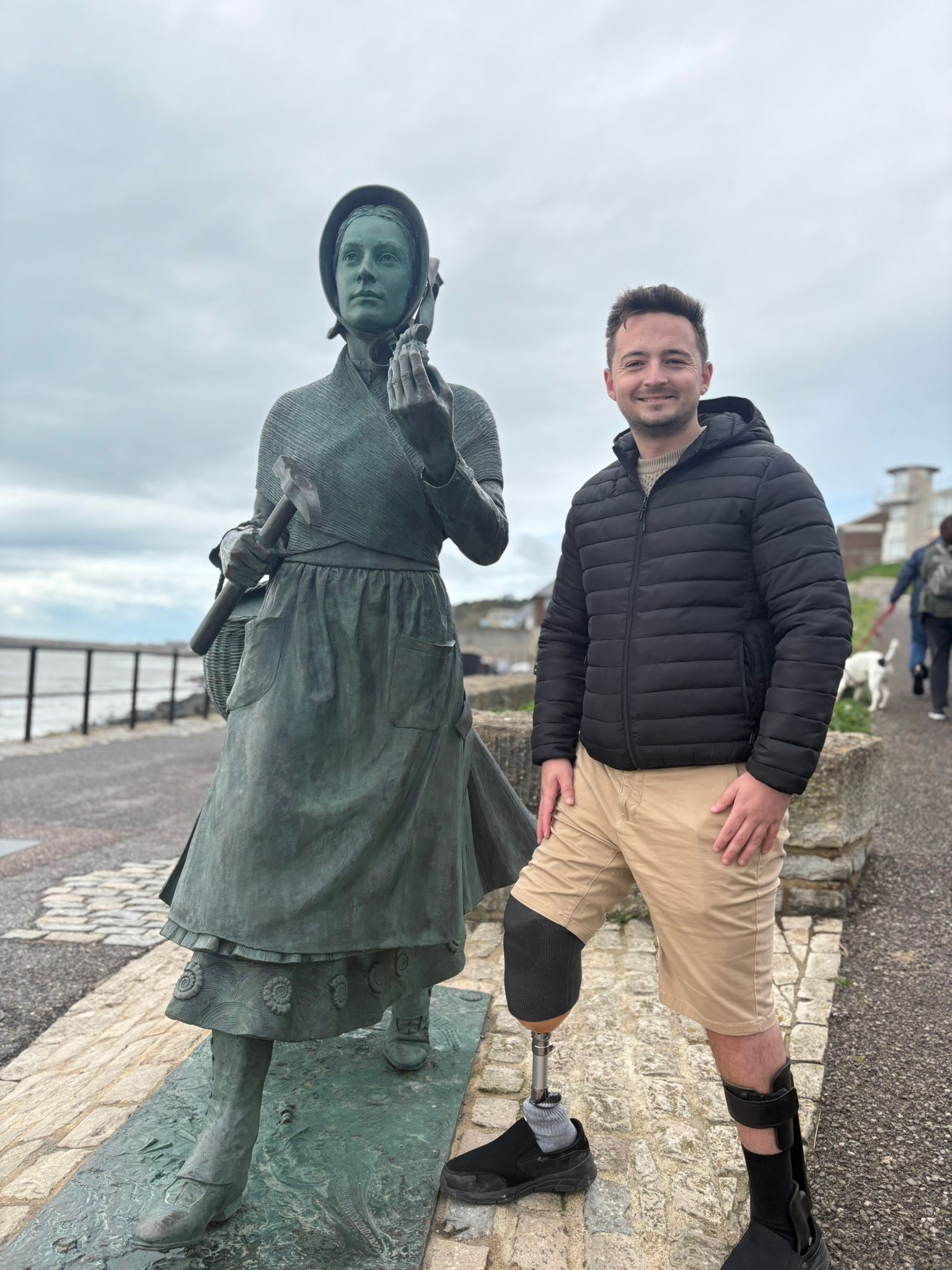
Ryan working on his project at palaeontologist Mary Anning’s statue. Sir Attenborough admires Anning’s contributions and inaugurated the Mary Anning Wing at Lyme Regis Museum.
Along with this, Ryan is eager to travel to Madagascar to find the Attenborough’s pintail dragonfly (Acisoma attenboroughi):
“[This dragonfly is] extremely common there. The scientist who named it after Sir David made sure that if you’re out in the garden or a field and you see one, you can physically say, ‘That’s Attenborough’s dragonfly!’. And that’s an instant connection to the natural world and to Sir Attenborough. That’s quite a special thing.”
He also looks forward to returning to South Africa to see Attenborough’s flat lizard (Platysaurus attenboroughi).
One of the best things about this project is that it doesn’t have to end! For Ryan, there is always someone else to be inspired by, like the late Dame Jane Goodall or the Irwin Family
Accessibility and preparing for challenges
No project comes without difficulties. For Ryan, some of these will relate to disability and pain management. As a Steps Charity Ambassador, Ryan walked the Jurassic Coast in 2022. There, he learned the importance of taking your time:
“What I’ve learned [is that] I really need to give myself more time to walk. If it takes a couple days, doesn’t matter. As long as I get there safely and comfortably, that’s fine.
There will be challenges, there will probably be barriers to certain things. But if I can talk to these scientists, I can plan it properly. If there are issues, I can move that species back and do another one that’s easier.”
Being a recent amputee, he could face difficulties with air travel, as he hasn’t flown in years. He’ll document these situations to spread awareness. He also hopes to connect with more disability organisations, like Limbless Association and Purple Tuesday.
Of course, not all wildlife documentary challenges relate to personal matters. In Ryan’s earlier film, Secrets of the Savannah, a lion and a crocodile stole his cameras!
Laughter, connection, and understanding
Ryan reminds conservationists that humour is a great teacher. He hosts a separate children’s series as the entertaining “Ranger Ryan”, where he connects kids to nature in a playful way.
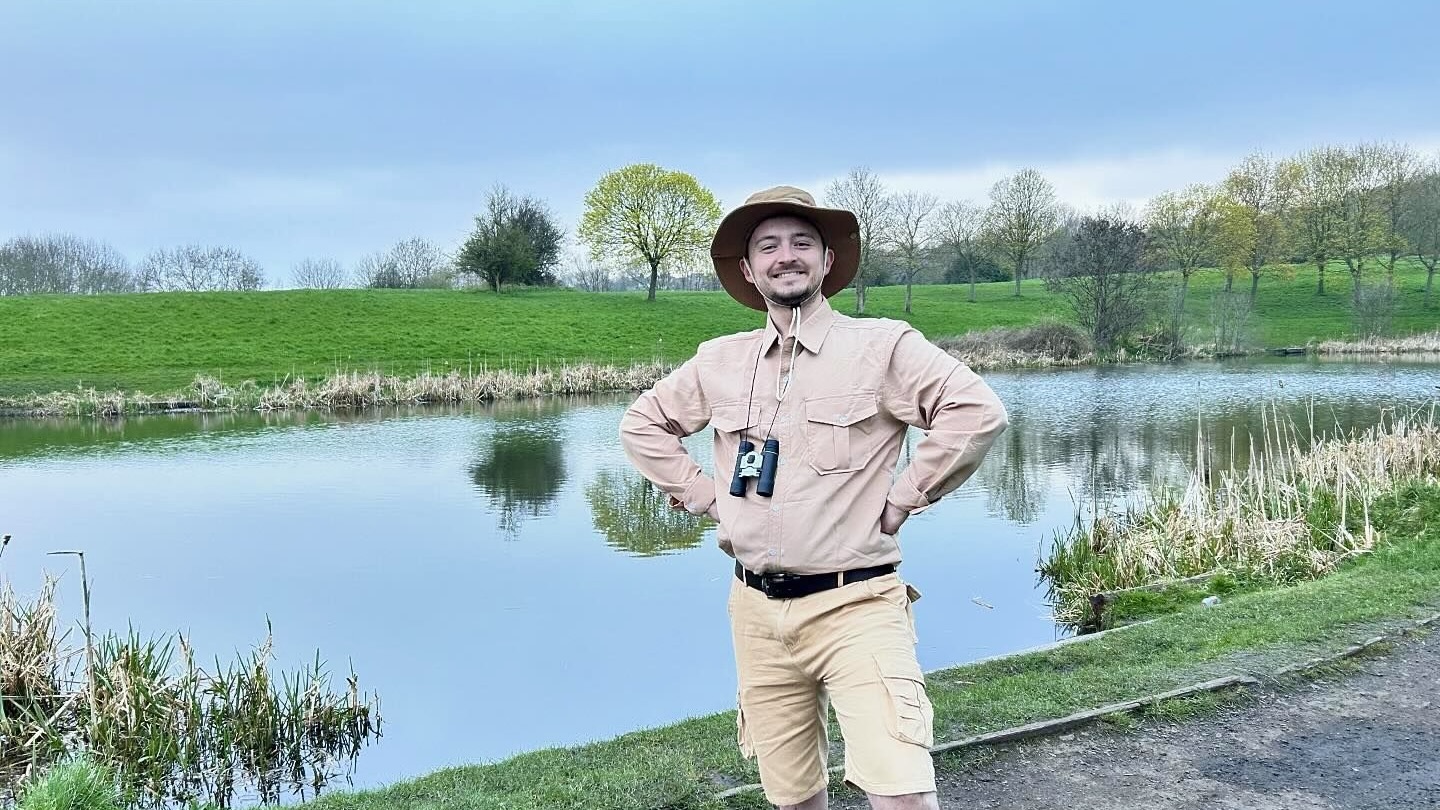
Ryan as humorous children’s show host, “Ranger Ryan”.
Attenborough’s Animals episodes will include outtakes to encourage laughter, too:
“[This project is] not just a checklist. It’s about what these stories bring, the people that I’m going to meet, the adventures I’m going to go on.
So many things can go wrong for me. By [including outtakes], it’d be quite a comical thing to follow as well.”
Overall, he believes conservation is about deepening connection and understanding. We can all learn from one another and make each other smile.
Through Attenborough’s Animals: An Accessible Adventure, Ryan will do just that.
You can follow Ryan’s journey on his YouTube channel, Instagram, and LinkedIn.
More reading, and fun facts:
- You can read Ryan’s advice about applying for conservation jobs with a disability.
- Ryan was a Conservation Careers blogger!
- Ryan became well-known for a question about ferrets on UK game show The Chase!
Author Profile | Katie Cohan
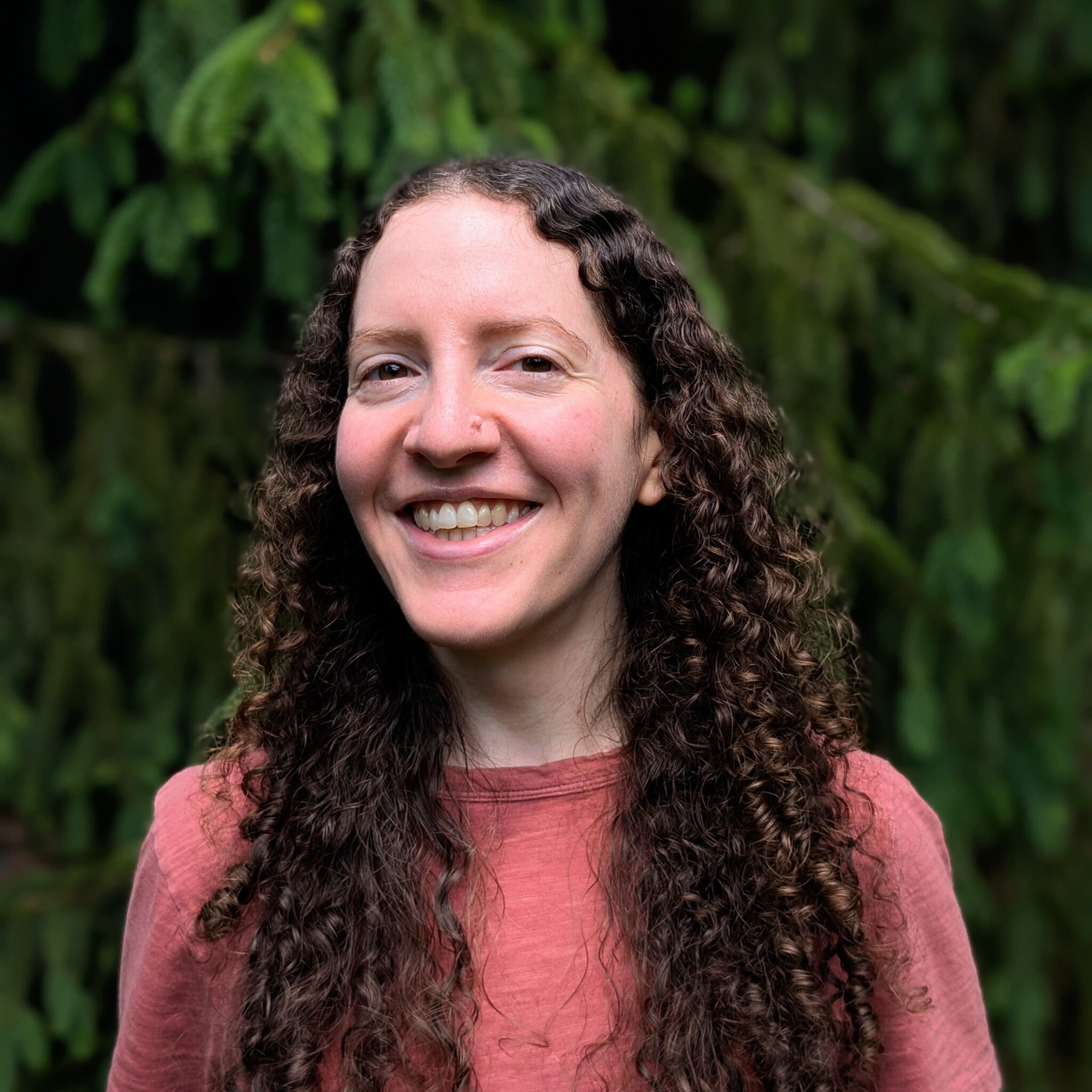 Katie Cohan has felt a strong connection to nature and culture since childhood. This inspired her to work in anthropology, veterinary medicine and wild and domestic animal care. As a writer, she now aims to highlight the intersection between human systems and the natural world. She is especially passionate about showcasing overlooked narratives and bringing attention to endangered and misunderstood species. Connect with Katie on LinkedIn.