The biggest barrier to your conservation career? It might be you

What if the biggest barrier to your conservation career isn’t the sector – but the stories you believe about it?
If you’re starting out – or trying to switch into the sector – chances are you’ve heard at least a few of these:
“You need a master’s degree to stand a chance.”
“You’ll have to volunteer for years before landing your first job.”
“Conservationists don’t earn much.”
“Employers don’t value career switchers.”
“Jobs only go to people already ‘on the inside’.”
Sound familiar?
These aren’t just harmless comments. They’re the kind of statements that stick in your brain, passed around like facts – until they start to feel like the truth.
But here’s the thing: conservation is a field grounded in science. And what do scientists do when they hear a bold claim?
They question it.
They test it.
They look for evidence.
So what if these weren’t facts at all? What if they were just hypotheses waiting to be challenged?

What do scientists do when they hear a bold claim? They question it, test it and look for evidence.
What is negativity bias?
Negativity bias is our brain’s tendency to give more weight to negative experiences, beliefs or information than to positive ones.
It’s why bad news headlines grab our attention.
Why one harsh comment can outweigh a dozen compliments.
Why failure lingers longer in our memory than success.
This bias evolved to keep us safe – to make sure we remember where the danger is. But when it comes to our careers – especially in a sector like conservation – negativity bias can quietly distort how we see the landscape, the sector and ourselves.
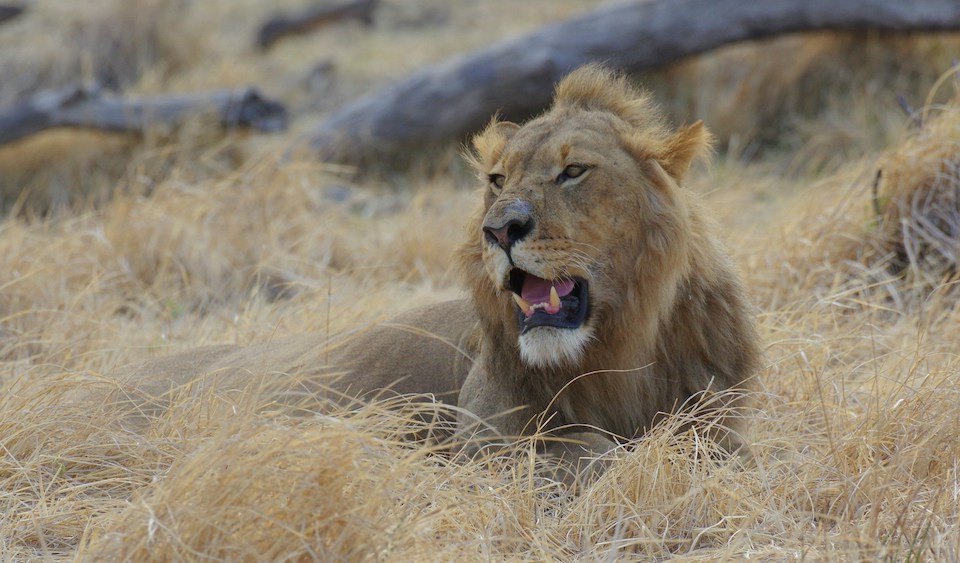
It’s crucial – evolutionarily speaking – to remember where the danger is.
Where does negativity bias come from?
Negativity bias is sneaky. It often wears the mask of practicality, realism or common sense. It shows up in advice from people who care about us:
- Well-meaning professors or teachers.
- Friends and peers trying to figure things out themselves.
- Concerned family members.
- Generic university career services with limited sector insight.
- Outdated career advice like “If you go to university and volunteer long enough, you’ll get there”.
- Our own experiences of rejection (especially if we’ve been shielded from failure before).
- News headlines, social media comparison traps, and scarcity-driven stories.
At Conservation Careers, we often hear this bias show up in questions like:
“Is it actually possible to become a conservationist?”
“Am I being unrealistic?”
“Should I look for something more achievable?”

One of the most common assumptions in the conservation sector is that you need a master’s degree to get a job. However none of the 11 key conservation roles usually require a master’s degree.
The line between reality and bias
Let’s be clear: negativity bias isn’t about denying reality. There are real challenges in conservation, including:
- Limited funding
- Insecure contracts
- Inequity and exclusion
- High competition for certain roles
- Burnout and stress
In some regions – as with current funding insecurities in the U.S. – things are especially tough. And for conservationists in less-developed regions, the barriers are even greater.
These issues matter. They shape real lives and careers and deserve to be addressed.
But negativity bias becomes dangerous when we let those challenges become the only lens through which we see the sector – and our own potential. When we assume:
- “The whole sector is like this.” (Overgeneralising)
- “It’s not realistic for me.” (Catastrophising)
- “That’s just how it is.” (Giving up agency)
- “Why bother trying.” (Abandoning possibility)
This is the trap. When we stop questioning these beliefs, we stop exploring what might be possible.

Negativity bias becomes dangerous when focussing on challenges blinds us to opportunities all around us.
How negativity bias keeps conservationists stuck
Over the years, we’ve seen how negativity bias can quietly shape the decisions of aspiring and professional conservationists alike. It leads people to:
- Not apply for jobs they’re qualified for.
- Aim too low, convinced senior roles are out of reach.
- Stay in unpaid roles, long after they’re ready for paid work.
- Chase more degrees, believing they need to ‘prove’ their worth.
- Stay stuck in misaligned jobs, fearing no one else would hire them.
- Dismiss career switches, assuming the risk is too great.
- Avoid networking, believing they have nothing valuable to offer.
- Shy away from leadership, thinking “I’m not the leadership type.”
- Feel like imposters, despite clear success and positive feedback.
Negativity bias is like wearing dark sunglasses while looking at your career – everything seems dimmer than it really is.

What colour sunglasses might you be wearing?
It’s not always the sector. It’s the story we believe about it.
Here are some familiar assumptions we hear – and examples of evidence-based counterpoints.
- The conservation job market is oversaturated. Evidence: Some entry-level roles are crowded – others are actively hiring (and struggling to fill jobs).
- You need a master’s degree. Nine of the 11 key conservation roles don’t require one – experience often counts just as much, if not more.
- Transferable skills “don’t count.” Many conservation organisations actively seek skills like communications, project management and fundraising – often from outside the sector. Hear it from CEOs on the Conservation Careers Podcast.
- Conservationists don’t earn much. Pay varies widely by role, employer type, organisation size, location and individual needs. There is no one-size fits all.

You might be surprised to learn that all 11 key conservation roles typically require relevant experience, while only some require formal education. Master’s degrees aren’t usually a requirement for entry-level roles.
How to break free from negativity bias
The good news is that negativity bias isn’t fixed. You can challenge it – and shift it – starting right now.
1. Treat assumptions as hypotheses – just like a scientist. Ask:
- Is this always true?
- What evidence do I have?
- Are there any counterexamples?
- What else might be possible?
2. Seek alternative perspectives
- Read real-world success stories – especially from conservationists who broke in without degrees, started mid-career or took unconventional paths.
- Explore the wide range of conservation roles – from policy and fundraising to education, economics and more.
3. Look for ‘hidden’ opportunities. Thousands of conservation jobs, internships and volunteer roles are never widely advertised. Many circulate through networks, referrals (or are created when the right person shows up at the right time). Learn how to land them in our Conservation Careers Academy.
4. Curate your inputs. Follow uplifting, constructive people and organisations. Fill your feed, inbox and conversations with those who focus on possibilities, not just problems.
5. Make space for reflection. Whether it’s through journaling, one-on-one coaching, or our Coaching Corner in the Conservation Careers Academy, reflection helps uncover the beliefs that may be quietly holding you back.

The belief that changes everything
The conservation world has its challenges. But it’s also filled with passionate, creative, resilient people who are building meaningful careers every day.
We owe it to ourselves – and to the planet – to meet those challenges with curiosity, courage and clear thinking.
So pause and ask yourself:
What assumptions have I been believing about a career in conservation?
And what might shift if they weren’t actually true?