The cost of caring: Understanding burnout in purpose-driven work

Written by Emily Fyfe, Conservation Careers Community Connector.
If I’m honest, things hadn’t been okay for a while. But it happened so gradually that, like the proverbial frog in boiling water, I didn’t realise how bad it had become.
From the outside, my career looked great. I’d helped our veterinary clinic grow, improved the quality of care, and even started reducing our environmental impact. But inside, I was unravelling.
Work that once felt deeply meaningful began to feel hollow. New corporate management clashed with my values. The hours were long, the pressure relentless, and I started to lose sight of who I was.
My usual empathy dulled into detachment. I became exhausted, cynical, and stuck. And then, one day, my mind, body, and heart -each pushed past their limit – collectively said: Enough.

Diagnosis: Burnout
For the year prior, I had chased strange symptoms with my doctor: chronic pain, relentless fatigue, insomnia, and brain fog so intense I worried I had early-onset Alzheimer’s. I lost interest in the things I loved. Life felt like an endless to-do list I no longer had the energy to face.
When I finally received the diagnosis of burnout, I struggled with it. Was it even real? Did it mean I just couldn’t “hack it”? I wanted a blood test or an MRI – something tangible to validate my experience.
My immediate team – people who knew me – were incredibly supportive. But upper management? It felt like they thought I was asking for an all-expenses-paid vacation. This disconnect is common, and it can add another layer of shame and self-doubt.
Burnout is still poorly understood. Many health professionals receive little to no training in how to recognise or treat it. Coming from one high-burnout field (veterinary medicine) and entering another (conservation), I now see how widespread and under-recognised it is, especially in purpose-driven professions.
This isn’t a reason to turn away from meaningful work. But it is a reason to be informed.
So here’s what I wish I’d known – before I burned out.
Burnout in conservation: 3 things to know
1. Burnout is real
Although burnout has been studied for over 50 years, it was only officially recognised by the World Health Organization in 2019 as an occupational phenomenon resulting from chronic, unmanaged workplace stress.
Burnout has three core features:
- Exhaustion (physical and emotional).
- Depersonalisation (feeling detached or cynical about your work).
- Reduced personal accomplishment (real or perceived).
While it’s often associated with work, burnout can also arise from prolonged stress in other areas – like caregiving (including for the planet), parenting or activism – and is often rooted in multiple, overlapping pressures.
Burnout isn’t just about working long hours or juggling too many tasks, although these are a big part of it. It’s often caused by a lack of control over your work, insufficient support or resources and misalignment with your core values.
Over time, chronic nervous system dysregulation resulting from unprocessed stress causes hormone and neuroendocrine disruptions that affect many, if not all, parts of your body. Insomnia, poor gut function, chronic pain and even autoimmune disease have all been described as the result of burnout.
Burnout can affect anyone, but it’s especially common among young professionals, women and neurodivergent individuals.
It is real, and it is not a personal failure. It’s a physiological and emotional response to prolonged, unprocessed stress – and it requires recognition, support and recovery.
You’re not alone. And you deserve care.
2. Conservationists (and other purpose-driven workers) are at higher risk
When I joined a recovery program for burnout, I felt embarrassed. I assumed it would be full of people who had “failed”. Instead, I found a room full of doctors, educators, aid workers… and conservationists. These weren’t people who lacked strength. They were leaders in their fields who had poured so much into their work that they’d lost themselves in the process.
The problem wasn’t weakness. It was overextension.
Conservation professionals, ecologists and those working in environmental sectors experience burnout at higher rates than the general population. Many of us are driven by passion and urgency, working toward outcomes that matter deeply, while navigating chronic shortfalls in funding, staffing and resources. The gap between what’s needed and what’s possible can take a toll.
Due to the vocational nature of the work, many conservation roles blur the line between personal and professional life, where “doing it for the cause” can lead to unpaid or underpaid work. Irregular hours, remote locations, and long stretches away from loved ones can also increase the risk of burnout. For many, this work is both profoundly meaningful and profoundly draining.
On top of that, conservationists often carry a deep emotional connection to their work. When ecosystems collapse or species are lost, it doesn’t just feel like bad news – it feels like personal loss. And when the political and social systems we are working in limit what we can do, a sense of helplessness can build over time.
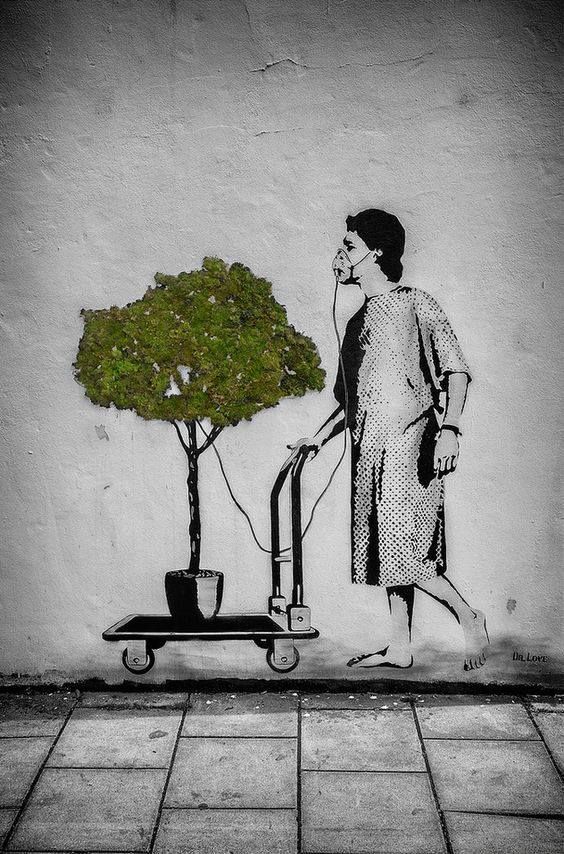
Street Art by Dr. Love photographed by Daz Smith.
These realities don’t mean you shouldn’t pursue a career in conservation – but they do highlight the need for mental health support, healthy boundaries and systems that take care of the people doing this vital work.
Burnout shouldn’t be the price of purpose.
3. Recovery is possible – but it takes time, awareness and care
The first thing to know is that recovery is slow. When I was first placed in a burnout recovery program, I figured I’d spend a month getting better and then go back to business as usual.
Wrong.
Burnout recovery takes time. Some studies suggest it can take anywhere from 12 to 24 months, especially in more severe cases, and that’s only if you stop doing the thing that caused the burnout in the first place.
The good news? The earlier you catch burnout, the easier it is to recover. Learning to spot the signs in yourself – and actually respond to them – can make a big difference. Recovery tends to be much shorter and less intense when burnout is recognised and addressed early.
Secondly, recovery isn’t about doing more – it’s about doing less. No amount of yoga, green juice or meditation will help if you’re still pushing through, numbing out or ignoring the stress signals your body is sending.
Burnout is a call to change – not just your job, but your relationship with yourself. True recovery means learning to listen more and push less. It means letting go of the belief that your worth is tied to your ability to be helpful, productive or in control.
Here are a few research-backed (and personally tested) strategies for recovery from burnout:
Time and rest: This is where it begins. Sleep, gentle exercise (careful your body is tired), play and creative outlets can all help restore balance. This first period can be intense! All the unprocessed emotions you have repressed may come bubbling back to the surface. Give yourself the time, space and grace to feel this. This may not be the time to start a new project or make a major life decision.
Self-Compassion and community: Self-compassion is essential in burnout, where feelings of shame and failure are common. It allows us to reframe the narrative from I’m struggling because I’m weak to I’m struggling because I’m human, and because I’ve been under too much pressure for too long.
Try treating yourself with the same kindness you’d offer a friend or child going through a hard time. Like a supportive coach, self-compassion doesn’t diminish motivation – it actually boosts resilience and encourages growth far more effectively than self-criticism.
And don’t underestimate the power of community. Sharing your struggles – and being seen in them – can be deeply healing. I could see others begin to heal long before I believed it was possible for me, and that gave me the strength to keep going.
Stress reduction: You can’t always stop the stressor (quitting your job may not be an option right now) – but you can reduce burnout by completing the stress cycle. Stress has a physiological beginning, middle and end, and it’s when your body gets stuck in the middle – locked in a state of chronic activation – that burnout takes hold.
Even if the stressor is removed – say, you finally quit that job – the stress doesn’t just vanish. Anyone else ever get sick right after final exams or the moment vacation starts? The stressor is over, but the stress response is still active in your body, waiting to be completed. It’s not just about removing the trigger – it’s about helping your body release what it’s been holding onto.
Things like mindfulness, movement, breathwork, crying, laughing, creativity and connection help complete the stress cycle. These aren’t luxuries. They’re necessary to bring you back into balance.
Professional help: You don’t have to figure this out alone. Therapies like Cognitive Behavioural Therapy and Acceptance and Commitment Therapy can help reframe burnout-inducing patterns like perfectionism, rigid thought patterns, catastrophic thinking, people-pleasing and impostor syndrome.
And thanks to telehealth, support is often accessible even for those working in remote conservation roles.
Realigning with your values: Burnout can stem from a disconnect between your core values and your work. Self-reflection, journaling, therapy and coaching can all help you reconnect with what truly matters to you.
Interestingly, while conservationists are at higher risk, research also shows that having a strong sense of purpose and doing work that aligns with personal values is a strong protective factor against burnout – when supported with healthy boundaries, adequate rest and meaningful support.
Final thoughts: You’re not alone
If you’re reading this and recognising the signs, know this: You are not weak. You are not broken. You’re not the only one who’s ever cared too much for your own good.
Burnout isn’t the end of your story.
With the right support, it can be the beginning of a more grounded, fulfilling one.
Additional resources
Books:
- Burnout: The Secret to Unlocking the Stress Cycle by Emily and Amelia Nagoski
- Mindful Self-Compassion for Burnout by Kristin Neff and Christopher Germer
Podcasts:
- Conservation Careers: Burnout in conservation
- Brené Brown’s Unlocking Us: Interview with Emily and Amelia Nagoski on burnout and stress cycles
- 10% Happier Podcast: The Science Of Burnout — And How To Recharge From Stress
Articles:
- Improving mental health and wellbeing when working with biodiversity loss, climate change and other stressors
- Conservation Careers Blog: Taking care of your mental health as a conservationist with Brittany Sawrey-Coulson
- A roadmap to wellness: A simple tool to spot burnout early (Available within the Conservation Careers Academy).
Looking to connect, find support and carve out your path in conservation? Explore the Conservation Careers Academy and join the Conservation Careers community.
Author Profile | Emily Fyfe
 Since completing her veterinary degree from the University of California Davis in 2013, Emily has spent the last 10 years dedicated to the health and welfare of domestic animals and wildlife. Fueled by her passion for nature, she is transitioning into a career in wildlife conservation to help protect biodiversity and life on this planet. As part of this career journey, she has recently begun an MSc. in Conservation Medicine through the University of Edinburgh, has joined the UNEP Great Ape Survival Partnership as an intern, and is working on a study with the Office de Biodiversité Francais to investigate the emergence of distemper in wildlife in France. Emily is particularly interested in a One Health approach to conservation, conservation medicine and community-based conservation work.