Hopeful scepticism: How to keep going when optimism feels out of reach

What do you do when optimism feels impossible, but giving up feels just as wrong?
In the face of the urgent and ongoing degradation of our planet, many of us working in conservation find ourselves caught between two extremes: the hollow comfort of wishful thinking and the heavy weight of despair.
Optimism without action can lead to denial. Pessimism without perspective can lead to paralysis. Both assume we can predict the future. And both disconnect us from what matters most: our ability to act.
But there is another way: hopeful scepticism: a mindset that acknowledges uncertainty but remains committed to action. It’s about staying open to possibility while being grounded in reality.
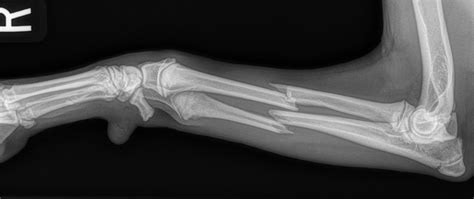
As a veterinarian, I know that if a dog comes in with a broken leg and I throw up my hands and say, “Well, that’s it, nothing I can do here,” the leg is unlikely to mend. But if I sit back and hope it gets better without taking any action, that doesn’t help either.
Instead, I take an X-ray, reset the bone, manage the pain, and monitor the healing process. I am not certain that it will work. But I act anyway. Because informed, compassionate action in the face of uncertainty is what the job demands.
When I look at the overlapping crises of climate change, biodiversity loss, and pollution, I believe the same principle applies.
Why gloom isn’t wisdom, and cheer isn’t courage
Pessimism, assuming the worst and using that as a reason to disengage, is on the rise. In the United States, trust in others and institutions has dropped from about 50% in the 1970s to around 30% today.
Often, it is unconsciously used as a form of self-protection. If we expect disappointment, we feel less vulnerable. It is also commonly mistaken for intelligence. Many people believe pessimists are more realistic or smarter, but research does not support this. Pessimists do not perform better on problem-solving or social judgement tasks.
Cynicism is a set of assumptions that we wear like armour, but that can end up closing us off from possibility, connection, and trust. And because many people view pessimism as wise, we put cynical people in positions of power. We place our faith in those who do not have faith in others.
On the other hand, blind optimism can disconnect us from reality. While optimists tend to be healthier, happier, and live longer, if we believe the future will be fine no matter what, we have little reason to stay engaged. And with worsening environmental data and continued systemic inaction, optimism feels more and more out of reach.
We are living in a challenging moment. If we do not believe our efforts are vital, that we have agency, we are unlikely to put ourselves in the line of fire and take action for a better future. But the truth is, we do not know how things will unfold.
That uncertainty is deeply uncomfortable. So uncomfortable that we might cling to false convictions – either the comforting belief that everything will be fine, or the protective belief that nothing can be done – just to avoid the unknown.
A case for hopeful scepticism
This is where psychologist Jamil Zaki’s concept of hopeful scepticism offers a path forward. It is not naïve. It does not deny the facts. But it also does not give in to fatalism. Hopeful scepticism makes space for uncertainty and invites us to keep showing up anyway.
Accepting what is, while remaining open to what could be, helps us stay engaged even when the path ahead is uncertain. It is grounded in science, guided by values and sustained by a willingness to learn.
This mindset allows us to gather data, acknowledge mistakes, and remain receptive to complexity and evolving knowledge instead of shutting down. It takes courage and humility to think like a scientist, leave space for what we do not yet know and be willing to adjust our beliefs as we learn more.
It is also deeply human. It says: we do not know what is possible, but we are willing to find out.
To practise hopeful scepticism, hold values tightly and beliefs loosely
Beliefs are ideas we hold about how the world works, why people act the way they do, and what solutions are most effective. Values are the principles that guide who we are – like compassion, justice and caring for the collective good.
When we confuse beliefs with values, we cling to outdated ideas because we think they define us. If we see our beliefs as who we are, then changing our minds becomes an existential threat.
But when we stay grounded in our values, we can remain curious. We can adapt. We can shift how we act. And we can connect with people whose beliefs are different from ours, because we recognise the values we share underneath.
In conservation, we need people who are willing to evolve as they learn and who can build bridges across increasingly polarised perspectives.
Action builds hope
Hope can mean many different things to people. For the sake of this article, I’m using a definition rooted in cognitive behavioural theory: hope not just as a feeling or wish, but as a cognitive-motivational construct made up of agency (the belief that you can make a difference) and pathways (a way to move forward).
Many people use the unlikelihood of success as a reason to do nothing. But action, even small action, builds hope.
When we set goals, take steps toward them, and connect with others who are working for change, we create momentum. Seeing ourselves and others take action opens the door to possibility. Action creates agency. And agency builds hope.
We see this in community-led conservation efforts all over the world, from Indigenous land stewardship to local wildlife corridors, where people with limited resources are restoring balance and biodiversity, one step at a time.
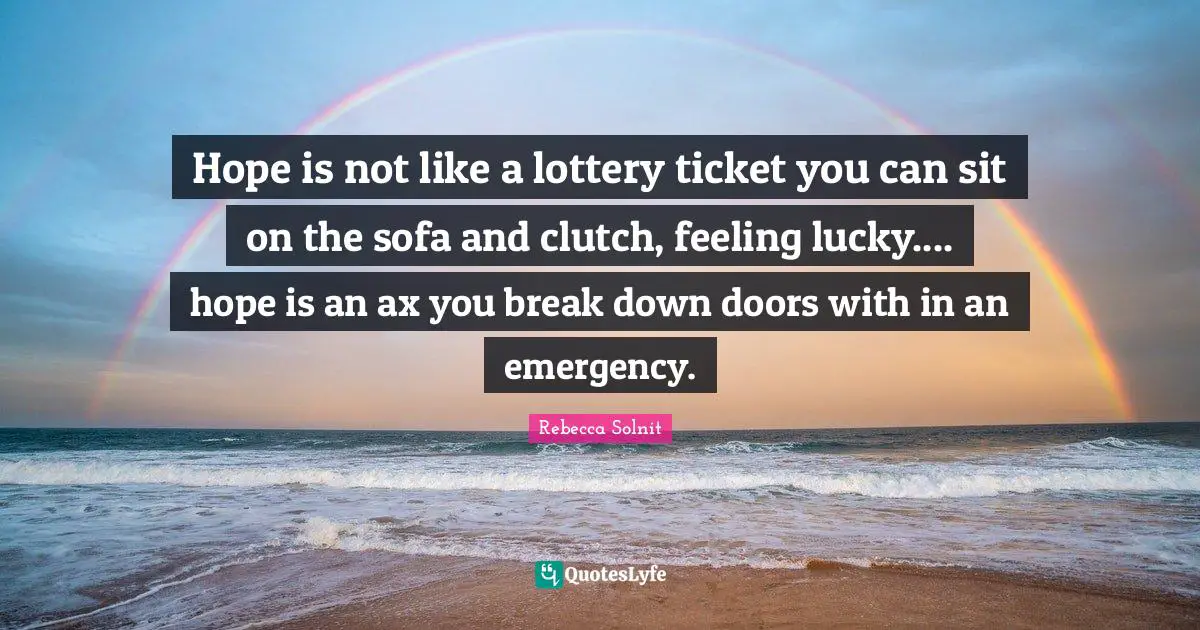
Hope is gritty positivity. It is getting in there and doing the work. It is putting your whole heart on the line. It is taking the risk of being disappointed, so that you might help make something better.
When hope wavers, walk with faith
Hope keeps us moving forward. It helps us keep going through difficulty, even when the outcome is uncertain. But even hope depends on believing that something good might be possible. And on my darkest days, even that can feel out of reach.
That is when I lean on something deeper: faith.
For me, faith is not religious. It is a steady belief in the work itself. It is the trust that the arc of history bends, however slowly, toward balance, justice and life. I walk with faith that my actions still matter, even if I do not live to see the world I am working to create. Because in my bones, I know it is the right thing to do.
In conservation, as in life, we do not need to be relentlessly cheerful or perfectly confident. What we need is the courage to face uncertainty, and the resolve to act anyway.
Most people, more than we often think, care – about nature, about each other, and about the future. And there are solutions and possibilities we have not even imagined yet.
So, keep your hope alive and continue to be brave in the face of uncertainty. Together, we are building something worth believing in.
Interested in learning more about hopeful scepticism? Check out Hope for Cynics: The Surprising Science of Human Goodness by Jamil Zaki.
And don’t miss this Conservation Careers article by Nick Askew based on his interview with Tony Juniper Optimism is exhausting… Do THIS instead
Author Profile | Emily Fyfe
 Since completing her veterinary degree from the University of California Davis in 2013, Emily has spent the last 10 years dedicated to the health and welfare of domestic animals and wildlife. Fueled by her passion for nature, she is transitioning into a career in wildlife conservation to help protect biodiversity and life on this planet. As part of this career journey, she has recently begun an MSc. in Conservation Medicine through the University of Edinburgh, has joined the UNEP Great Ape Survival Partnership as an intern, and is working on a study with the Office de Biodiversité Francais to investigate the emergence of distemper in wildlife in France. Emily is particularly interested in a One Health approach to conservation, conservation medicine and community-based conservation work.