Becoming an impactful researcher: Making a difference across science and policy

What does it take to bridge the worlds of science, policy and industry to tackle one of the planet’s most urgent environmental threats?
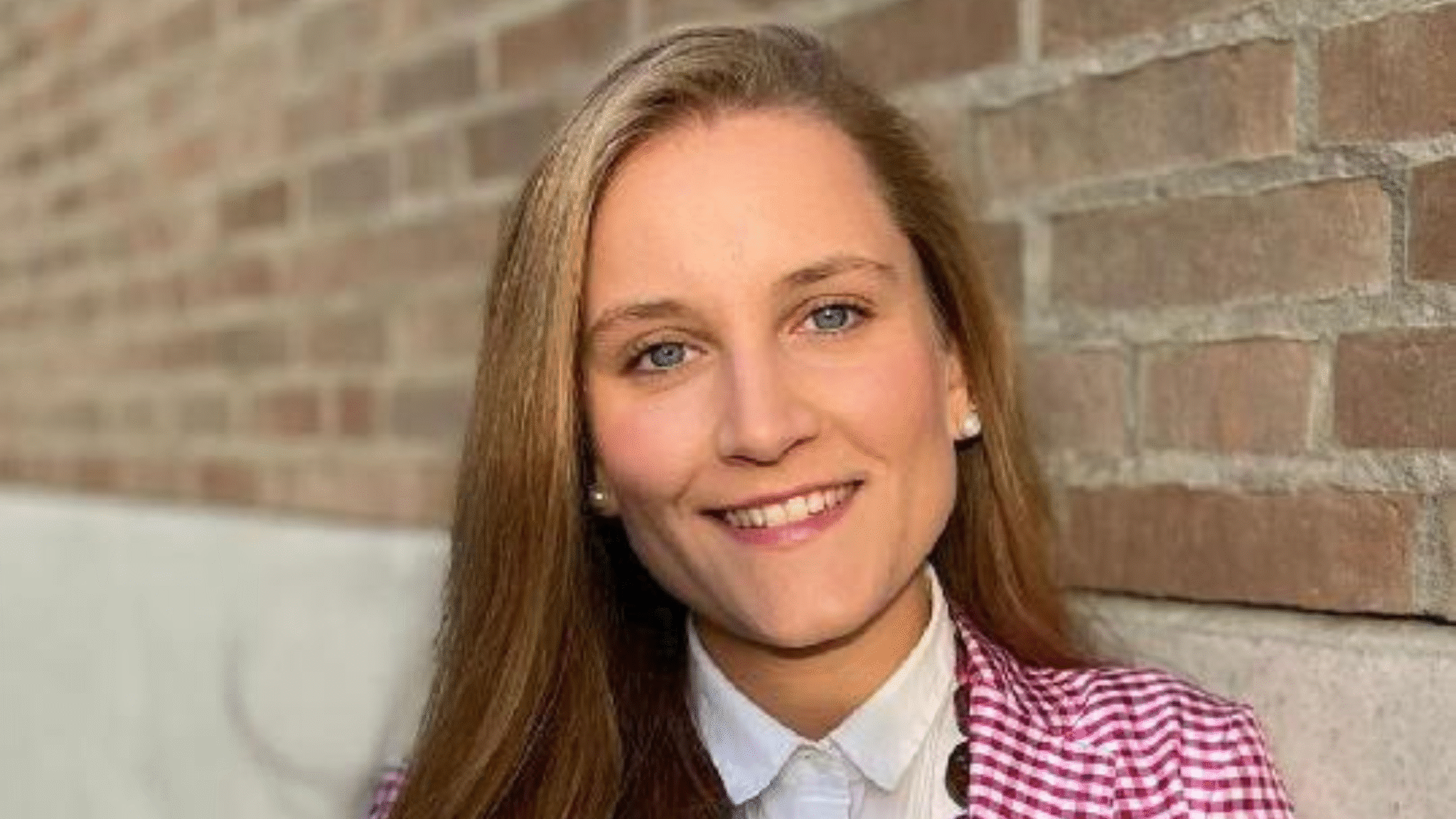
Meet Ginevra Oertel, a PhD candidate at the Norwegian University of Science and Technology, whose research focuses on developing microplastic pollution prevention strategies in the maritime sector.
Ginerva’s academic background spans an impressive network of institutions, including Maastricht University (Netherlands), Lund University (Sweden), Central European University (Hungary) and the University of the Aegean (Greece), through the renowned Erasmus Mundus MESPOM Master’s programme in Environmental Sciences, Policy and Management.
With a solid foundation in European Studies and environmental policy, Ginevra’s work bridges science, governance, and industry. Her journey into conservation science is driven by a powerful question: How can we create real-world change by making policy smarter, industry more responsible, and science more accessible?
Through her work, Ginevra is finding the answers, researching hidden sources of pollution, influencing policy and partnering with industry leaders to build sustainable, circular solutions.
In this interview, Ginevra reflects on the turning points in her career, the lessons she’s learned working across borders, and her advice for the next generation of changemakers.
Whether you’re an aspiring environmental researcher, policy advisor, or systems thinker, her story will leave you inspired to think bigger, act boldly and collaborate across disciplines to protect the planet.
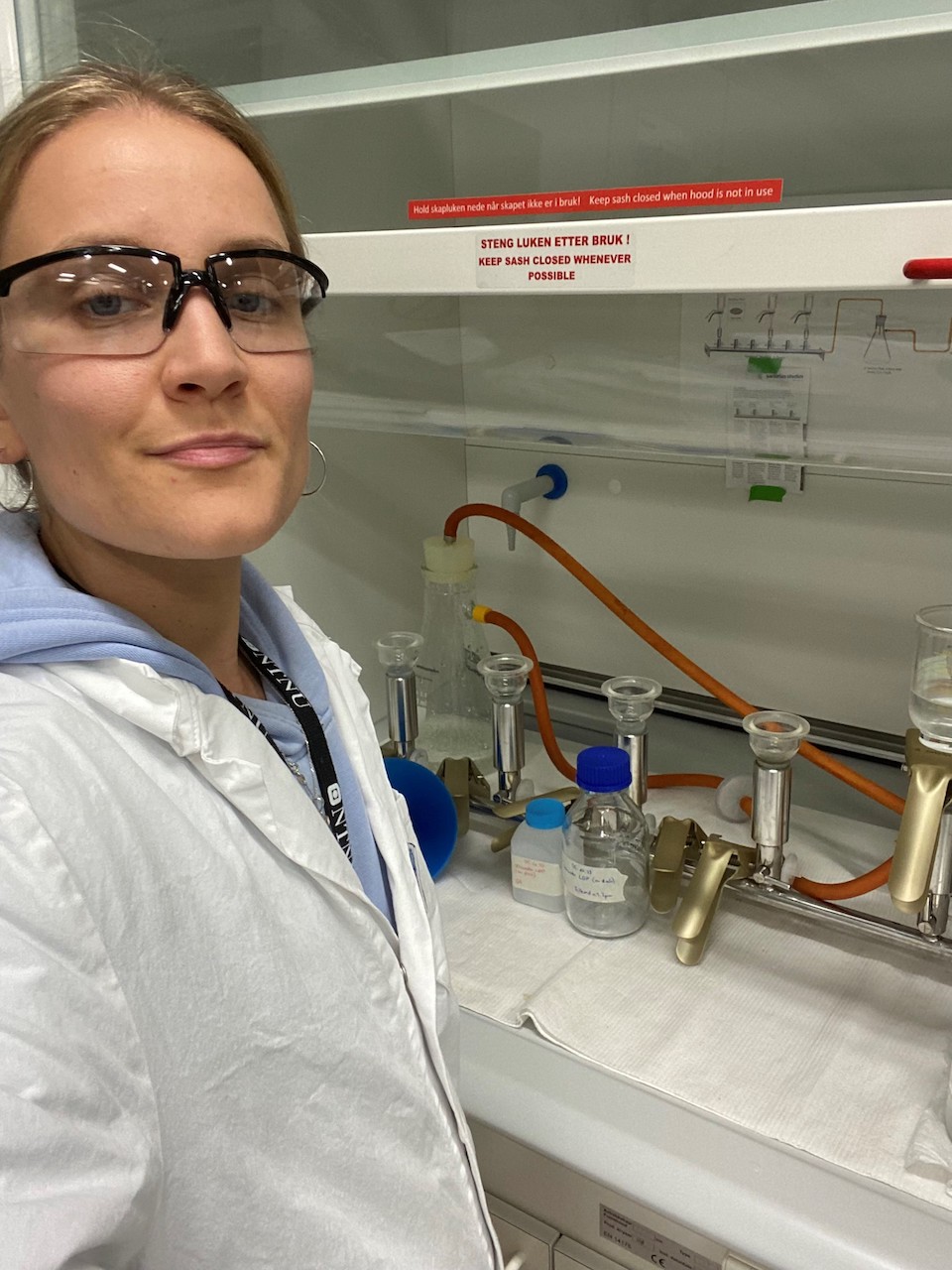
Ginevra conducting microplastic sample analysis, part of her doctoral research into pollution prevention strategies for the maritime industry.
From policy to science: Finding her calling
Ginevra’s passion for environmental science didn’t come from a direct love for nature alone, but from a desire to understand and influence the policies that affect it.
Her undergraduate degree in European Studies sparked her interest in environmental politics, but it wasn’t long before she realised that policymakers often lacked a scientific understanding of the issues they were regulating. She wanted to bridge this gap.
“In environmental politics, I noticed that policies often tackled symptoms rather than root causes,” she explains. “I wanted to understand the science behind the policies to make decisions based on long-term prevention rather than short-term fixes.”
This realisation led her to pursue postgraduate studies that bridged science and policy. Her current research zeroes in on one of today’s most pressing issues: microplastic pollution.
Gaining global perspective: The value of international experience
Studying at multiple institutions across Europe, Ginevra emphasises the importance of a global perspective in addressing environmental challenges. Environmental issues, she points out, are not confined to one region. Whether it’s microplastic pollution, biodiversity loss, or climate change, these challenges have far-reaching impacts.
“My international experiences helped me see environmental problems from multiple cultural and scientific viewpoints,” she shares. “What works in one country or culture may not work in another, and that’s key to creating adaptable, globally relevant solutions.”
Ginevra’s experiences studying in different countries provided the context she needed to understand the interconnectedness of ecosystems and the need for collaborative global efforts. Her academic journey highlighted the importance of cross-border collaboration and cultural understanding in creating globally relevant environmental solutions.
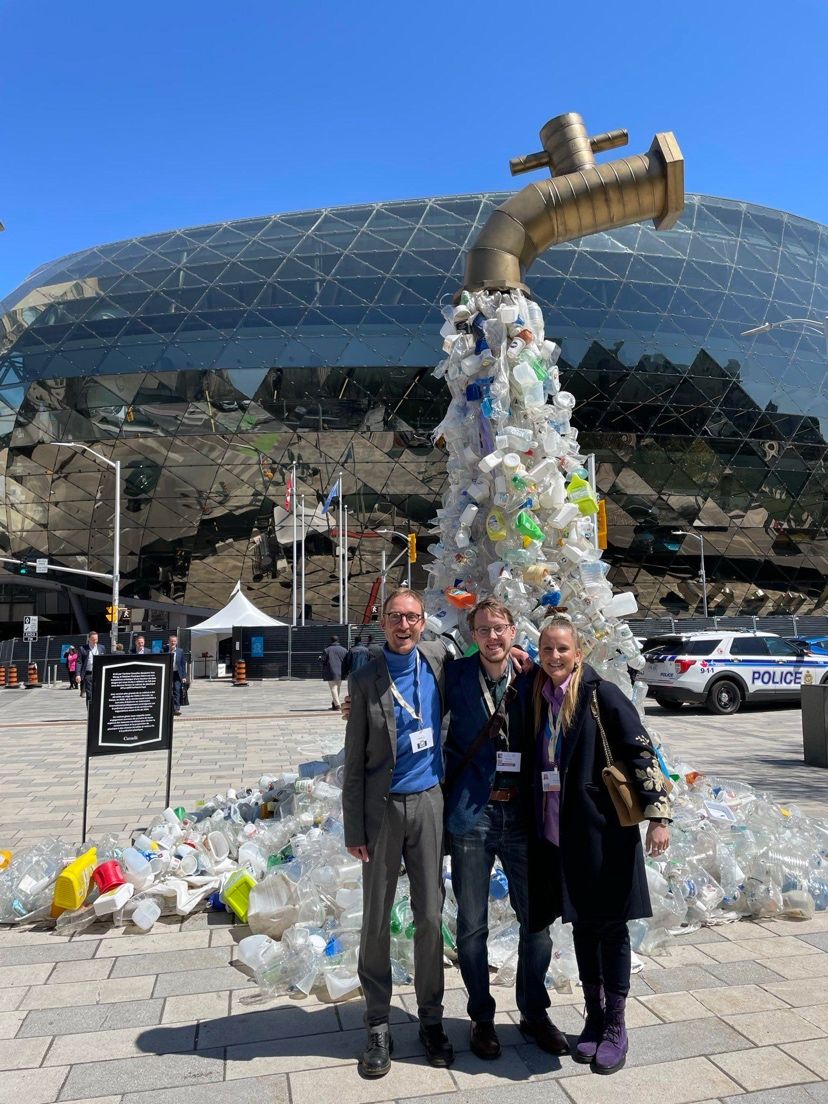
Ginevra Oertel with fellow delegates in front of a powerful art installation representing the plastic pollution crisis, displayed during the Fourth Session of the Intergovernmental Negotiating Committee (INC-4) on Plastic Pollution.
The power of collaboration: Driving interdisciplinary research
As a PhD candidate, Ginevra studies microplastic pollution from ship paint, a relatively underexplored but significant source of marine microplastics. Her research blends environmental science with operations and policy management.
“My research is not just about identifying problems; it’s about solving them by collaborating with industries, policymakers, and researchers,” she explains. “We need to work together to implement solutions that are scientifically sound and practical in real-world settings.”
Through her interdisciplinary approach, Ginevra aims to provide regulatory frameworks and management strategies for the shipbuilding industry to prevent microplastic pollution at its source. She believes this approach, focused on upstream prevention, is key to tackling the pollution crisis.
“Don’t work in silos. Collaborate with professionals across different sectors, science, business, and policy. That’s where true impact happens.”
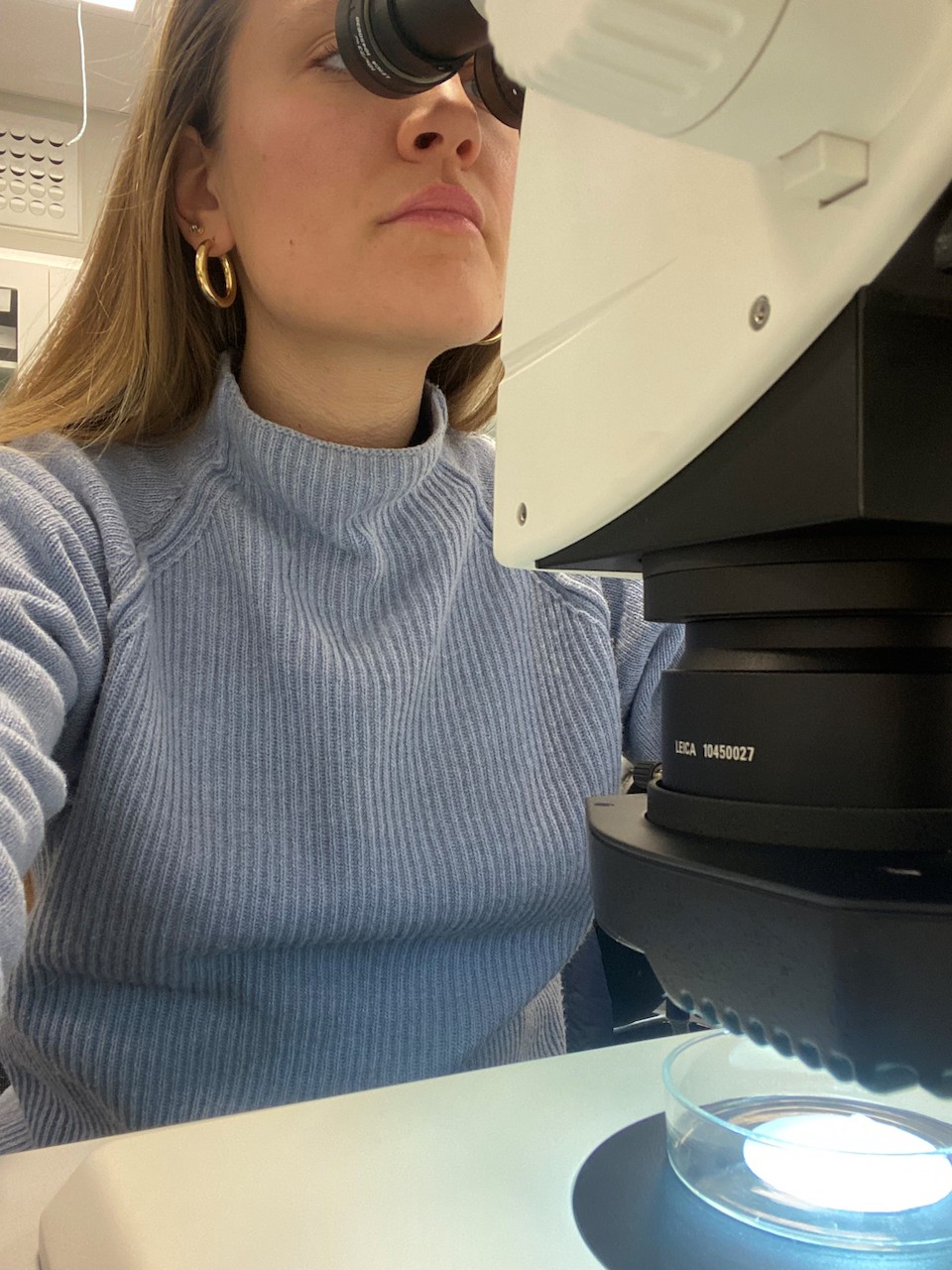
Ginevra examining environmental samples under a microscope to identify ship paint microplastics
Circular economy: rethinking waste
Ginevra champions the circular economy as a solution to linear, wasteful systems. Her interests include waste-to-resource concepts and green chemistry. One of the key challenges she sees is the mismatch between regulations and the goals of a circular economy.
“One of the biggest barriers to implementing circular economy principles is outdated regulations,” she notes. “Certain laws make it difficult to reuse materials, and these need to be updated to reflect the changes we need to make.”
She also points out the lack of infrastructure for turning waste into secondary raw materials, something she believes is crucial to advancing the circular economy. Through her research, Ginevra advocates for smarter regulations and better infrastructure investments to drive sustainability across industries.
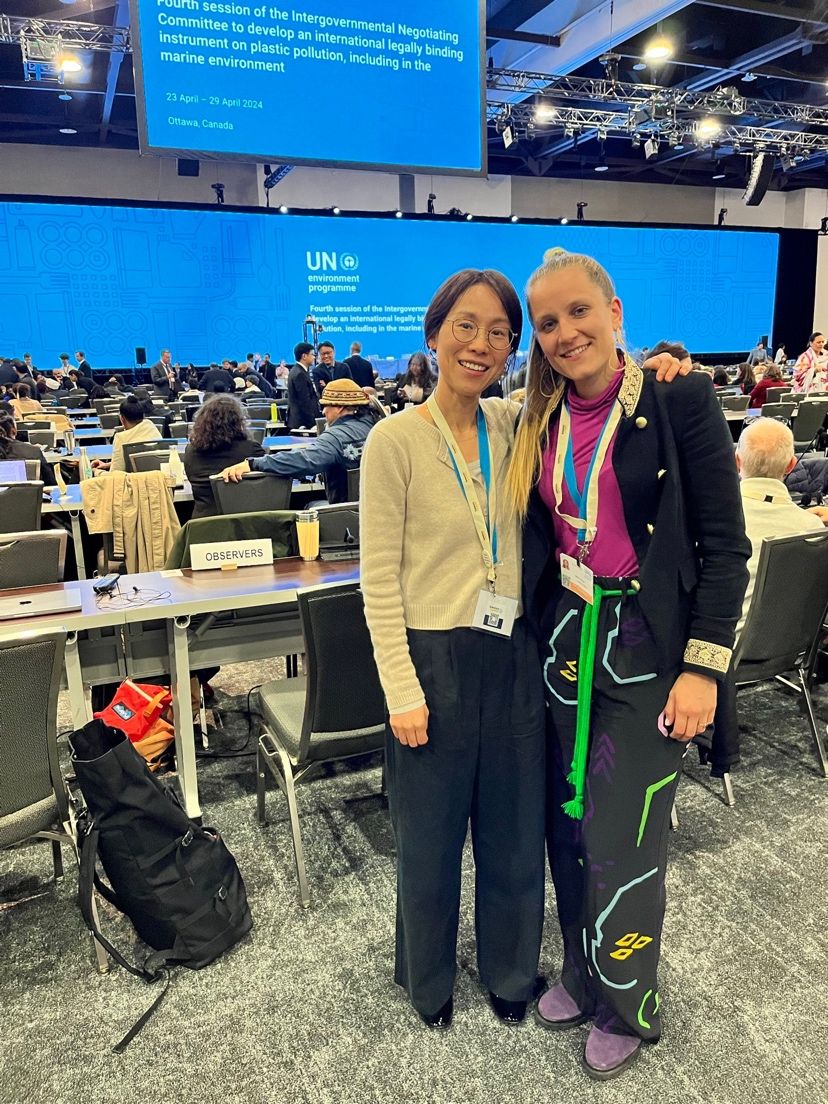
Ginevra at the Fourth Session of the Intergovernmental Negotiating Committee (INC-4), working alongside international delegates to help shape a legally binding agreement on plastic pollution under the UN Environment Programme.
The role of industry: Collaborating for cleaner oceans
As an advocate for industries’ role in reducing pollution, Ginevra sees the maritime and fishing industries as pivotal players in combating marine plastic pollution. Her involvement in the Blue Circular Nets project, which focuses on preventing pollution from abandoned fishing gear, has given her insight into the practical challenges industries face.
“Industry has a crucial role to play in addressing plastic pollution,” Ginevra explains. “While there are certainly cases of negligence, many companies do want to change, but they need support, clear frameworks, and the right incentives.”
Rather than placing blame, she advocates for a collaborative approach that encourages industries to take responsibility, while also pushing for stronger policy alignment.
“The fishing industry, for example, depends on a healthy ocean. It’s in their best interest to reduce pollution. I believe a new generation of managers and executives needs to be equipped to embed sustainability into their business models and cultivate responsible cultures within companies.”
Her work advocates for greater collaboration between industries and research institutions to implement sustainable practices, and she stresses that industries must innovate to address pollution at the source.
“If you want to make a real difference, engage with industries and help them implement sustainable practices. Bridging the gap between research and industry is essential for creating lasting change.”
Building diverse experience: Ginevra’s career advice
Ginevra’s diverse career, spanning research, consulting, and sustainability startups, has shaped her approach to solving environmental problems. She believes that versatility is key for anyone entering the conservation field.
“Try different roles, even in sectors that may not be labelled as ‘sustainability-focused,'” she advises. “Exposing yourself to different perspectives and stakeholders is invaluable for understanding the complexity of environmental issues.”
She also encourages young professionals to engage with policymakers and industries early in their careers. “Research becomes more powerful when it informs policy and drives real-world change,” she says.
“Be versatile in your experiences. Work in different sectors, engage with stakeholders, and always connect your research to practical applications.”
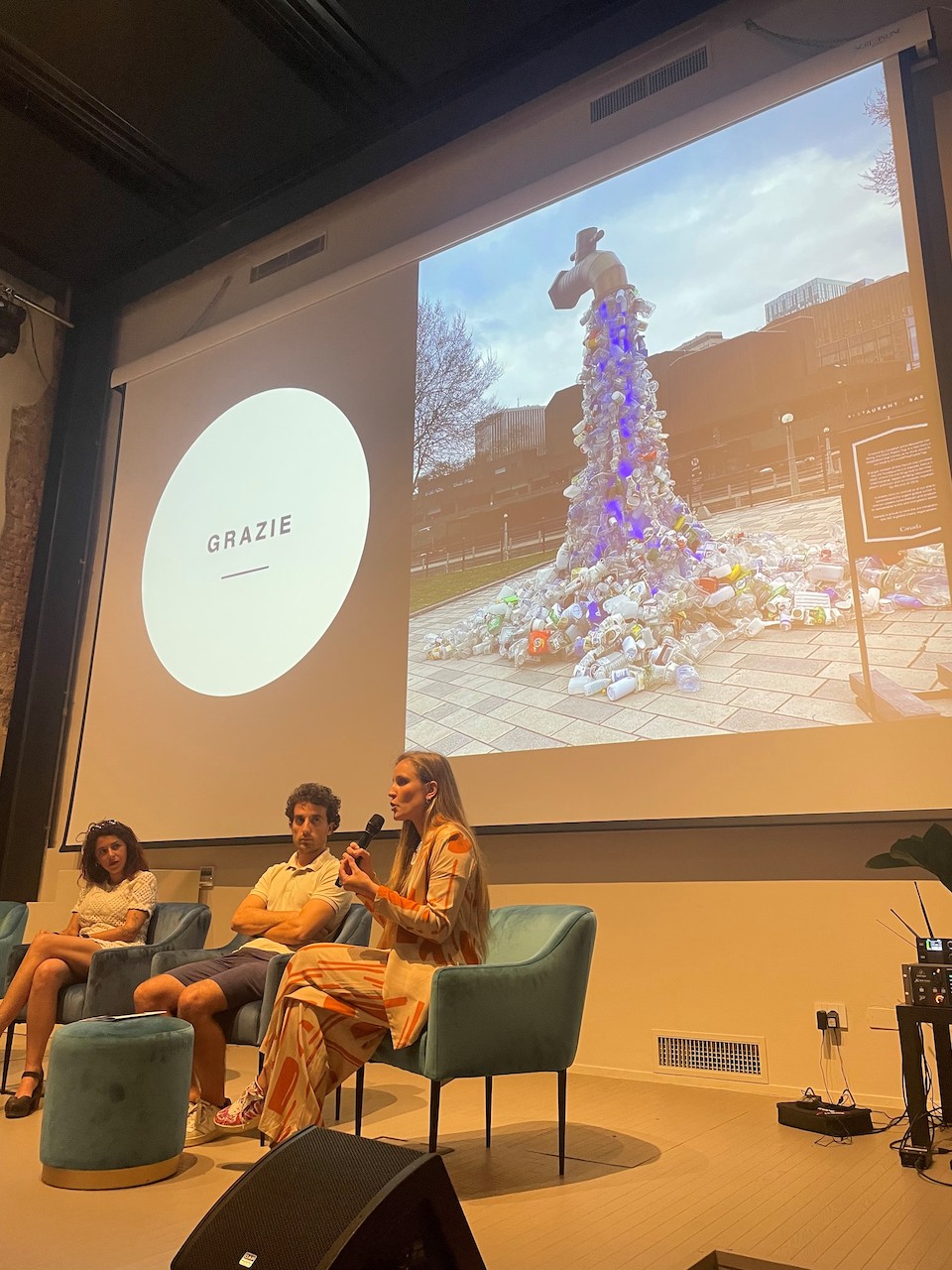
Advocacy in Action: Ginevra speaking at a sustainability conference in Italy, highlighting innovative policy and industry collaborations to address marine plastic waste.
What’s Next?
Looking ahead, Ginevra is committed to bridging the gap between science, industry and government to address plastic pollution globally. She envisions a future where industries collaborate to find sector-specific solutions to pollution, and where policymakers adopt stronger regulations to support these efforts.
“My research will contribute to identifying microplastic sources and developing prevention strategies,” she concludes. “But we need to think beyond one industry; plastic pollution is a global issue that requires a global solution.”
“Always think big. Environmental problems don’t have borders, and your solutions shouldn’t either.”
Ginevra’s core message for aspiring researchers
Ginevra’s advice is clear: “Think outside the box, be creative and always keep the bigger picture in mind.”
Whether it’s through her work on microplastic pollution, the circular economy, or industry collaboration, Ginevra demonstrates that solving global environmental challenges requires innovative thinking, cross-disciplinary collaboration, and a passion for long-term, systemic change.
For aspiring conservationists, Ginevra’s message is an inspiring call to action: “Take bold steps, engage with the world around you and always strive for practical solutions that will make a real impact.”
Further reading & resources
Interested in diving deeper into the issues Ginevra explores? Here are some helpful resources, articles, and platforms to expand your understanding and get involved:
Microplastic pollution & marine research
Oertel, G. et al. (2024). “Identifying and managing ship paint microplastic pollution along the supply chain: a shipbuilding case study.” Ginevra’s first peer-reviewed publication exploring how microplastics are released from ship paint and how this source can be mitigated.
Explore careers in conservation science & policy
Explore a wide range of conservation roles, including Scientist and Policy Advocate, and how to break into the field.
Browse 1000s of conservation training opportunities globally, including free courses and certification options, curated by Conservation Careers. Explore training opportunities.
Author Profile | Stephanie Nicolaides
 Stephanie Nicolaides is a dedicated PhD candidate in Environmental Management at the University of the Western Cape. Her research delves into the impact of plastic pollution on the Mossel Bay coastline (South Africa), with a particular focus on the effects on marine biodiversity. Her work focuses on assessing plastic presence, local knowledge, and developing sustainable solutions. Stephanie holds an MSc in Life Sciences from the University of South Africa, where her dissertation examined the behavioural ecology of African clawless otters. She also earned her BSc Hons in Life Sciences, graduating cum laude, with an honours project on personality in Leopard Tortoises. Passionate about environmental sustainability, Stephanie is committed to advancing knowledge in marine biology and contributing to efforts to protect and preserve coastal ecosystems. Connect with Stephanie on LinkedIn.