From gears to greenery: Dr Gopalakrishna’s path from mechanics to conservation science

In a world grappling with environmental crises, the need for passionate and skilled conservation advocates has never been more crucial.
Dr Trisha Gopalakrishna exemplifies this shift, moving from a background in mechanical engineering to becoming an impactful conservationist and researcher. Trisha works with leading organisations like The Nature Conservancy (TNC), focusing on vital environmental issues.
Her unique career journey is particularly inspiring for those considering a career switch, as it highlights how transferable skills and a deep-rooted passion for the planet can lead to meaningful impact. Trisha’s story serves as a powerful reminder that it’s never too late to pursue a different path – whether for aspiring conservationists looking to make a change, or those who seek to bring their expertise into a more sustainable future.
Her experiences offer valuable lessons on the importance of adaptability, perseverance and following one’s heart in the pursuit of environmental solutions
A foundation in curiosity
Growing up in Bengaluru, one of India’s major metropolises, she was acutely aware of pollution and waste management issues. There was not one singular moment that sparked her journey into the conservation. Trisha’s journey was sourced from a deep-seated desire to contribute in finding solutions to environmental challenges.
“I was always inclined toward science, especially physics and mathematics,” she explains, which led her to pursue mechanical engineering – a decision influenced by her strong academic background and societal expectations in India.
She soon realised the disconnect between her studies and her passion. “Though I was good at the subjects I was studying, it did not mean I was interested in them,” she admits.
With this growing sense of dissatisfaction, Trisha took an unconventional leap, to take a year off and explore other opportunities. A rare thing to do in India. A conversation with a partner about their experiences in tiger conservation ignited an interest in wildlife and environmental work.
This ignition drove her to reach out to conservationists and non-profits. Through perseverance she eventually landed a three-month internship in the Western Ghats, where she would begin her career in biodiversity and conservation.
Experiences that shaped a conservation ethos
Trisha’s first real taste of conservation came through a paid three-month internship in the Western Ghats, one of India’s most biodiverse regions.
The Western Ghats, a UNESCO World Heritage site, is a mountain range that runs parallel to the western coast of India, stretching across the states of Gujarat, Maharashtra, Goa, Karnataka, Kerala, and Tamil Nadu. Known for its rich biodiversity and varying climatic conditions – from tropical rainforests to temperate forests – the region is a hotspot for conservation efforts.
Trisha’s work, which is centred around environmental conservation and sustainable development, is deeply influenced by the issues facing this ecologically significant area. For more information on the region and its biodiversity, you can explore The Wildlife Conservation Society – India.
This fieldwork opportunity marked a significant turning point in her career. “It was challenging, frustrating, and rewarding – often all at once.” Here, alongside wildlife biologists, she worked on socioeconomic surveys in the region’s plantations and identified frog species.
“I genuinely thought I was doing nothing right,” she admits, recalling the early days. “I couldn’t identify a single tree or frog, and I struggled to have meaningful conversations with many people I encountered.”
Yet, amidst these challenges, she was developing a profound understanding of the interconnectedness between people and the environment. Later she participated in other internships, which focused on assessing the needs of women’s cooperatives and exploring indigenous knowledge on plant species’ phenology.
Her work, allowed her to see firsthand how communities, especially those dependent on agriculture, were intricately linked to nature. Trisha’s technical engineering background provided her with the analytical skills needed to collect and process data.
However, it was her newfound curiosity for ecological dynamics that ultimately motivated her to pursue formal education in the ecological sciences. This led her to Duke University’s prestigious environmental management program.
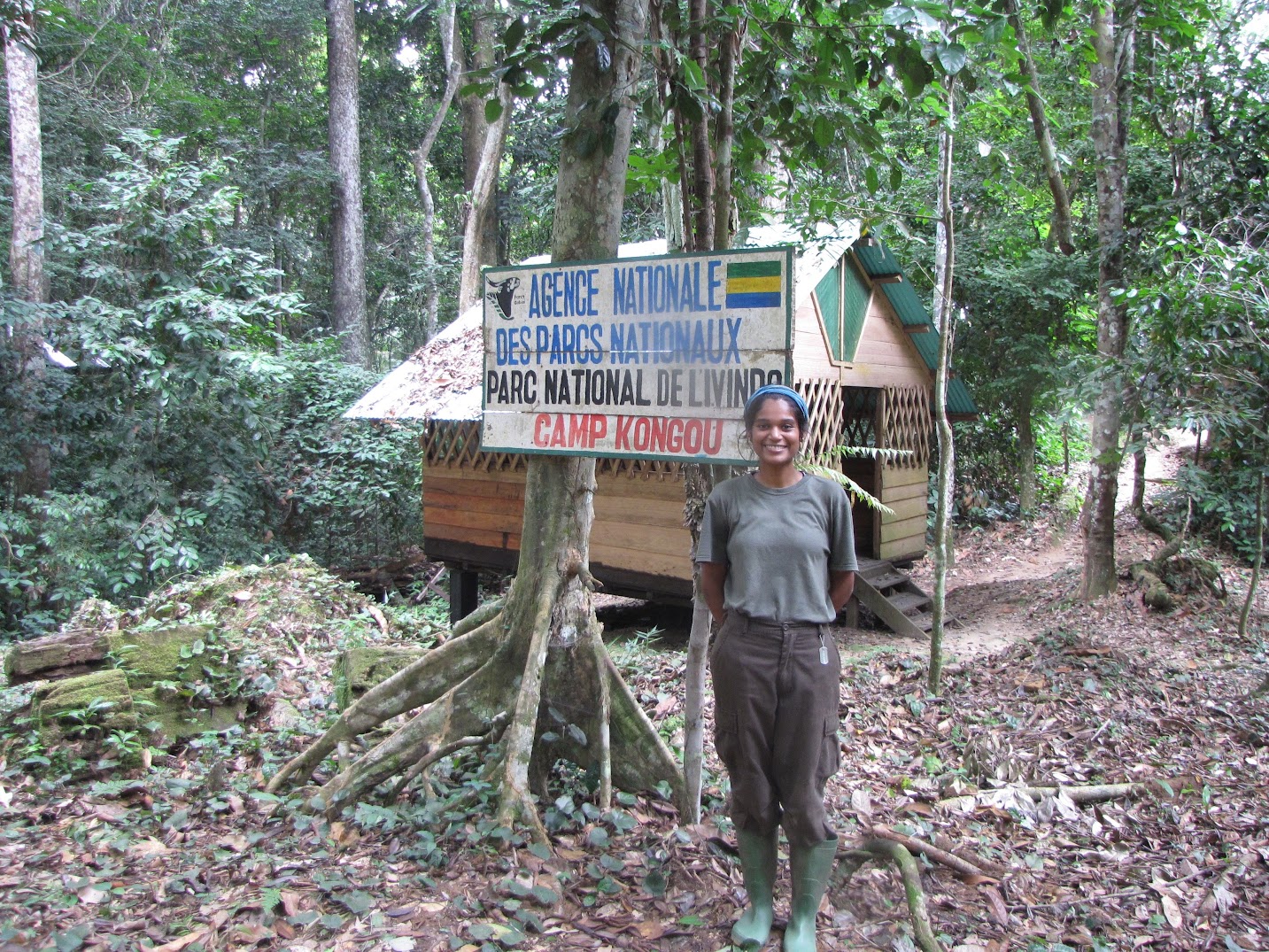
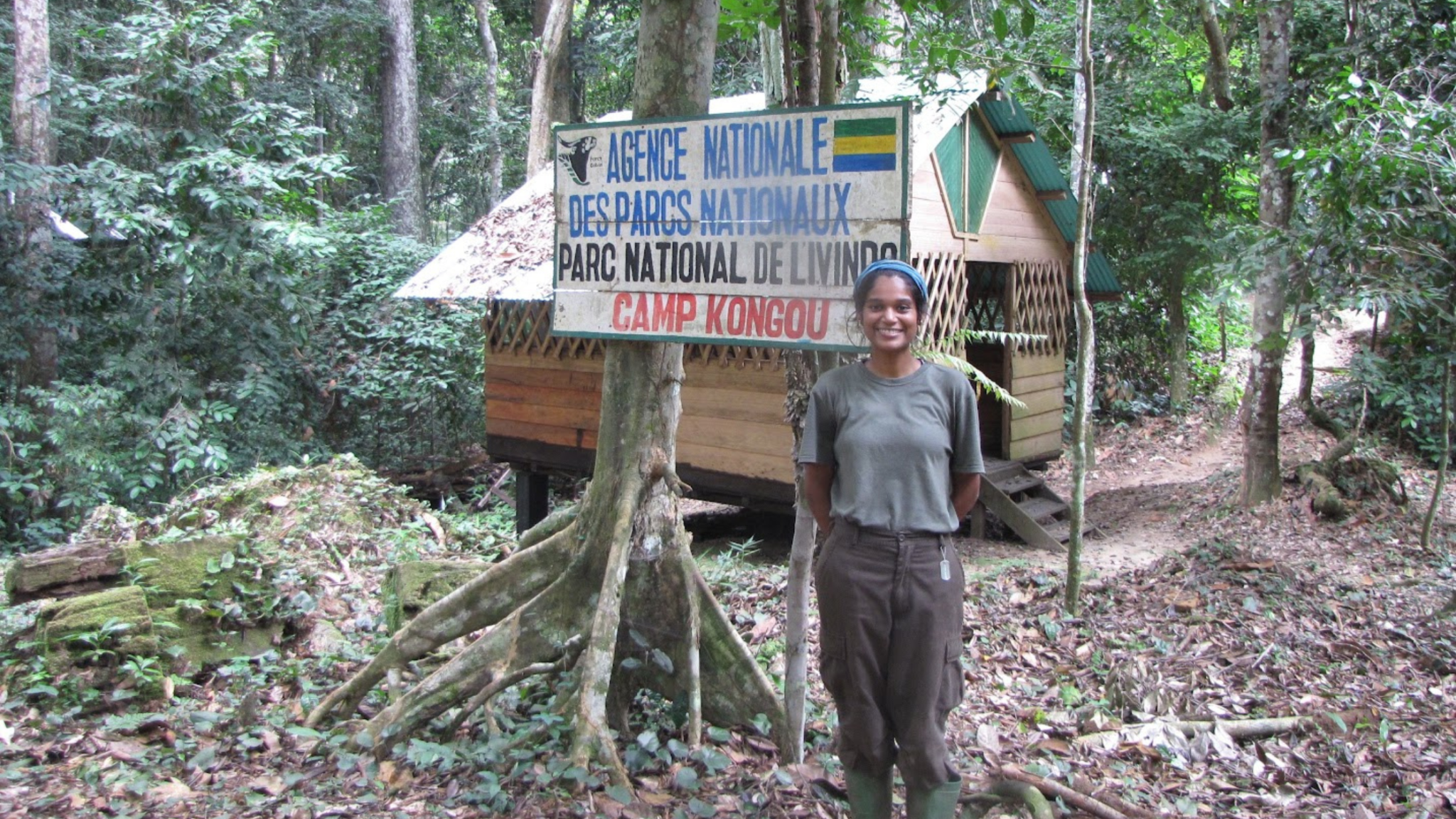
Trisha doing fieldwork for her master’s research about seed-seedling recruitment dynamics in hunted and logged forests of Gabon.
From education to action
At Duke, she specialised in ecosystem science and conservation, with fieldwork in Gabon for her thesis. “The variety of subjects I studied and the hands-on experiences really opened my eyes to tropical ecology,” she shares.
Her time at Duke was pivotal in shaping her research focus on climate solutions and conservation, laying the foundation for her later work in climate change mitigation.
After completing her master’s Trisha joined The Nature Conservancy (TNC) in Washington, D.C., where she helped develop the portfolio of “Natural Climate Solutions.” As she describes, this ‘eye-opening’ experience further solidified her focus on a solutions-oriented approach to conservation.
“At TNC, I learned that we must describe problems and find solutions. It’s about tackling challenges head-on.”
Motivated, Trisha strived to explore the climate mitigation potential of reforestation, leading to her doctoral research, which revealed critical insights into India’s forestry practices.
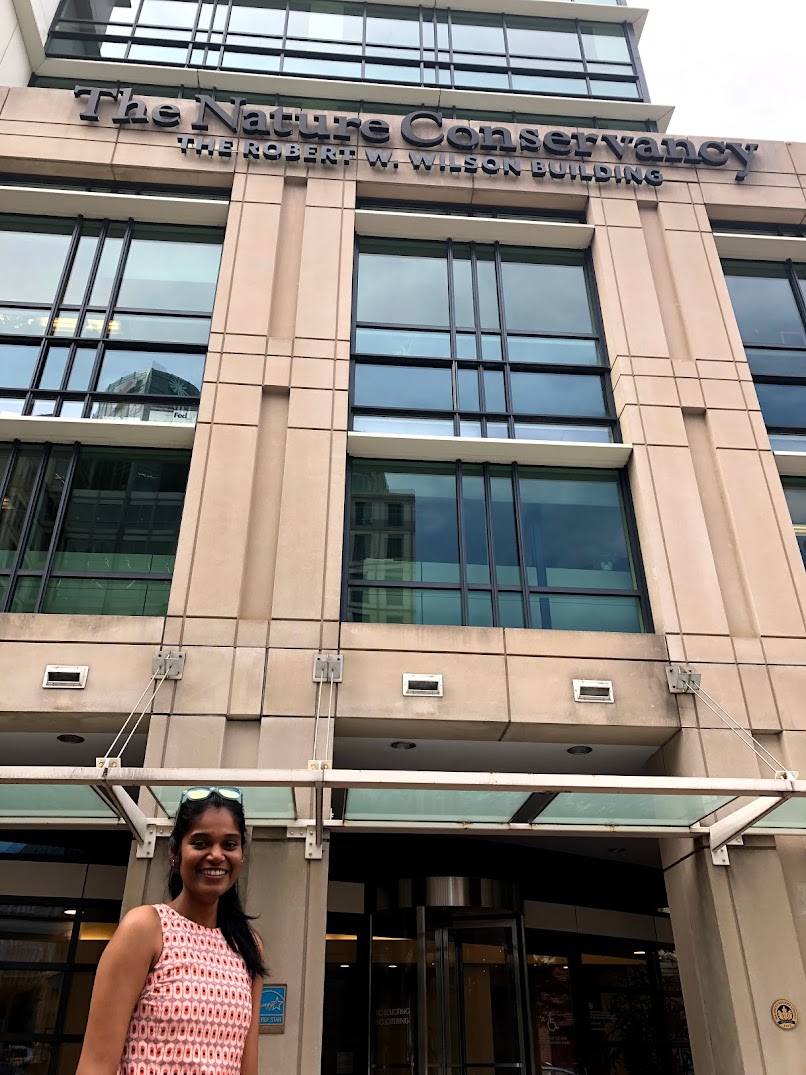
Trisha standing outside The Nature Conservancy building in Washington, D.C., USA, where she helped develop the portfolio of “Natural Climate Solutions.”
Harnessing technology for conservation
As an expert in spatial ecology, Trisha extensively uses two tools to advance her conservation research:
- Geographic Information Systems (GIS)
- Remote sensing technologies
These tools have revolutionised her ability to assess large-scale processes such as climate change. “GIS and remote sensing allow us to paint a complete picture of ecosystem restoration – from current state to potential, to monitoring and evaluation,” she explains.
As with any tool there are limitations. While GIS and remote sensing can provide valuable information over vast and inaccessible areas, they often lack the granular detail needed to fully understand ecosystem dynamics.
“We need to combine these tools with ground-level data to gain a comprehensive understanding,” she says, emphasising the importance of a multi-faceted approach to conservation.

Trisha using GIS and remote sensing technologies to advance conservation research.
Putting the tools to use in savanna restoration
Trisha uses these tools in action. Her postdoctoral research focuses on restoring savannas in Brazil and India, ecosystems that have long been overlooked in global conservation efforts.
Savannas cover 40% of the world’s land area but are often treated as degraded forests, especially in tropical regions. “Savanna restoration is much further behind forest restoration in terms of science, potential and policy,” she explains.
Yet, the importance of savannas cannot be overstated; one-third of the global population relies on them for essential services like fuel, fodder, and water.
Trsiha’s work is uncovering new ways to restore and manage these vital ecosystems, especially in the face of climate change. Her research in Brazilian savannas demonstrates that these landscapes are highly resilient and can continue to function despite environmental pressures. This resilience, she believes, makes savannas a critical focus for conservation in the coming decades.
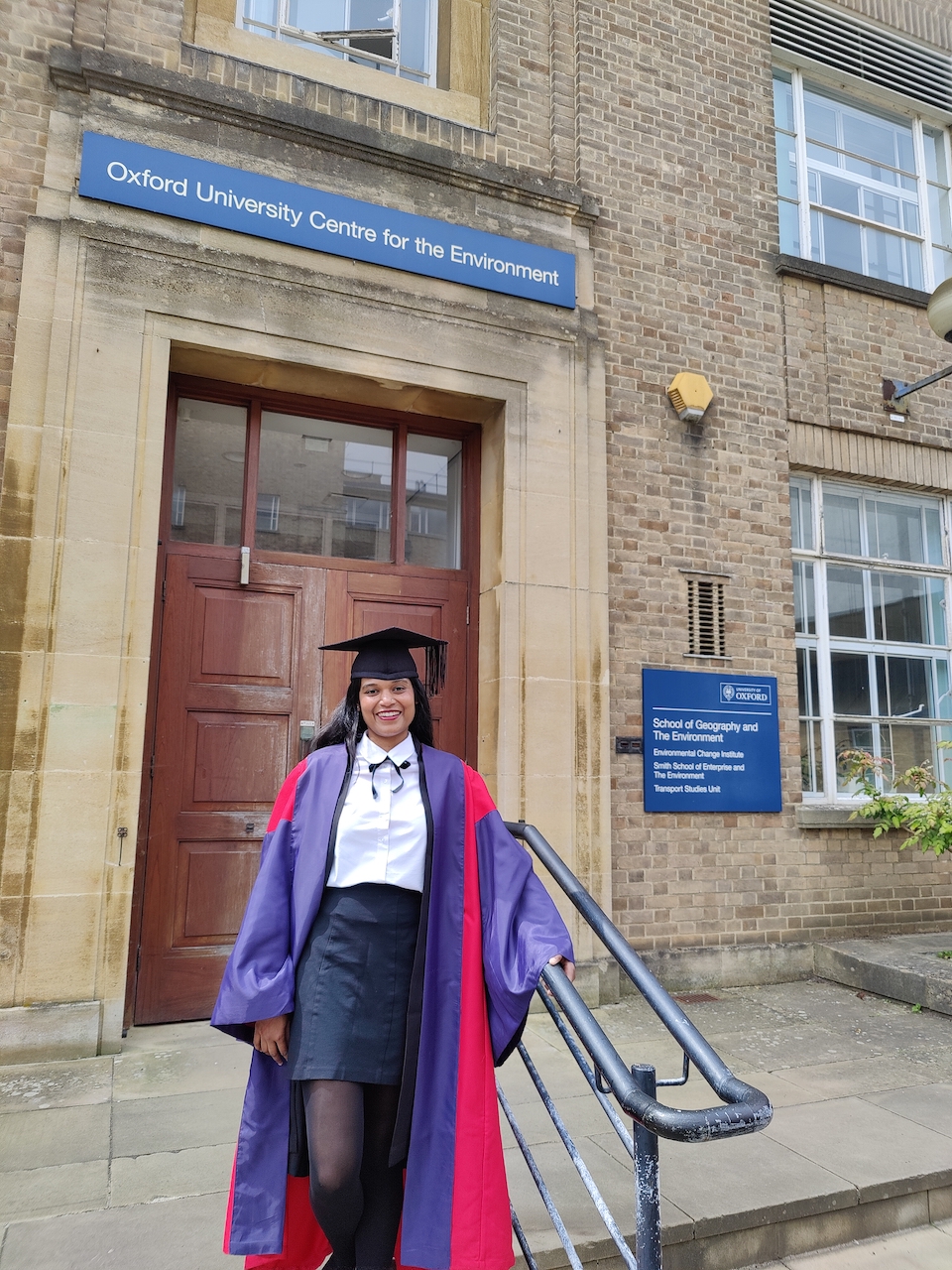
Trisha graduating from Oxford University (UK) with her doctorate which focused on restoring savannas in Brazil and India.
Embracing equity in conservation
A central thread running through Trisha’s work is the urgency to integrate gender and equity considerations into conservation projects. “Conservation must account for gender, socioeconomic status, and geography,” she asserts.
From her experiences she suggests doing this by:
- Incorporating diverse perspectives: Conservation efforts can be more effective, ensuring that all stakeholders benefit from restoration and mitigation initiatives.
- Employing an intersectional lens in her research: she aims to address the inequities present in resource management and conservation practices
Her own research has examined the unequal distribution of benefits from conservation activities, particularly in the context of climate change. “We cannot work in a vacuum,” she stresses, “we must ensure that all voices are heard and that the benefits of conservation efforts are distributed fairly,” she asserts. This commitment to inclusivity is crucial for fostering sustainable and just conservation practices.
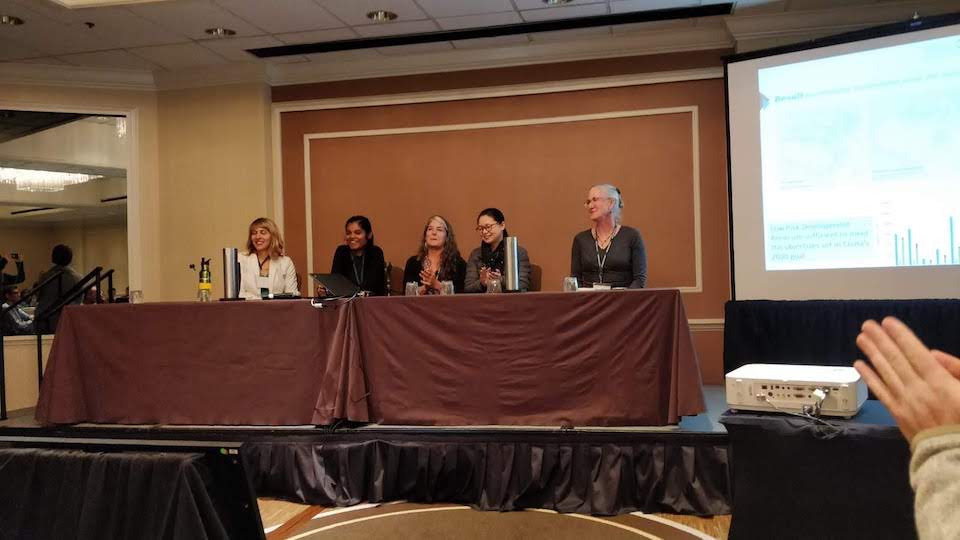
Trisha participating in an all-woman science panel at the Global Science Gathering of the Nature Conservancy.
Mobilising youth for a Sustainable Future
To mobilise youth for climate action and conservation, Trisha advocates for incorporating environmental issues into educational curricula. “A more eco-aware youth today will lead to a more sustainable planet in the future,” she states, emphasising the need for comprehensive environmental education.
Trisha’s advice to aspiring conservationists is both insightful and practical. She emphasises the following:
- Understand your strengths and weaknesses: Knowing where you excel and where you need growth is key to navigating the conservation field.
- Embrace new experiences: Stay open to new opportunities, challenges, and learning moments that come your way.
- Engage with a diverse range of stakeholders: Building relationships with local communities, scientists and policymakers can expand your impact.
- Foster curiosity and adaptability: Being curious about the environment and adaptable in your approach will make you an asset to any conservation project.
Advice for aspiring conservationists
Trisha’s journey is filled with lessons for young conservationists. Her advice? “Understand what you’re good at and, just as importantly, what you’re not. Don’t blindly follow others – create your own path,” she advises.
She encourages aspiring researchers to continuously try new things, learn new skills, and connect with diverse people working in conservation. “Always be curious and open to learning,” she says.
She further stresses the importance of mastering GIS and remote sensing tools, as these technologies allow conservationists to understand and address large-scale issues such as climate change and biodiversity loss. This will be important for the future because these tools enable data-driven decision-making, helping to track environmental changes, predict future trends, and implement targeted conservation strategies on a global scale.
Her perspective on conservation has significantly evolved throughout her career too, “I’ve learned that we must deal with the multifaceted aspects of conservation biology and ecological sciences – social, economic, and equity.” She points out that it’s impossible to be an expert in every aspect, but that’s okay. “This is when collaborations are built!”
She continues, emphasising that all these aspects are interconnected, and navigating them requires balance and understanding. “There are many moving parts in conservation, and I’ve learned that to avoid getting lost in the complexity, it’s essential to continuously reassess my interests, opinions, and skills.
The misconceptions about working in conservation biology
While her work has taken her to diverse landscapes, she believes there is a common misconception about what working in conservation biology entails. Many people, especially those new to the field, think that conservation work revolves around traveling to remote, beautiful locations, surrounded by exciting landscapes and wildlife.
“While that’s true to some extent, conservation biology is much more than that!” she explains. “In reality, some of us spend our days meeting with government officials, writing reports and analysing data on our computers.”
She stresses that these roles are equally important, as they help influence policy and guide practical conservation efforts. “Conservation involves working across multiple sectors, from policy and society to industry,” she emphasises, urging young conservationists to broaden their understanding of the field.
Trisha’s vision of the future of conservation science
Looking forward, Trisha is excited about emerging trends in the conservation field, especially the integration of private sector funding with government support for large-scale ecosystem restoration.
She’s also interested in the concept of “novel ecosystems” – biomes that emerge from restoration efforts in the face of climate change. “Understanding how these new ecosystems function will be key to effective restoration and conservation,” she says.
Her journey is a testament to the power of perseverance, collaboration, and the constant quest for knowledge – key ingredients in the collective effort to secure a sustainable future for our planet
Follow Trisha’s work
- Twitter: @trishuphigh
- LinkedIn: Dr Trisha Gopalakrishna
- ResearchGate: Dr Trisha Gopalakrishna’s profile
Related resources for aspiring conservationists
- The Nature Conservancy (TNC): A leading global conservation organisation, offering programs and resources on conservation science and practice.
- GIS and remote sensing for conservation: Learn about Geographic Information Systems (GIS) and remote sensing technologies, vital tools in modern conservation efforts.
- Women in conservation: Learn about the role of women in the environmental and conservation sectors and the importance of gender equity in conservation.
Author Profile | Stephanie Nicolaides
 Stephanie Nicolaides is a dedicated PhD candidate in Environmental Management at the University of the Western Cape. Her research delves into the impact of plastic pollution on the Mossel Bay coastline (South Africa), with a particular focus on the effects on marine biodiversity. Her work focuses on assessing plastic presence, local knowledge, and developing sustainable solutions. Stephanie holds an MSc in Life Sciences from the University of South Africa, where her dissertation examined the behavioural ecology of African clawless otters. She also earned her BSc Hons in Life Sciences, graduating cum laude, with an honours project on personality in Leopard Tortoises. Passionate about environmental sustainability, Stephanie is committed to advancing knowledge in marine biology and contributing to efforts to protect and preserve coastal ecosystems. Connect with Stephanie on LinkedIn.