From classroom to conservation: How students are redefining stewardship

Who is Tintswalo Mukhari? She’s not a scientist or politician; she’s a high school student from St Catherine’s Convent in South Africa who is proving that youth can drive real environmental change.
What is she doing? Together with her co-captain, Lesedi Kgarimetsa, Tintswalo leads the True Blue Recycling Club, a school-based initiative turning everyday waste into opportunity, from eco-bricks and bottle-cap collections that fund wheelchairs, to recycled art installations raising awareness about ocean plastic pollution.
Where is this happening? At the heart of Johannesburg, in a school setting where students are learning that stewardship begins at home, in classrooms, and in their own community.
When did it begin? In late 2024, when a teacher’s idea sparked Tintswalo and Lesedi to step up and lead.
Why does it matter? Because South Africa, like much of the world, faces a rising tide of plastic waste and environmental neglect. Tintswalo’s vision shows that young people can inspire both peers and adults to act before the problem worsens.
How is it being achieved? By combining faith, creativity, and community. Tintswalo grounds her leadership in both Christian values of stewardship and modern conservation awareness, turning recycling into a shared responsibility and a visible act of hope.
In a world where environmental news is often bleak, her story is a reminder that youth leadership is not just the future of conservation, it is its present.
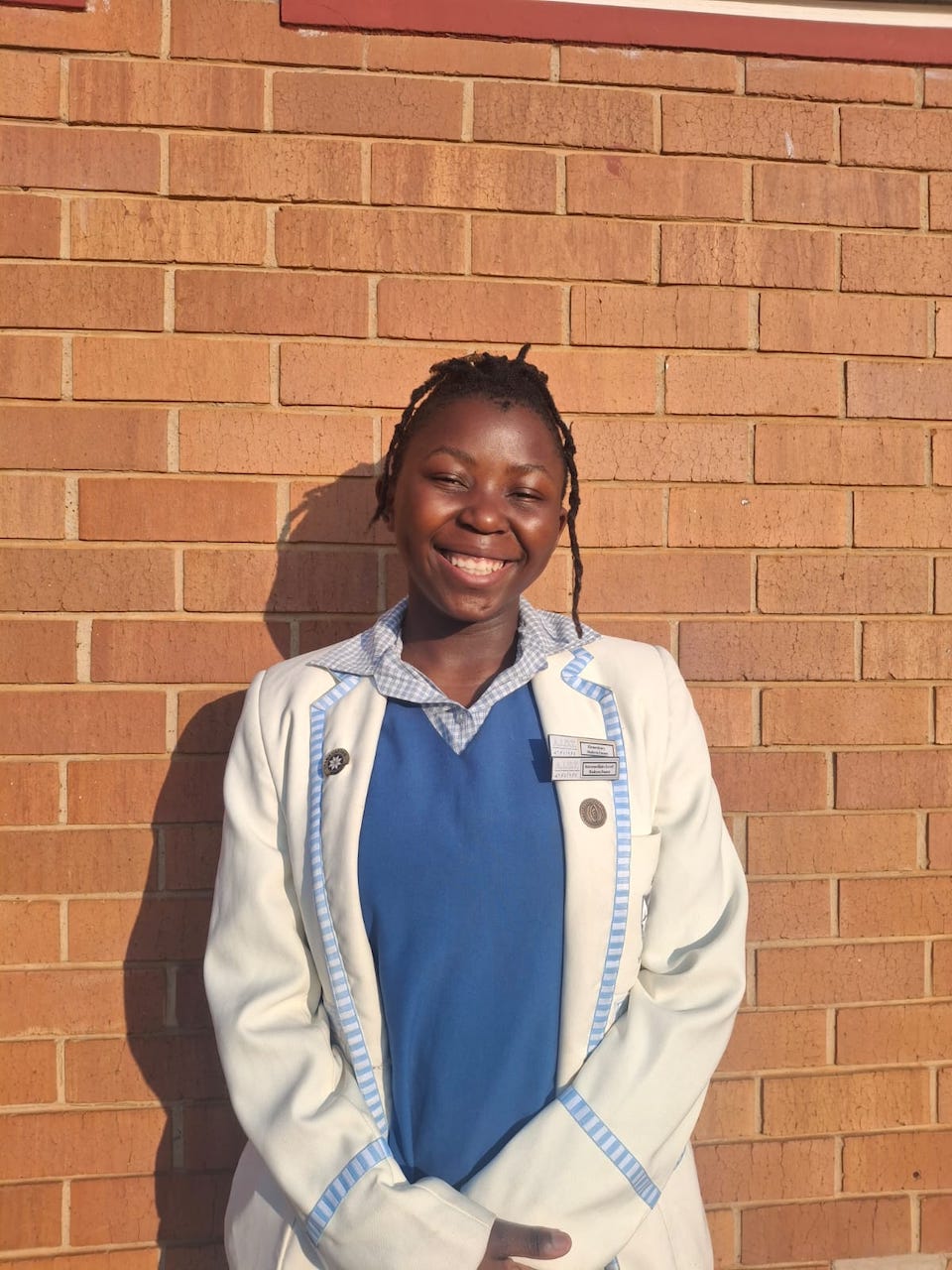
Tintswalo Mukhari, a student at St Catherine’s Convent in Johannesburg, believes environmental stewardship begins with small, consistent actions.
From inspiration to action
For Tintswalo, environmental consciousness didn’t arrive as an abstract concept, it was sparked by moments of wonder and reinforced by storytelling. “Sir David Attenborough’s documentaries made me realise the ocean’s role in maintaining the isostatic balance of our planet,” she says. His voice didn’t just inform her, it stirred a personal responsibility to act.
But her sense of stewardship runs even deeper. Drawing on her Christian faith, Tintswalo reflects on the Biblical instruction to care for creation.
“When God told Adam to care for the land, that task was inherited by us and our forefathers,” she explains. “It’s our obligation and responsibility to ensure future generations have a place they can proudly call home.”
This idea of “passing on the baton” wisdom and responsibility flowing from one generation to the next, is at the heart of everything she does.
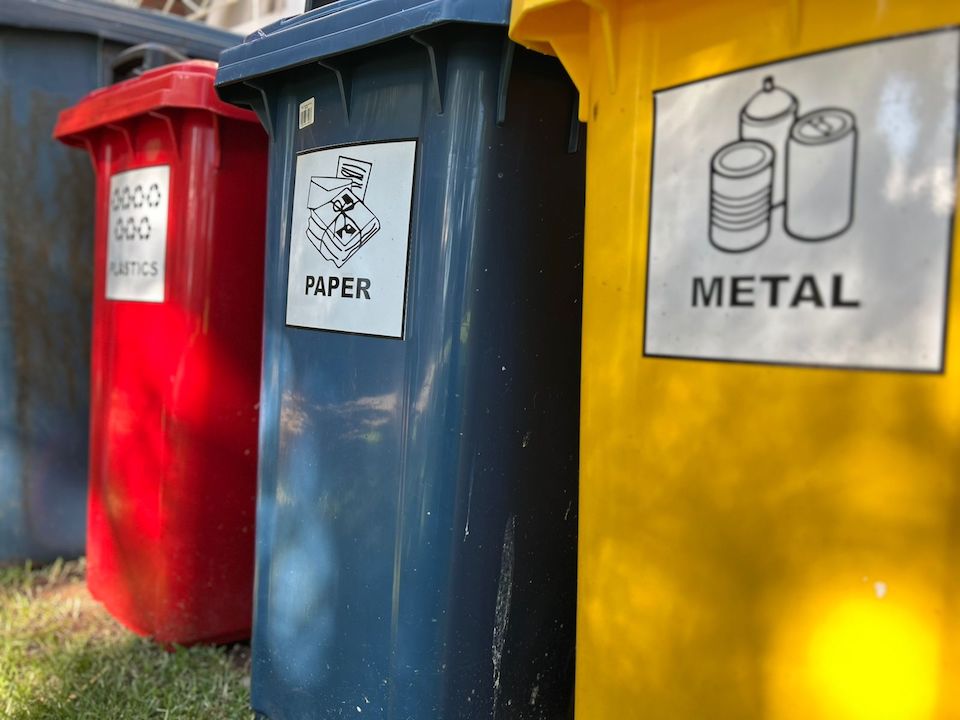
Sorting for a sustainable future Students at St Catherine’s Convent take waste separation seriously, with dedicated bins for plastics, paper and metal.
The birth of the True Blue Recycling Club
In late 2024, a school assembly planted the seed. A teacher, Mrs Parau, proposed starting a recycling initiative. Tintswalo and her friend, Lesedi Kgarimetsa, didn’t just volunteer, they stepped up to lead. Soon after, the True Blue Recycling Club was born.
The club’s mission was clear: challenge the stigma that recycling is tedious by showing how it can be tangible, impactful, and even fun. Their projects link waste reduction directly to community benefit, from eco-bricks (plastic-filled bottles used in construction) to bottle cap and bread tag collections for the Sweetheart Foundation, which funds wheelchairs for people in need.
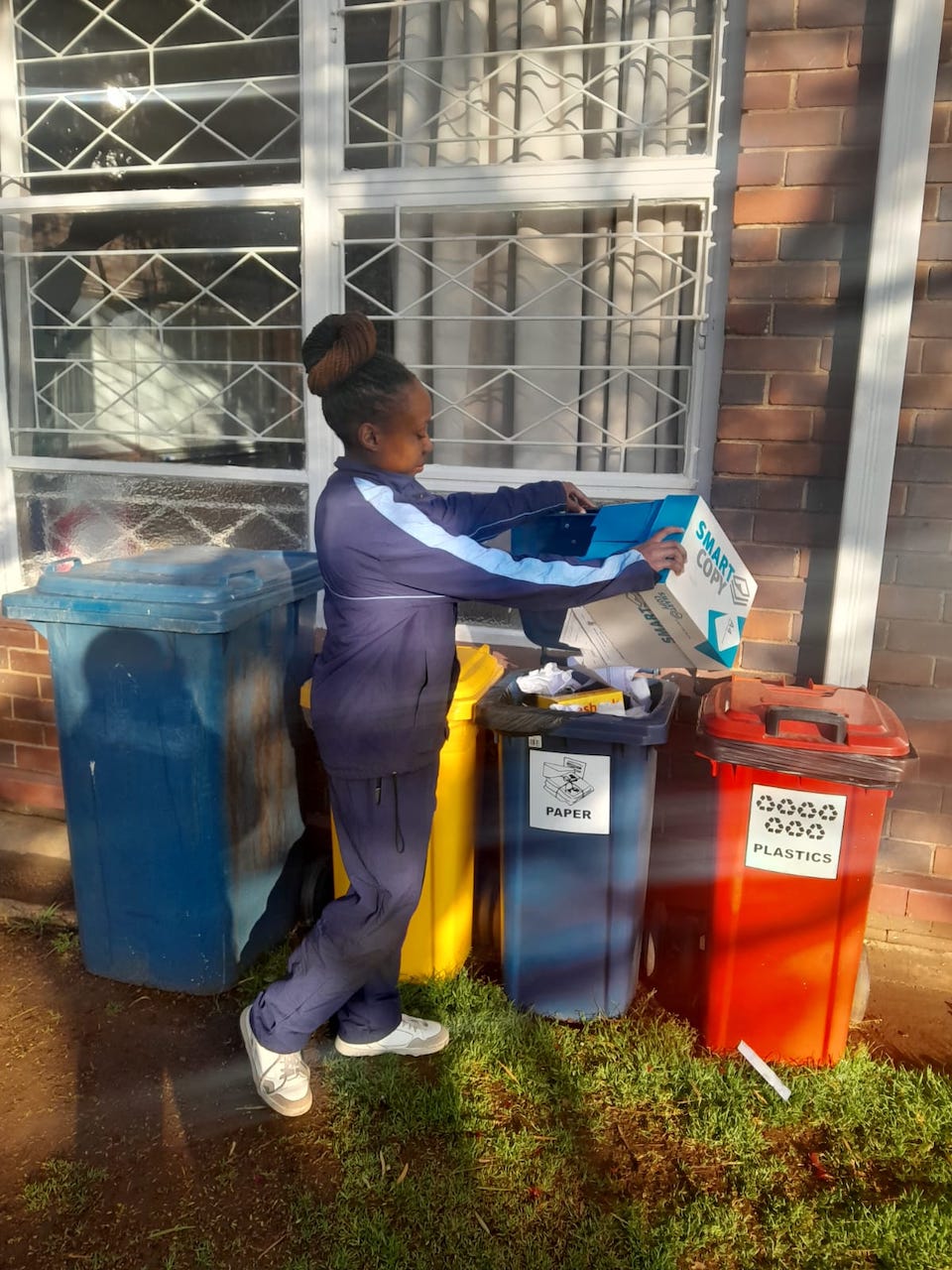
A simple act of recycling old worksheets transforms clutter into opportunity.
“At first, we didn’t expect much interaction,” Tintswalo admits. “But the more ideas we introduced, the more enthusiastic everyone became.”
One small but powerful example: introducing paper-only bins in each classroom. Teachers, once unsure what to do with stacks of outdated worksheets, now had a dedicated system, and students took ownership of the process.
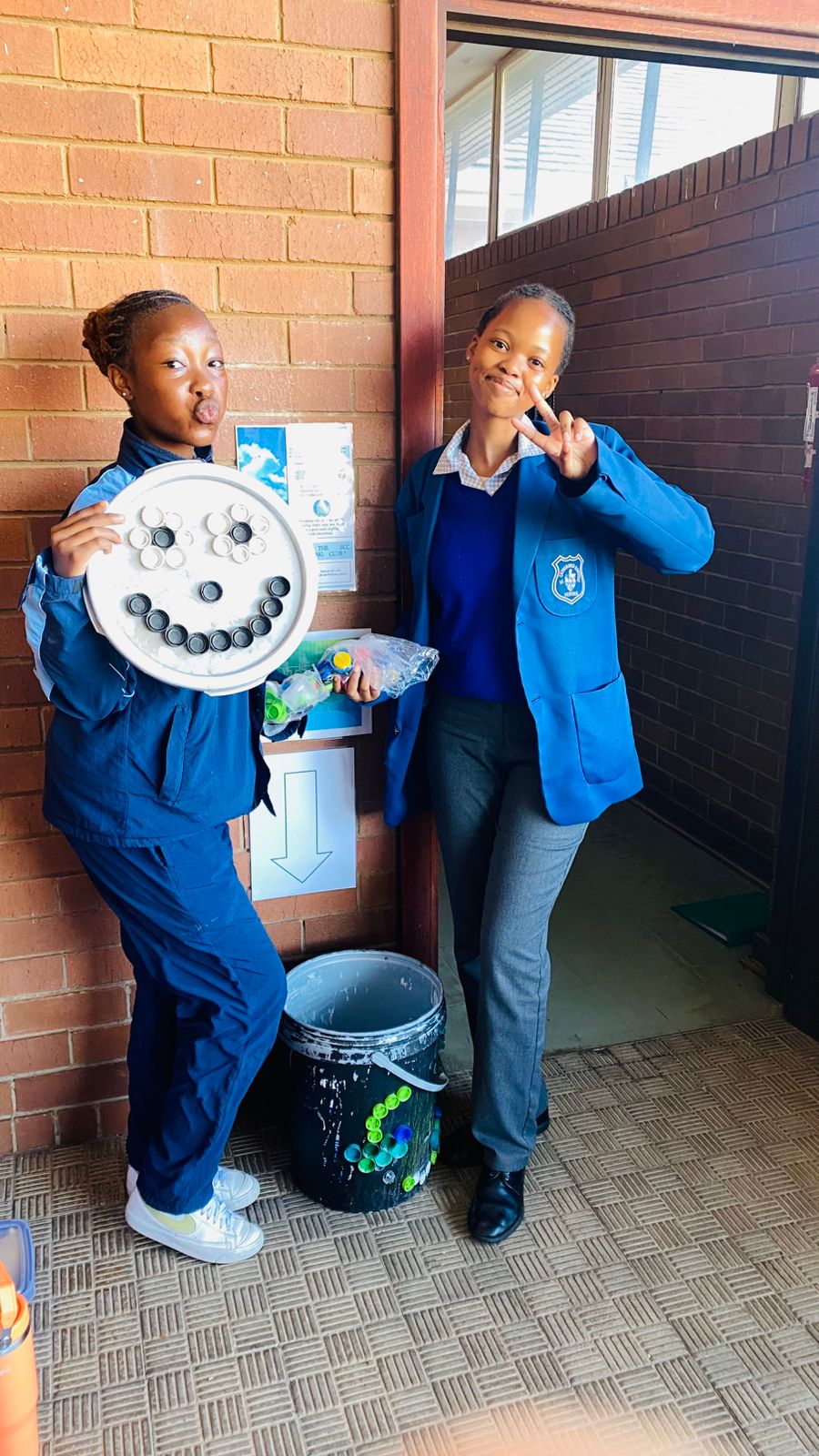
Creative recycling projects help dismantle the stigma that waste reduction is tedious.
Turning trash into art
The club’s debut project was as creative as it was symbolic. Partnering with the school’s art club, they launched a marine-themed recycled art initiative. Students scoured their homes for unused or discarded materials, old CDs, chicken wire, bottle caps, and transformed them into sculptures highlighting the ocean’s fragility in the face of plastic pollution.
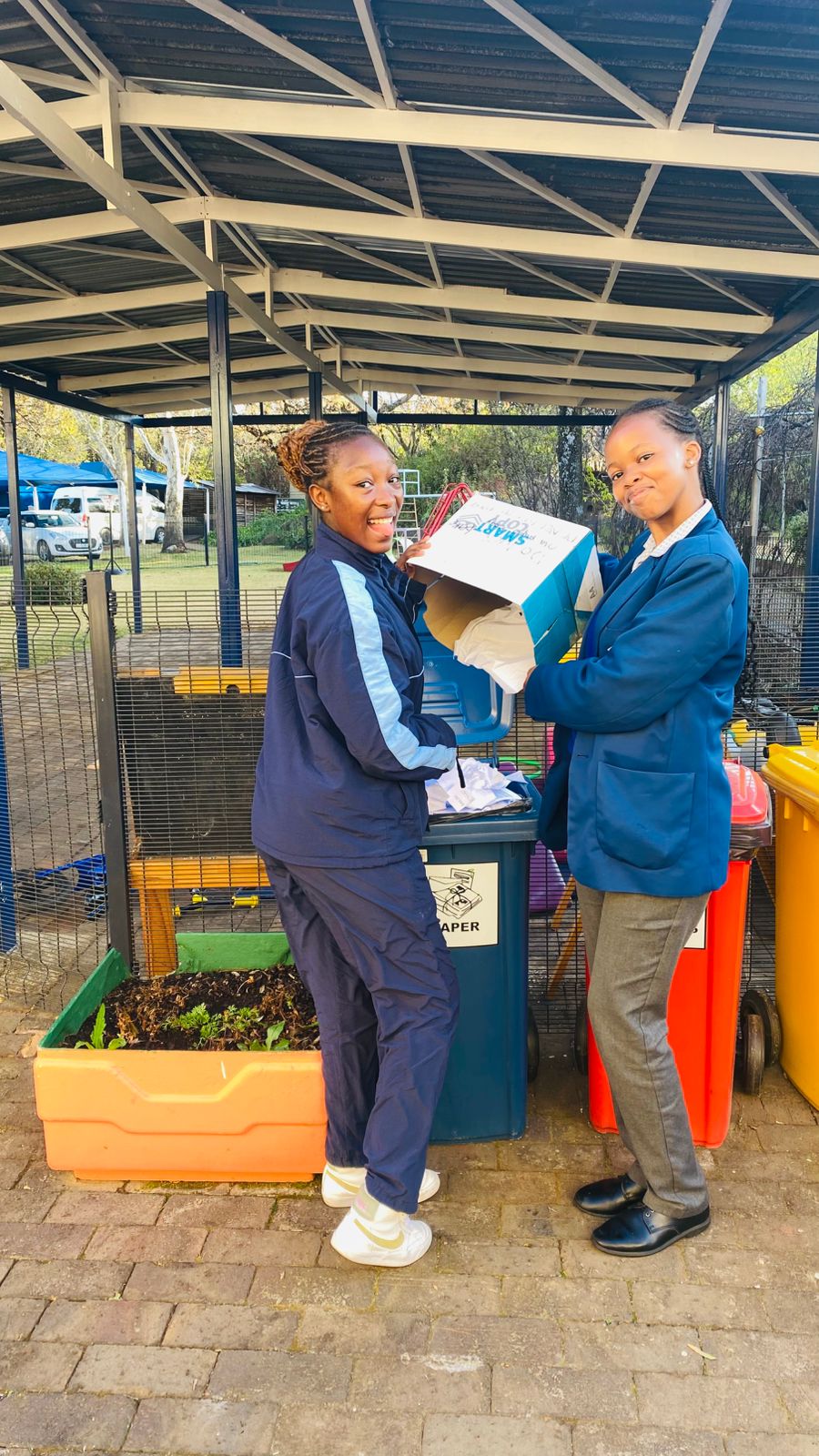
Student leaders demonstrate practical recycling by ensuring classroom waste finds its way into the right bins.
The pieces were both imaginative and haunting. One standout was “Waste to Wave” by Nonsi and Anneya, which at first glance resembled a cresting wave. Viewed from another angle, it mirrored the form of a landfill, challenging viewers to see the link between land-based waste and marine degradation.
Their art found an even wider audience when the Bartolomeu Dias Museum in Mossel Bay agreed to display the works during Environmental Week, World Oceans Day, and Marine Month. “We were welcomed with overwhelming positivity,” says Tintswalo. “It showed us our work could inspire beyond our school walls.”
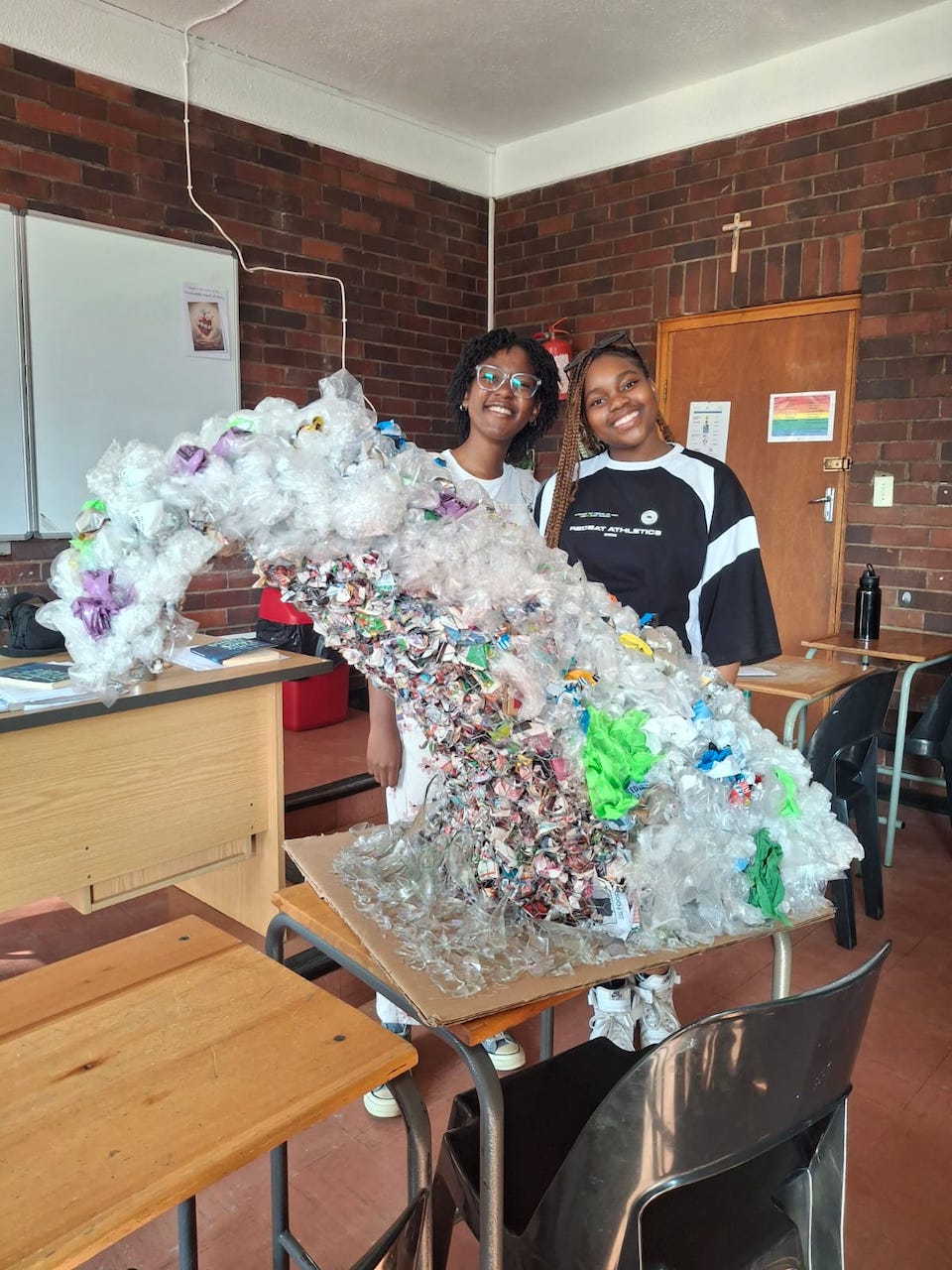
Waste to Wave Students repurpose plastic waste into art that powerfully connects landfill pollution with the fragility of our oceans.
Why “True Blue” matters
The club’s name is more than a nod to their school’s colours. It’s a tribute to Earth, the Blue Planet, and a reminder of the oceans that define it. “Our hydrosphere provides most of our oxygen and regulates climate,” Tintswalo explains. “For our first project, we wanted to honour that.”
While South Africa’s plastic pollution crisis may not yet match the severity seen in other regions, Tintswalo believes complacency is dangerous. “We shouldn’t wait for it to get worse before we act. Public action should come first, with government support following.”
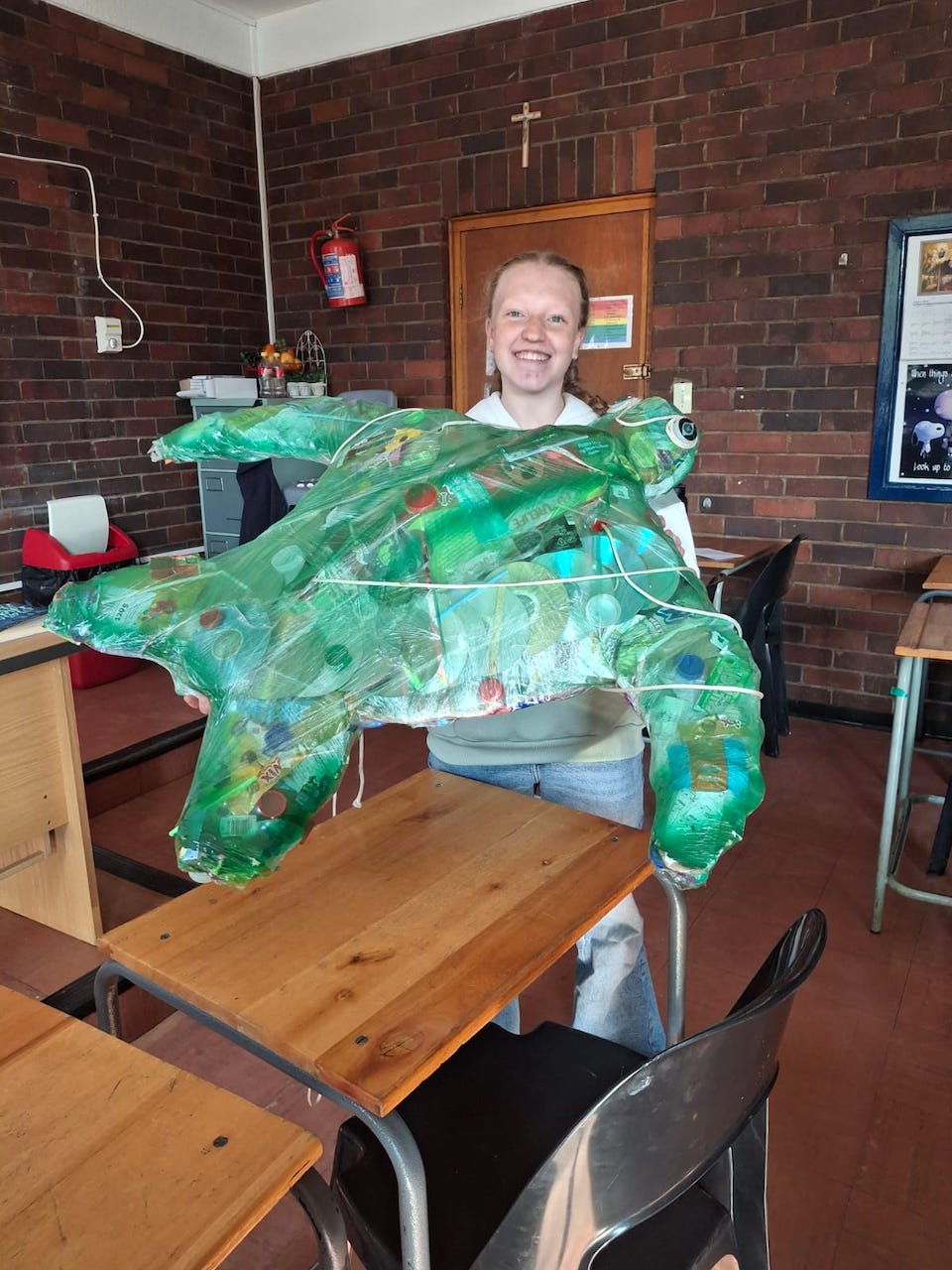
A marine-inspired sculpture made from discarded plastic bottles highlights the fragile link between land-based waste and ocean health.
Challenges, perseverance and vision
Not every step has been smooth. Finding a venue to display their art involved weeks of searching and rejections. But Tintswalo and Lesedi leaned on the belief that “nothing good comes easy”. That perseverance is something she hopes will define the club long after she graduates.
“I want the next leaders to innovate, to build on our foundation with greater passion,” she says. Her advice to all young South Africans? “Educate yourself on your impact. Start small, stop using plastic straws or go big and become a conservationist. Just do something rather than nothing.”
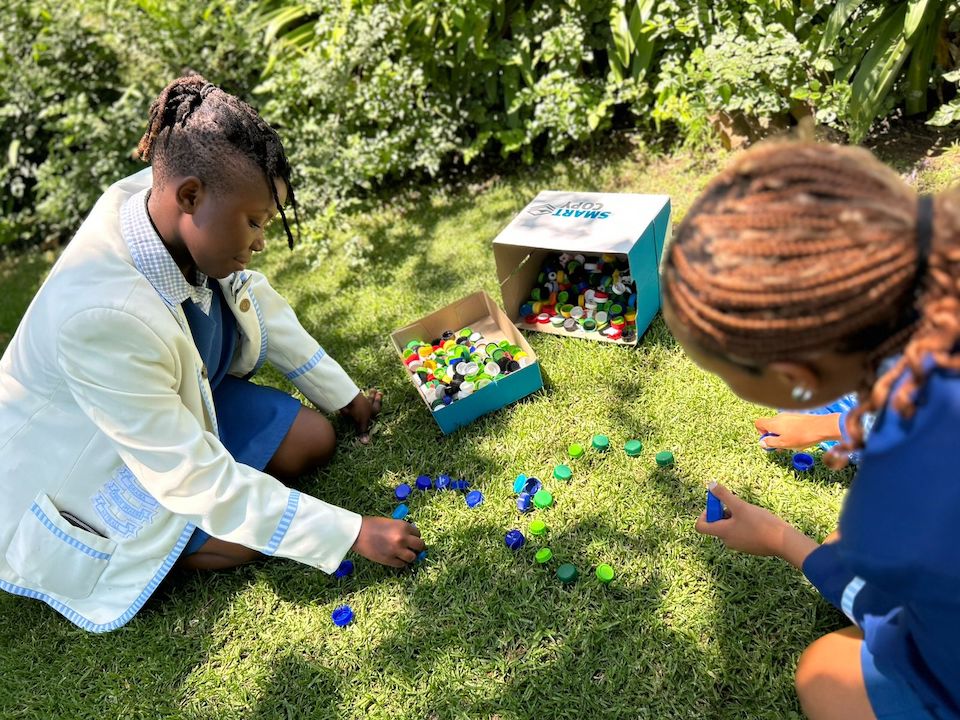
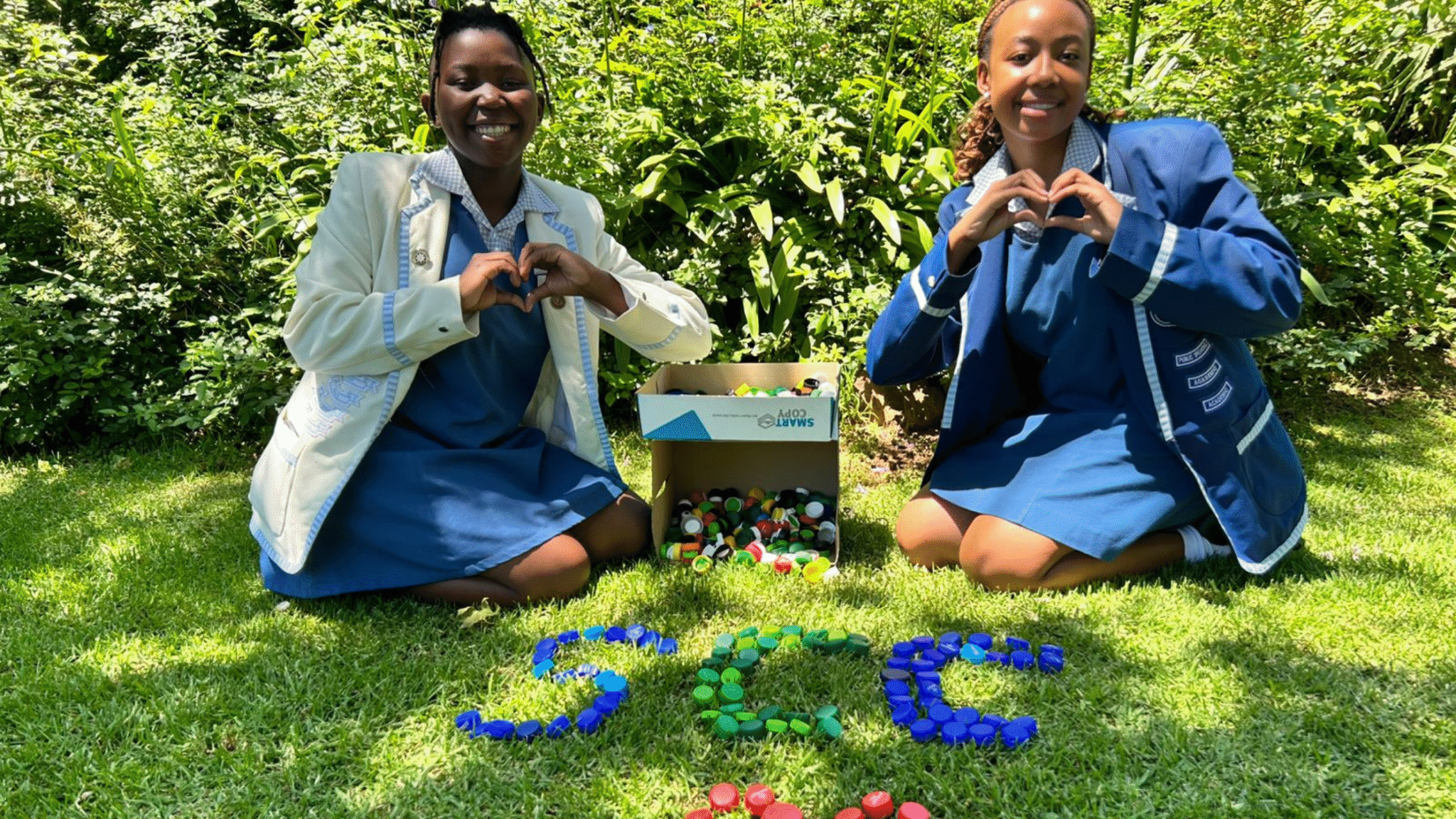
Conservation in colour Students channel creativity by arranging collected bottle tops into messages of hope and environmental care.
Advice for fellow aspiring conservationists
Tintswalo offers a practical starting point for anyone unsure where to begin:
- List five things you love about our planet: plants, animals, weather patterns, anything.
- Learn more: read, watch documentaries, or meet people working in those areas.
- Find local programmes: contact them; many welcome passionate volunteers.
- Apply your knowledge: turn awareness into daily action.
As she puts it: “Change is the end result of all true learning.”
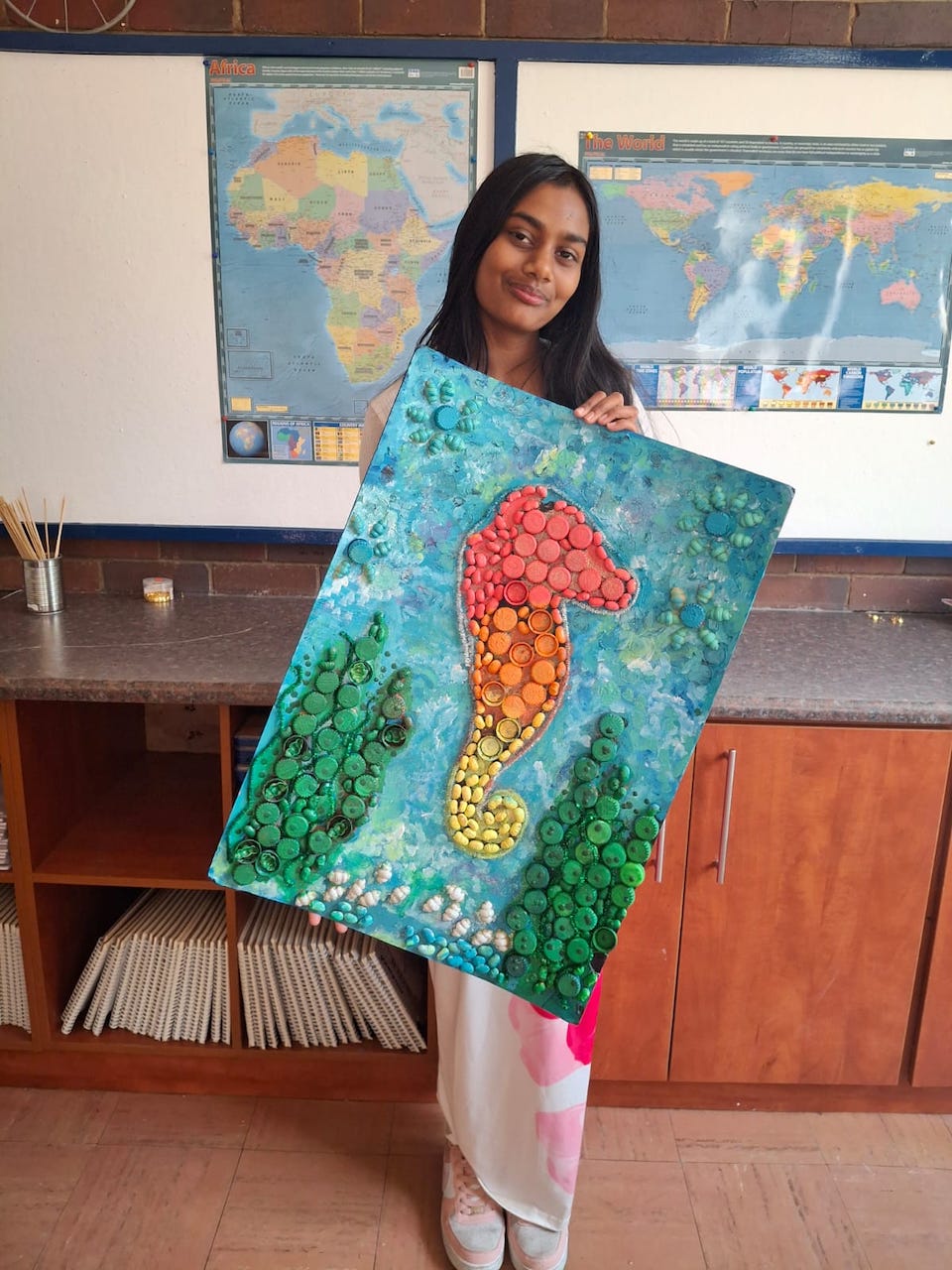
From caps to creatures A recycled seahorse mosaic reminds us that every plastic item has a lifecycle.
A young leader with an old soul
In Tintswalo’s blend of old-fashioned values and modern action, we see a blueprint for the kind of environmental leadership the future needs, rooted in respect, driven by creativity, and sustained by faith.
The True Blue Recycling Club may have begun as a school project, but under her guidance, it has become a living example of how the baton of stewardship can be passed, and received, with purpose.
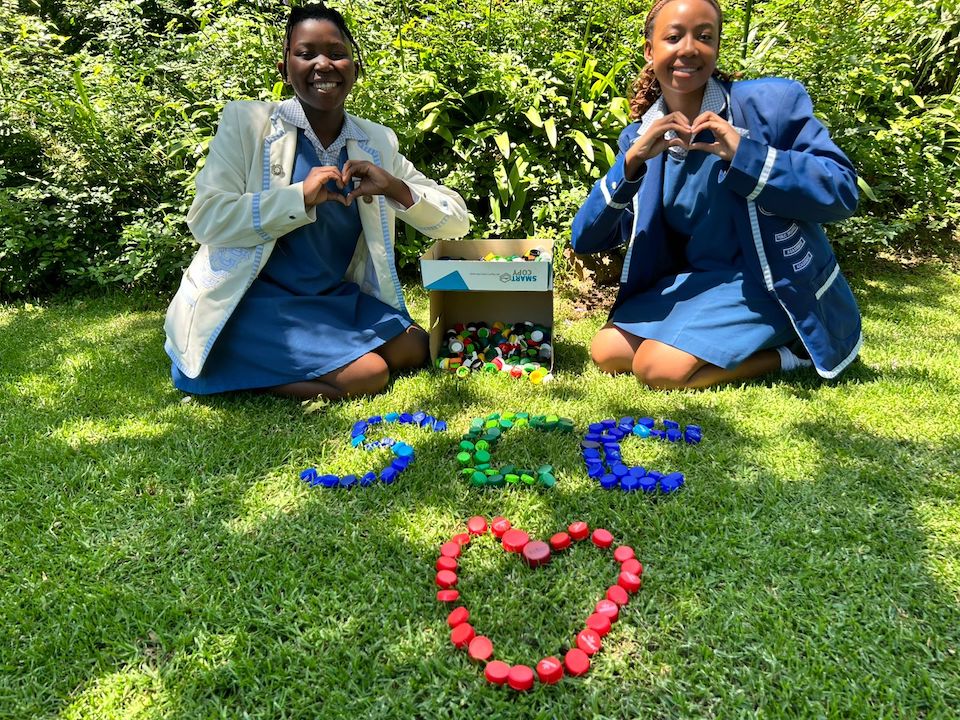
Student environmentalists Tintswalo Mukhari and Lesedi Kgarimetsa, co-captains of St Catherine’s Convent’s True Blue Recycling Club, turn plastic waste into purpose.
Join the next generation of conservation leaders
Feeling inspired by Tintswalo’s story? Here’s how you can take your own first step into a conservation career:
Ultimate Guides to Careers in Conservation
Discover practical advice on how to build a career protecting the planet, whether you’re just starting out or changing direction.
How to switch careers into conservation
Learn how passion, communication, and creativity can be as powerful as a biology degree in today’s conservation sector.
Youth-Led Conservation Initiatives
Read how young changemakers around the world, like Tintswalo and Lesedi, are transforming environmental stewardship from the ground up.
Author Profile | Stephanie Nicolaides
 Stephanie Nicolaides is a dedicated PhD candidate in Environmental Management at the University of the Western Cape. Her research delves into the impact of plastic pollution on the Mossel Bay coastline (South Africa), with a particular focus on the effects on marine biodiversity. Her work focuses on assessing plastic presence, local knowledge, and developing sustainable solutions. Stephanie holds an MSc in Life Sciences from the University of South Africa, where her dissertation examined the behavioural ecology of African clawless otters. She also earned her BSc Hons in Life Sciences, graduating cum laude, with an honours project on personality in Leopard Tortoises. Passionate about environmental sustainability, Stephanie is committed to advancing knowledge in marine biology and contributing to efforts to protect and preserve coastal ecosystems. Connect with Stephanie on LinkedIn.