From living room safaris to real-world impact: A literature graduate’s journey

Remember those evenings glued to the television, mesmerised by the roaring lions of the Sahara watching that wildlife documentary? For some of us, those childhood encounters with the wild sparked a fire that never quite went out.
That’s how Rithwik Sundar, a literature graduate from India, found his calling. Proving that a passion for wildlife, even when nurtured through a screen, can blossom into a meaningful career dedicated to protecting it.
While a traditional path into a wildlife conservation career in India often involves a science-heavy background, Rithwik’s story offers a refreshing perspective: you don’t always need a biology degree to make a significant contribution. Armed with a degree in literature he carved an “unconventional” route into the field.
Currently thriving as an Assistant Editor at Sanctuary Asia, India’s pioneering wildlife magazine. Rithwik’s journey highlights the diverse pathways available within wildlife conservation.
So, what does a career in conservation communications actually entail? For Rithwik, the days are a vibrant mix of research, writing and editorial work. Imagine delving into the details of a tiger conservation project, then crafting compelling narratives that bring the challenges and triumphs to life for a wider audience. This role involves a deep dive into natural history, ensuring accuracy and engaging storytelling go hand in hand.
One of the most fulfilling aspects of this career path is the incredible opportunity to connect with the individuals on the front lines of conservation. According to Rithwik, having conversations with India’s leading conservationists, as they dedicate their lives to protecting endangered species and their habitats is incredibly rewarding.
It provides a unique window into the complexities and dedication required in this field. This constant engagement with experts not only enriches Rithwik’s professional knowledge but also fuels his personal passion, the lines between work and personal life can beautifully blur.
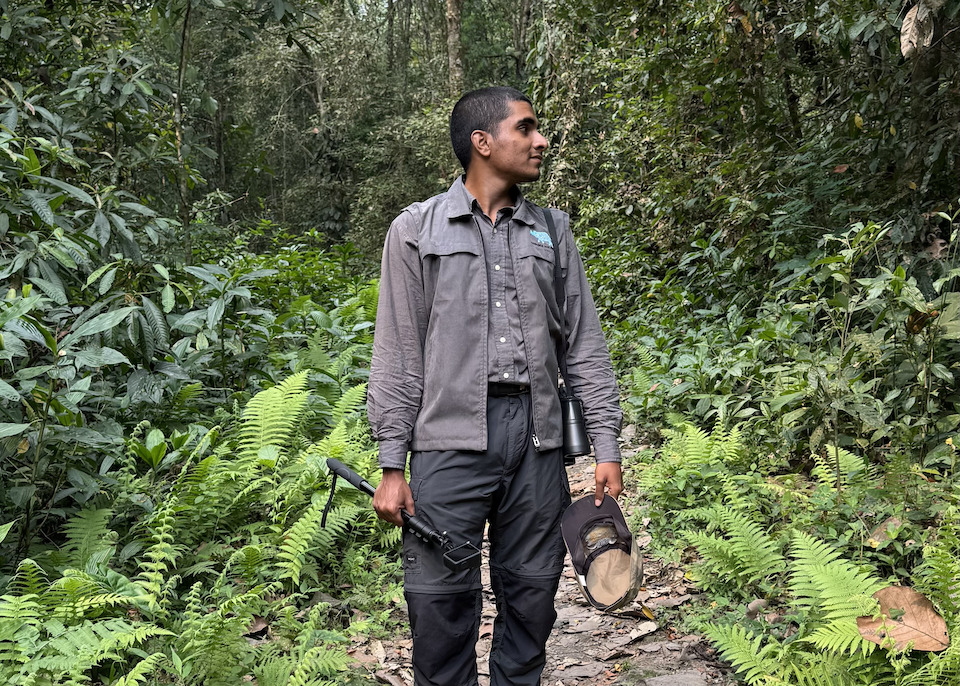
Rithwik, looking for inspiration for his next story.
What might be a recreational trip for others often turns into an opportunity for firsthand observation and learning. Whether it’s editing an article about migratory birds or spending a weekend observing them in their natural habitat, the passion just integrates into everyday life.
However, working in conservation isn’t always easy. The constant exposure to news of habitat destruction, the looming threat of climate change, and the often-uphill battle to protect even small pockets of nature can take an emotional toll. Maintaining optimism in the face of such daunting challenges requires resilience and a conscious effort to focus on the positive.
Rithwik believes this is where the power of communication truly shines. By highlighting even ‘small wins’ – the protection of a vital habitat patch, the successful breeding program of an endangered species – conservation communicators play a crucial role in keeping hope alive and inspiring action.
So how can an aspiring early career person break into the world of wildlife writing?
Rithwik’s advice is both practical and encouraging: immerse yourself in the field first, he says. Take the time to understand the intricate web of conservation issues, the key players, and the fundamental ecological principles. Volunteering is a great way to do that and having a mentor that one can continuously learn from is like cherry on top of the cake, he adds.
So, if you’re considering a career in conservation communications, understand that you’re entering a field of immense importance, even if its significance isn’t always widely recognised. As a communicator, you become a vital bridge, making the often-complex science of conservation accessible and understandable to the public.
As a conservation writer, he says, “Remember your words have the power to educate and inspire. Ultimately, the more people who understand the challenges facing our natural world and the importance of conservation efforts, the more likely they are to take action.”
Follow Rithwik as he explores the rich biodiversity that he passionately wants to conserve through his writing.
Are you curious about becoming a conservation writer yourself? Explore our Conservation Communicator role profile, which describes communicator duties, employer types, requirements and more.
Are you considering switching careers into conservation? Check out our ultimate guides How to Switch Careers into Conservation: Top ten questions answered and Switching Your Career Into Conservation: A Snapshot of Jobs.
Author Profile | Sera Samarna
 Sera, writing under her pen name Symrna Darkmorph, is a passion-driven wildlife conservation writer. She aspires to help people reconnect to nature. She has been an educator for about a decade and is now an enthusiast for Urban Nature and Conservation. She writes a nature journal at The Nature Edition (www.thenatureedition.com).