Switching paths: From culinary arts to conservation leadership

Scott Thomson’s career path took an extraordinary turn, one that few could have predicted. Starting as a chef in South Africa’s hospitality industry, he spent years in the fast-paced world of professional kitchens, crafting dishes and perfecting his culinary skills.
However, at the age of 23, an irreversible injury changed everything. Suddenly facing a future reliant on a wheelchair, Scott was forced to rethink not just his career, but his entire sense of purpose.
His search for meaning led him to conservation, where he now serves as the chairperson of the Great Brak River Conservancy, leading impactful environmental projects that benefit both nature and the local community.
A shift from hospitality to conservation
Scott’s transition from chef to conservationist was not a straightforward one. Trained as a chef, he spent seven years working in the hospitality industry, building qualifications and a career that seemed set in stone.
Life took an unexpected turn at the age of 23, when a severe injury left him with an irreversible neck injury. Forced to confront life from a wheelchair, Scott reevaluated his entire outlook on the world. The physical toll of the accident was heavy, but it also sparked an internal battle.
“When you lose passion, when you lose ability, you lose yourself,” Scott reflects. This loss of identity drove him to seek a way to reconnect with the world around him. His answer, a piece of land, a place where he could escape the city’s noise and understand the environment up close.
“I needed to get out of the city,” Scott explains. “So, I bought a piece of land, and through understanding it, I took what I found to the Great Brak River Conservancy to share.”
His interest in learning about land management and ecosystem restoration soon developed into a full-fledged passion, including recognising the importance of community-driven conservation efforts.
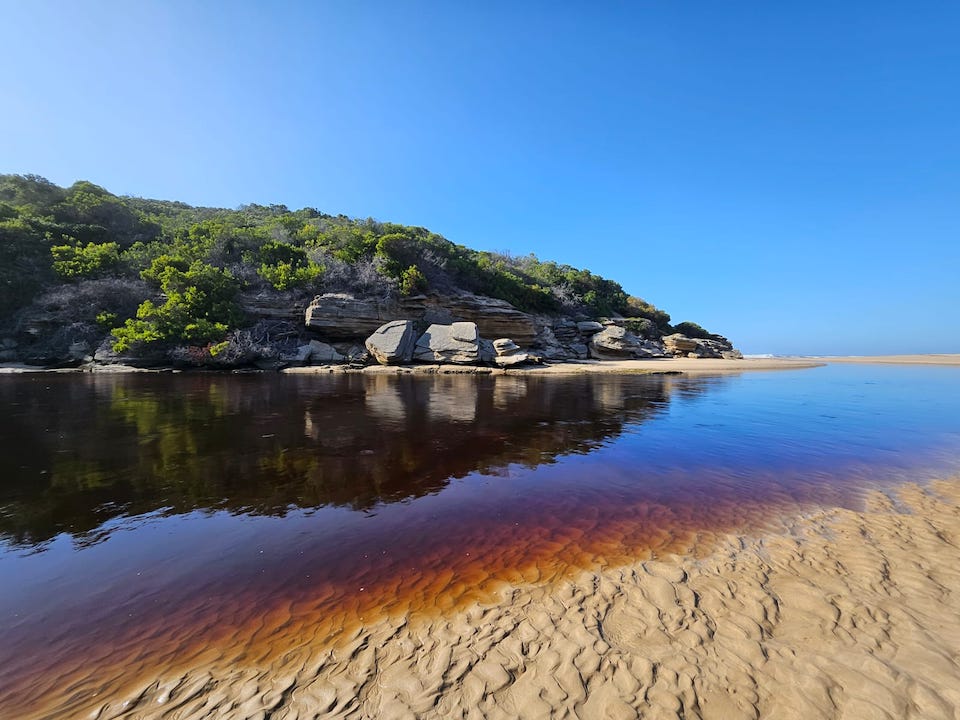
Located in the heart of the Southern Cape, the Groot Brak Estuary is a vital ecosystem.
This opened doors to new opportunities and provided a platform for Scott to become involved with the Great Brak River Conservancy. His unwavering passion for conservation and fresh perspective eventually led him to assume the role of chairperson, where he has brought his passion for change and a fresh perspective.
Scott’s efforts carry a unique weight and his leadership within the Conservancy has been instrumental in driving change.
As a wheelchair user, Scott will never walk on the beaches he has helped clean or hike the trails he has worked to rehabilitate.
His dedication to preserving the environment is not about personal gain or the ability to experience the natural beauty he protects. Instead, it is driven by a deeper philosophy – a belief that the environment is a unifying force, one that transcends physical limitations, divisions in society and even the constraints of his own body.
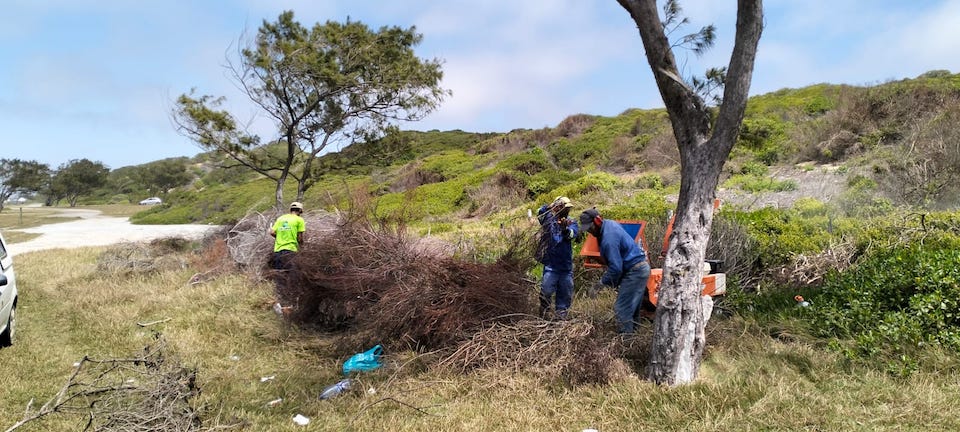
A section of dune, spanning 10 hectares, was thoroughly cleared of Rooikrans (Red eye wattle, an invasive species South Africa) to restore the natural landscape.
The Great Brak River Conservancy
The Great Brak River Conservancy is located in the Western Cape Province of South Africa, where the Great Brak River flows into the Indian Ocean. This area is home to a diverse range of ecosystems, from coastal wetlands and estuaries to sand dunes and indigenous vegetation. However, it also faces significant environmental challenges, including invasive species, pollution, and the loss of natural habitats.
Under Scott’s leadership, the Conservancy has made huge strides in confronting these challenges, working tirelessly to restore native habitats, improve water quality, and engage the local community in conservation efforts.
Through initiatives like alien vegetation removal, estuary health restoration, and the promotion of sustainable land management practices, the Conservancy is slowly but surely transforming the area into a model for sustainable conservation in South Africa.
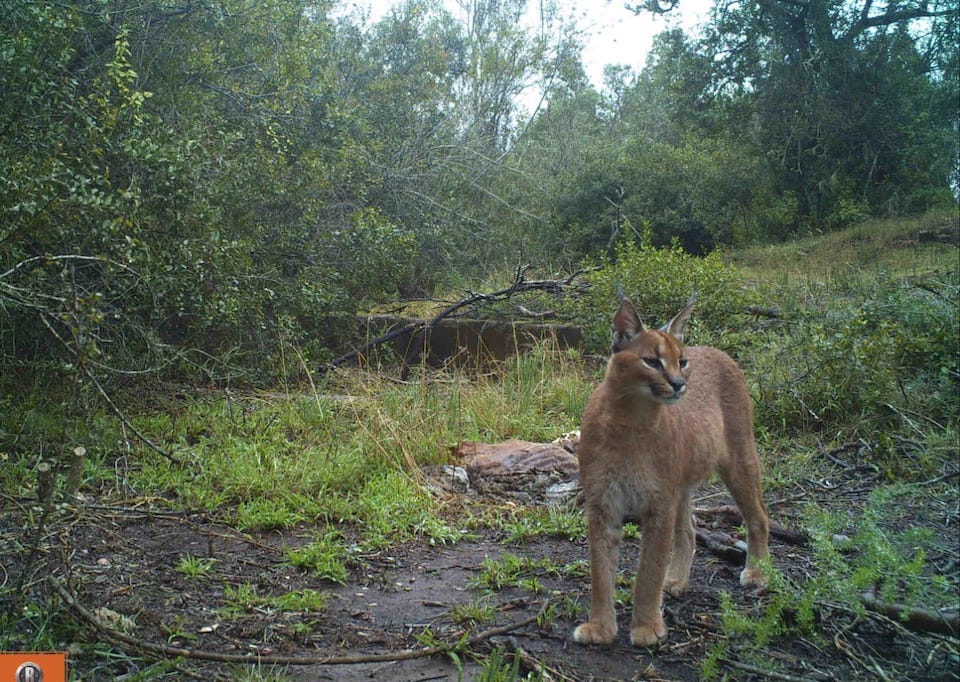
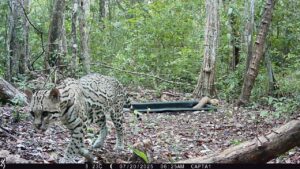
Through camera trapping, the conservancy tracks local wildlife. This elusive Rooikat (Caracal caracal) was recently captured on one of the trails.
The conservancy is involved in numerous impactful efforts to preserve and protect the local environment.
What Scott does in conservation
Under Scott’s leadership, the Conservancy has initiated a range of projects aimed at restoring ecosystems, managing resources sustainably and involving the local community in conservation efforts. Some of these projects include:
- Alien vegetation removal: Scott’s team has been working tirelessly to combat the spread of alien species in the area, such as Rooikrans, which threaten native vegetation and wildlife. These efforts have involved regular clean-up days with local volunteers and partnerships with environmental organisations to restore the area to its natural state.
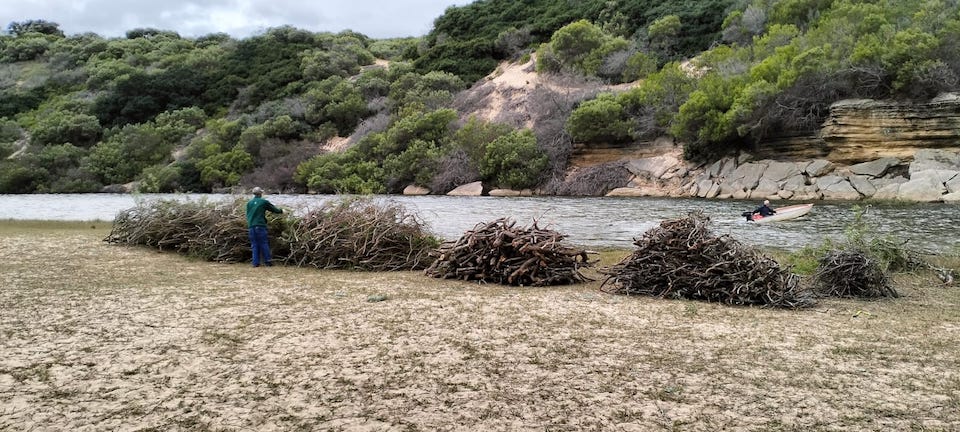
Invader species clearing on dunes of Groot Brak Beach.
- Beach clean-ups and waste reduction: One of Scott’s proudest initiatives has been the monthly beach clean-ups along the Great Brak River estuary. Through these activities, they have removed over six tons of waste, including plastic, bottle tops, and other debris.
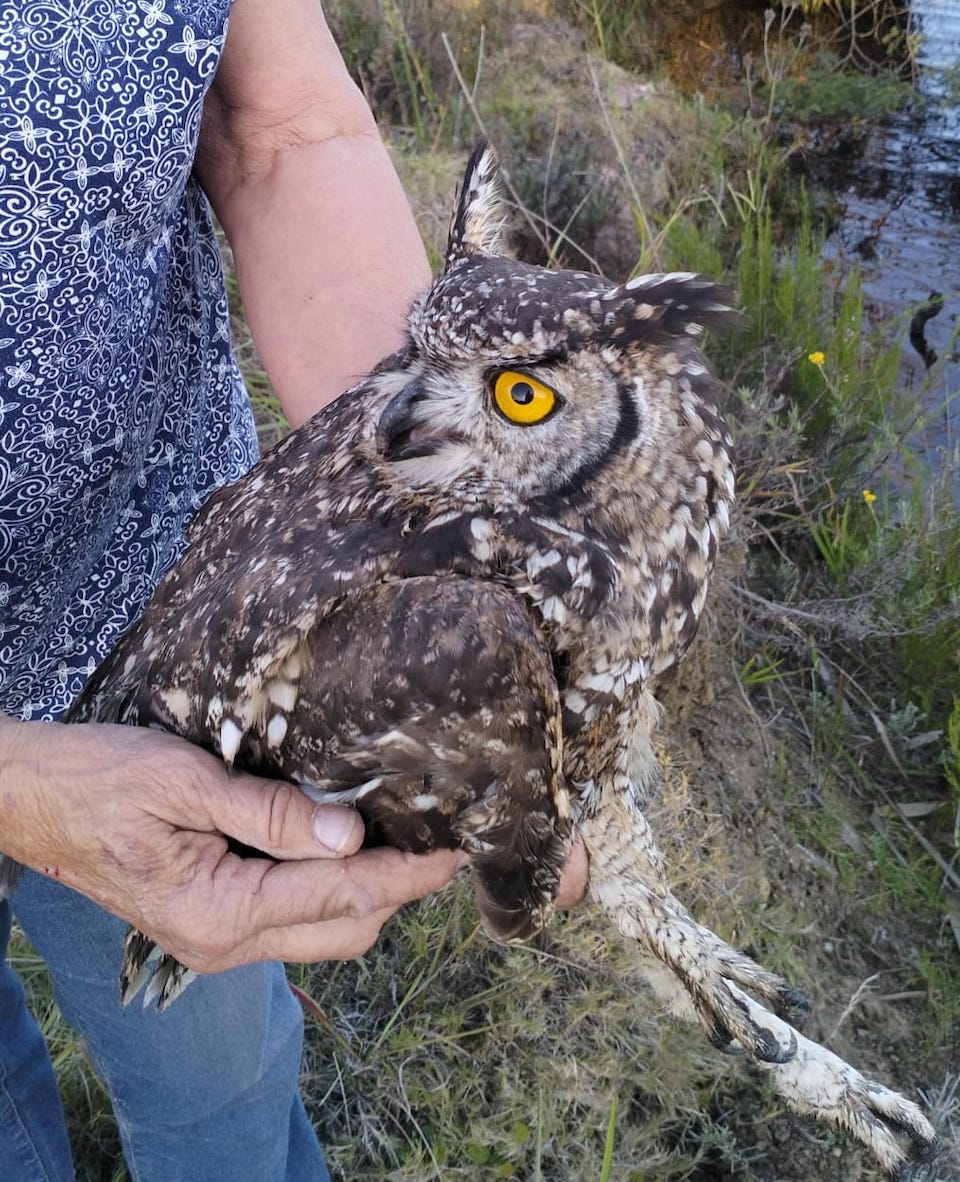
The conservancy received a call about this injured Spotted Eagle owl with a broken wing. and transported it to the Garden Route Birds of Prey Rehabilitation for treatment.
- Wildlife monitoring and rehabilitation: A key aspect of Scott’s conservation work is the monitoring and protect local wildlife, using camera traps to observe animal activity in the area When injured animals are found, they collaborate with local rehabilitation centres to ensure their proper care and recovery.
- Food garden: Their community initiatives include starting a food garden at the local creche, providing both nourishment and educational opportunities.
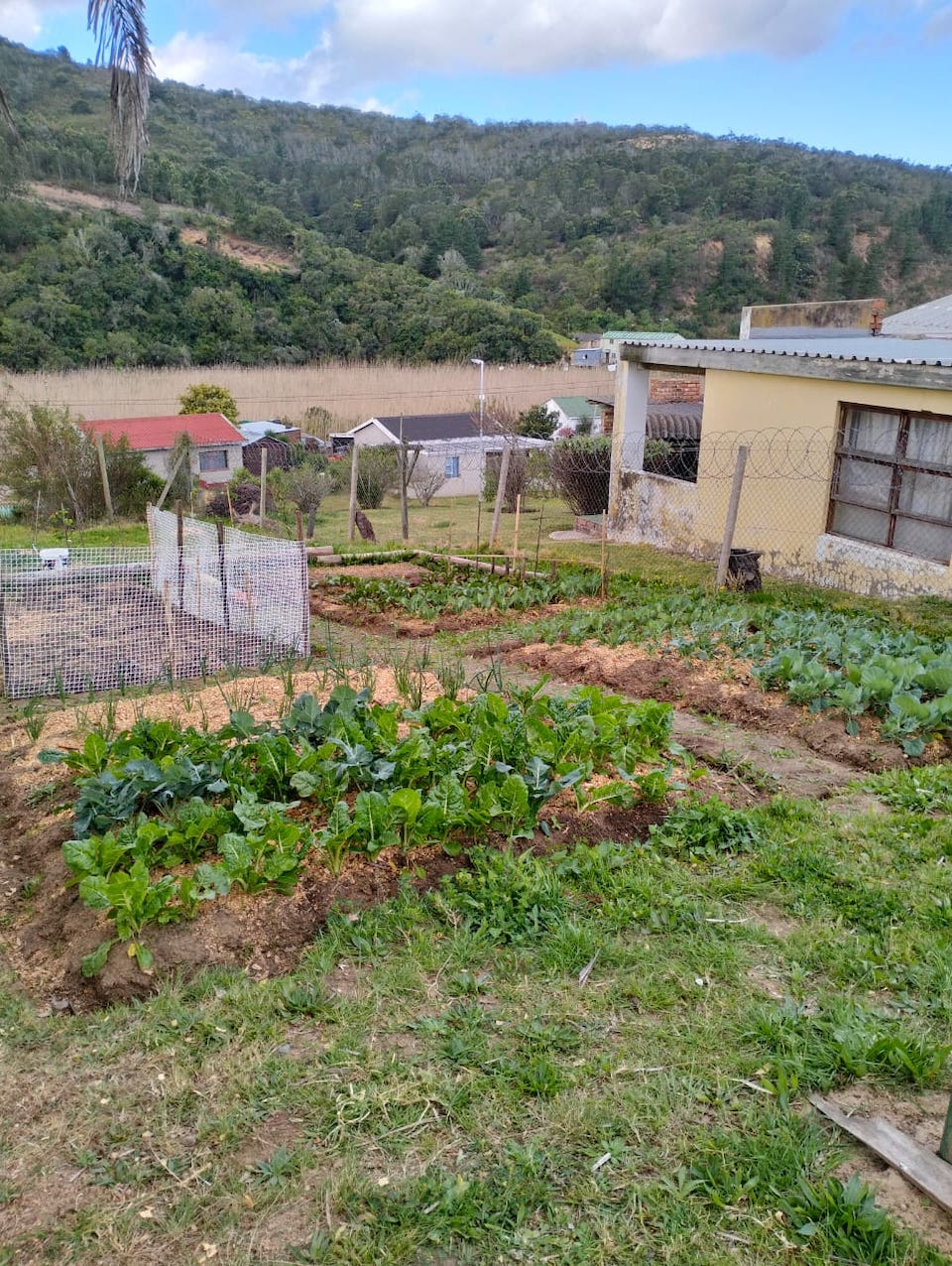
A thriving food garden established at Santa Creche in Groot Brak, an initiative supported by the Conservancy.
Sustainability in conservation: A long-term commitment
Sustainability is at the core of Scott’s conservation philosophy. He acknowledges that true conservation goes beyond preserving what we have; it’s about managing resources for future generations.
In this regard, he rejects what he calls “fortress conservation,” where land is locked away, cutting off local communities. Instead, Scott advocates for sustainable, inclusive management practices that benefit both the environment and the people.
“Conservation is about managing resources,” Scott explains, “It’s a give-and-take process. It’s not about creating a perfect, isolated space. It’s about working with the land and the people.” For Scott, the future of conservation lies in balancing environmental stewardship with community engagement and sustainable livelihoods.
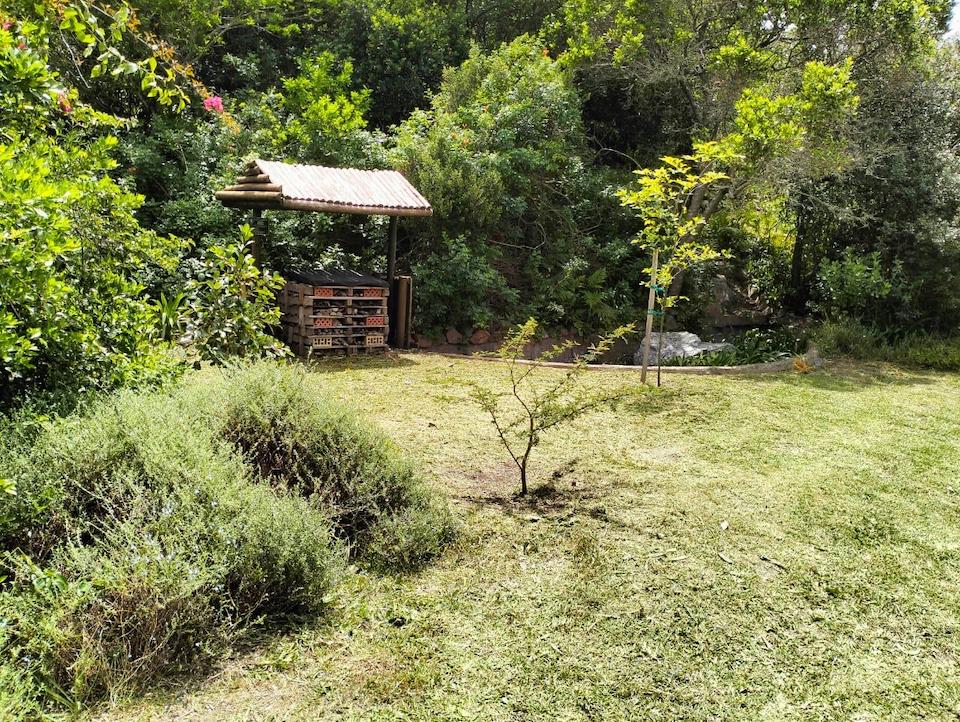
Originally an irrigation pump, this structure has been repurposed into an insect hotel to support local biodiversity.
The legacy of change
Reflecting on his journey, Scott finds motivation in both the successes and the struggles. He understands that conservation is a long-term effort, one that may not always show immediate results. As he looks toward the future, Scott is inspired by the knowledge that his efforts, however small they may seem, are part of a much larger, ongoing process of change.
“I don’t do this because of my disability,” Scott says, referencing his role as a wheelchair user. “I do this in spite of it.” His resilience, tenacity and unwavering commitment to conservation are a testament to the power of individual action.
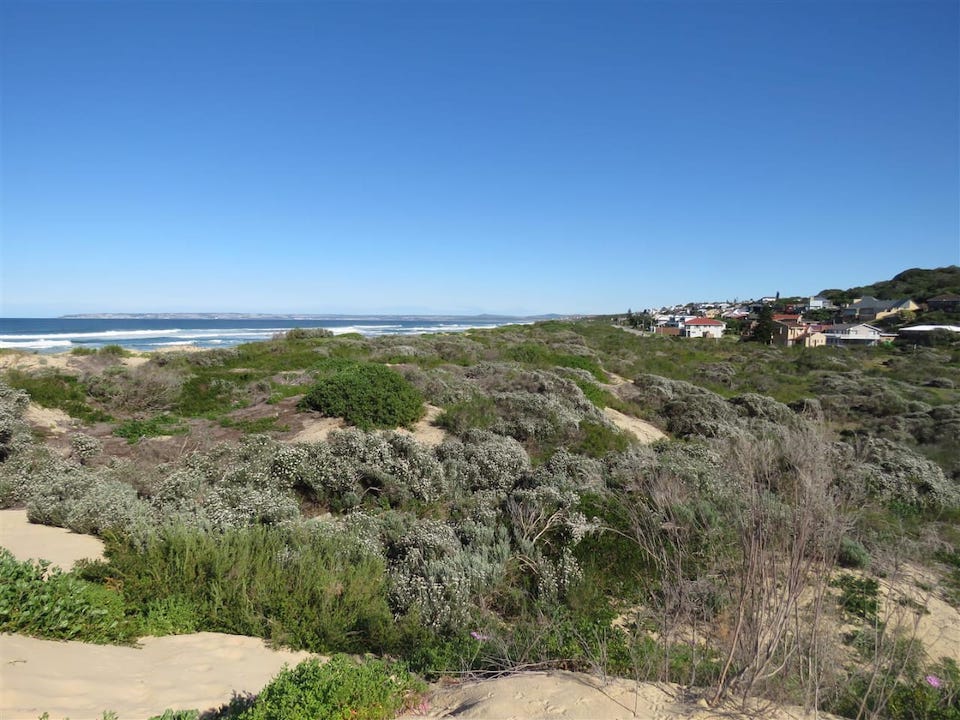
A section of dune in Groot Brak was thoroughly cleared of Rooikrans to restore the natural landscape.
For Scott Thomson, the journey of environmental conservation is not just about saving the planet; it’s about reconnecting with who we are as humans, finding unity in our shared environment and working together to create lasting change for future generations.
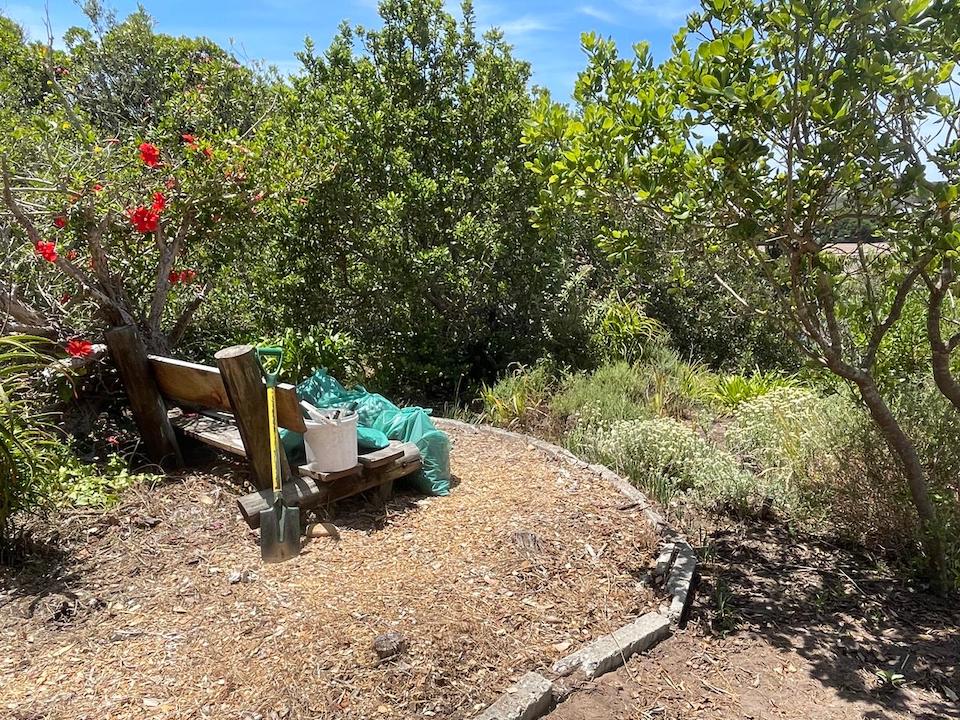
The Station Garden project, where we are restoring a historic garden to make it a vibrant and accessible space for the community once again.
Call to action
1. Educate yourself and others.
Understanding the intricate relationship between humans and the environment is crucial to driving long-term change. Explore these thought-provoking books and resources to deepen your knowledge:
- “The Secret Wisdom of Nature: Trees, Animals, and the Extraordinary Balance of All Living Things” by Peter Wohlleben – Wohlleben explores the deep interconnections in nature and highlights how ecosystems communicate, providing a philosophical perspective that aligns with holistic conservation approaches.
- “Braiding Sweetgrass” by Robin Wall Kimmerer – an exploration of indigenous wisdom and scientific knowledge on ecology and conservation.
- “The Book of Hope: A Survival Guide for Trying Times” by Jane Goodall – a powerful exploration of hope and conservation from the renowned primatologist, emphasising the role of collective action in environmental protection.
- “Rewilding Africa: Restoring The Wilderness On A War-Ravaged Continent” by Grant Fowlds & Graham Spence – Fowlds and Spence detail efforts to restore Africa’s wilderness areas, combining modern rewilding strategies with traditional knowledge to heal ecosystems.
2. Empower the next generation
Conservation is not only about protecting the environment; it’s also about educating and empowering the next generation of leaders. Help inspire the youth in your community to connect with their natural surroundings through local programs or school-based initiatives.
Visit EcoSchools for educational resources to engage young minds in environmental stewardship.
Would you like to learn more about Scott’s conservation philosophy? Check out Conservation as a unifier – A vision for a sustainable, connected future.
Are you interested in making a career switch or even leading a conservation organisation? These Conservation Careers resources could help you make it a reality:
Author Profile | Stephanie Nicolaides
 Stephanie Nicolaides is a dedicated PhD candidate in Environmental Management at the University of the Western Cape. Her research delves into the impact of plastic pollution on the Mossel Bay coastline (South Africa), with a particular focus on the effects on marine biodiversity. Her work focuses on assessing plastic presence, local knowledge, and developing sustainable solutions. Stephanie holds an MSc in Life Sciences from the University of South Africa, where her dissertation examined the behavioural ecology of African clawless otters. She also earned her BSc Hons in Life Sciences, graduating cum laude, with an honours project on personality in Leopard Tortoises. Passionate about environmental sustainability, Stephanie is committed to advancing knowledge in marine biology and contributing to efforts to protect and preserve coastal ecosystems. Connect with Stephanie on LinkedIn.