How a South African banker traded boardrooms for bushveld and found her calling in conservation

What does it take to leave behind a high-flying corporate career and devote your life to protecting wildlife? For Erika van der Westhuizen, the answer lay in courage, community and a deep love for nature.
After more than two decades in the world of banking and law, Erika made the bold decision to step away from her desk and into the field. Today, she leads conservation efforts along South Africa’s Garden Route as the chairperson of the Dana Bay Conservancy, championing local biodiversity, fighting poaching and empowering communities through hands-on action and environmental education.
Her journey from spreadsheets to snares wasn’t easy. But it offers invaluable lessons for anyone yearning to make a meaningful career switch into conservation, whether you’re at the beginning of your career, considering a mid-life pivot or dreaming of launching grassroots change in your own backyard.
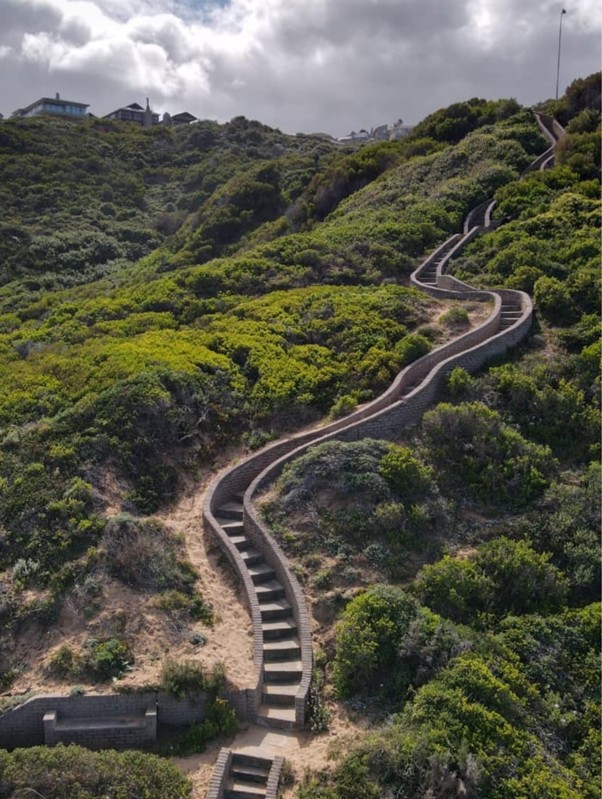
Dana Bay’s scenic beauty, this winding pathway leads through the coastal fynbos, part of the Cape Floristic Region. Erika works to preserve these delicate ecosystems.
Follow your passion: Understanding your true calling
“From a young age, I always felt this deep pull toward the outdoors,” she recalls. “I knew I had to find a way to make that passion my life’s work.”
After over two decades in banking, Erika decided that her heart was in the Southern Cape, and she made the bold move to Dana Bay (a tranquil coastal village nestled within the Cape Floristic Region, one of the most ecologically rich and biodiverse hotspots on the planet).
Erika’s switch from banking to conservation wasn’t glamorous. She faced financial uncertainty, resistance from some community members and the steep learning curve of managing ecological projects. Yet she stayed the course.
How you can apply this: If you’re switching careers, expect a transition period. Consider starting part-time, volunteering or building a financial buffer. Look for ways to gain experience, even if it’s outside your job.
Expect challenges but use them to grow
The Dana Bay Conservancy logo reflects the region’s iconic fauna, from bushbuck to tortoise, and its call to action: Respect our environment.
When Erika transitioned to conservation, she faced many challenges, from financial instability to the unpredictable nature of the work. Yet, her drive to contribute to something meaningful kept her focused. “Conservation work is not for the faint of heart,” she admits.
“It can be tough, especially financially, and in changing the negative perspectives of residents around conservation which originates from historical incidents, but there’s nothing more fulfilling than seeing the direct impact of your work on the environment and the community.”
Advice: Be prepared for the ups and downs of a career in conservation. It requires patience, resilience and persistence. The journey may not always be easy, but the rewards are immense when you know you’re making a difference in the world.
What is the Dana Bay Conservancy and Erika’s role?
Located along the picturesque Garden Route of South Africa’s Western Cape, Dana Bay is home to a variety of endemic species and diverse ecosystems that are vital to the region’s ecological balance.
As chairperson of the Dana Bay Conservancy, Erika’s role involves overseeing the conservancy’s efforts to preserve these natural resources and to engage the local community in conservation. Erika’s leadership has transformed the Dana Bay Conservancy into a hub of community-based conservation, where residents, businesses and conservationists work together to protect the area’s wildlife and habitats.
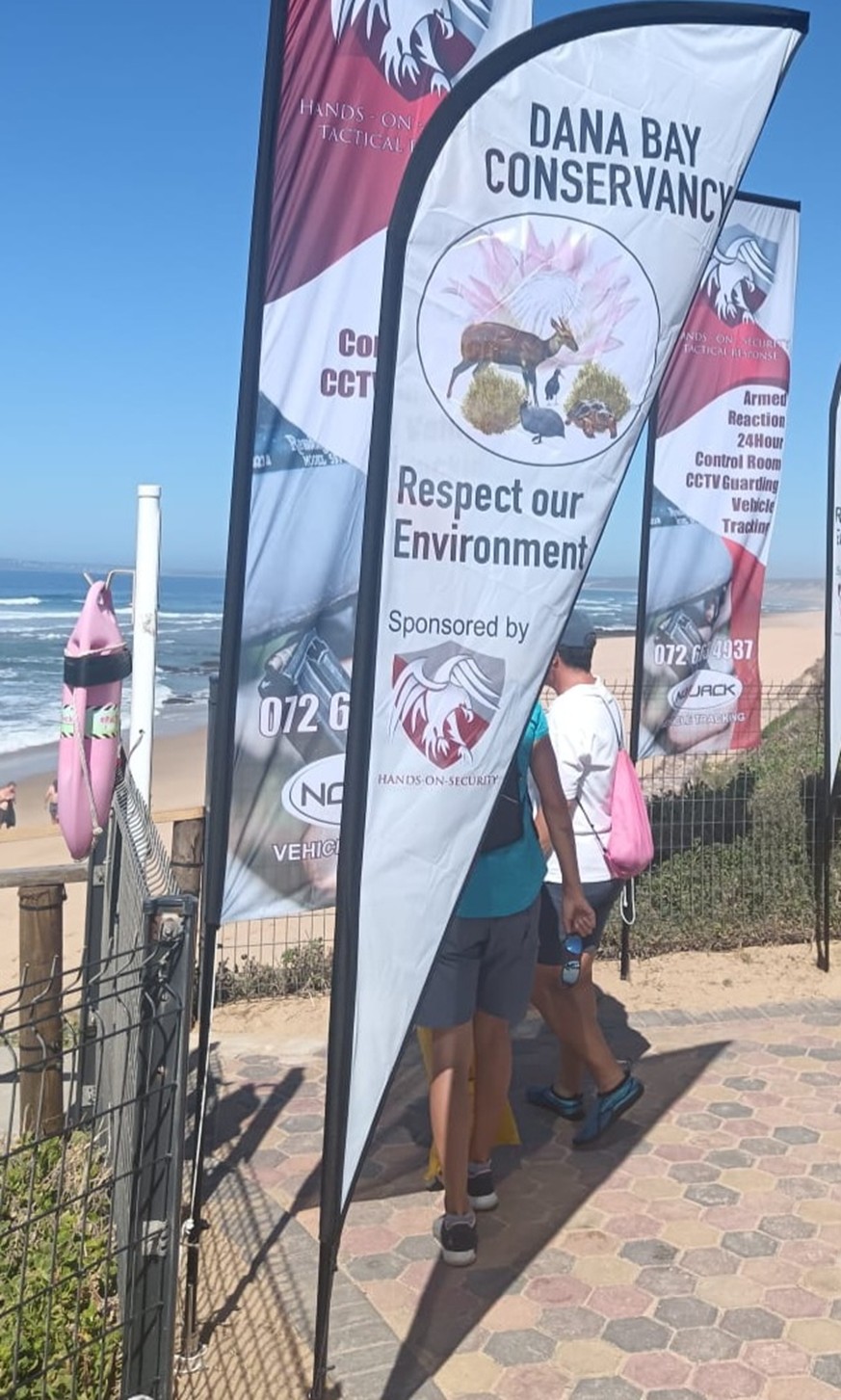
Conservation meets the coastline: Dana Bay Conservancy banners at the beachfront raise awareness and encourage local stewardship.
Involving the community: Conservation is a team effort
A key part of Erika’s success has been her ability to engage the local community in conservation efforts. “No conservation effort can succeed without the active participation of the people who live closest to the land,” she explains. “By involving the community, we ensure that conservation becomes a shared responsibility, not just the work of a few individuals.”
Advice: Involve the community in your conservation efforts. A successful conservation initiative relies on the collaboration of all parties involved. Whether it’s through awareness campaigns, volunteer programs or educational events, ensuring that people are part of the process creates long-lasting change.
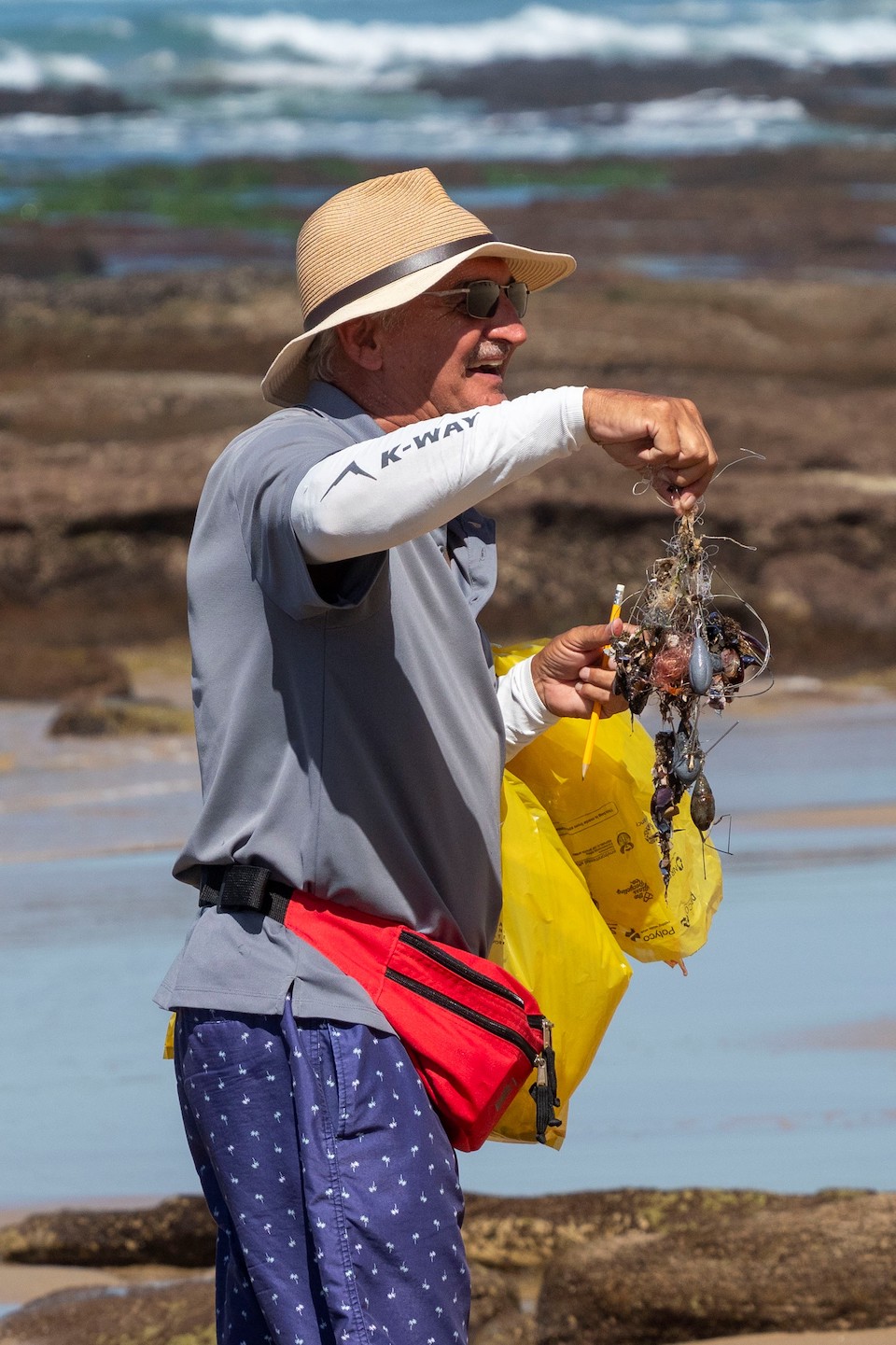
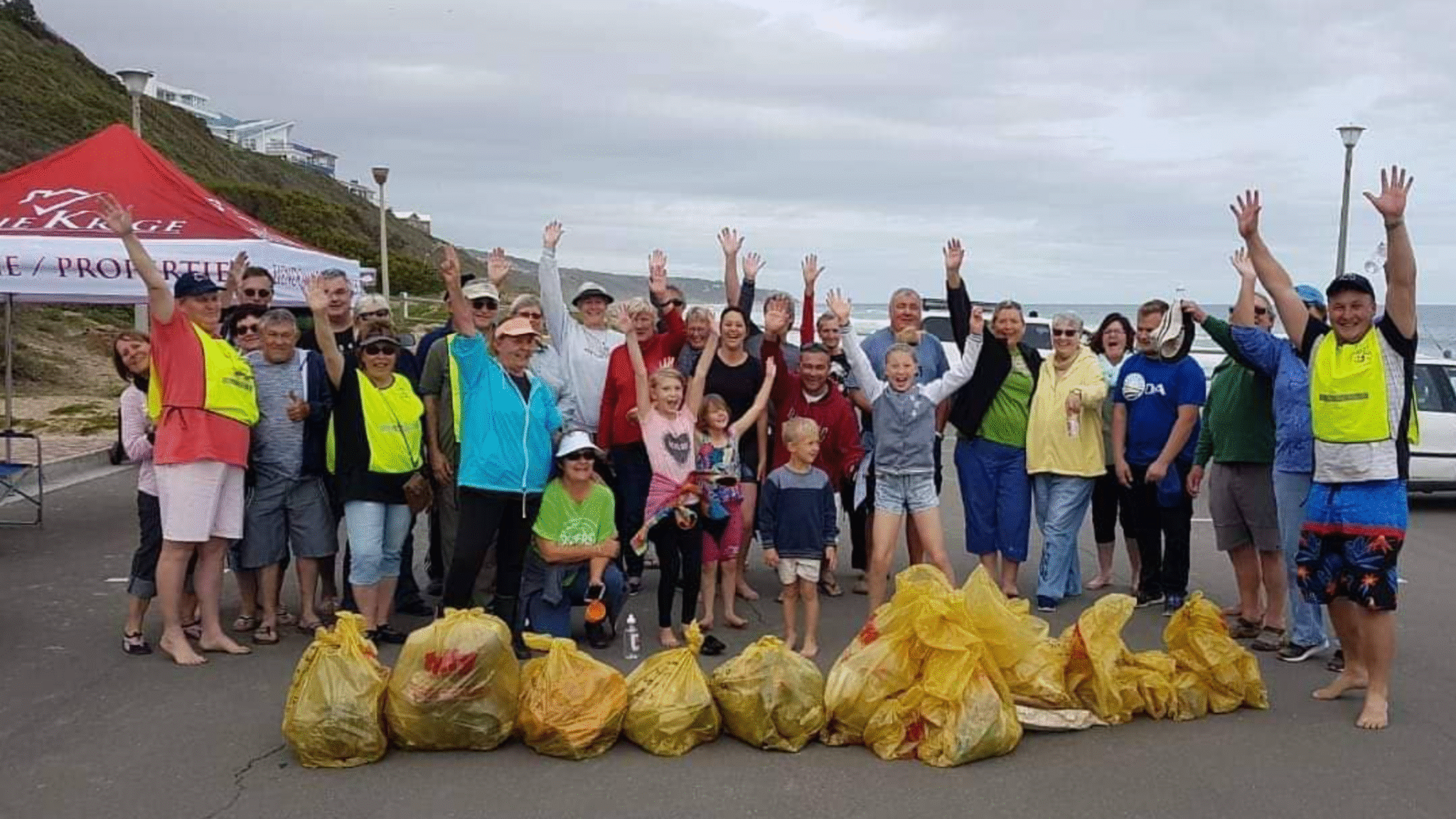
Community volunteers remove discarded fishing gear and marine waste during one of the Conservancy’s regular beach cleanup.
Leading by example: Key conservation projects
Erika’s leadership has driven several hands-on conservation projects that have had a tangible impact on the local ecosystem. Some of her most notable projects include:
-
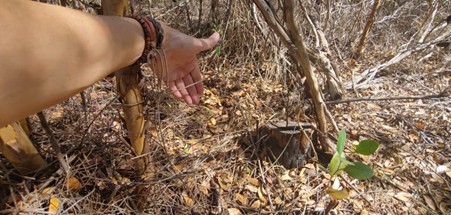
Erika’s anti-snaring campaign targets illegal traps like this one found in Dana Bay’s bushveld.
Anti-Snaring Campaign: Through local partnerships, Erika and her team have worked to remove snares set by poachers, protecting wildlife like bushbucks, caracals and tortoises. “Every snare we remove is one less threat to our wildlife,” Erika shares. “It’s a small victory, but it adds up.”
- Tortoise Protection Initiative: Erika’s passion for tortoises has led to the launch of the “Tortoise Mapping” campaign. “Tortoises are vulnerable, and we need to protect them for future generations. They are such complex creatures,” she says. Through research and monitoring, Erika and her team are soon rolling out the “Tortoise Research” project, gathering data to protect the local tortoise population. The project will include assistance from various conservation and veterinarian partners.
- Beach Cleanups & Marine Conservation: Erika organises regular beach clean-ups to tackle marine pollution. “The state of our oceans is alarming,” she acknowledges. “We can’t just sit back and wait for someone else to fix it; we all need to get involved.” For the past year the team, with the help of community members, is also performing Oystercatcher monitoring on behalf of CapeNature on the Dana Bay beaches.
Advice: Get involved with practical, real-world projects. Whether it’s monitoring wildlife or addressing pollution, start by focusing on initiatives that directly impact your local environment. Community involvement and real action are key to seeing immediate results in conservation.
Build strong relationships: The power of people skills
Erika’s background in corporate banking and law has shaped her approach to leadership. She’s a true “people-user,” a term she uses to describe her ability to connect with and understand others. “In conservation, relationships are everything,” she explains. “Whether it’s with local businesses, community leaders, or other organisations, you need to build strong, trust-based relationships to drive change.”
Advice: People skills are essential in conservation. Build relationships with your community, partners and stakeholders. Embrace the fact that every person involved will bring a different strength to the battlefield.
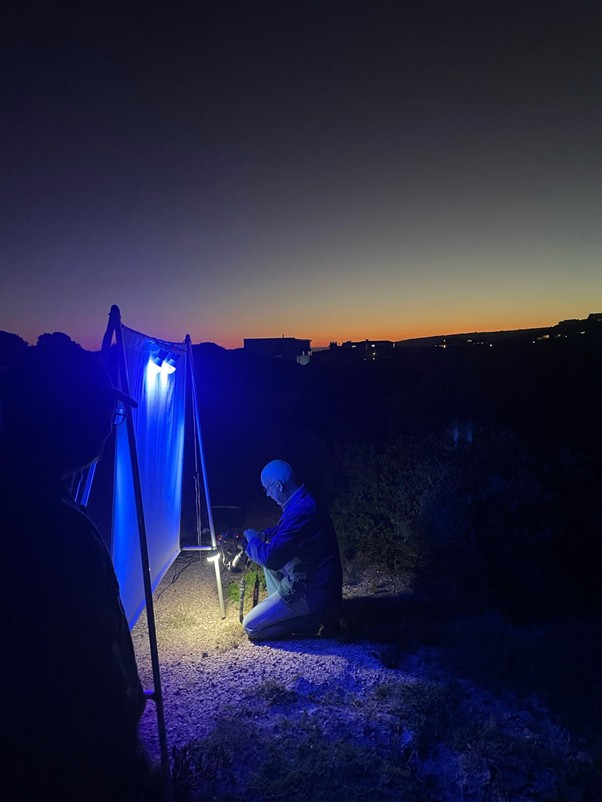
Citizen science after dark: During ‘Frog Night Out’ and insect monitoring evenings.
Stay open to change
The world of conservation is dynamic, and Erika has always been open to evolving her approach. “Every day brings new challenges and new opportunities,” she says. “If you’re not adaptable, you risk being left behind. Conservation is a constantly evolving field, and that’s what makes it so exciting.”
Erika and her team is embarking on an exciting collaboration with an expert ‘bird-ringer’ who will come teach residents the craft and skill.
Advice: Adaptability is essential in conservation. Stay open to new ideas, technologies and strategies that can improve your work.
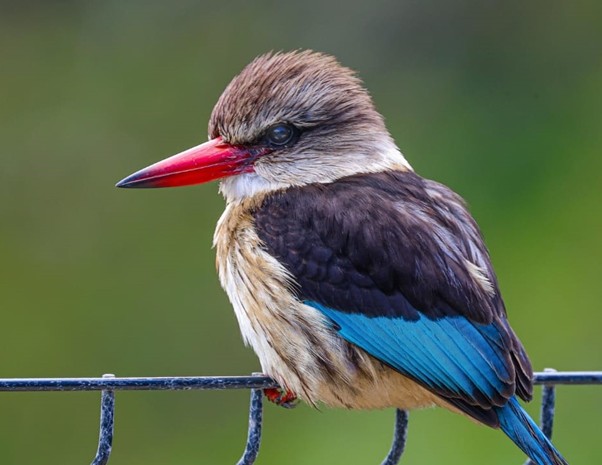
The woodland kingfisher (Halcyon senegalensis) is just one of many bird species observed in the region.
Passion for mentorship: Training the next generation
Erika is committed to mentoring young conservationists, offering hands-on training and real-world experience to students and budding professionals.
“I believe it’s our responsibility to pass on what we’ve learned,” she shares. “Mentorship is how we ensure the next generation is ready to take up the mantle of conservation leadership.” Erika and her team are excited to kick-off on a ‘Kids Programme’ later in 2025.
Advice: Mentorship matters. Don’t just focus on your own success; help others grow too. Provide opportunities for the next generation to gain valuable experience in the field.
Erika’s legacy: Leaving a lasting impact
One of Erika’s goals is to leave a lasting legacy for future generations. Currently, she is working on the establishment of a research project to ensure the long-term survival of local tortoises through a research project that tracks and protects the endemic population. In collaboration with the Wildlife Crime Information Network (WCIN), Cape Nature, veterinarians and volunteers, this initiative gathers essential data for conservation.
Additionally, as a director of the Mossel Bay Conservation Forum NPC, Erika plays a pivotal role in uniting local conservancies and conservation entities. The forum fosters collaboration, resource-sharing, and funding to preserve and protect Mossel Bay’s natural resources.
Advice: Think long-term. Consider the future of your work, and focus on leaving behind something that will continue to inspire others to protect the environment.
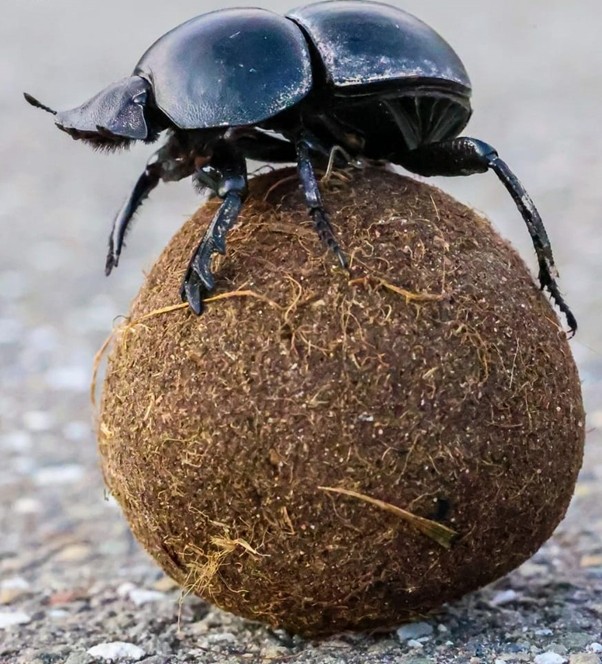
Nature’s recyclers: Species like the dung beetle play a vital role in nutrient cycling and soil health. Erika’s conservation education campaigns highlight the importance of all creatures.
Conservation begins with connection
One of the simplest yet most powerful things you can do to promote conservation is bring people outside.
Erika co-founded the Wildlife Wanderers and Adventurous Explorers group with Leon Rossouw from the Wildlife Crime Information Network (WCIN). What started with just two community nature walks in Dana Bay quickly turned into a thriving initiative – proving just how much people crave connection with both nature and one another.
“We thought a handful of people might show up,” Erika recalls. “But on the day of our first walk, over 100 people came. That’s when we realised how much this was needed.”
The group now runs a range of accessible, family-friendly events – from coastal walks to the popular “Frog Night Out”, where children and adults learn about local amphibians. A small participation fee goes directly back into conservation work.
How you can apply this:
- Start small. Organise a monthly walk, a beach cleanup, or a night hike.
- Collaborate with a local expert or conservation organisation.
- Make it inclusive and affordable.
- Keep it fun and educational, people protect what they understand and enjoy.
You don’t need a formal structure to begin. All you need is curiosity, a bit of coordination and the willingness to invite others along. Conservation begins with connection.
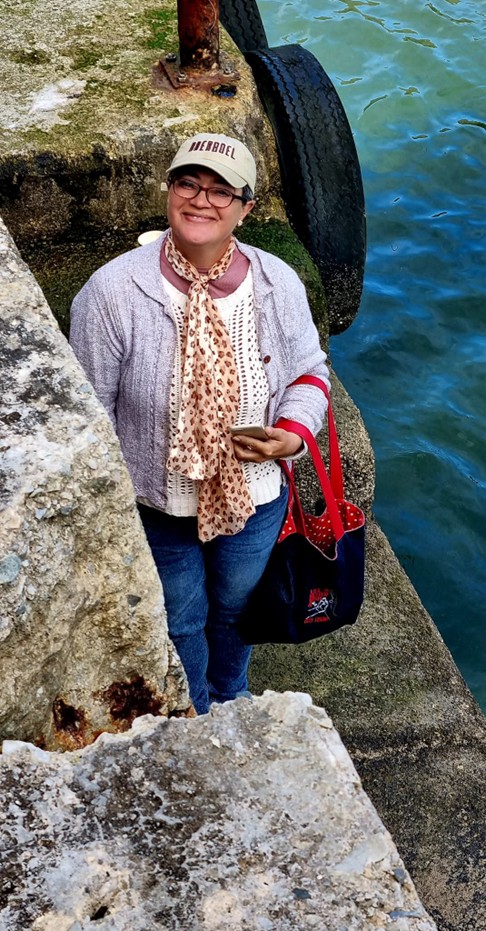
Leading with joy: Whether on the shoreline or in the field, Erika leads with heart and humility.
Be the change you want to see
Erika’s journey into conservation is a powerful reminder that passion, perseverance and community engagement are the cornerstones of effective environmental protection. Her advice to aspiring conservation leaders is clear: “Follow your passion, stay committed, and always be open to learning.”
Conservation is not just about protecting nature; it’s about inspiring others to do the same. If you want to make a difference, start by taking small steps today, and soon enough, you’ll be making a big impact. Our work in conservation is never done.
Want to explore conservation careers?
Discover more stories like Erika’s and explore Key Conservation Roles, Ultimate Guides and interviews on our Careers Advice Blog.
Featured image: Residents of Dana Bay cleaning the beaches. Credit: @danabayconservancy on Instagram.
Author Profile | Stephanie Nicolaides
 Stephanie Nicolaides is a dedicated PhD candidate in Environmental Management at the University of the Western Cape. Her research delves into the impact of plastic pollution on the Mossel Bay coastline (South Africa), with a particular focus on the effects on marine biodiversity. Her work focuses on assessing plastic presence, local knowledge, and developing sustainable solutions. Stephanie holds an MSc in Life Sciences from the University of South Africa, where her dissertation examined the behavioural ecology of African clawless otters. She also earned her BSc Hons in Life Sciences, graduating cum laude, with an honours project on personality in Leopard Tortoises. Passionate about environmental sustainability, Stephanie is committed to advancing knowledge in marine biology and contributing to efforts to protect and preserve coastal ecosystems. Connect with Stephanie on LinkedIn.