
Community-based conservation careers
Are you passionate about protecting nature with people, not from them?
A career in community-based conservation could be your calling.
Check out this Ultimate Guide to community-based conservation.
Conservation is about safeguarding wildlife and ecosystems. But can it succeed without the leadership and partnership of local communities?
At Conservation Careers, we believe the future lies in community-based conservation – where conservation is designed and delivered with people, not around them.
Community-based conservation careers put you at the heart of collaboration: supporting communities to manage land and resources, protect species, and build sustainable livelihoods.
Discover how you can build a meaningful career in community-based conservation.
Table of Contents
What is community-based conservation?
Community-based conservation is a people-centred approach to protecting nature. Unlike traditional “top-down” models – where governments, non-governmental organisations (NGOs), or external experts made decisions with little input from local people – community-based conservation recognises that those who live closest to biodiversity are often its best stewards.
There is no single universal definition of community-based conservation, but the core values are widely agreed upon:
The WWF Community-Based Conservation Framework defines community-based conservation as “conservation work that is led by or implemented in partnership with communities, based on shared governance, mutual benefits and collaborative decision-making.”
The GA Level 3 Award for Community-Based Conservationists describes it as “a people-centred approach to conserving biodiversity that seeks to align the interests of conservation with the rights, needs and values of local and Indigenous communities.”
In short: community-based conservation is not about doing conservation for people or despite people – it’s about doing it with people.
Core features of community-based conservation
Community-based conservation initiatives typically share a set of key characteristics:
Participation – Communities are meaningfully involved in conservation design, decision-making and delivery.
Local ownership – Conservation is led, implemented or co-managed by local and Indigenous peoples.
Mutual benefit – Projects aim to deliver both ecological and social outcomes, such as biodiversity gains and improved livelihoods.
Equity and respect – Community-based conservation respects cultural traditions, land rights, and different worldviews.
Long-term engagement – Success relies on trust and enduring relationships, not just short-term projects or external funding.
How community-based conservation differs from traditional conservation
Historically, many conservation projects were designed using a top-down model – where decisions were made by governments, individual pioneers or external experts with little or no input from the people living on the land or coexisting with the wildlife.
One classic example of this is the “fortress conservation” model. This approach treats nature as something to be protected from people – often by creating protected areas and restricting access. While it can lead to ecological gains, it has also resulted in human displacement, conflict and loss of rights, especially for Indigenous peoples.
Community-based conservation flips that script. It assumes that people who both depend on and live with nature can – and should – be its strongest allies.
Why community-based conservation matters
In today’s era of biodiversity loss, climate change and inequality, community-based conservation offers one of the most promising ways forward. Done well, it:
Strengthens conservation by aligning with community priorities
Protects rights while promoting ecological outcomes
Builds stewardship, skills and pride in local conservation efforts
“Communities aren’t barriers to conservation. They are its future.”
Where do community-based conservation professionals work?
Community-based conservationists work wherever people and nature meet – from rural villages and Indigenous territories to protected areas and shared landscapes. Their work often spans both the field and the office.
In communities, they might facilitate meetings, build trust with local leaders, support livelihood projects or help design land-use plans. In the field, they could be mapping resources, monitoring wildlife with local rangers or delivering training in participatory tools. Back in the office, they’re coordinating projects, writing reports, securing funding or collaborating with partner organisations.
Some community-based conservationists also work in cross-sector roles – for example, partnering with governments, development agencies or social enterprises to align conservation with community priorities.
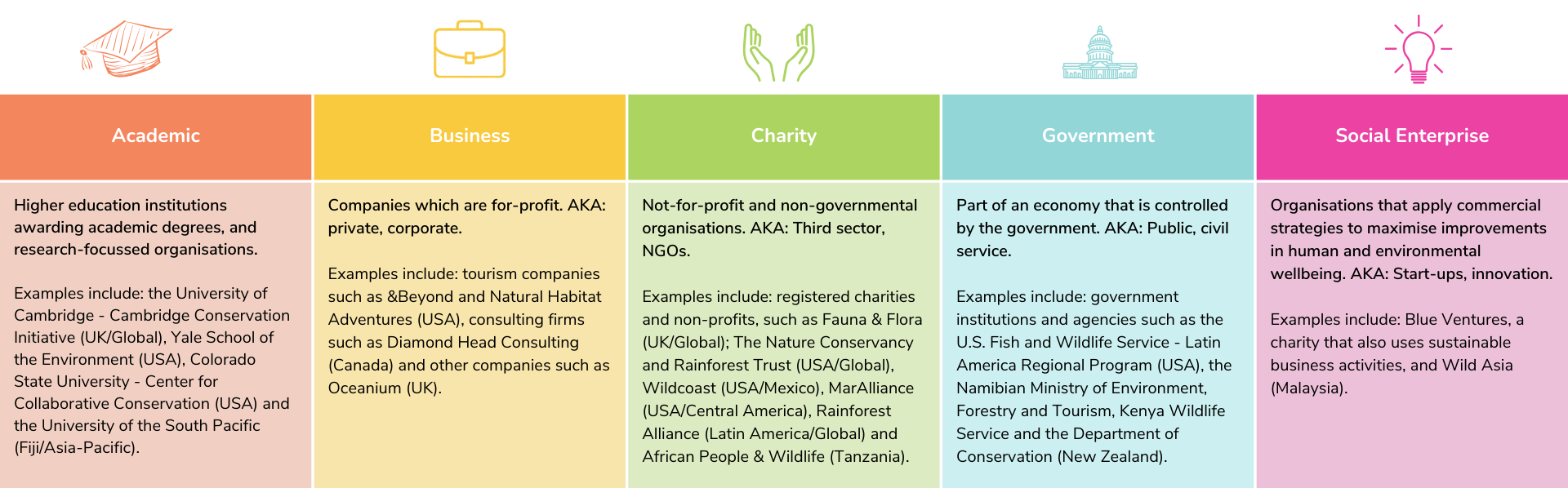
Types of conservation employers that hire community-based conservationists include:
Want to discover more great community-based conservation employers? As a Conservation Careers Academy member, check out our Career Explorer database with over 40,000 jobs from around the world.
What is a typical community-based conservation job description?
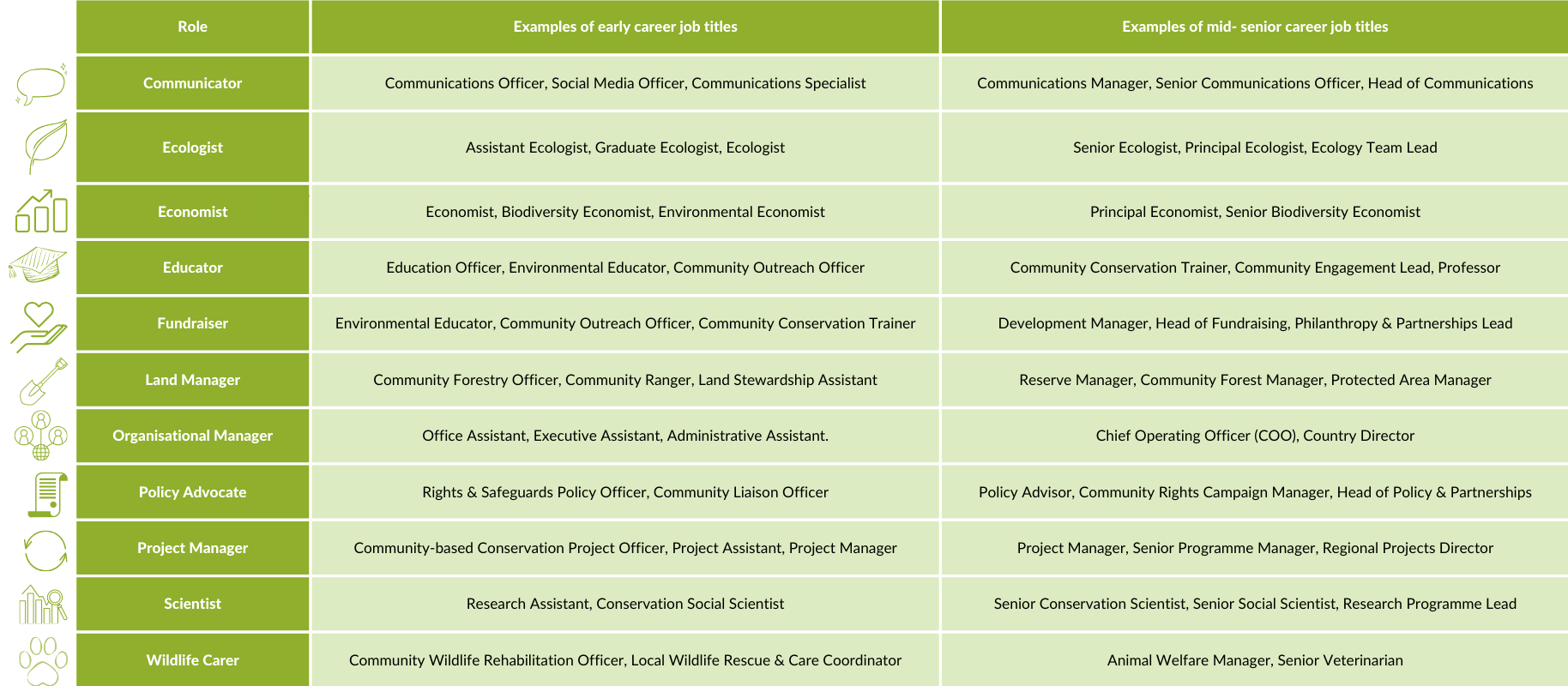
Community-based conservation is a broad ’cause’ or ‘theme’ of work. This means that if you have an interest in community-based conservation, you can apply your skills across any of the Key Conservation Roles. There’s something here for everyone with an interest in people and nature.
Community-based conservation careers sub-themes
Community-based conservation careers are diverse, ranging from fieldwork and education to project management and policy. Below are a few examples of common sub-themes – with typical early career job titles and duties.
Community engagement and outreach
As a community-based conservation professional working in engagement, you’ll help build trust, raise awareness and ensure that local voices shape conservation initiatives.
Example early career job titles include: Community Outreach Assistant, Engagement Officer Community Liaison Officer.
Examples of typical duties include:
Building relationships with local leaders, elders and groups.
Facilitating community meetings and workshops.
Coordinating community consultations and surveys.
Supporting Free, Prior and Informed Consent (FPIC) processes.
Delivering awareness campaigns (radio, posters, social media, etc.).
Collecting and sharing feedback from communities with project teams.
Supporting local storytelling and communications.
Fieldwork and monitoring
Field-based community-based conservation roles often combine ecological monitoring with participatory approaches, ensuring communities are directly involved in data collection and decision-making.
Examples of early career job titles include: Community Field Technician, Participatory Monitoring Assistant.
Examples of typical duties include:
Conducting wildlife or habitat surveys with local partners.
Mapping land use and resource rights with community input.
Supporting community-led biodiversity monitoring (e.g. camera traps, GPS).
Collecting socio-economic data alongside ecological surveys.
Entering and summarising monitoring data.
Livelihoods and enterprise support
Many community-based conservation jobs involve linking conservation goals with sustainable, community-led livelihoods.
Example early career job titles include: Livelihoods Officer, Community Enterprise Assistant, Sustainable Development Officer.
Examples of typical duties include:
Supporting community enterprises (e.g. eco-tourism, beekeeping, handicrafts).
Providing training or capacity-building on small business management.
Helping design incentives for conservation-compatible livelihoods.
Linking communities to markets for eco-friendly products.
Monitoring the social and economic impacts of conservation activities.
Coordinating partnerships with social enterprises or cooperatives.
Project and programme management
Community-based conservation project managers help plan, deliver and evaluate projects that combine ecological goals with community priorities.
Example early career job titles include: Project Assistant, Community Conservation Officer, Programme Support Officer.
Examples of typical duties include:
Developing and coordinating project activities.
Conducting background research (ecological, social or policy).
Supporting proposal writing and fundraising efforts.
Administering project budgets and reports.
Coordinating partners, contractors or volunteers.
Organising community events, trainings, or education sessions.
Representing the project at local meetings and multi-stakeholder forums.
Supporting monitoring, evaluation and learning.
Policy and advocacy
Some community-based conservation roles focus on shaping laws, rights and governance to protect both communities and biodiversity.
Example early career job titles include: Policy Assistant, Advocacy Officer, Community Rights Officer.
Examples of typical duties include:
Conducting policy analysis (land tenure, Indigenous rights, governance).
Supporting advocacy campaigns at local, national or global levels.
Engaging communities in policy dialogues and consultations.
Drafting policy briefs or position statements.
Liaising with governments, NGOs and community-based organisations.
Monitoring the implementation of rights-based safeguards.
Haven’t found your ideal role yet? Why not explore our Job Archive, where you can search more than 50,000 job descriptions, including community-based conservation jobs.
Want to understand what a day in the life of a community-based conservationist is really like? Read the latest community-based conservation career stories & advice.
What is the job demand in community-based conservation careers?
Over the past decade, community-based conservation careers have grown steadily as strategies increasingly recognise local people as essential partners in protecting nature. Organisations are designing projects that place communities at the heart of solutions, creating a wider range of jobs involving engagement, facilitation and social science alongside traditional ecological roles.
This shift is driven by evolving policy and funding priorities that tie conservation success to social outcomes. Donors, governments and international agreements – such as biodiversity frameworks for 2030 – now emphasise equity, Indigenous rights and local benefits. As a result, organisations are hiring staff who can connect conservation goals with community development on the ground.
Regional demand is rising fastest in biodiversity-rich areas where local communities are central to conservation success. Across Africa, Asia and Latin America, projects increasingly link environmental protection with livelihoods – such as community wildlife conservancies in East Africa, Indigenous forest management in the Amazon or nature-based tourism in southern Africa. Meanwhile, many large conservation employers remain headquartered in North America, Europe, and Australasia, meaning professionals in developing regions often collaborate with or work through global partnerships.
Although the conservation sector still faces financial constraints, with NGOs and governments limited by tight budgets and restricted funding for staff, momentum continues to build for community-based conservation careers. A growing global consensus recognises that lasting environmental solutions depend on local leadership. For early-career conservationists and career switchers, this means opportunities are expanding for those who can combine environmental expertise with social engagement skills – and help people and nature thrive together.
What are the education requirements for community-based conservation careers?
Many people entering the conservation sector believe that most conservation jobs require a university degree or master’s, and that formal education is the single best route to a conservation job.
But conservation is a diverse sector and the requirements for each role varies, so having a clear target job will help to understand the type of education you need. The same goes for jobs in community-based conservation. Community-based conservation is a broad ’cause’ or ‘theme’ of work, which includes all of the Key Conservation Roles.
Employers tell you what they require in their job descriptions, so get clear on your target job and study entry-level job descriptions to see if you have what’s needed in terms of education, skills and experiences.
Some community-based conservation jobs may require an undergraduate (Bachelor’s) degree in a relevant field such as conservation biology, ecology, environmental science, natural resource management, sustainable development or social sciences (e.g. anthropology, sociology or economics). Some universities offer specialisms or modules on community-based conservation, human-wildlife conflict or sustainable livelihoods. Mid- to senior-level roles in research, management or policy may require a master’s or PhD.
When starting a community-based conservation career, real-life experience can greatly increase your chances of landing a job. We recommend gaining experience through internships, volunteering and other work experience schemes.
Check out these resources:
How do I get a community-based conservation degree?
Search our Conservation Training board for degrees and courses related to community-based conservation careers, such as:
- Certificate in Community-Based Conservation | Conservation Careers | Online (short course)
- Human Dimensions of Natural Resources and the Environment | Pennsylvania State University | Pennsylvania, USA (Masters)
- The Duke Environmental Leadership Master of Environmental Management | Duke University | Online (Masters)
- Urban and Regional Planning (Sustainability) | University of Florida | Online (Masters)
- Urban Nature: Connecting Cities, Sustainability and Innovation | Lund University | Anywhere (Short Course)
- Sustainable Cities and Communities | Lund University | Online (Short Course)
- Sustainable Tourism and Protected Area Management | Michigan State University | East Lansing, MI, USA (Masters)
- Indigenous Religions & Ecology | Yale University | Online (Short Course)
- Tropical Forest Landscapes 101: Conservation & Restoration | Yale University | Online (Short Course)
- Tropical Forestry and Agroforestry | Czech University of Life Sciences | Prague, Czech Republic (Masters)
What are the top community-based conservation careers skills?
Community-based conservation is a broad ’cause’ or ‘theme’ of work, which includes all of the Key Conservation Roles. This means that the specific skills you need to become employable will depend on the specific role you want to do.
Employers tell you what they require in their job descriptions, so the best way to understand the skills you need is to get clear on your target job and study job descriptions.
However, in general, many community-based conservation jobs call for a hybrid of people-focused communication and engagement skills with scientific, technical and/or management skills. Here’s a snapshot of some of the most sought-after skills (and knowledge) employers look for in community-based conservation jobs. Most of these skills are highly transferable!
Communication & outreach – Strong written, verbal and intercultural communication skills.
Community engagement & interpersonal skills – Skills such as communication, active listening, empathy, facilitation, conflict resolution, cultural sensitivity and trust-building with local people.
Partnership & collaboration – Skills such as relationship-building, negotiation, coordination, stakeholder management, shared decision-making and maintaining productive cross-sector partnerships.
Project management – Skills such as planning, budgeting, organisation, coordination, managing resources, multitasking and attention to detail.
Education & capacity building – Abilities such as designing workshops, creating learning materials and simplifying technical concepts.
- Technical & field skills – Skills such as basic data collection, species monitoring, GIS/GPS, natural resource management knowledge.
Fundraising – Skills such as grant writing and proposal development.
Adaptability & problem-solving – Resilience, cultural adaptability, initiative, patience, creativity and more.
Below we’ve summarised common skills and experience employers seek, for some typical community-based conservation jobs. To learn more about the the specific skills and experience you’ll need to land a community-based conservation job, we recommend exploring job descriptions on our Job Archive.
Community Engagement & Outreach
Cross-cultural communication and active listening- Facilitation of meetings, workshops, and consultations
- Relationship-building with community leaders and stakeholders
- Conflict resolution and negotiation
- Participatory approaches (e.g. Participatory Rural Appraisal (PRA); Free, Prior and Informed Consent (FPIC); co-design)
- Event planning and community mobilisation
- Public speaking and presentation
- Local language proficiency or cultural awareness
- Storytelling, writing and media engagement (social media, radio, posters)
- Monitoring and reporting of community feedback
Fieldwork & Monitoring
- Ecological survey techniques (flora, fauna, habitats)
- Participatory monitoring methods with community members
- Data collection, entry, and management
- Use of GPS, GIS and mapping tools
- Biodiversity and habitat identification skills
- Socio-economic data gathering and interviewing
- Environmental sampling and field safety protocols
- Data analysis and report writing
- Community training in basic monitoring techniques
- Collaboration across technical and local teams
Livelihoods & Enterprise Support
Understanding of sustainable livelihood and conservation linkages- Small business planning, financial literacy and marketing support
- Value chain and market analysis for nature-friendly products
- Community facilitation and training delivery
- Partnership-building with cooperatives and local enterprises
- Socio-economic monitoring and impact assessment
- Gender and social inclusion awareness
- Microfinance, grant or enterprise management
- Adaptive management and problem-solving
- Communication and documentation of success stories
Project & programme management
Project planning, implementation and coordination- Budgeting, financial tracking and donor reporting
- Proposal writing and fundraising support
- Stakeholder coordination and partnership management
- Monitoring, Evaluation, and Learning (MEL) frameworks
- Event and logistics management
- Research and data synthesis (ecological, social or policy)
- Communication and networking across sectors
- Time management and multitasking
- Administrative accuracy and attention to detail
Policy & Advocacy
- Policy analysis and interpretation (governance, land, rights, biodiversity)
- Research and synthesis of policy evidence
- Writing policy briefs, statements and advocacy materials
- Stakeholder engagement with government, NGOs and communities
- Campaign planning and strategic communications
- Understanding of human rights, FPIC (Free Prior and Informed Consent) and legal frameworks
- Public speaking and representation at consultations or forums
- Networking and coalition-building
- Monitoring policy outcomes and compliance
- Diplomacy, tact and negotiation skills
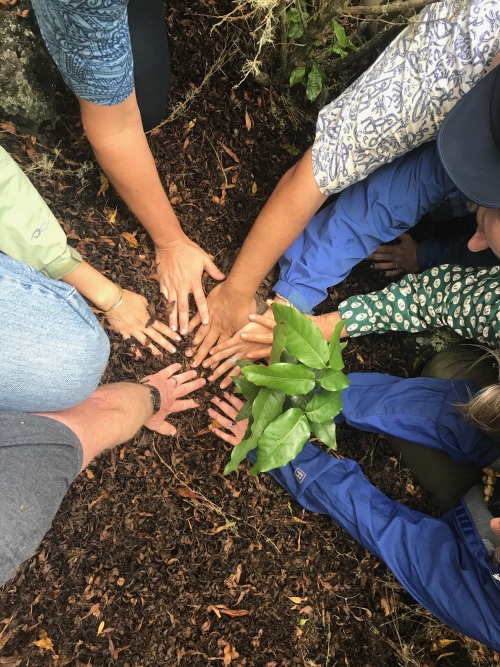
Top image: The Auwahi Forest Restoration Project is one of the most ambitious large scale forest restoration projects in Hawaii, supported by 1000s of Maui resident volunteers. As a result, this rare Hawaiian dry forest went from ecological failure to an example of community-based restoration success. Credit: USFWS – Pacific Region via Flickr.
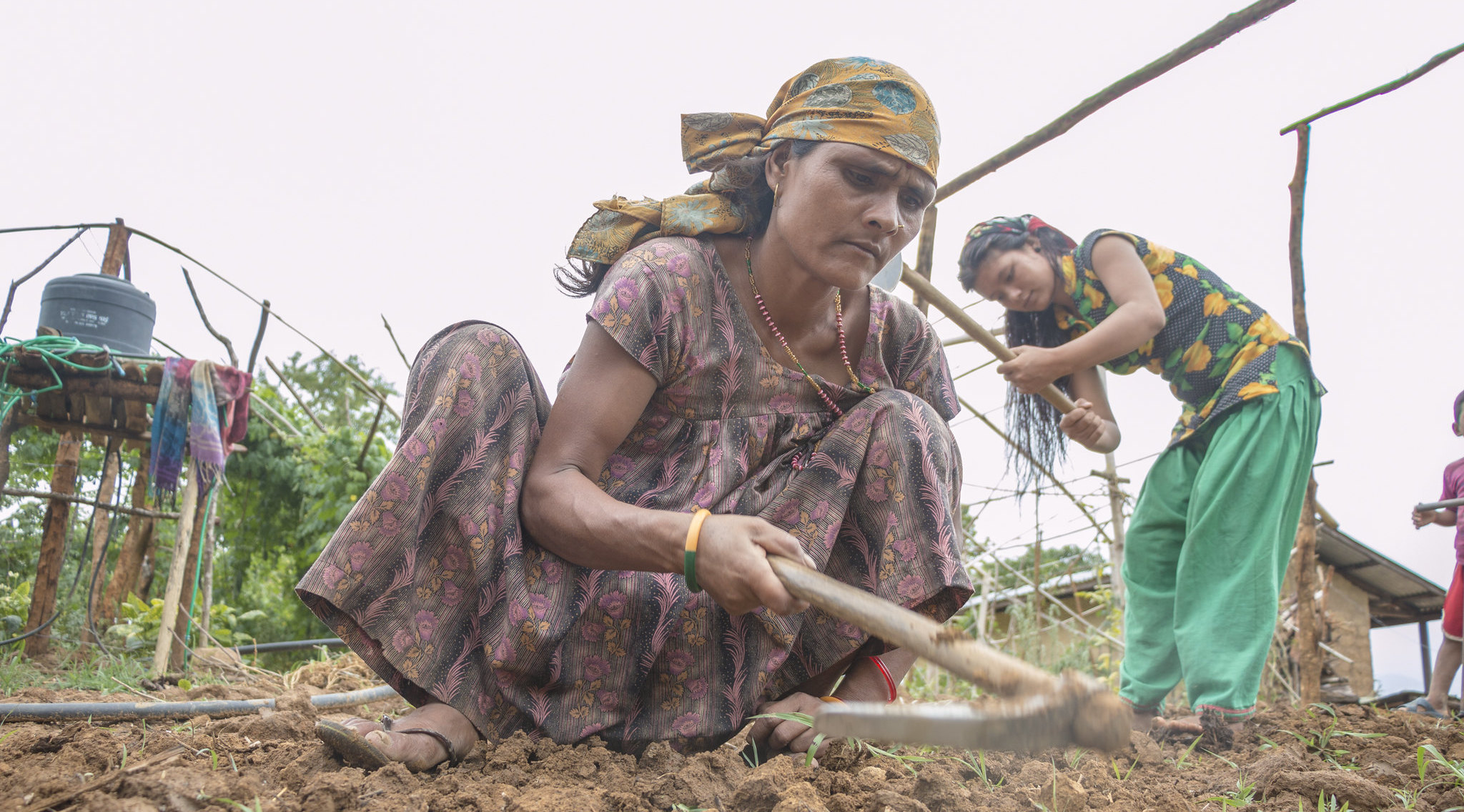
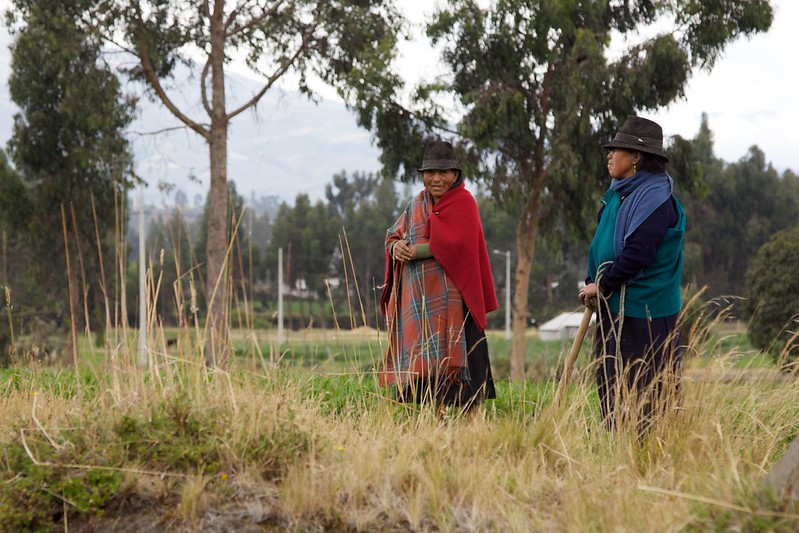
Bottom image: Indigenous women at work in the fields near Yanayacu, Ecuador. Credit: David Brossard via Flickr.
What community-based conservation societies and professional organisations exist?
There are many societies and professional organisations for community-based conservationists worldwide. Here are just a few to get you started:
International community-based conservation societies:
The Society for Conservation Biology (SCB). The SCB is a global network offering training, conferences and resources for biodiversity conservation professionals.
The ICCA Consortium. The ICCA advocates for and supports territories conserved by Indigenous Peoples and local communities worldwide.
The International Ranger Federation (IRF). The IRF connects and supports rangers working with communities to protect natural areas around the world.
The International Association for Society and Natural Resources (IASNR). The IASNR unites social and environmental scientists to advance community-based natural resource management.

WildHub. WildHub is a free, global online community where conservation professionals share resources, training and peer support.
Community-based conservation societies in Africa:
Society for Conservation Biology – Africa Region. SCB Africa unites conservation professionals to share knowledge and strengthen capacity through congresses, mentoring programmes and research grants.

Game Rangers Association of Africa (GRAA). Founded in 1970, GRAA is the oldest and largest ranger association in Africa, providing a community of practice with networks, support, training and representation for over 2,500 wildlife rangers across Africa.

African Forest Forum (AFF). AFF is a pan-African network of forestry professionals dedicated to sustainable forest management and conservation of tree resources, acting as a knowledge broker and capacity builder (through research, publications, training and more).
Wildlife and Environment Society of South Africa (WESSA). One of South Africa’s oldest membership-based environmental organisations, WESSA promotes public participation in conservation and offers professional training programs and volunteer networks to build careers.
Kenya Wildlife Conservancies Association (KWCA). KWCA is an umbrella body for community and private conservancies in Kenya, with 100+ member conservancies, providing a platform for networking, training and advocacy.
Community-based conservation societies in the United Kingdom and Europe:

The Scottish Countryside Rangers’ Association (SCRA). The SCRA represents and supports Scottish rangers working on public engagement and natural heritage. The Society for Conservation Biology – Europe Region.

SCB Europe is the European network of SCB, comprising hundreds of conservation professionals dedicated to biodiversity protection.
EUROPARC Federation. EUROPARC Federation is the network for Europe’s natural and cultural heritage, representing protected area managers across 37+ countries, and improving protected area management through international cooperation, training, exchange of best practices and policy influence.
Community-based conservation societies in the United States and Latin America:

The Corps Network. The Corps Network supports youth and veteran service corps involved in conservation and community-based environmental work.
Society for Conservation Biology – Latin America and Caribbean (SCB LACA). SCB LACA unites conservation professionals in Central/South America and the Caribbean, building members’ capacities through collaboration, congresses and training.
Federación Latinoamericana de Guardaparques (FLG). FLG is a regional association of the International Ranger Federation (IRF), offering rangers in Latin America training, peer support and international representation.
Community-based conservation societies in Asia-Pacific:
- The Society for Conservation Biology – Asia Section.
SCB Asia connects conservation scientists and practitioners from the Middle East through East Asia, fostering research exchange, policy engagement and conferences. The Society for Conservation Biology – Oceania Section.
Encompassing Australia, New Zealand and the Pacific Islands, SCB Oceania advances conservation through member forums, regional conferences, awards and student support programs.
RECOFTC (The Center for People and Forests). Based in Bangkok, RECOFTC empowers local communities and practitioners in sustainable forest management, providing training courses and partnerships to strengthen community forestry.
Community-based conservation careers resources
Community-based conservation careers podcast episodes
How community-based conservation is helping protect Kenya’s last known giant ground pangolins – with our guest Beryl Makori of The Pangolin Project. Listen here.
Pioneering a community-based conservation approach – with guest Dr Charu Mishra, the world’s foremost expert on snow leopard conservation, Executive Director of the International Snow Leopard Trust, Co-Founder of India’s Nature Conservation Foundation and double Whitley Gold Award Winner. Listen here.
Learn about the theory and practice of successful community-based conservation programmes with guest, Dr Stacy Jupiter, Melanesia Regional Director of the Wildlife Conservation Society and winner of the prestigious MacArthur Fellowship in Conservation. Listen here.
Community-based conservation careers interviews

- From wildlife vet to conservation leader: A journey of passion and purpose
- Conserving Lions through Evidence-Based Conservation and Local Rights: An Interview with Amy Dickman
- Seeds of change: Abubakar Ibrahim’s quest for youth empowerment, conservation and heritage preservation in Nigeria
- Slow and steady wins the race – social justice through turtle conservation
- How a South African banker traded boardrooms for bushveld and found her calling in conservation
- Conversation sparks conservation: an interview with Blue Ventures’ Chief Executive, Alasdair Harris

Community-based conservation careers webinars
- Community-based Conservation
Why local and Indigenous communities matter in wildlife conservation, what makes community-based conservation successful and how we can work together to achieve greater impact – with guest Tom Graham, Co-Founder of MAD Travel, Author of “The Genius of the Poor” and TEDx Speaker.
Example community-based conservation jobs
To help illustrate community-based conservation careers, here are several job descriptions that represent (real) entry level community-based conservation jobs. Pay particular attention to the selection criteria (specifications) to learn more about what conservation employers are looking for when they hire for community-based conservation jobs. Remember that community-based conservation is a cause, and that job requirements are likely to vary widely depending on the specific role.
Fisheries and Livelihoods Coordinator | Blue Ventures | Timor-Leste, South Eastern Asia (2021)
Blue Ventures is a marine conservation organisation that puts people first. We support coastal fishers in remote and rural communities to rebuild fisheries, restore ocean life and build lasting pathways to prosperity. Our work began two decades ago in Madagascar’s remote coastal communities and is growing globally. The Fisheries and Livelihoods Coordinator is responsible for developing and managing the fisheries focused livelihood programmes that are linked to community-led coastal conservation in Timor-Leste. This position presents an excellent opportunity for a highly motivated Timorese professional looking to contribute to further developing and managing an ambitious conservation programme.
Responsibilities
- Manage or assist with the development of sustainable fishing livelihoods in coastal communities in Timor-Leste
- Lead on identifying opportunities to implement savings and loan schemes with fishers in our partner communities
- Support the Livelihoods Manager and global BV colleagues in identifying key partners and leverage in small-scale fisheries value chains and markets and scope key areas for improvements and potential solutions
- Lead and facilitate community consultations on livelihoods, in consultation with the Livelihoods Manager
- Develop and implement peer-to-peer learning exchanges which focus on livelihoods and business development
- Coordinate outreach activities (which focus on livelihoods) to communities and other stakeholders
- Lead on identifying livelihood capacity gaps and training needs, working with the Livelihoods Manager to build new learning opportunities for community members
- Lead the team in implementing a ‘Community Representatives’ network, with the support of the Livelihoods Manager
- Coordinate the maintenance of the network, taking a lead on scheduling phone and in-person check-ins with respective representatives
- Work with the Livelihoods Manager to develop a sustainable long-term system for the recruitment of community representatives
- Work with the Livelihoods Manager to build effective strategic partnerships with relevant national and regional partners, to include governments, universities, Chamber of Commerce, businesses, international organisations, other non-governmental organisations and key stakeholders
- Represent Blue Ventures’ work at relevant meetings and with relevant governmental and civil society partners, ensuring effective communications with partners, including follow-up
Requirements:
- Graduate degree (or equivalent) in a relevant field and/ or demonstrable practical experience in business development and management, community-based environmental conservation or community development
- Proven and demonstrable facilitation skills, with the commitment, drive and initiative to integrate into a diverse and multicultural team
- Good working knowledge of MS Office and GSuite
- High interpersonal and communication skills, including being able to communicate
across diverse cultures both verbally and in writing - Fluency in Tetun (written/ spoken), and working proficiency in English (written/ spoken)
- Previous experience working in Timor-Leste and/ or with coastal communities
Ranger Project Lead Community (Predator Free South Westland) | Department of Conservation | Franz Josef / Waiau, New Zealand (2025)
- Are you passionate about conservation and community? Do you thrive on building relationships and inspiring others to protect our natural heritage?
- The salary range for this position is $68,878 to $87,265.
- Full-time, 2-year fixed term or secondment opportunity – based in Franz Josef.
Our vision: Nature is thriving in Aotearoa | Te Oranga o te Ao Tūroa
The Department of Conservation Te Papa Atawhai (DOC) serves to protect and restore nature across Aotearoa. When nature thrives, we all thrive.
Ko tā Te Papa Atawhai he tiaki, he whakarauora anō hoki i te taiao puta noa i Aotearoa. He oranga taiao, he oranga tangata.
Mō te tūranga | About the role
Based in Franz Josef Waiau, you will be part of a dynamic team working across South Westland. You will be the visible champion and strategic leader for community engagement in the Predator Free South Westland (PFSW) initiative. This is a unique opportunity to make a lasting impact in one of Aotearoa’s most spectacular landscapes – uniting community, business, farming, tourism, iwi, and youth in a shared commitment to keeping South Westland predator free, now and for generations to come.
“We are a connected community who champion flourishing ecosystems and inspire a future where both our people and biodiversity thrive.”
You will lead the design and delivery of innovative, inclusive engagement strategies that foster enduring support for PFSW, ensuring the project is not just a conservation programme, but a movement owned and celebrated by the whole community. Your mahi will be pivotal to the long-term success of eliminating possums, rats, and stoats from over 100,000 hectares between the Whataroa and Waiau (Wahio) rivers, from the Southern Alps Kā Tiritiri o te Moana to the Tasman Sea Te Tai-o-Rēhua.
The key responsibilities of the role include –
- Strategic Community Engagement: Lead and facilitate the development and implementation of long-term, multi-tiered engagement strategies that inspire and empower locals, businesses, farmers, tourism operators, iwi, and youth to champion a predator free future.
- Partnership Building: Build and nurture strong, enduring partnerships with iwi, stakeholders, community groups, schools, businesses, and external organisations to embed predator free values and actions across South Westland.
- Community Coordination: Establish and support working groups, hui, and regular engagement forums, ensuring all voices are heard and valued. Continue the important mahi initiated at previous community workshops and hui (including the Four Kete benefits – environmental, social, cultural, and economic).
- Youth Leadership & Education: Inspire and empower rangatahi to take up leadership roles in conservation, integrating mātauranga Māori and Te Ao Māori perspectives into education and engagement programmes.
- Storytelling & Advocacy: Develop and share compelling stories of success, challenge, and progress through diverse media and community channels, amplifying the project’s impact and visibility.
- Monitoring & Reporting: Monitor, evaluate, and report on community engagement outcomes, risks, and opportunities, adapting strategies as needed for long-term success.
- National Strategic Alignment & Advocacy: Champion the alignment of PFSW with the national Predator Free 2050 (PF2050) goal, ensuring the project’s strategic importance and achievements are recognised both locally and nationally. Collaborate with the DOC communications and engagement team to position PFSW as a leading national example of strategic investment and innovation for PF2050, sharing learnings and success stories to inspire and inform similar initiatives across Aotearoa.
- Support Operations: Work closely with the PFSW programme lead position, the Predator Free South Westland ZIP team, the Operations Manager and wider team, in support of the operational delivery of predator control and ensuring community engagement aligns with project goals.
Ngā pūkenga me ngā wheako | Skills and experience
We are looking for:
- A natural communicator and relationship builder, able to inspire and unite diverse groups around a shared vision
- Proven experience in community engagement, conservation, project leadership, or related fields
- A passion for protecting Aotearoa
- An ability to juggle tasks whilst maintaining attention to detail
- Proficiency with MS programmes and comfort in navigating systems and processes
- An understanding of the importance of a good health and safety culture
- A valid driving licence
- A current first aid certificate is desirable
Mō te tīma | About the team
You will be joining a positive and enthusiastic team delivering conservation outcomes in South Westland with over thirty permanent staff spread across three locations – Fox Glacier, Franz Josef and Haast.
Shared DOC accommodation is available if required.
He aha ngā pāinga mōu? | What’s in it for you?
DOC places importance on developing a culture where everyone can participate, thrive, and grow. We’re working towards being an organisation that is diverse, equitable and inclusive by default. You can learn more about what we offer here.
We support flexible work arrangements for our kamahi who are working in a wide variety of roles and locations across Aotearoa. Flexible options will be considered based on your role and in discussion with your leader.
The salary range for this position is $68,878 to $87,265 with the starting salary of the successful applicant based on their relevant skills and experience.
Eligibility to work in New Zealand is mandatory – this includes holding a valid work visa that covers the whole period of employment.
Assistant Community Engagement Ranger | Dartmoor National Park Authority | Devon, UK (2025)
Salary: £29,540 – £33,699
Hours: Part-Time (22.2 hrs per week)
Contract Length: Fixed-term until 31 March 2030
Location: Dartmoor National Park Authority, Parke, Bovey Tracey, Devon, TQ13 9JQ
About the Role
This is a part-time position for a fixed term until 31 March 2030 based at the Dartmoor National Park Authority (DNPA) offices at Parke, Bovey Tracey. You will support the delivery of the Dartmoor’s Dynamic Landscapes (DDL) programme, working closely with DNPA’s Community Engagement Ranger and wider DDL partners.
About Dartmoor’s Dynamic Landscapes (DDL)
Dartmoor’s Dynamic Landscapes (DDL) is an ambitious partnership programme working for nature across three of Dartmoor’s river catchments. Supported by over £3.1 million from The National Lottery Heritage Fund, the programme brings together nine organisations including DNPA, RSPB, Sustrans, Emergency Exit Arts, and the Woodland Trust. From 2025 to 2030, DDL will deliver 15 interconnected projects focused on restoring habitats, supporting sustainable farming, and deepening community connections in towns such as Ivybridge, Okehampton, and Princetown.
Key Responsibilities
- Support and deliver engagement activities such as River & Moorland Festivals, Dartmoor Youth Rangers volunteers, Girls Do Dartmoor, and Nights under the Stars (NutS).
- Facilitate school and youth group engagement.
- Attend community events and support citizen science projects.
- Contribute to monitoring, evaluation, and digital communications.
Benefits
- Salary of £29,540 – £33,699 pro rata per annum
- Flexible working arrangements
- Generous annual leave allowance plus public holidays
- Membership of the Local Government Pension Scheme
- Based at our HQ on the National Trust’s Parke estate near Bovey Tracey
- Free staff parking and National Trust café on site
About You
The ideal candidate will have experience working with young people and engaging communities with the countryside or natural heritage. You should be a confident communicator, highly organised, capable of working independently and as part of a team, and possess relevant training (e.g., youth work, outdoor learning) along with safeguarding qualifications. Flexibility to travel around Dartmoor and work occasional weekends and bank holidays is essential.
Search all the latest community-based conservation jobs
Search all the latest community-based conservation jobs on our Conservation Job Board.
Featured image: A pastoralist in Borana, Ethiopia. Credit: ILRI\Zerihun Sewunet via Flickr.
Certificate in Community-Based Conservation